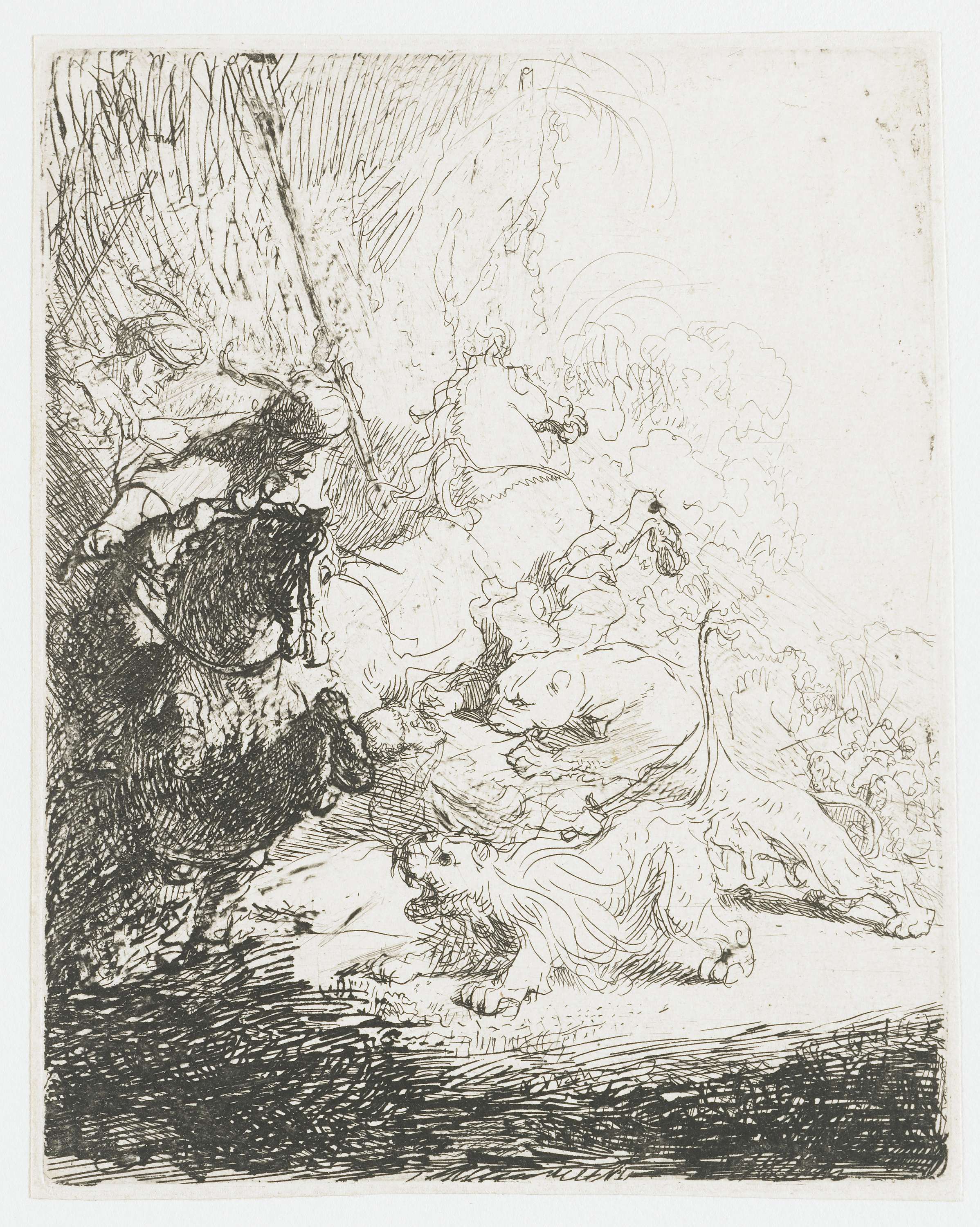
The small lion hunt (with two lions) — History & Analysis
Is this a mirror — or a memory? The small lion hunt conjures a visceral dance of life and death, encapsulating the fleeting nature of existence and the eternal struggle for survival. Begin by directing your gaze to the left side of the canvas, where the hunters lie poised yet tense, their weapons drawn and resolve palpable. The soft, earthy tones of the setting contrast sharply with the vibrant flashes of fur from the two lions, their powerful forms rendered in almost sculptural relief. Notice how the golden light spills across the scene, highlighting the hunters’ expressions — a mix of determination and fear — while casting shadows that suggest the lurking danger of their quarry. In this intricate web of tension, the lions act not just as prey but as symbols of primal instinct and rebirth, charging the painting with a duality of menace and majesty. The juxtaposition of the hunters’ collective anxiety against the raw, instinctual grace of the lions speaks to the cyclical nature of life. Each element within the frame holds significance, from the hunters' expressive gestures to the lions' fierce posture, inviting contemplation on our own roles within the chain of existence. Created around 1629, the masterful work emerged during a period when the artist was establishing his reputation in Amsterdam. At this time, the art world was shifting, with an increasing focus on realism and emotional depth. Rembrandt, keenly aware of these transformations, sought to immerse viewers in the dramatic interplay of light and shadow, capturing the essence of human experience and the wild, untamed spirit of nature.