The Temple of Jupiter Olympus, Athens — History & Analysis
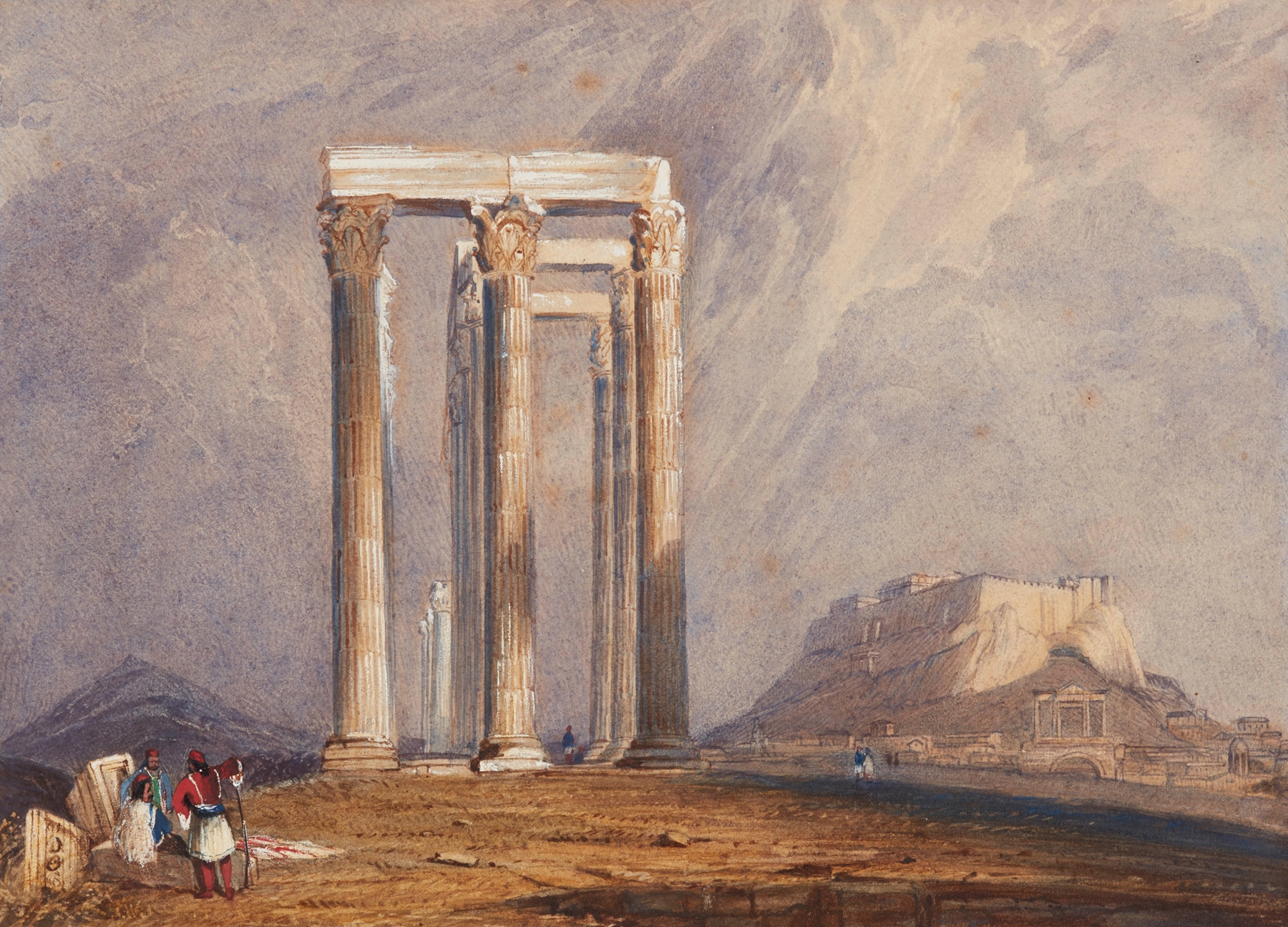
Where does light end, and longing begin? In The Temple of Jupiter Olympus, Athens, the interplay of shadow and illumination invites us to ponder the depths of history and aspiration. Focus on the brilliant radiance that spills across the ruins, drawing your eyes to the majestic columns that stand resilient against the azure sky. Notice how the artist masterfully captures the play of light as it dances along the ancient stone, highlighting the intricate textures that speak of time’s passage.
The composition is balanced yet dynamic, with the ruins occupying a significant portion of the canvas, invoking a sense of reverence for the past. Beneath the surface, the painting whispers of contrasts: the enduring strength of the temple juxtaposed against the delicate fragility of the natural world surrounding it. The vibrant blues and warm earth tones serve not only to evoke a sense of place but also to symbolize the clash between history and the burgeoning sense of revolution sweeping through Europe. Each element hints at a longing for the ideals of ancient glory while grappling with the present’s uncertainties.
In 1832, Clarkson Stanfield painted this piece while the winds of change were stirring across Europe, spurred by both artistic movements and political upheavals. Living in London, he was influenced by the Romantic era's fascination with the sublime, reflecting a world on the brink of transformation. His focus on classical subjects within a contemporary context reveals the ongoing dialogue between past and present, revealing the artist's keen awareness of the historical tides shaping society.