The Waterfalls at Tivoli — History & Analysis
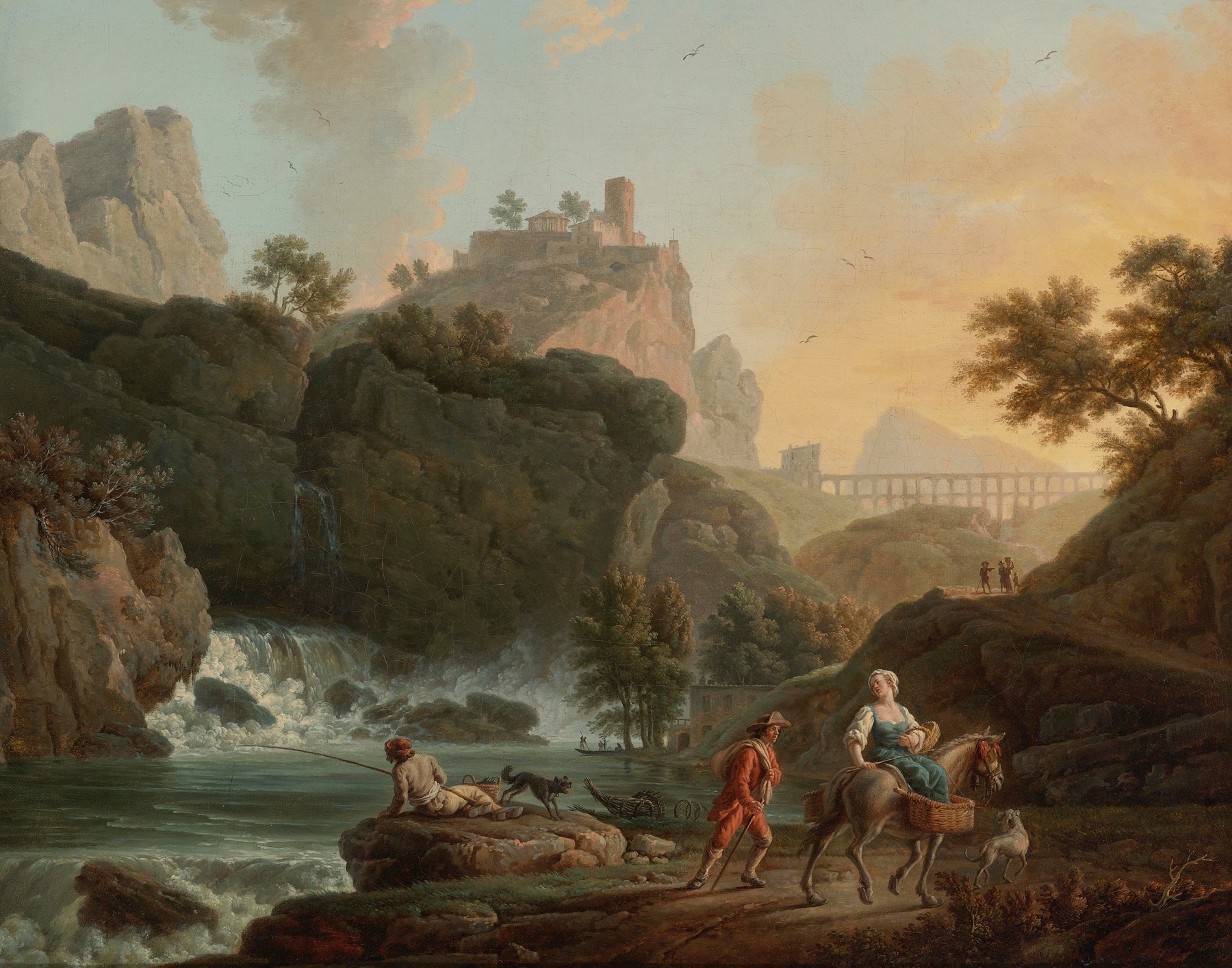
Where does light end, and longing begin? In The Waterfalls at Tivoli, this question flows between the cascading waters and the stillness of nature's embrace, inviting viewers into a world of serene movement. Look to the left, where the water tumbles down the rocky terrain, each droplet captured in a delicate balance of color and brushstroke. Notice how the sunlight filters through the vibrant green foliage, casting playful shadows that dance across the scene.
The blues and whites of the water contrast sharply with the earthy browns and lush greens, drawing your gaze not only toward the falls but also to the figures that lend a human touch to this landscape. Beneath the surface of this idyllic scene lies a duality of emotions. The gentle yet powerful movement of the water speaks to the incessant passage of time, while the tranquil environment reflects a yearning for peace amid life's chaos. The figures gazing upon the falls appear lost in contemplation, suggesting a connection between the natural world and the human experience of longing and desire.
In 1737, Vernet painted this masterpiece during a period when he was increasingly recognized for his landscape scenes, a departure from the more formal compositions of his earlier career. While living in Rome, he was inspired by the natural beauty surrounding him, as well as the burgeoning interest in depicting the dramatic interplay of light and shadow, a hallmark of the Baroque movement. This painting encapsulates his mastery of capturing nature's splendor while inviting viewers to lose themselves in its enchanting flow.