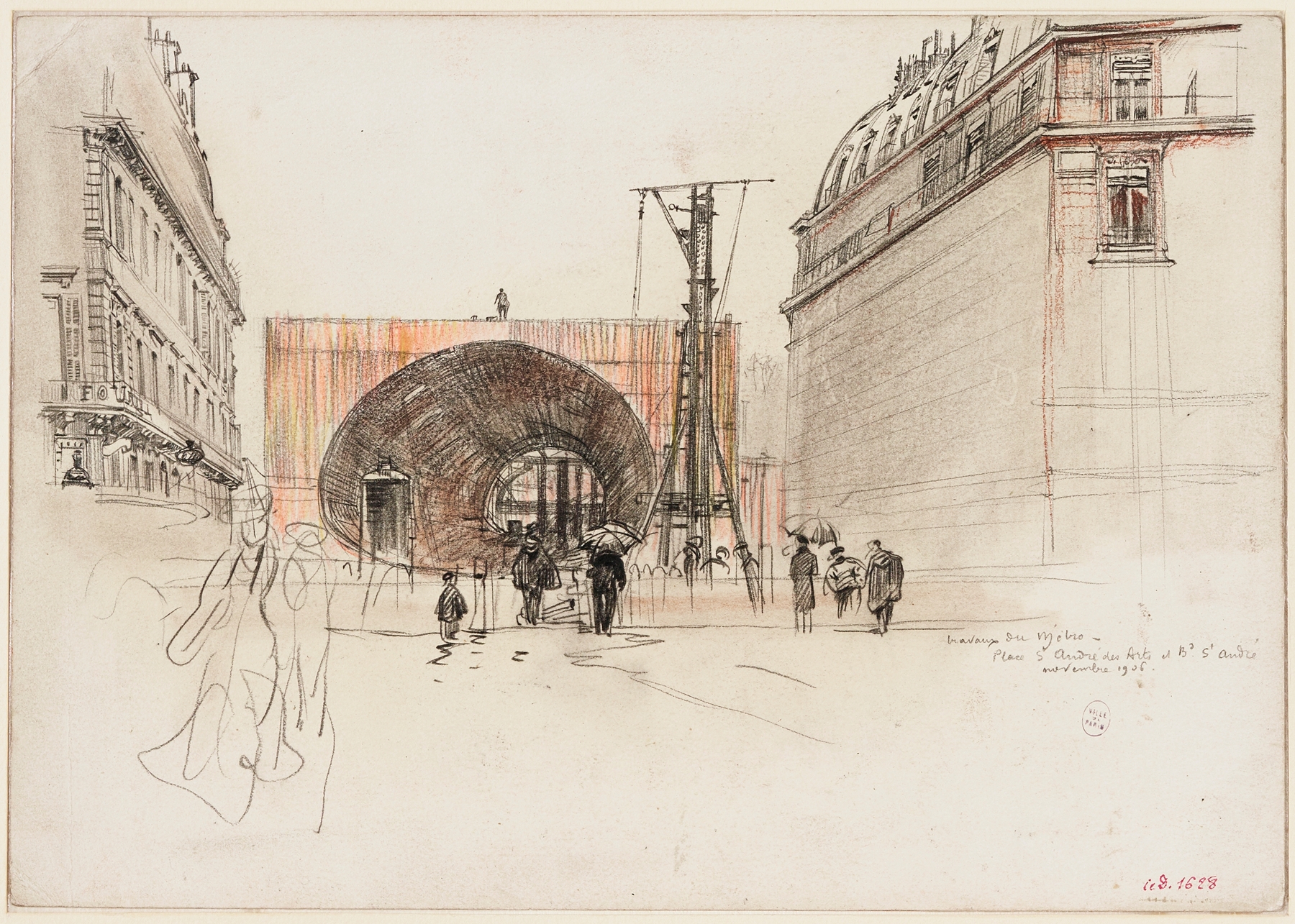
Travaux du métro, place Saint André des Arts — History & Analysis
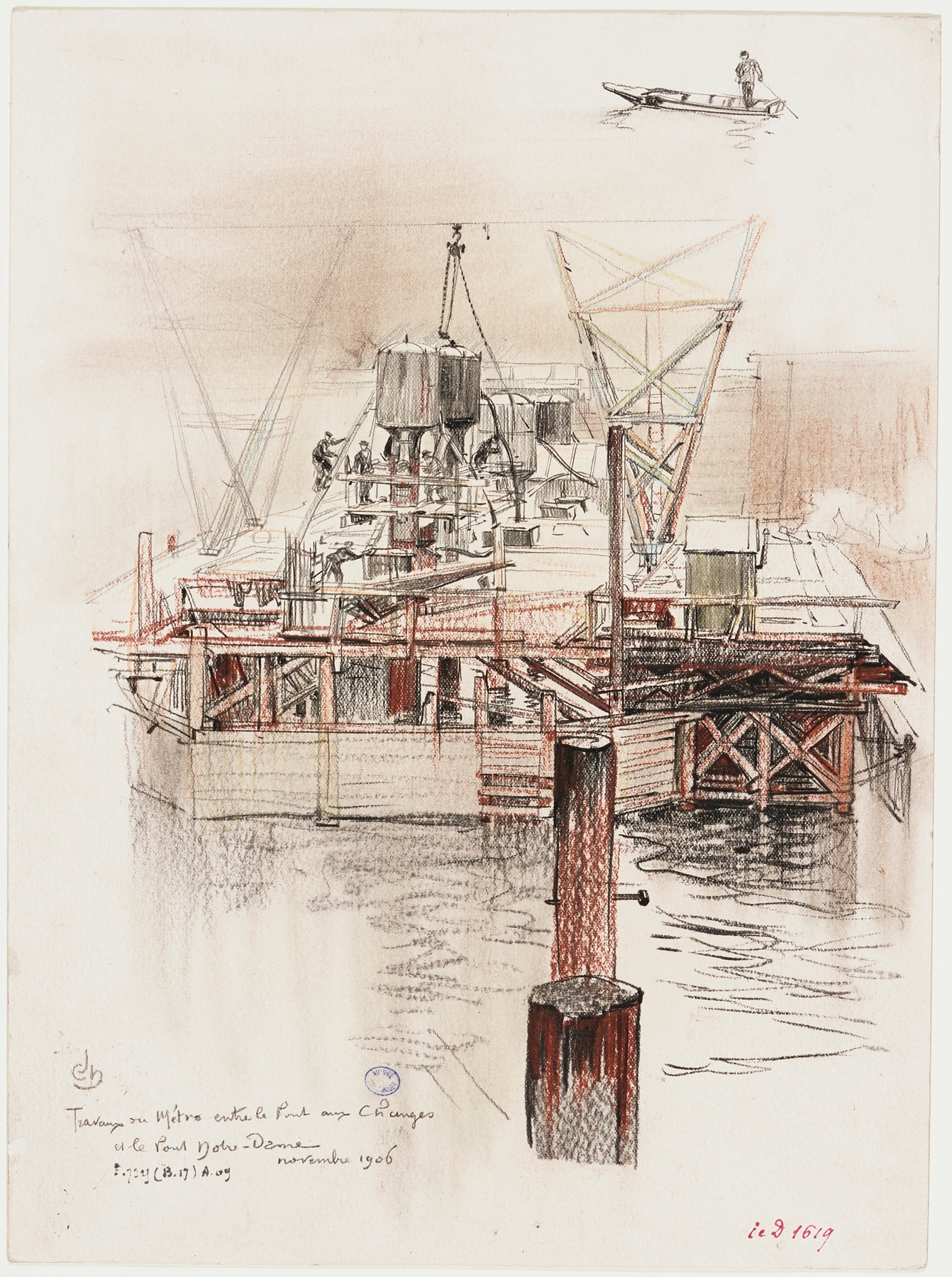
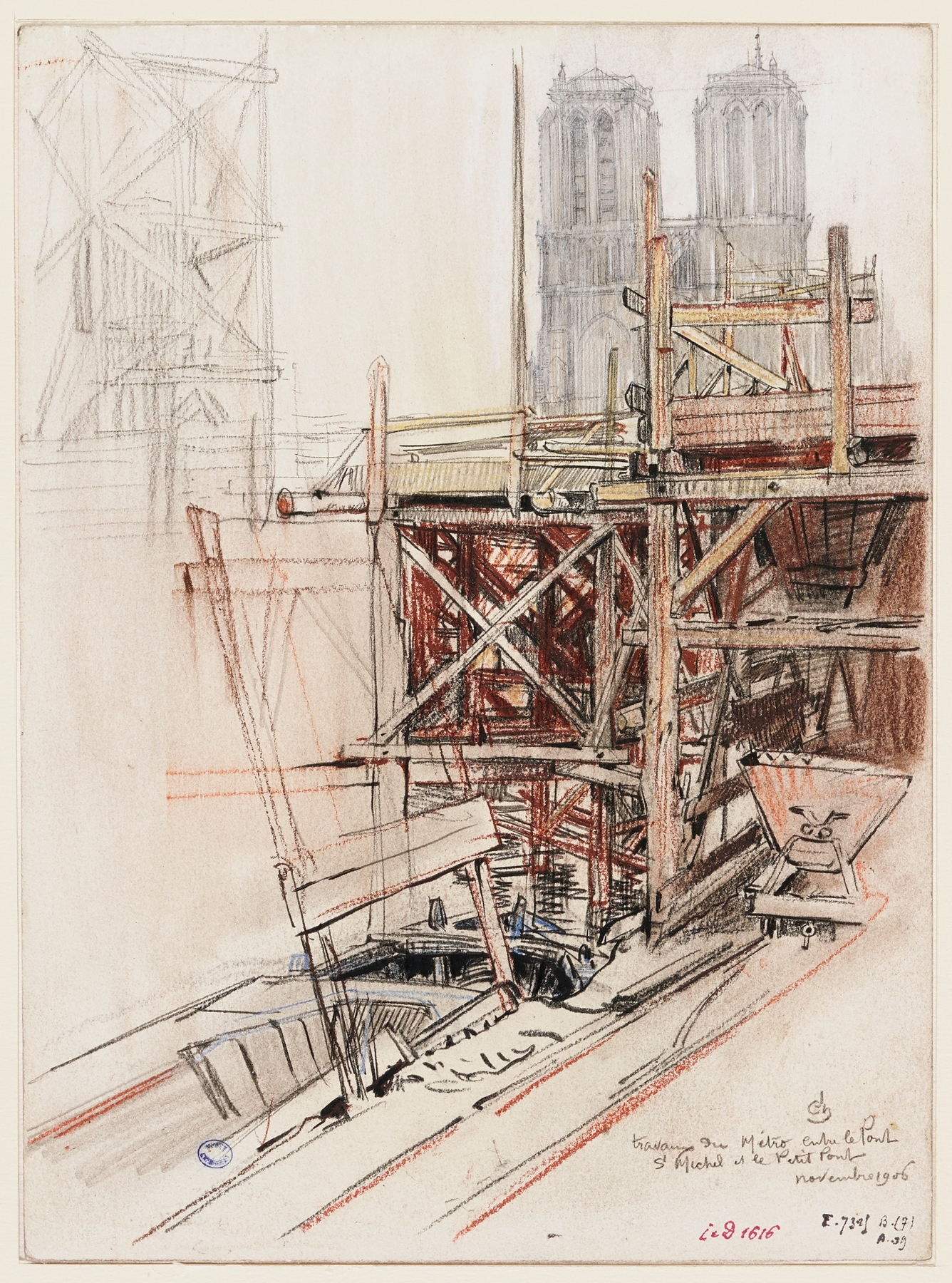
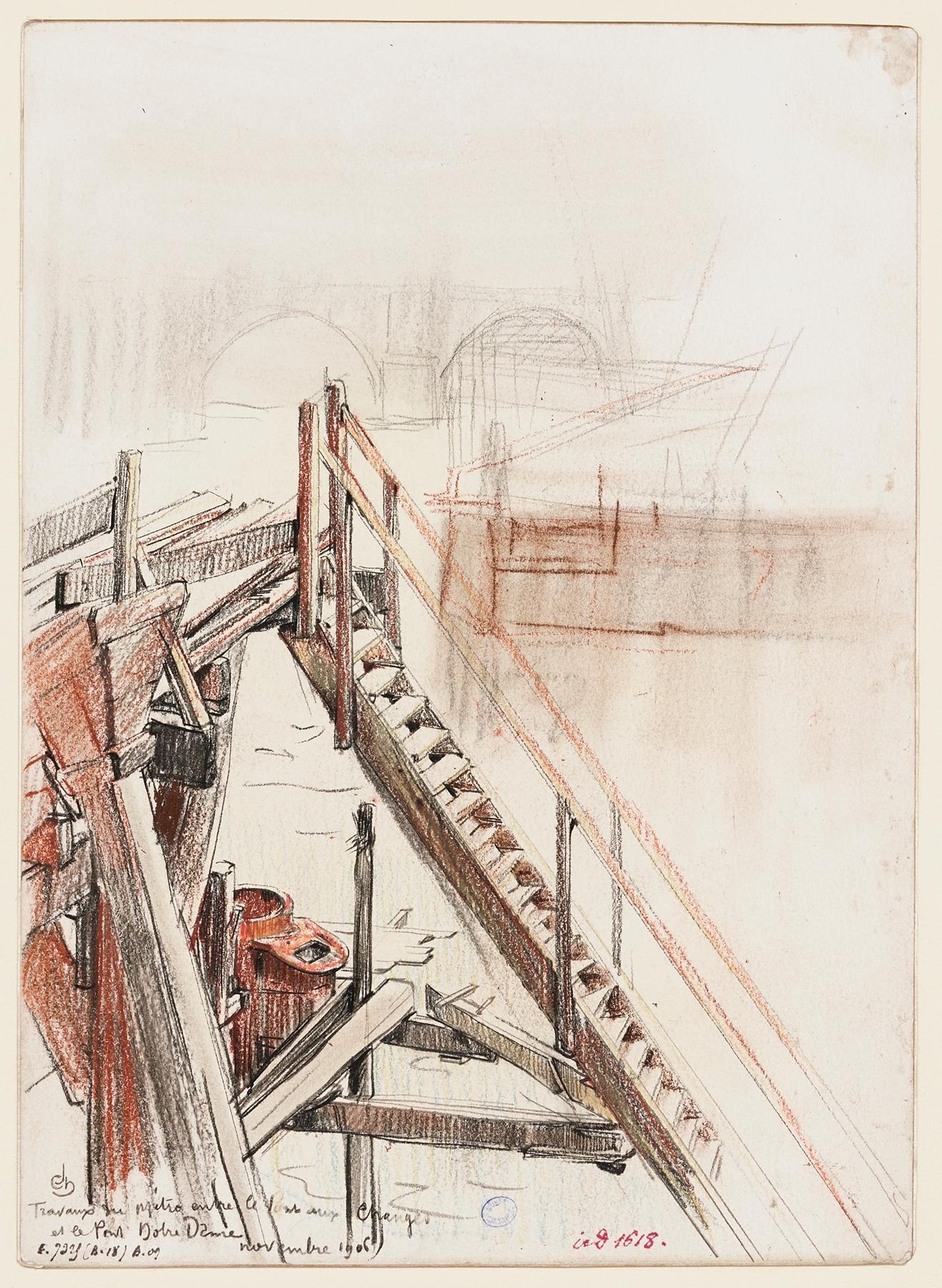
Who listens when art speaks of silence? In Travaux du métro, place Saint André des Arts, the muted chaos of construction unfolds, revealing a poignant interplay between progress and loss. Look to the center of the canvas, where workers labor in earnest, their figures intertwined with the skeletal structures of the metro. The earthy tones of browns and grays dominate the scene, evoking a somber atmosphere, while the stark lines of machinery contrast sharply with the organic forms of the men—an expression of human resilience amidst encroaching modernization.
Notice how Jouas captures the transient light filtering through the urban setting, casting long shadows that seem to echo the weight of history and the passage of time. Delve deeper into the painting, and you’ll uncover layers of meaning. The juxtaposition of bustling activity against the backdrop of a city on the brink of transformation speaks to a collective memory being overshadowed by ambition. Each worker's posture hints at a struggle between the past and an uncertain future, as the echoes of what once was are drowned out by the noise of construction.
The absence of warmth in the color palette mirrors the loss of the familiar, making way for a new, impersonal landscape. In 1906, Charles Jouas painted this piece during a time of rapid industrial expansion in Paris. The city was undergoing significant changes, with the metro system being developed to meet the demands of its growing population. Amid a backdrop of innovation and modernity, Jouas reflected on the human stories often overshadowed by the relentless march of progress, channeling his observations into a canvas that resonates with both urgency and reverence for the past.