Twilight in the Cedars at Darien, Connecticut — History & Analysis
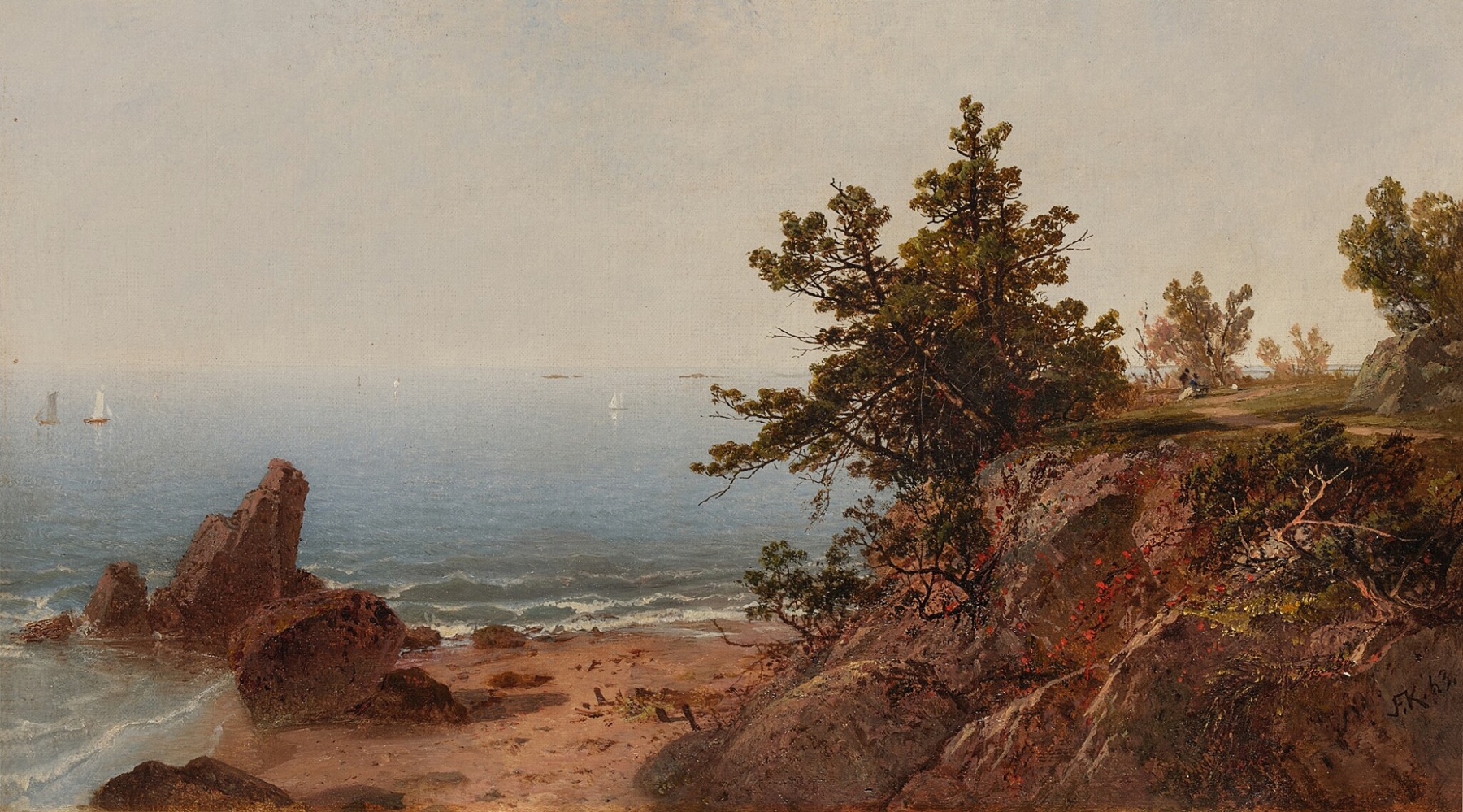
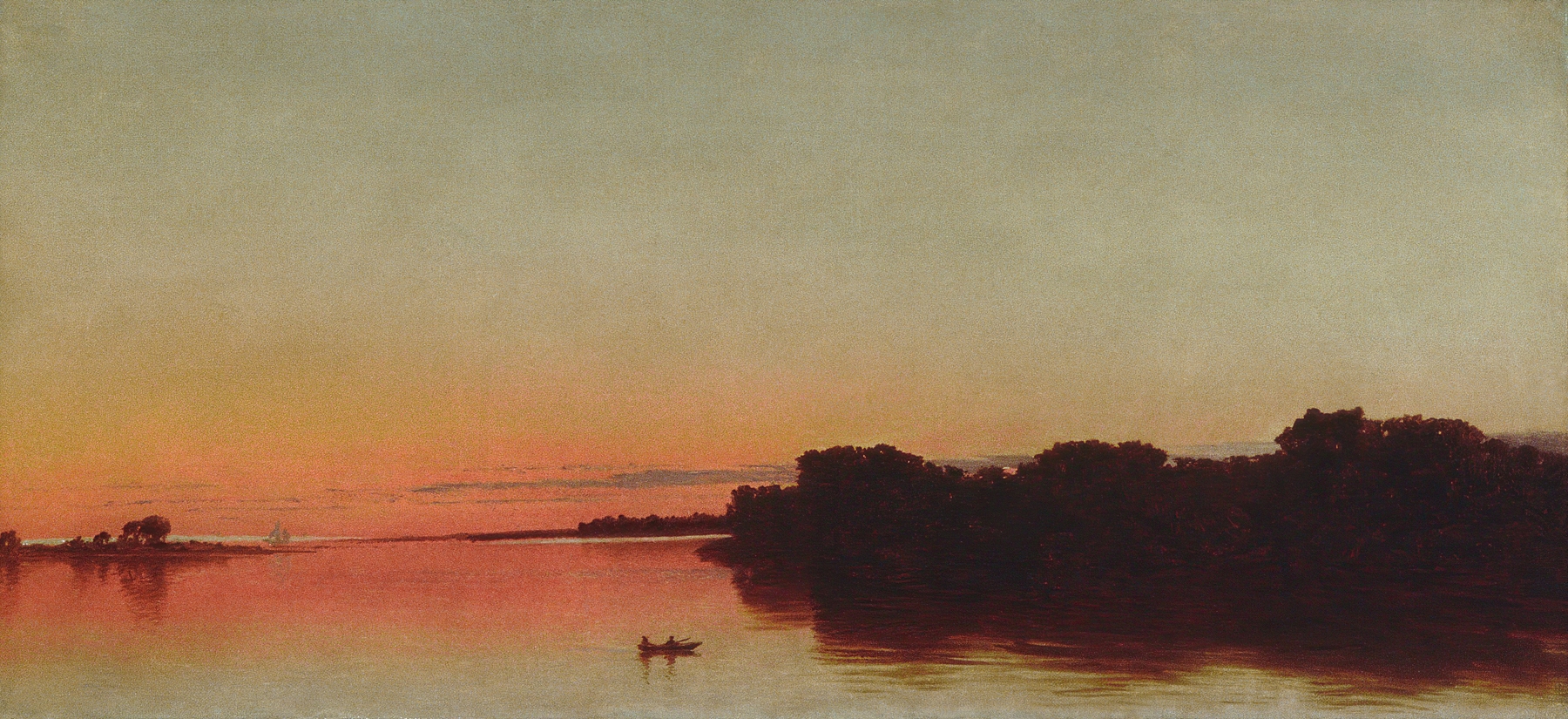
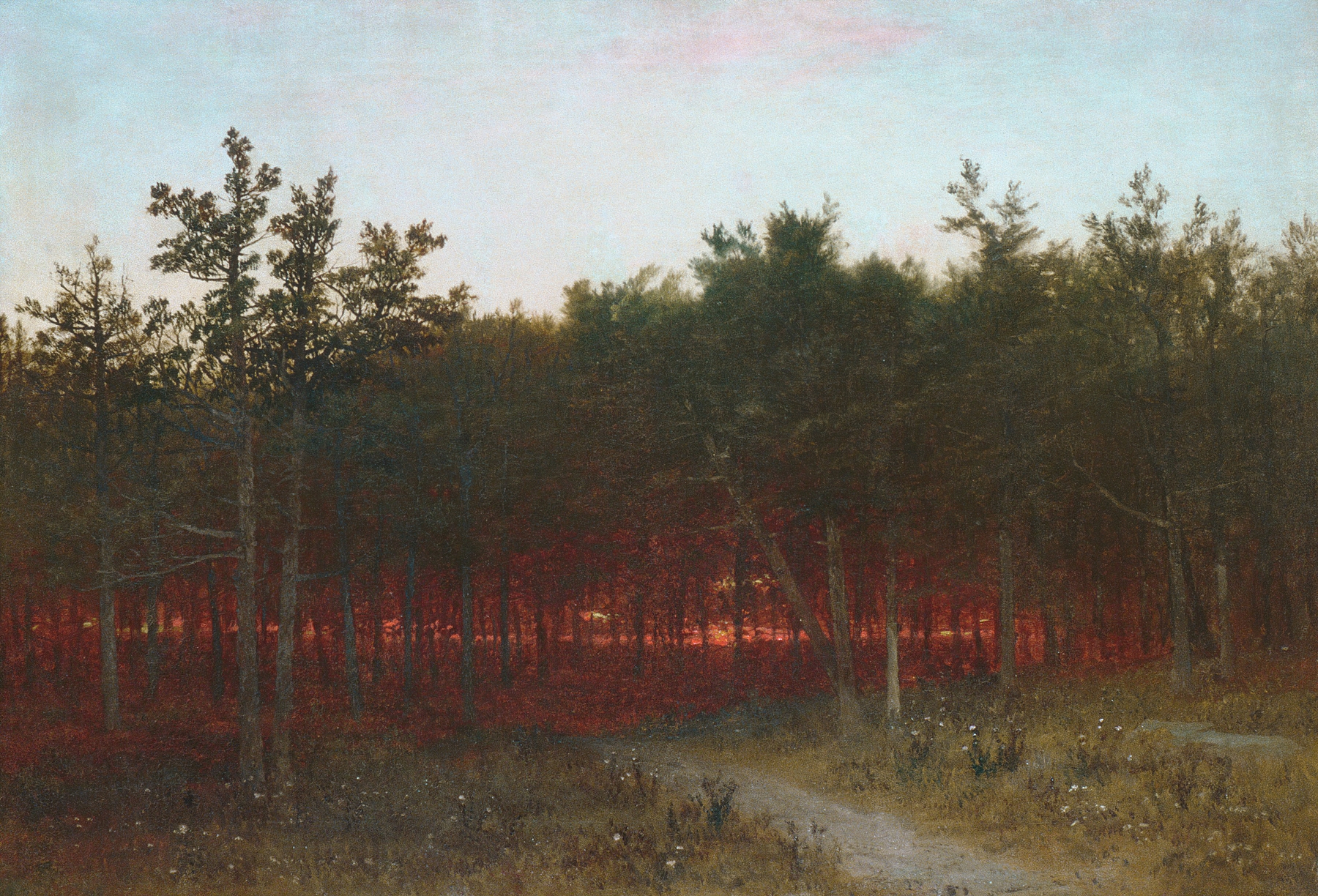
What if silence could speak through light? In Twilight in the Cedars at Darien, Connecticut, the whispers of the evening sky reveal a world poised on the brink of night, where tranquility and revelation intertwine. Focus on the soft gradient of colors as dusk descends, where vibrant oranges and deep blues blend seamlessly across the canvas. Look to the left at the tall, majestic cedars, their silhouettes elegantly framing the scene, casting shadows that stretch long upon the water.
Notice how the delicate brush strokes create a shimmering reflection, capturing the fleeting beauty of twilight, as the light dances upon the surface with an ephemeral grace that invites contemplation. The painting evokes a deep sense of stillness, yet each element pulses with hidden significance. The contrast between the dark trees and the brightening sky symbolizes the transition from day to night, a metaphor for change and introspection. The water, calm and glass-like, suggests a stillness that belies the tumult of thoughts and emotions, allowing viewers to experience a moment of serene clarity amid the chaos of life.
In 1872, Kensett painted this work during a period of personal and artistic growth. He was immersed in the Hudson River School's embrace of natural beauty, and the American landscape was becoming an essential theme as a national identity began to emerge. His exploration of light and atmosphere signaled a shift towards a more introspective approach in American art, reflecting both personal and collective revelations during a time of transformation.