Un coin de rivière avec maison et peupliers — History & Analysis
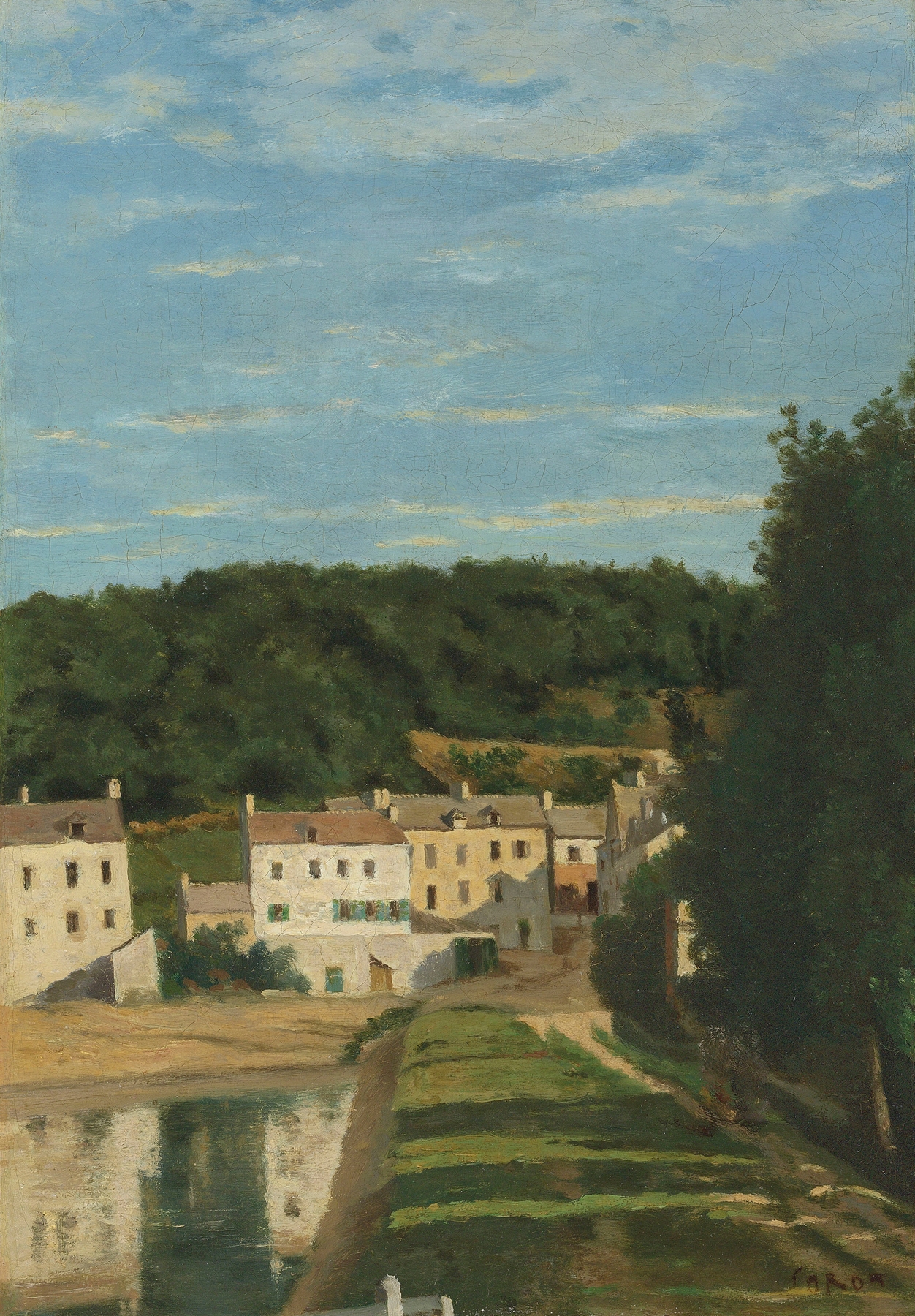
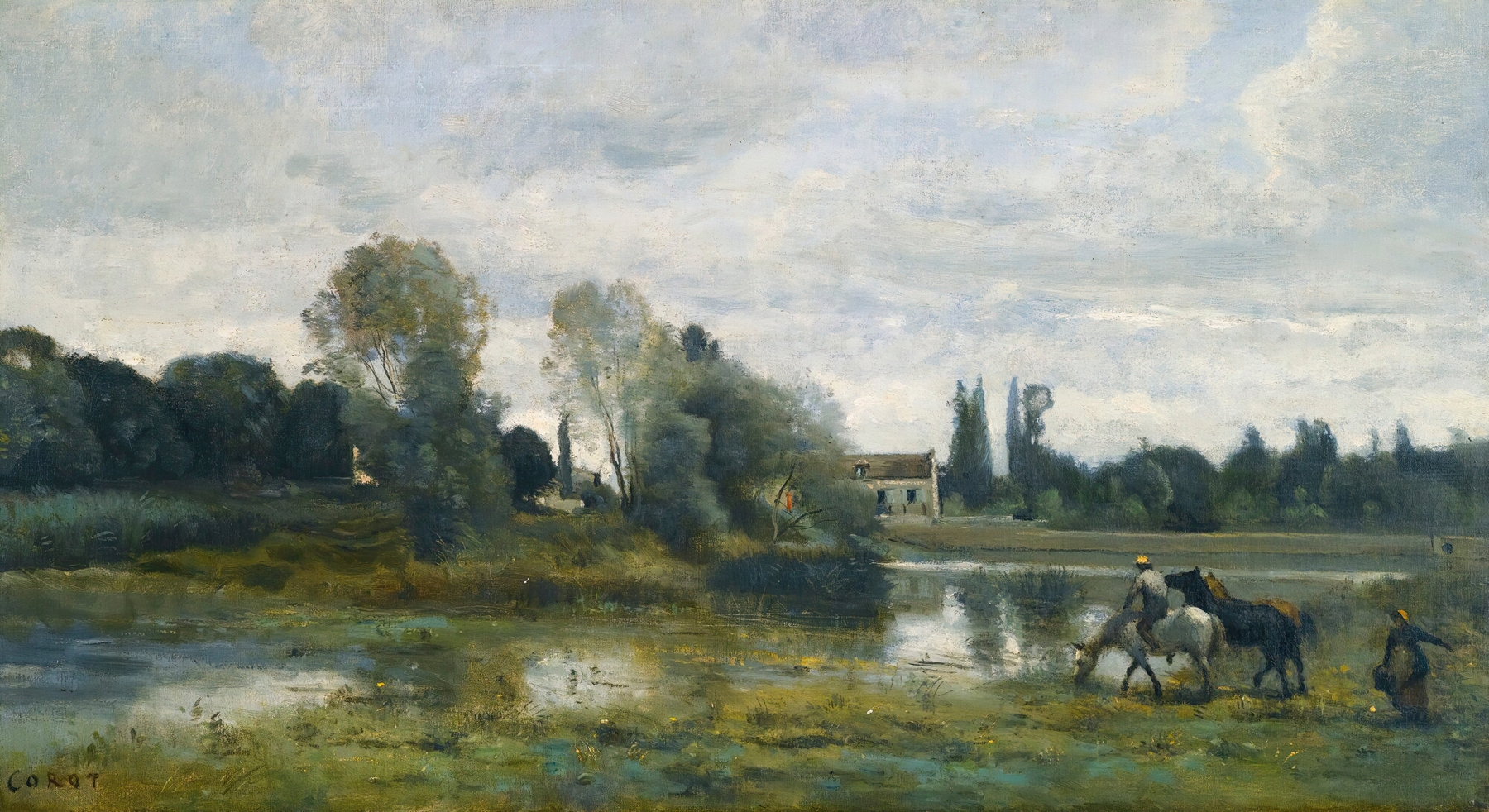
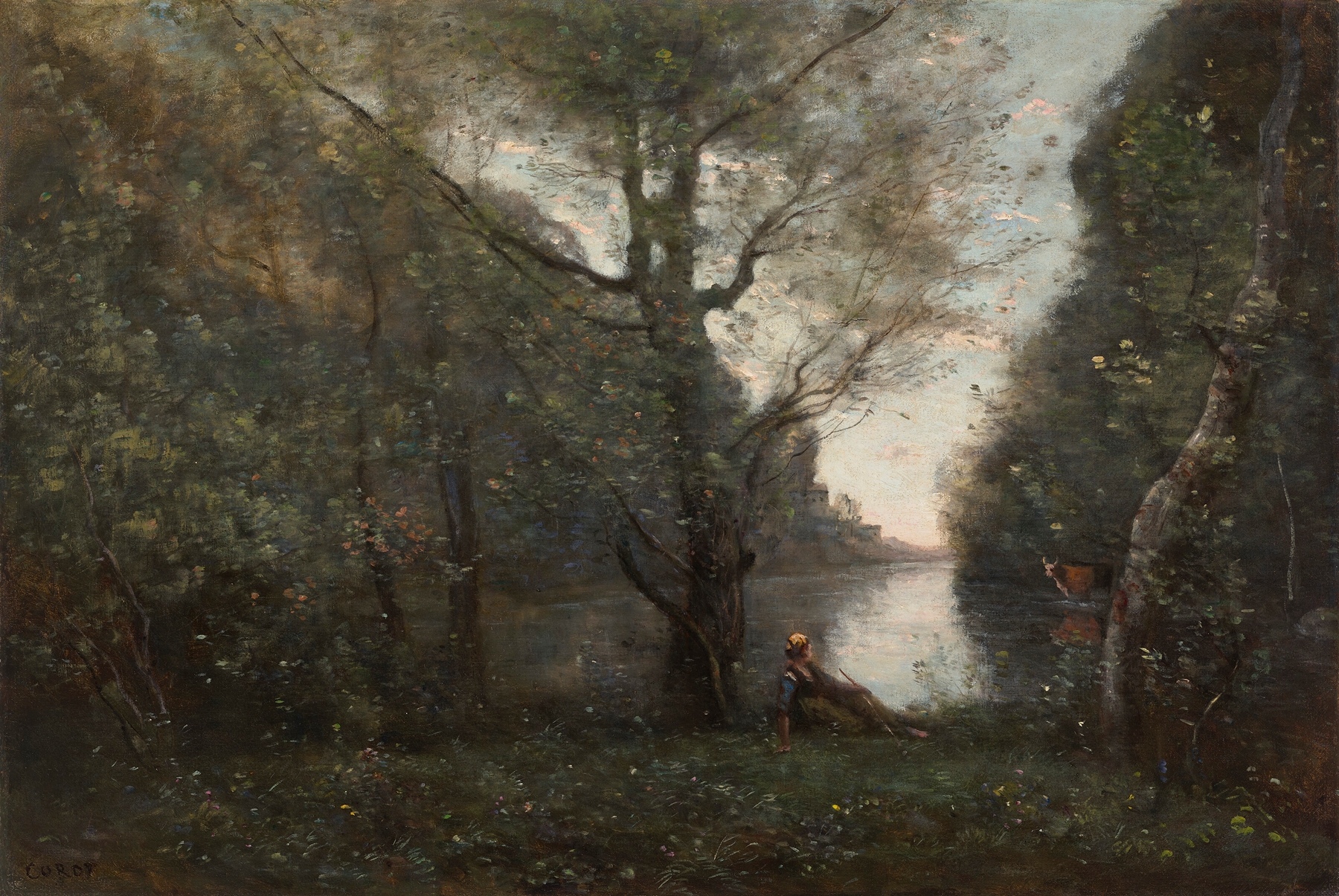
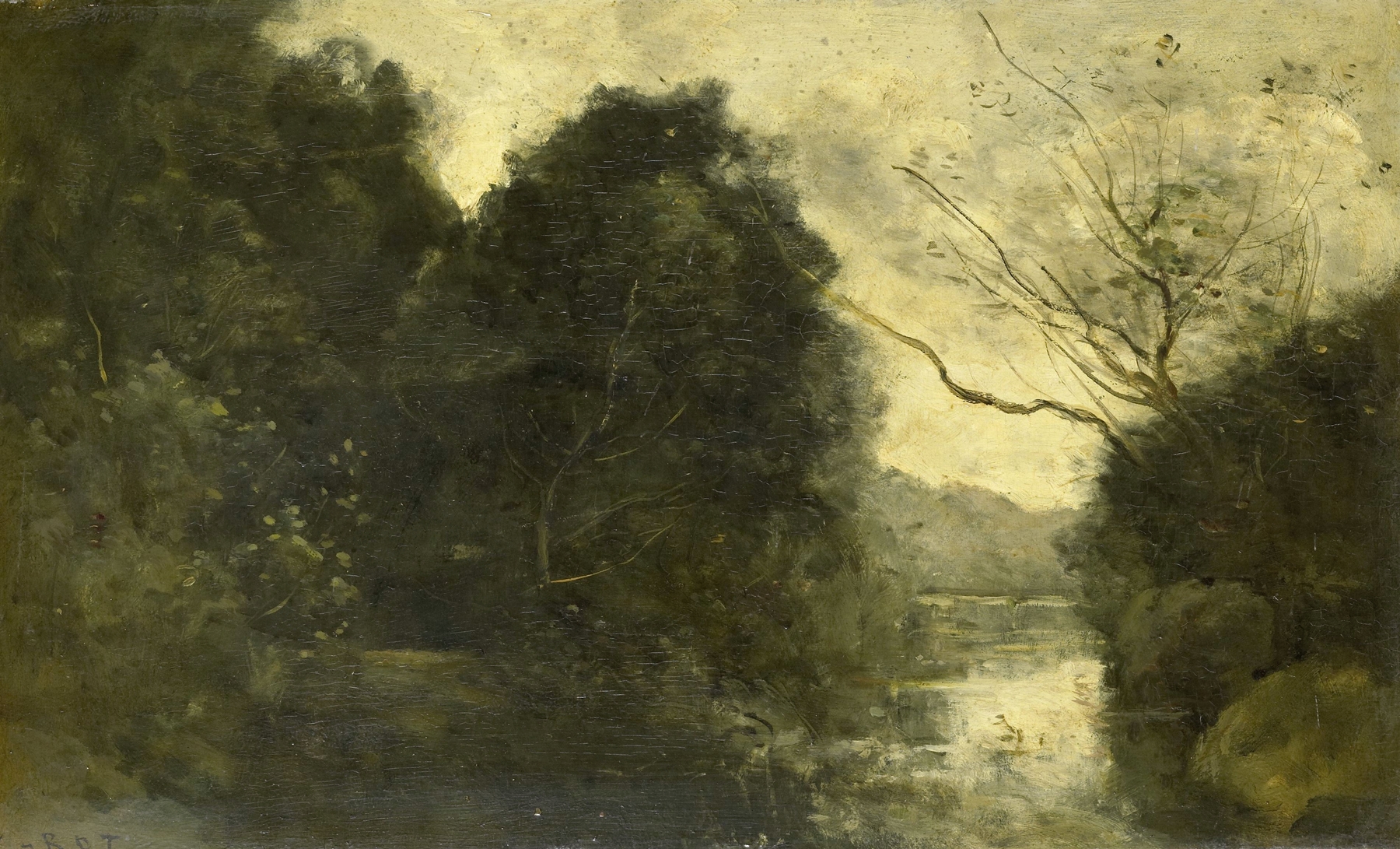
“The canvas doesn’t lie — it simply waits.” Beneath the tranquil surface of nature’s depiction lies a tension that whispers of violence, not in action, but in the silent struggle for peace. Corot invites us into a serene landscape, yet the underlying currents stir the soul, hinting at the chaos that often lurks just beyond the frame. Look to the left at the gentle flow of the river, its surface reflecting a patchwork of soft greens and blues. Notice the house nestled among the poplars, its warm browns contrasting with the lush greenery. The light cascades through the foliage above, creating dappled patterns on the water’s edge, where the brushwork oscillates between delicate and assertive.
This interplay of color and texture reveals Corot’s mastery in capturing not just the visual, but the emotional landscape of the scene. Yet, within this idyllic moment, one can sense a deeper unease. The towering poplars stand like silent sentinels, bearing witness to the potential violence of nature’s whims — a storm, a flood, or the ravages of time. The stillness of the water threatens to betray the chaos beneath, echoing the fragility of human existence against the backdrop of the natural world.
Each brushstroke becomes a testament to the tension between beauty and destruction, gently reminding us that peace is inherently precarious. In the early 1850s, the artist created this work during a period of personal reflection and artistic exploration. Living in Paris amidst the Romantic movement, he sought to capture the essence of nature while stepping away from the confines of traditional composition. This was a time when the Impressionists were beginning to challenge conventions, and Corot, while not directly aligned with them, laid essential groundwork that would influence the future of landscape painting.