Ungarische Pferdetränke — History & Analysis
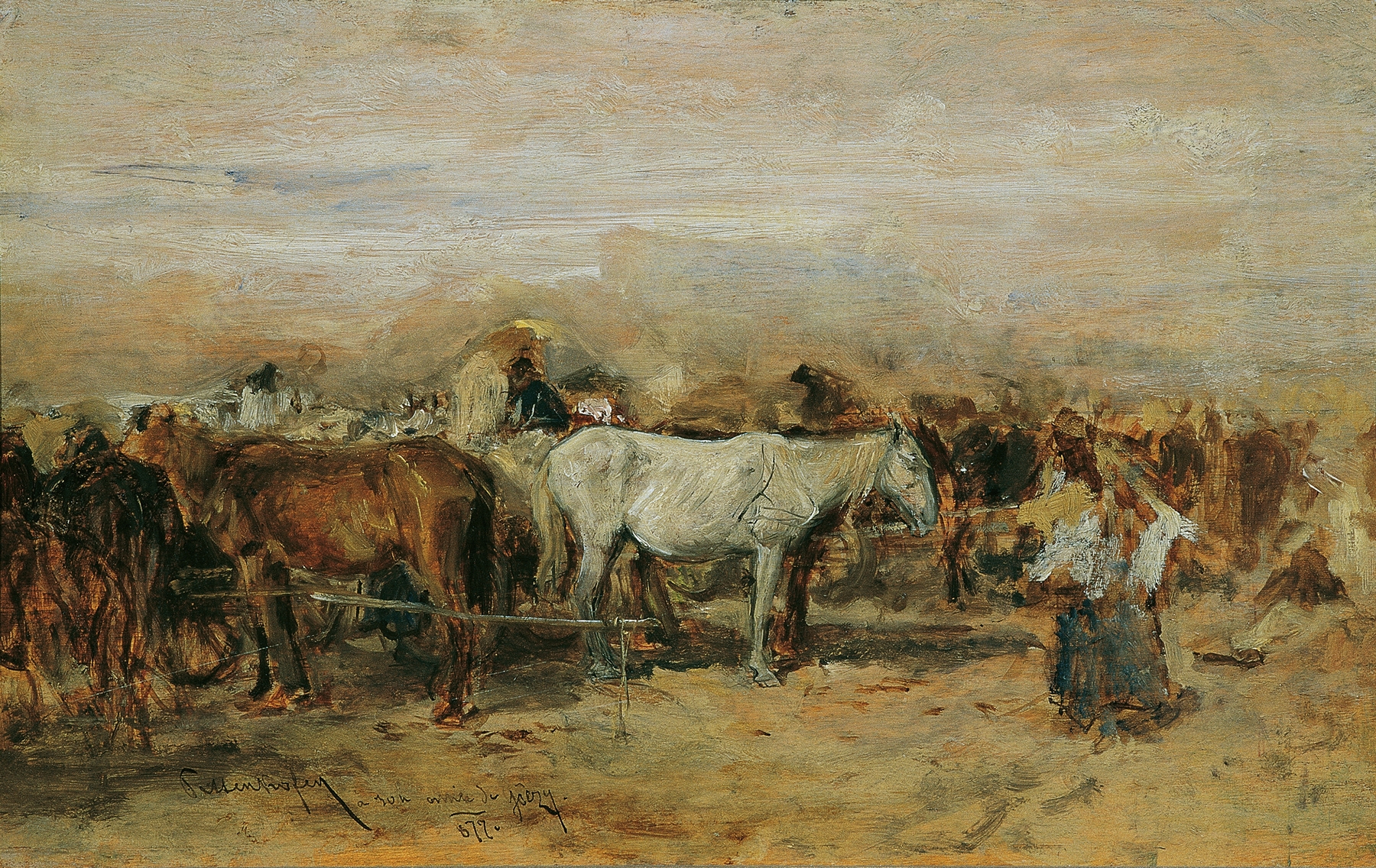
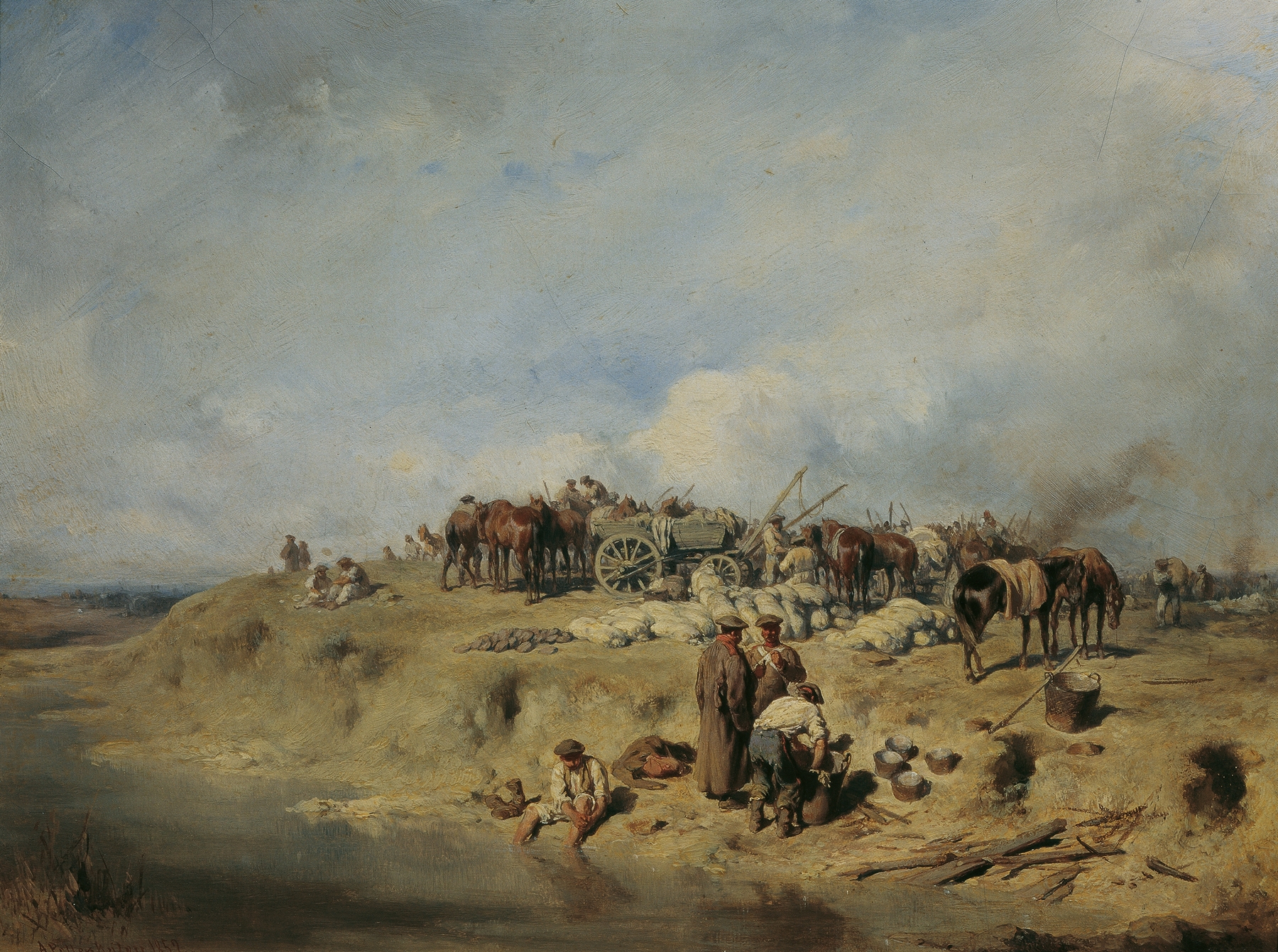
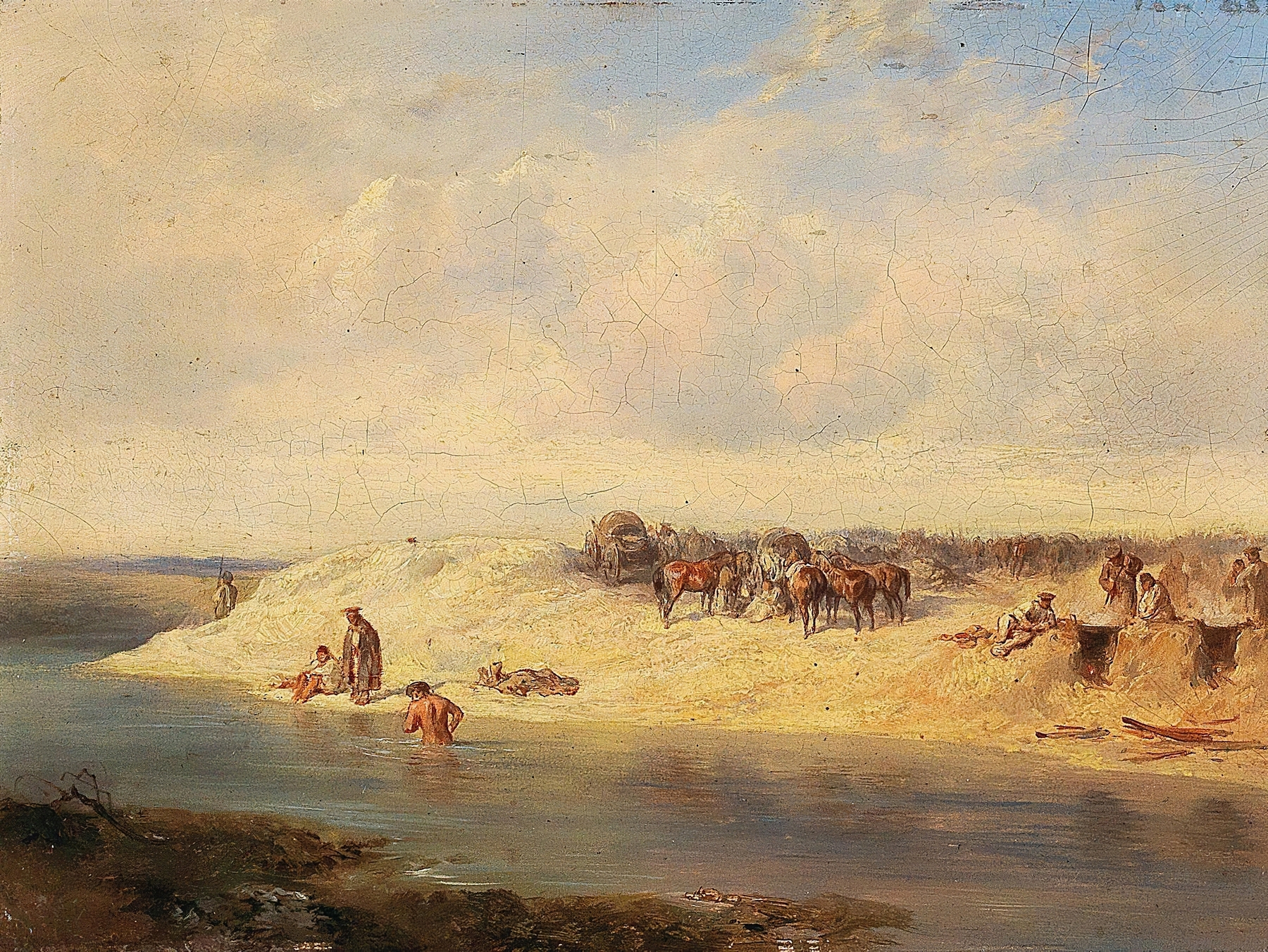
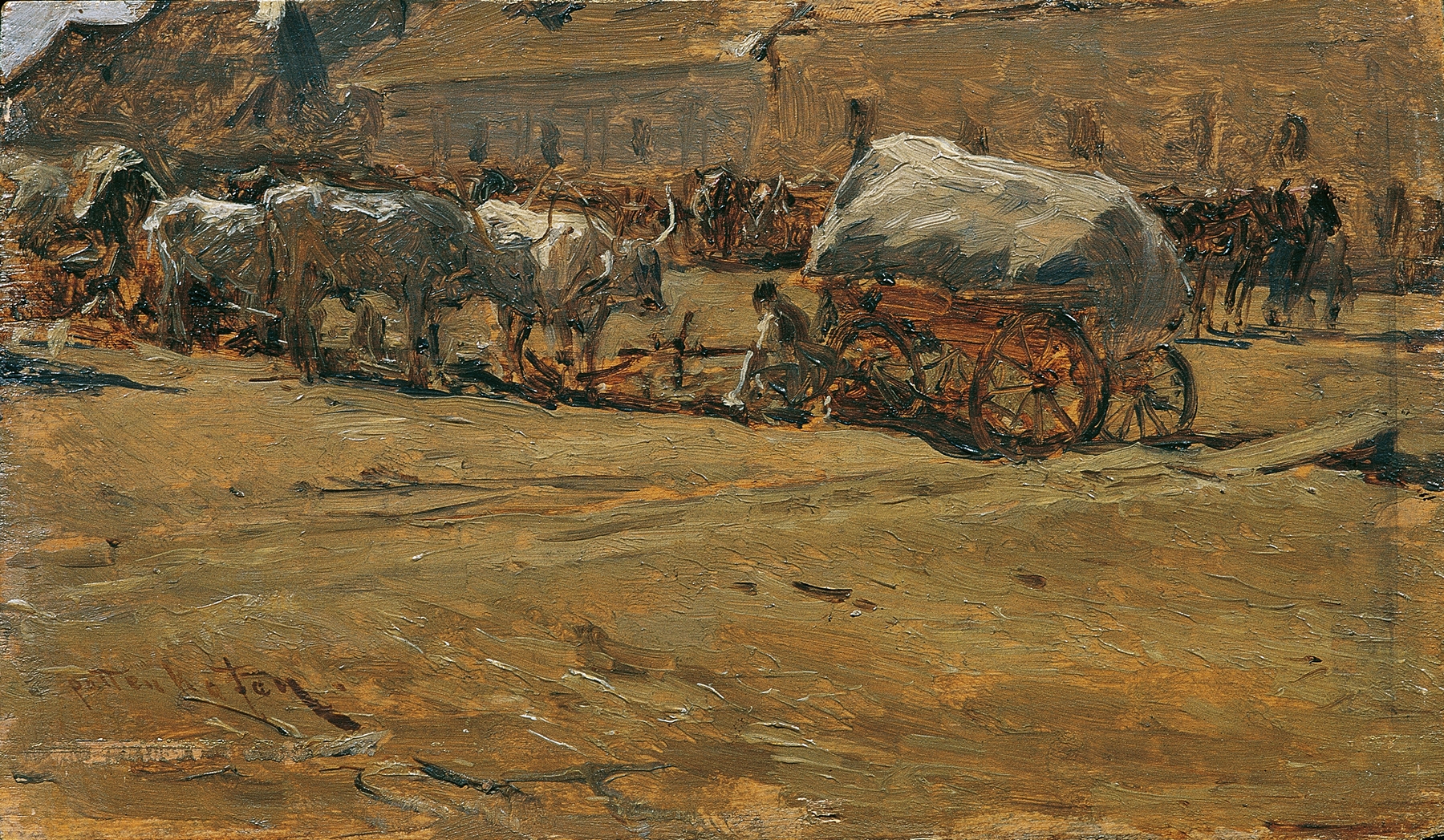
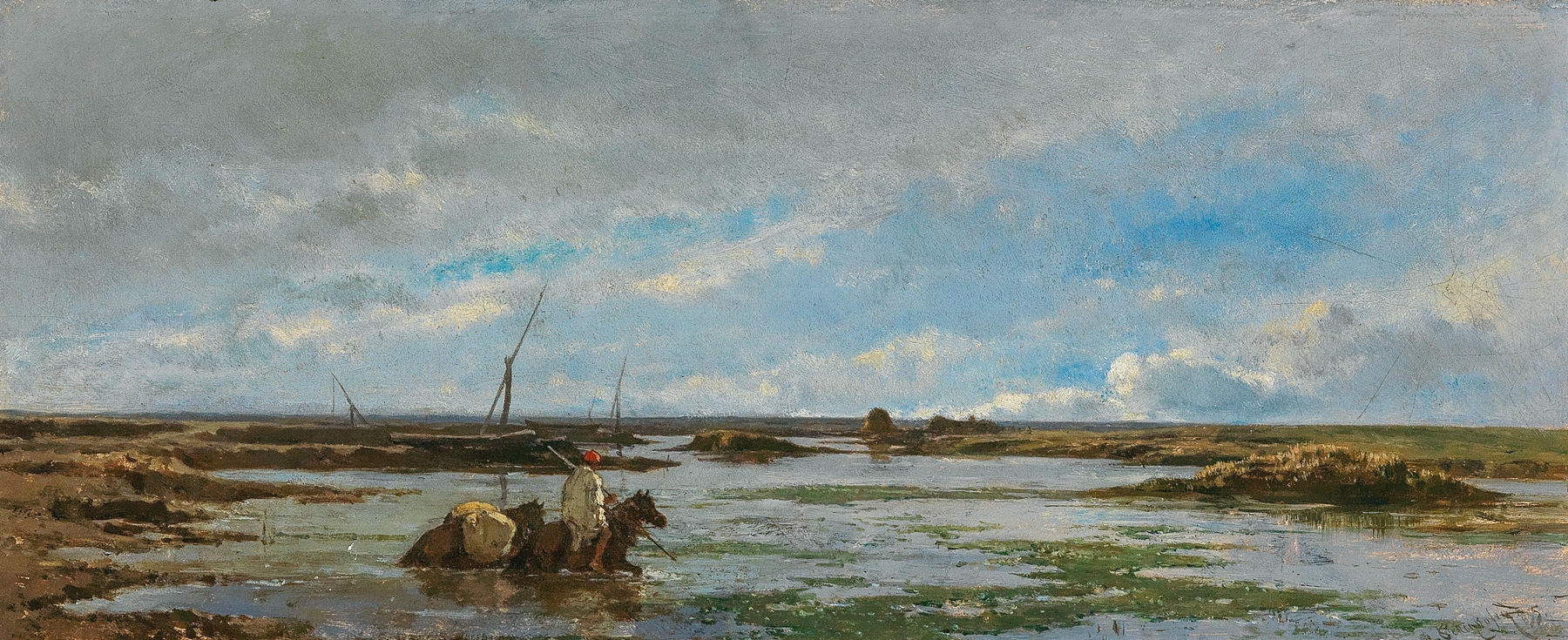
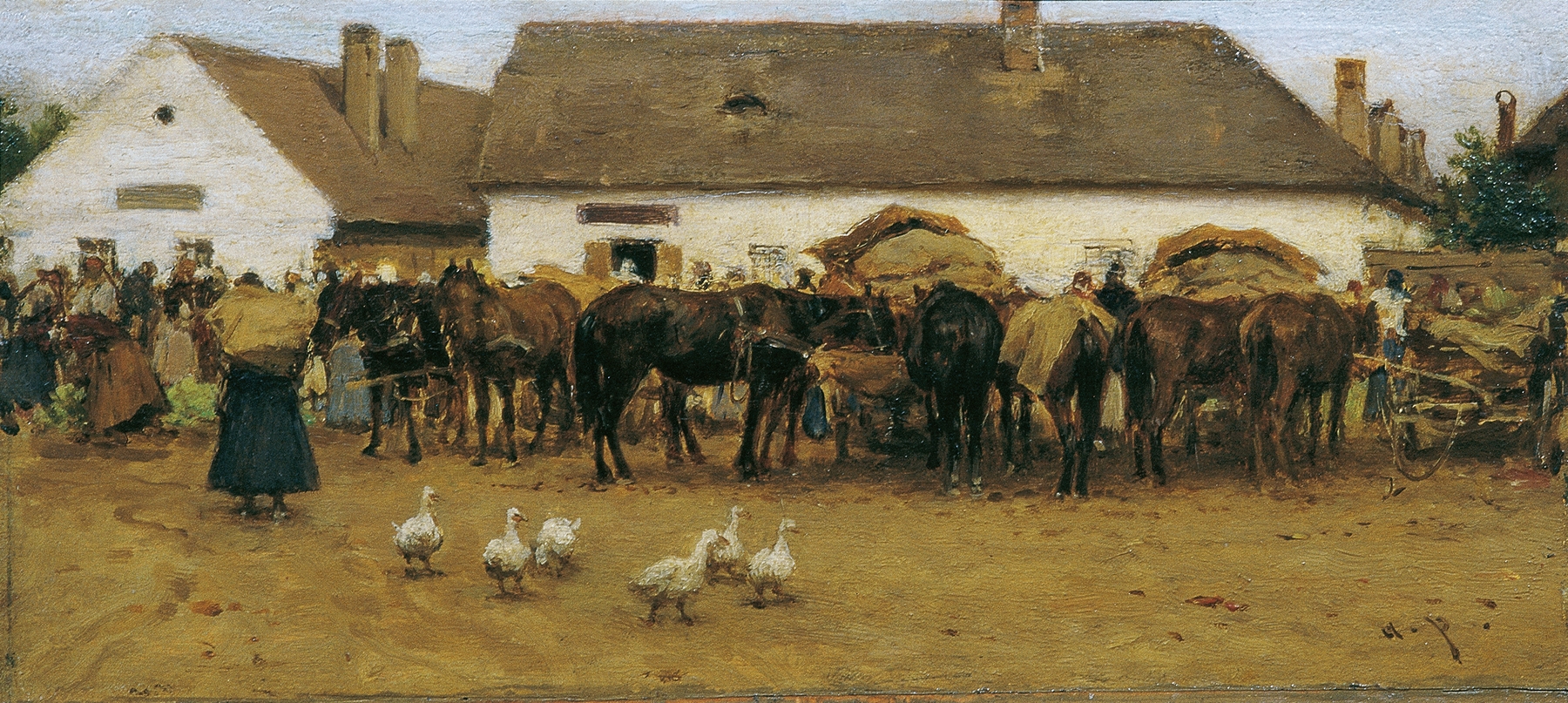
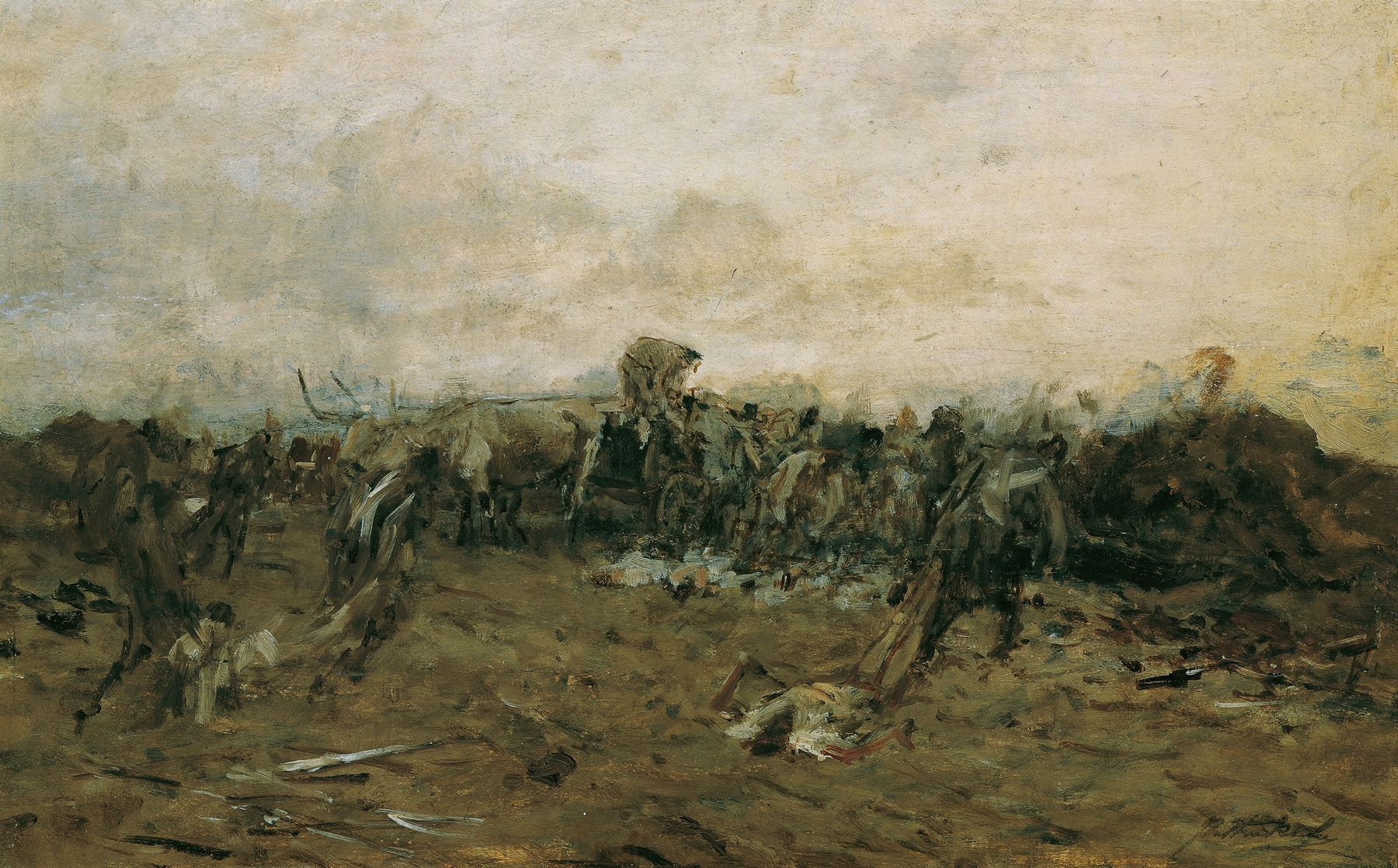
Can paint confess what words never could? In the stillness of Ungarische Pferdetränke, fear simmers beneath the surface, inviting us to explore its unspoken depths. Look closely at the center of the canvas, where a group of horses gathers around a water trough, their glossy coats glistening under a warm yet oppressive light. Notice how the artist meticulously captures the tension in their stances—muscles taut, ears perked—each creature poised as if sensing an unseen threat.
The earthy tones of the surrounding landscape contrast sharply with the vivid highlights on the horses, drawing focus to their anxious expressions and establishing an emotional backdrop. To the right, a solitary figure watches with a mixture of authority and uncertainty, embodying the human fear of the wild and untamed. The juxtaposition of the serene water and the palpable anxiety of the horses speaks to the fragility of peace in nature. There’s an implicit question of presence and absence, the horses’ instinctual awareness of danger contrasting with the figure's apparent detachment, hinting at a deeper commentary on humanity’s complex relationship with the natural world.
During the late 1860s, Pettenkofen painted this scene amidst a burgeoning interest in realism, as artists sought to portray life with accuracy and emotional depth. Living in Austria, he was influenced by the Romantic movement's exploration of nature and the sublime, while also reflecting the shifting perspectives of a society grappling with industrialization and its impact on the environment. This work stands as a poignant interaction between man and animal, capturing a moment of delicate balance, rife with tension and unarticulated dread.