Ungarischer Markt mit blauen Schirmen — History & Analysis
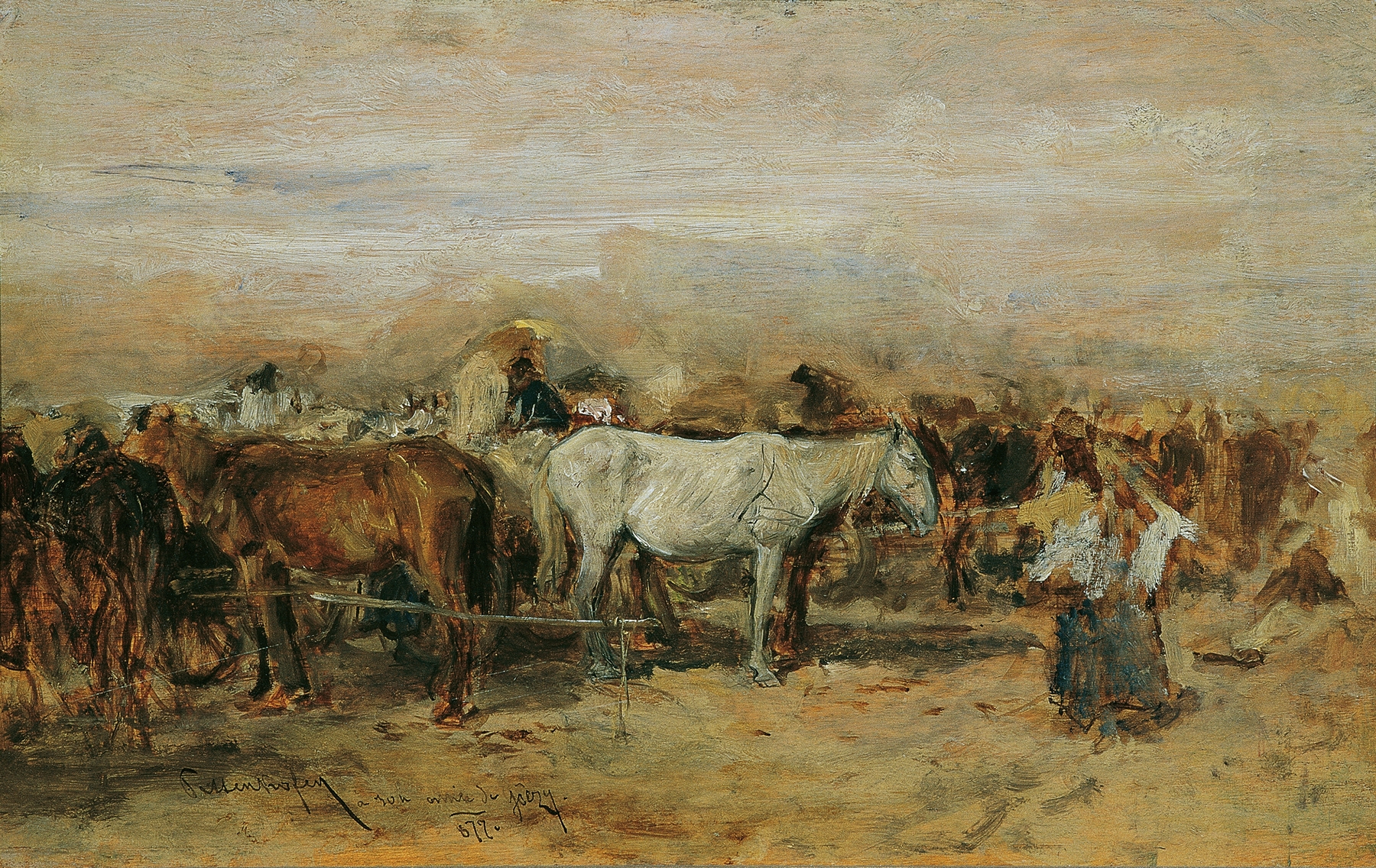
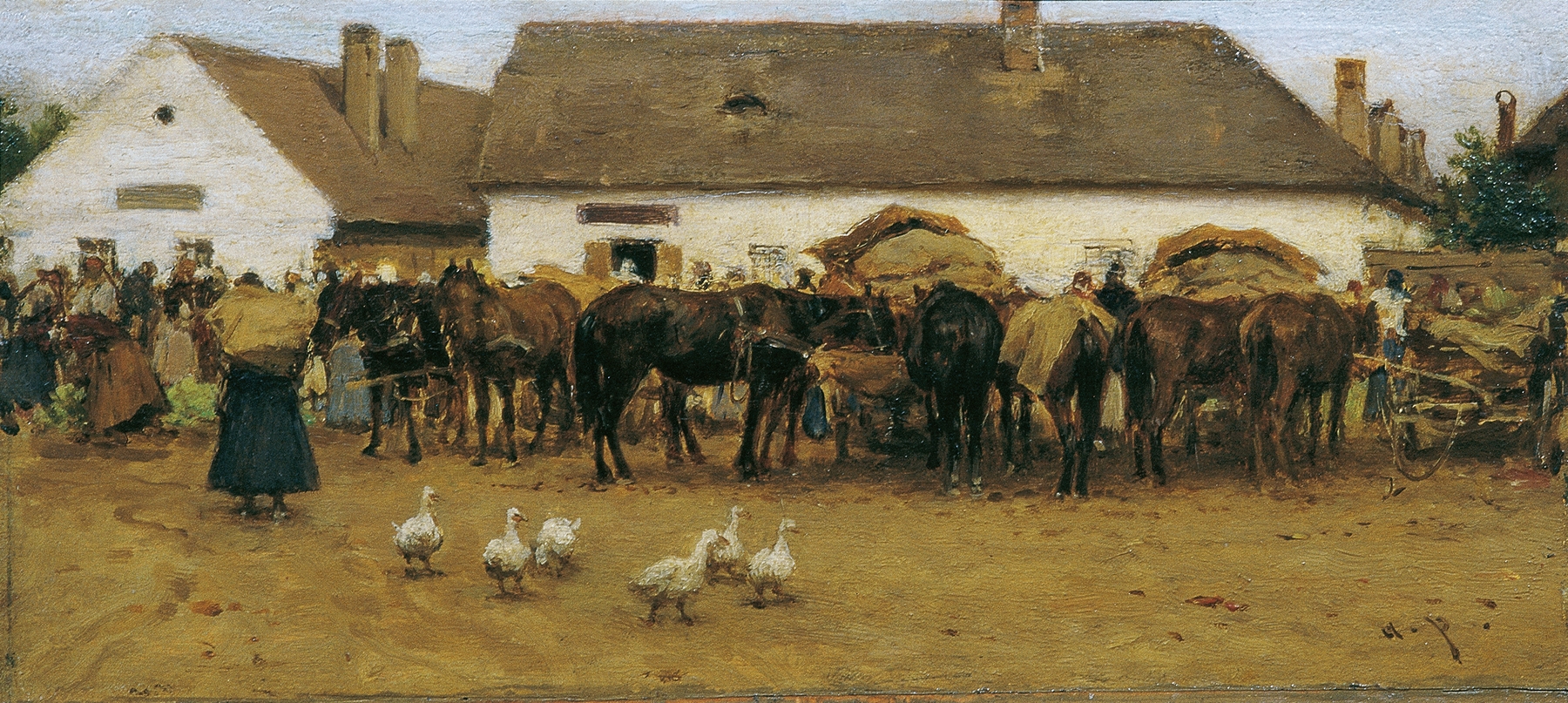
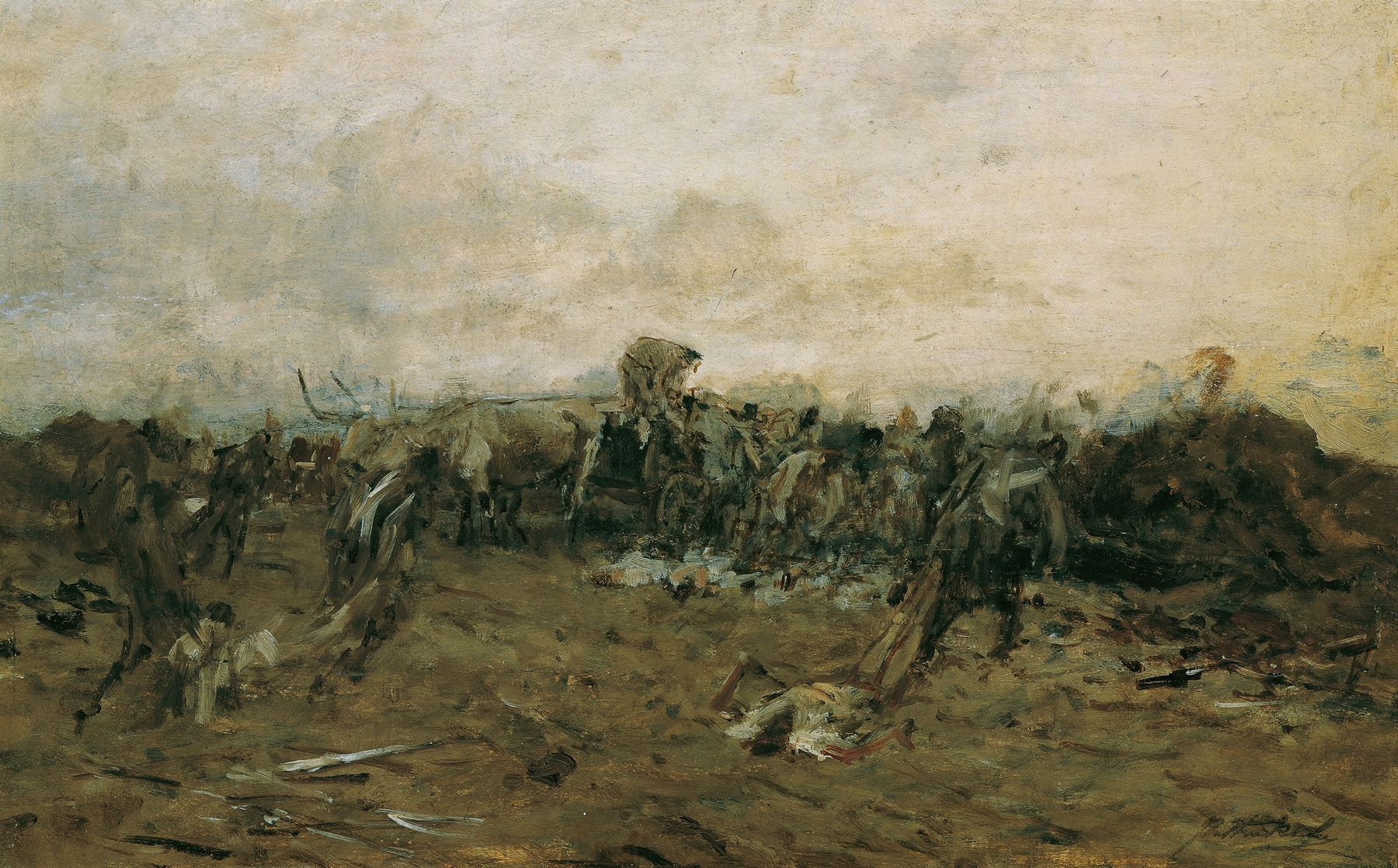
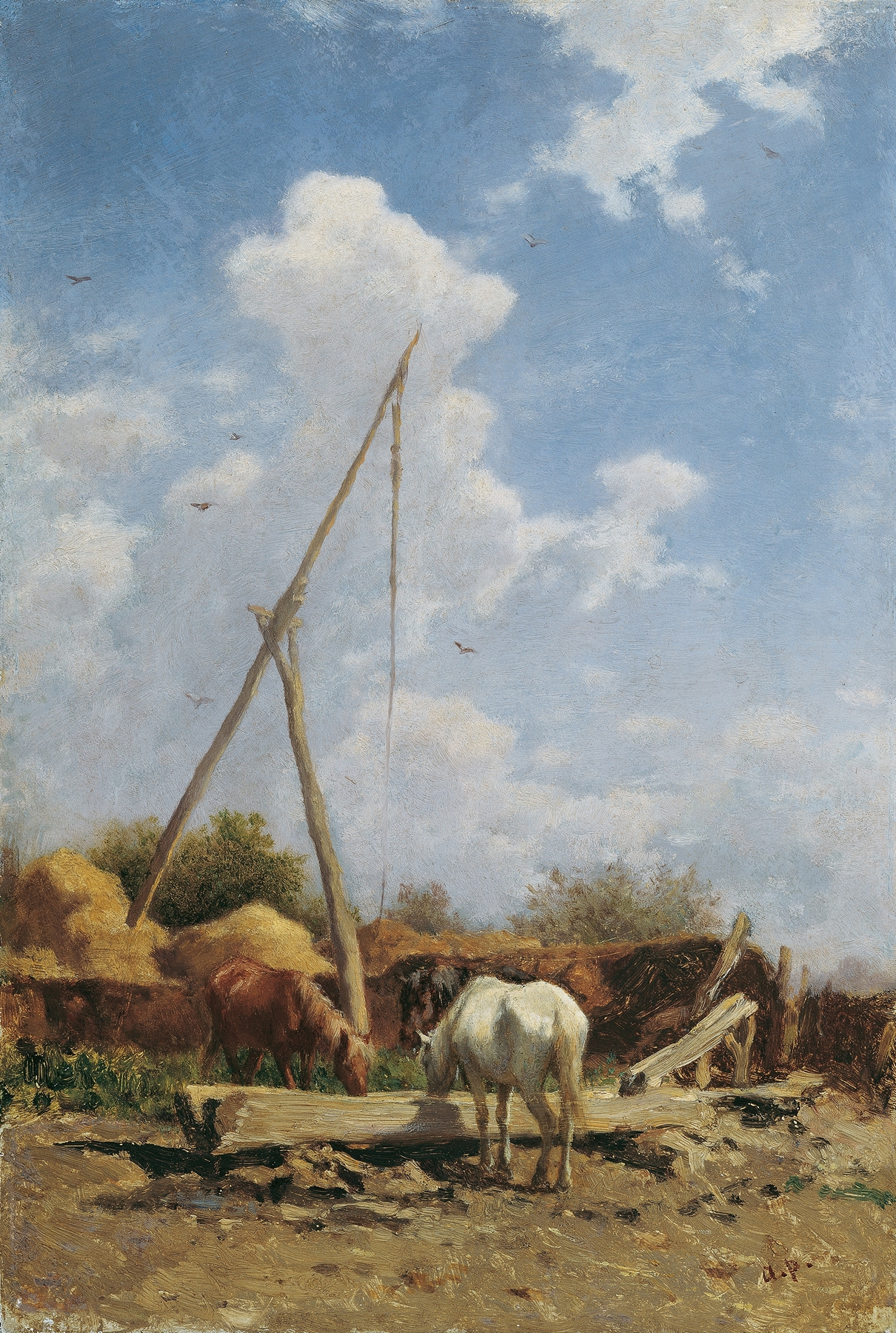
Could beauty survive in a century of chaos? This question reverberates through the vibrant colors and lively figures of a bustling market scene, where moments unfold amid the passage of time. Amidst the chaos of life, it seems that even the simplest of interactions can hold profound significance. Look to the center of the composition, where merchants and shoppers engage in animated conversation.
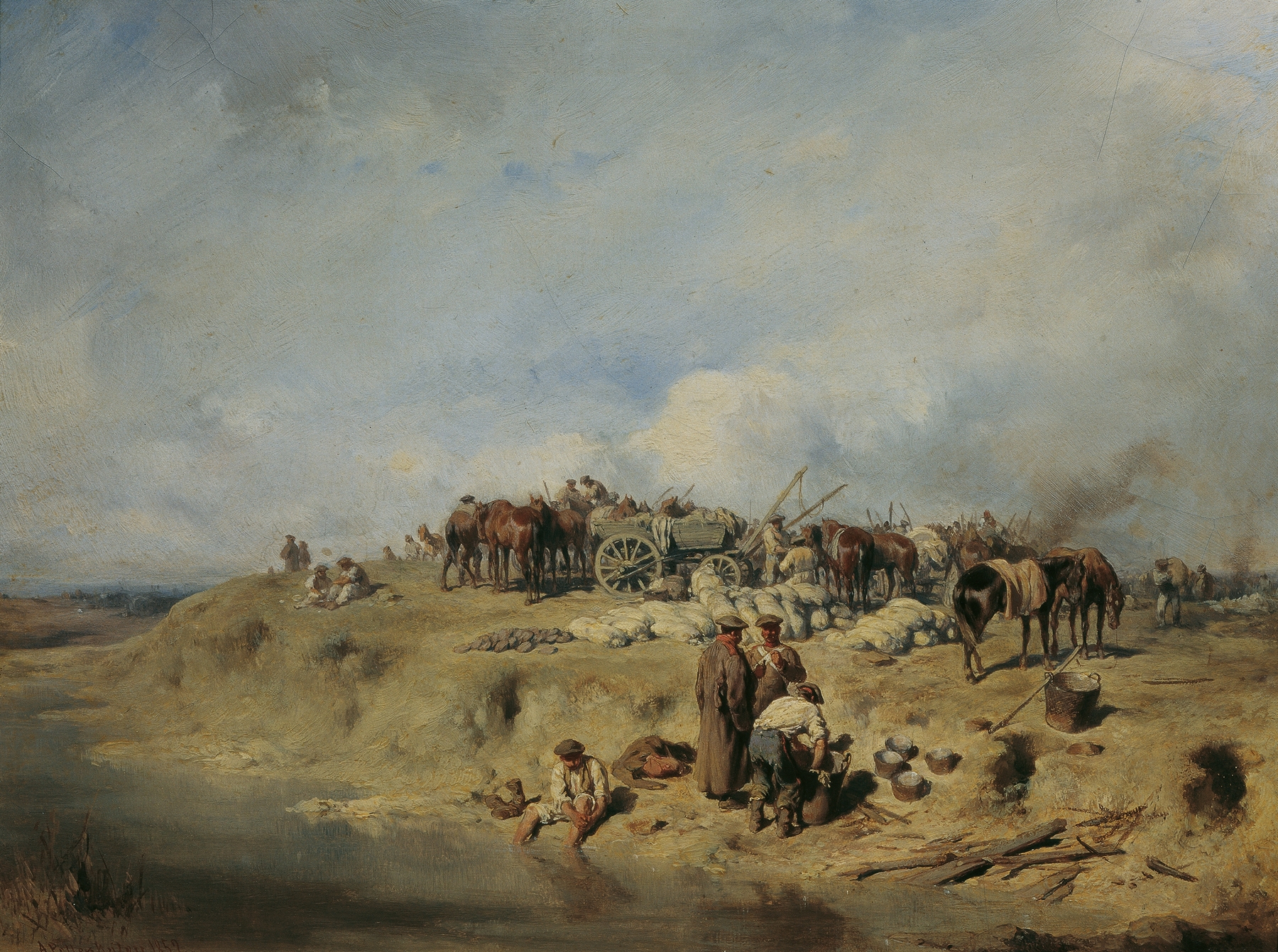
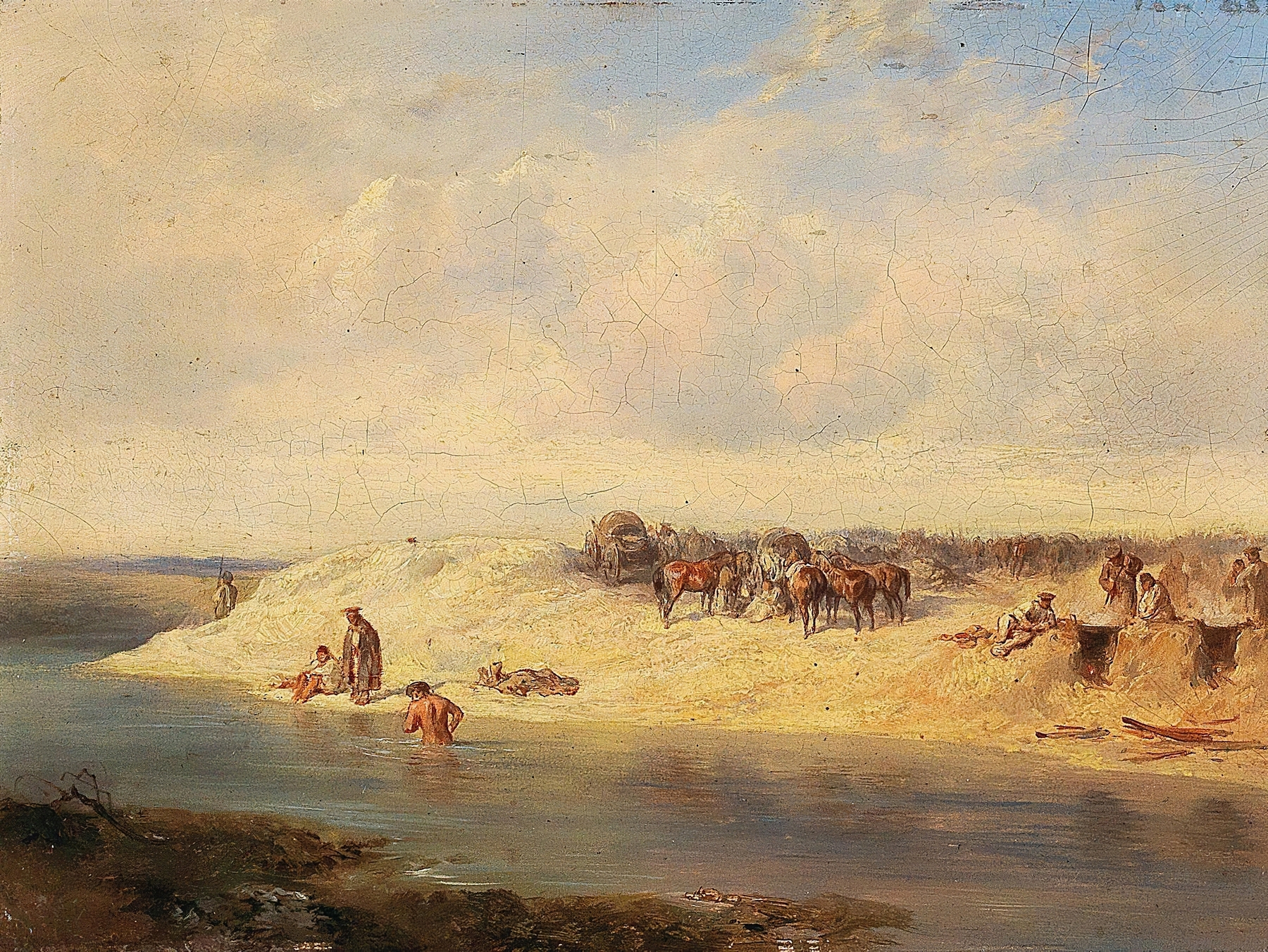
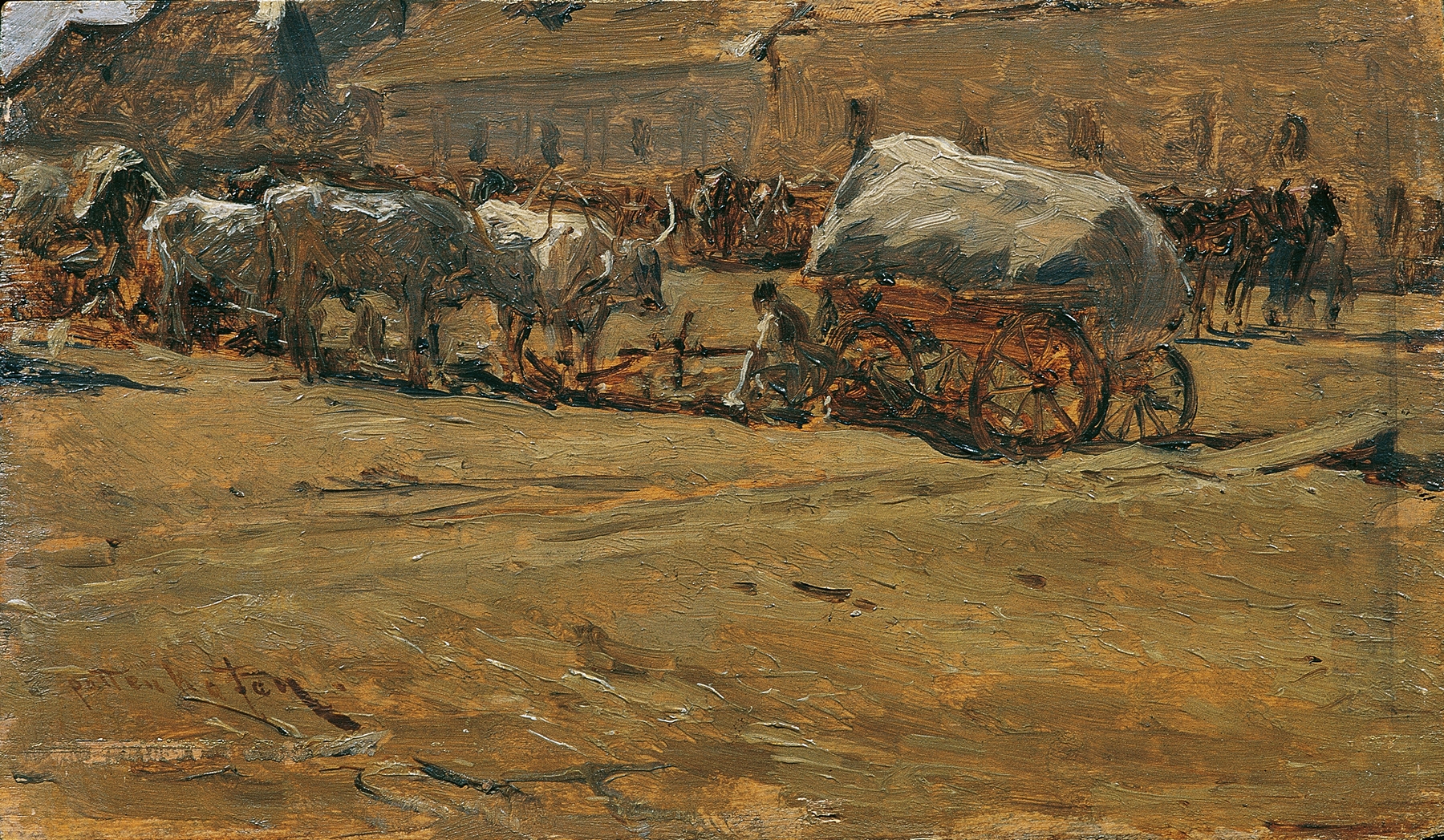
Notice how the blue umbrellas punctuate the canvas, casting a cool shade over the scene and inviting the eye to explore the warm, earthy tones of the marketplace below. The brushwork is dynamic, a testament to the artist's skill in capturing movement, while the careful layering of color creates a sense of depth that pulls you into this vibrant world. The contrast between the lively interactions of the marketgoers and the solitary figure seated to the left hints at deeper narratives of connection and isolation. Each face tells a story, inviting viewers to ponder the lives behind the painted smiles and furrowed brows, perhaps reflecting the broader social changes sweeping through Europe at the time.
The soft interplay of light and shadow creates a moment frozen in time, where each glance and gesture speaks to the transient nature of beauty in an uncertain world. In 1874, during a time of political and social upheaval, August von Pettenkofen painted this work as part of his exploration of everyday life and culture in Austria. Living in Vienna, he was immersed in a world where tradition often clashed with modernity, and his artistic focus on the common man reveals a deep appreciation for the moments that define human experience, both fleeting and eternal.