Ungarische Ochsengespanne — History & Analysis
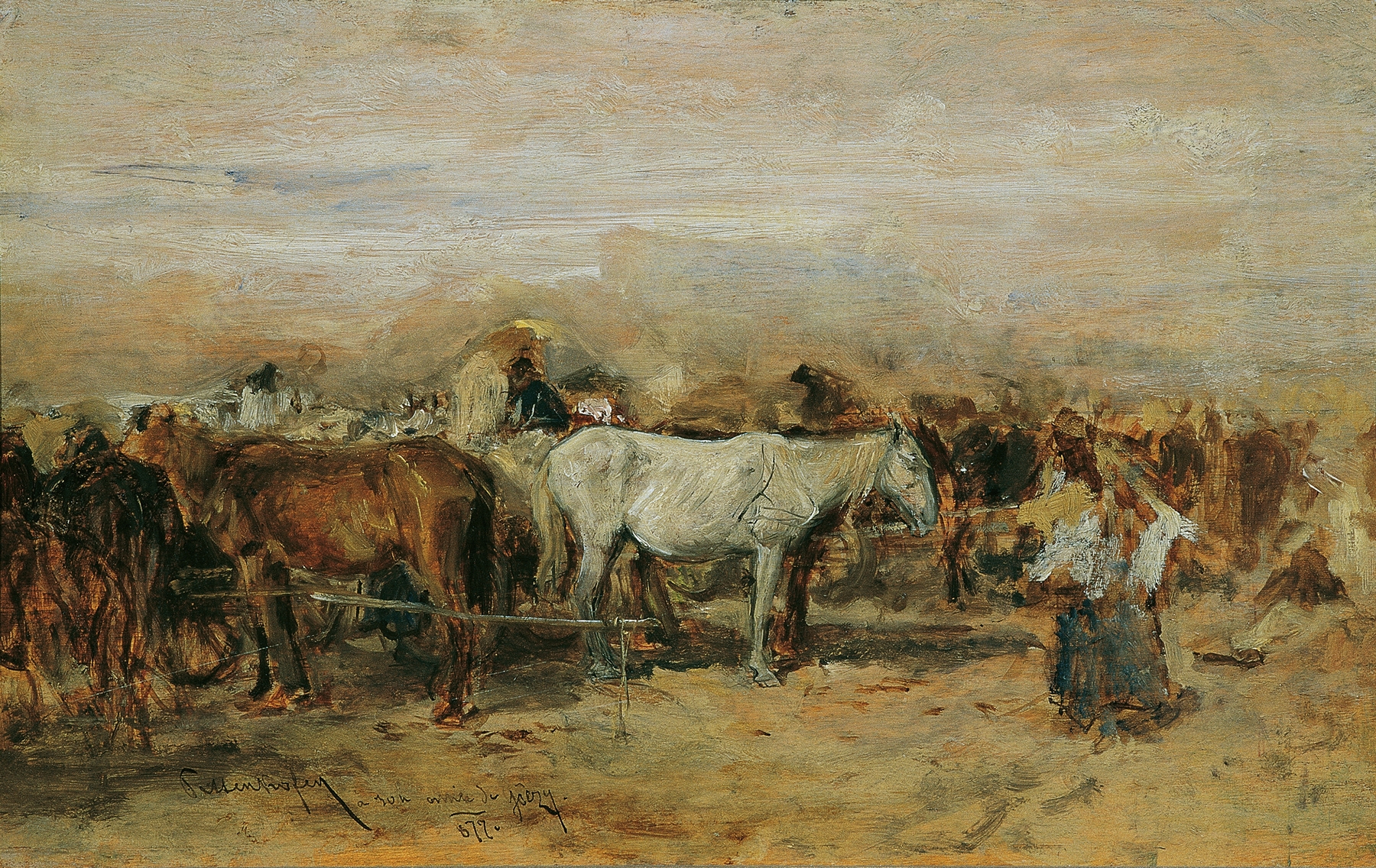
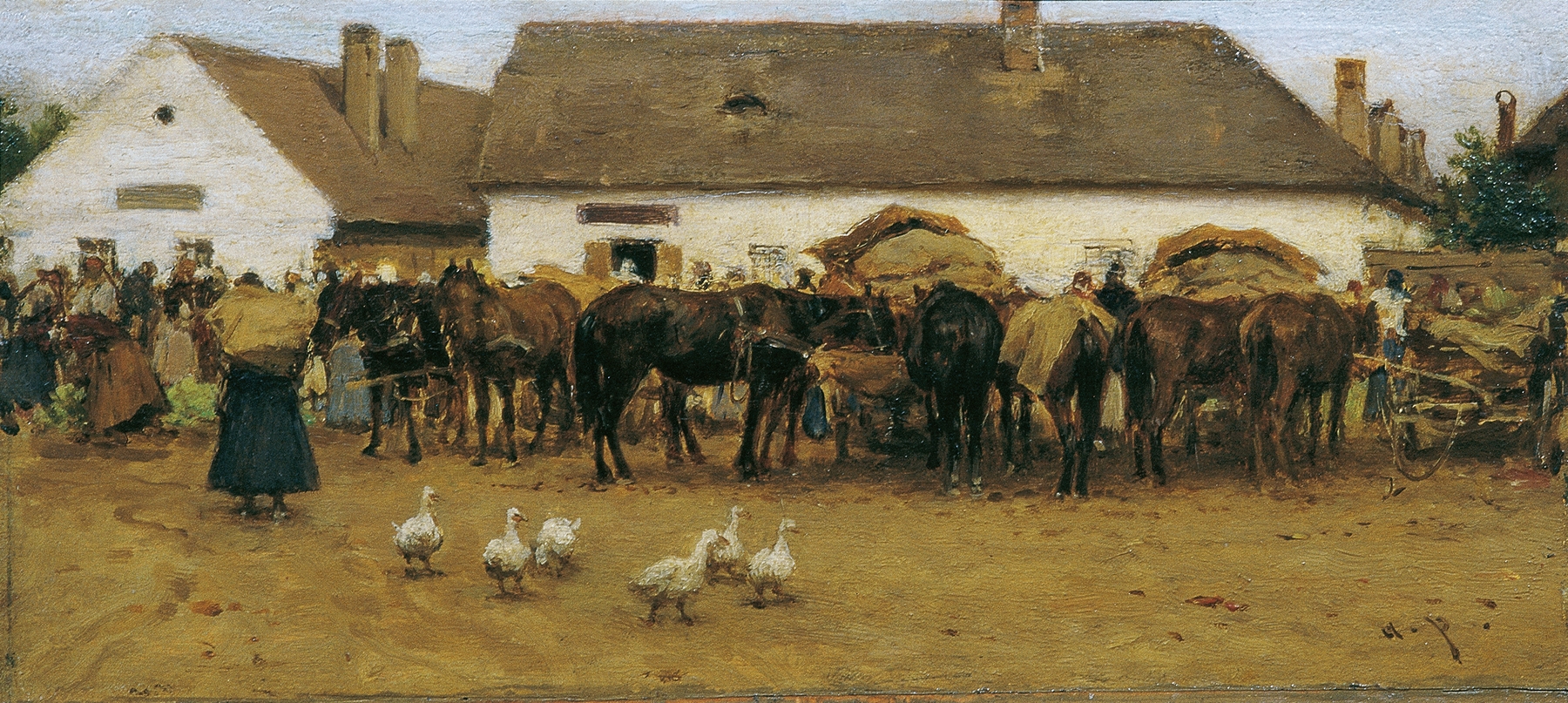
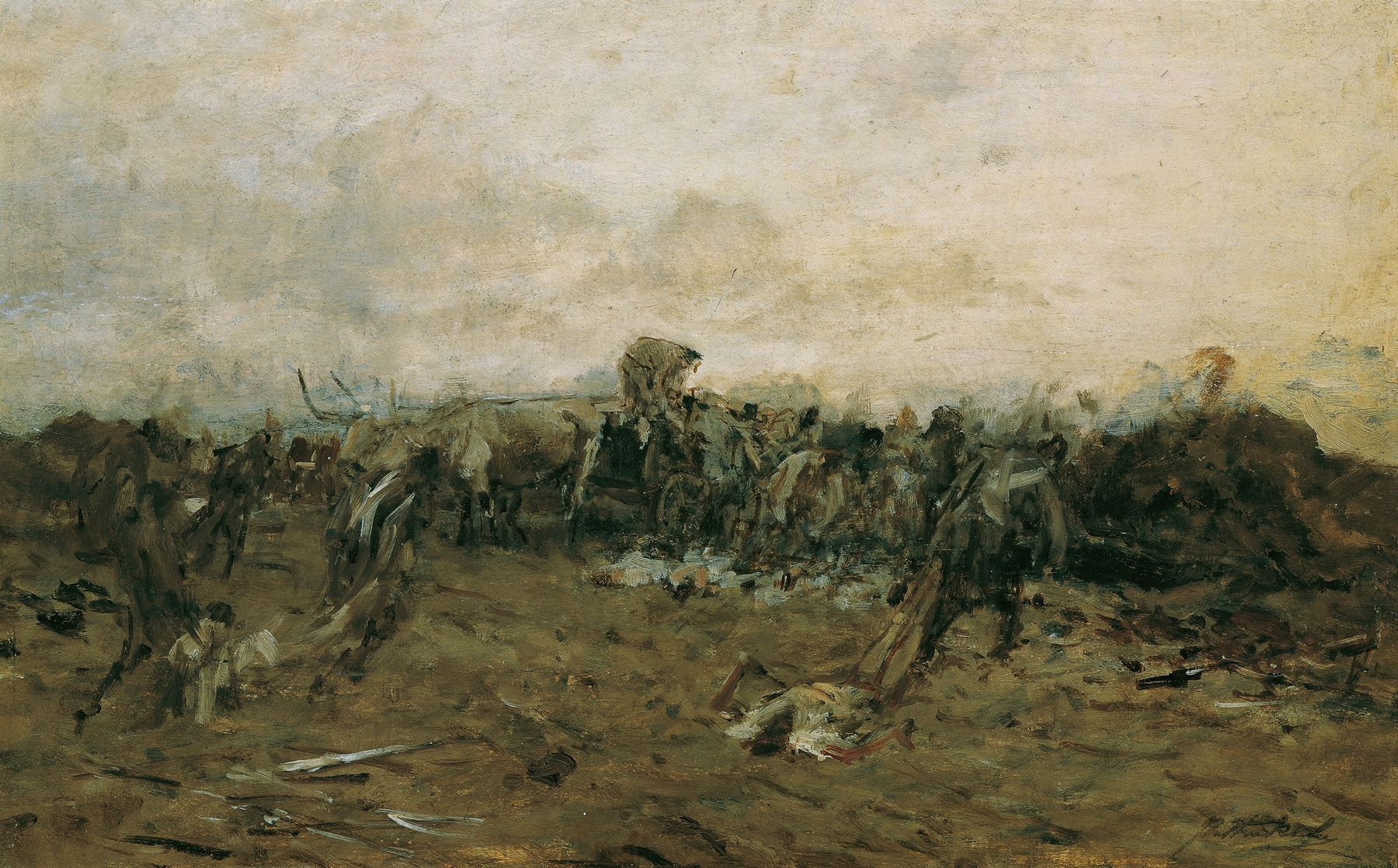
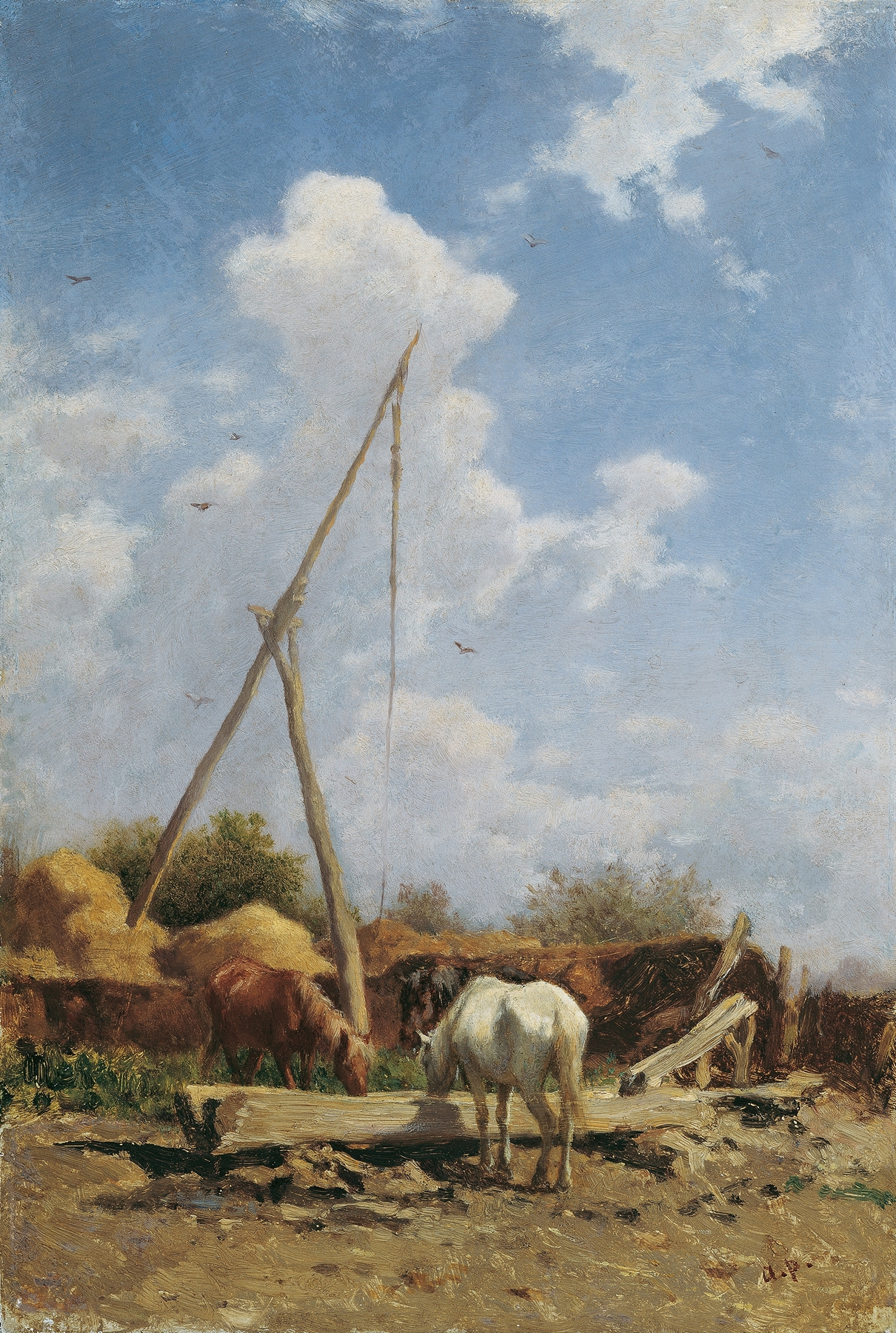
Who listens when art speaks of silence? In Ungarische Ochsengespanne, time stands still, captured in a moment of solemnity and purpose. Focus on the foreground, where oxen, tethered yet resolute, embody the weight of labor and tradition. The earthy tones of their hides contrast against the dusty road, leading the eye toward the horizon, where muted sunlight breaks through a veil of soft clouds.
Notice how the artist’s brushwork captures the texture of the animals and the landscape, imbuing the scene with a tactile reality that invites touch, even as it suggests an unyielding passage of time. Delve deeper into the scene, and the emotional complexities emerge. The oxen, though majestic, convey a sense of quiet resignation, hinting at the burdens they bear, not just as beasts of burden but as symbols of a vanishing agrarian lifestyle. The gentle curve of the road suggests journey and endurance, while the hazy sky looms, perhaps foretelling change—both environmental and societal.
The painting speaks to the tension between nature, labor, and the inexorable march of progress. Created in 1874, this piece reflects August von Pettenkofen’s deep connection to rural life and his interest in capturing the zeitgeist of his time. Working in Vienna during a period of significant industrial change, he sought to preserve the dignity of traditional livelihoods amidst an evolving world. This artwork stands as a testament to the resilience of the past, echoing the silent stories of those who came before.