Vier heksen — History & Analysis
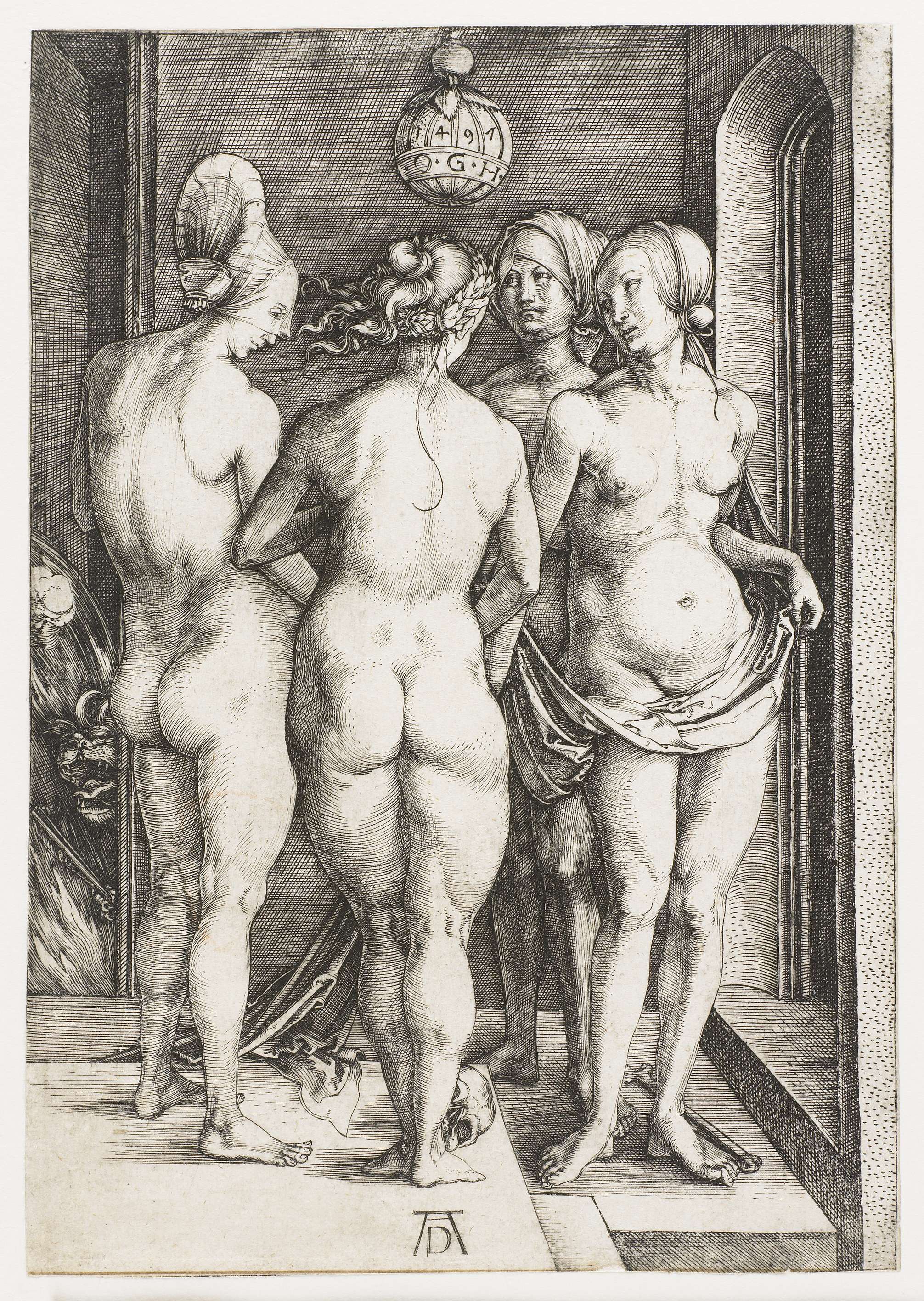
Could a single brushstroke hold eternity? In Vier heksen, the intertwining figures of witches evoke a haunting sense of madness that lingers beyond the canvas. Their gnarled hands and twisted bodies reflect not just a moment but the pervasive fear and obsession that defined their time, inviting viewers to explore the darker corners of humanity. Look to the center where the figures converge, their expressions a blend of wickedness and allure. Notice how Dürer expertly contrasts the starkness of the witches' pale skin with the rich, deep tones of the surrounding landscape.
The use of chiaroscuro enhances the drama, casting elongated shadows that suggest both danger and seduction. Every stroke emphasizes their chaotic energy, drawing the eye to the intimate yet eerie camaraderie shared among them. Beneath this surface lies a profound commentary on society and superstition. The flickering light dances upon the edges of their wild hair, symbolizing the thin line between sanity and madness. The grotesque features reveal not only the fear of the unknown but also the power dynamics of the time—how women were often scapegoated and demonized.
This exploration of societal fears intertwines with elements of the grotesque, creating a tension that resonates throughout the piece. In 1497, Dürer was in the midst of his artistic ascent, deeply engaged in the study of human anatomy and nature. Living in Nuremberg, a hub of artistic innovation, he was surrounded by the burgeoning Renaissance ideas that sought to reconcile faith and reason. The painting mirrors the societal anxieties of his era, where witch hunts proliferated, reflecting a tumultuous world caught in the throes of transformation and paranoia.