View from Bærum — History & Analysis
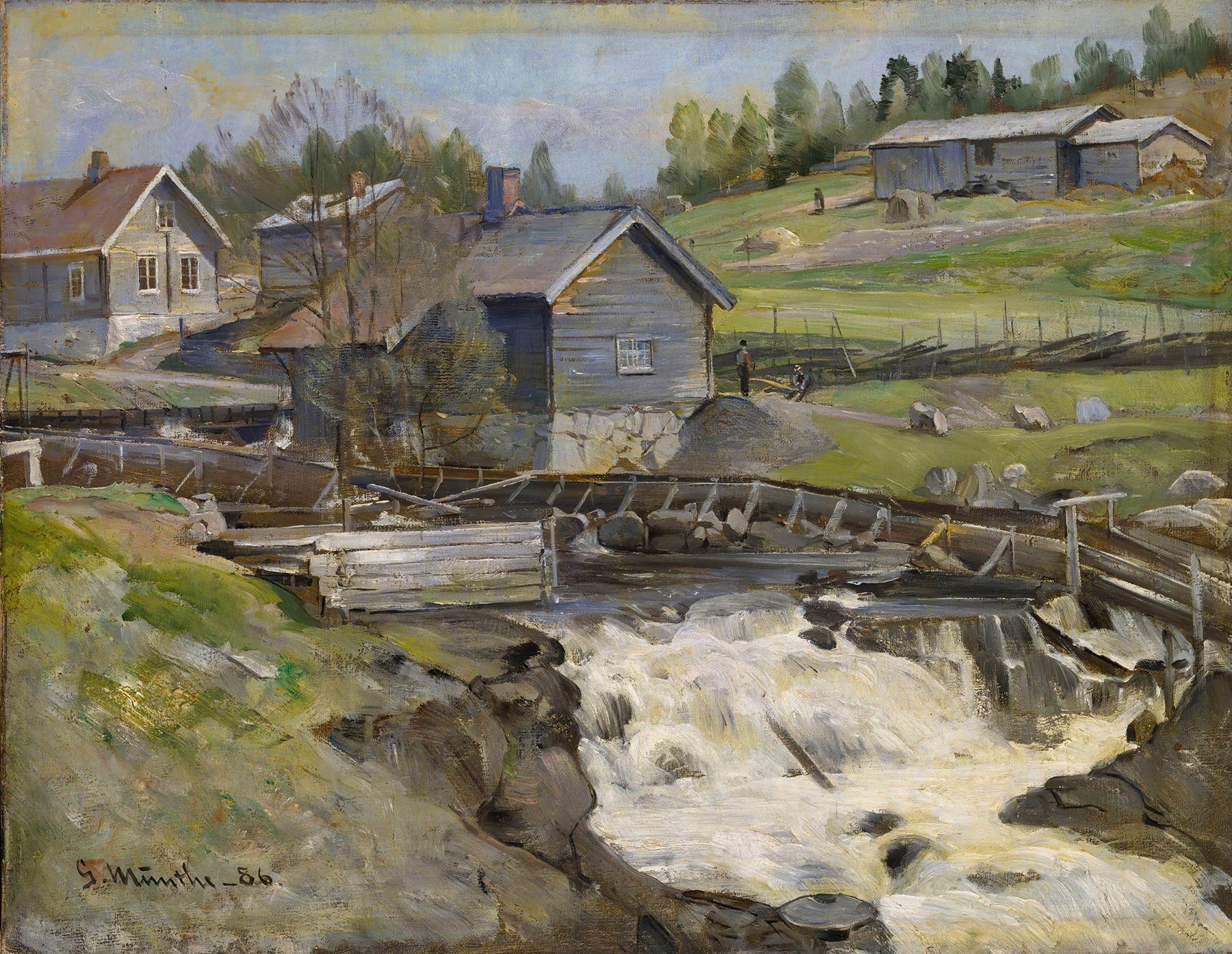
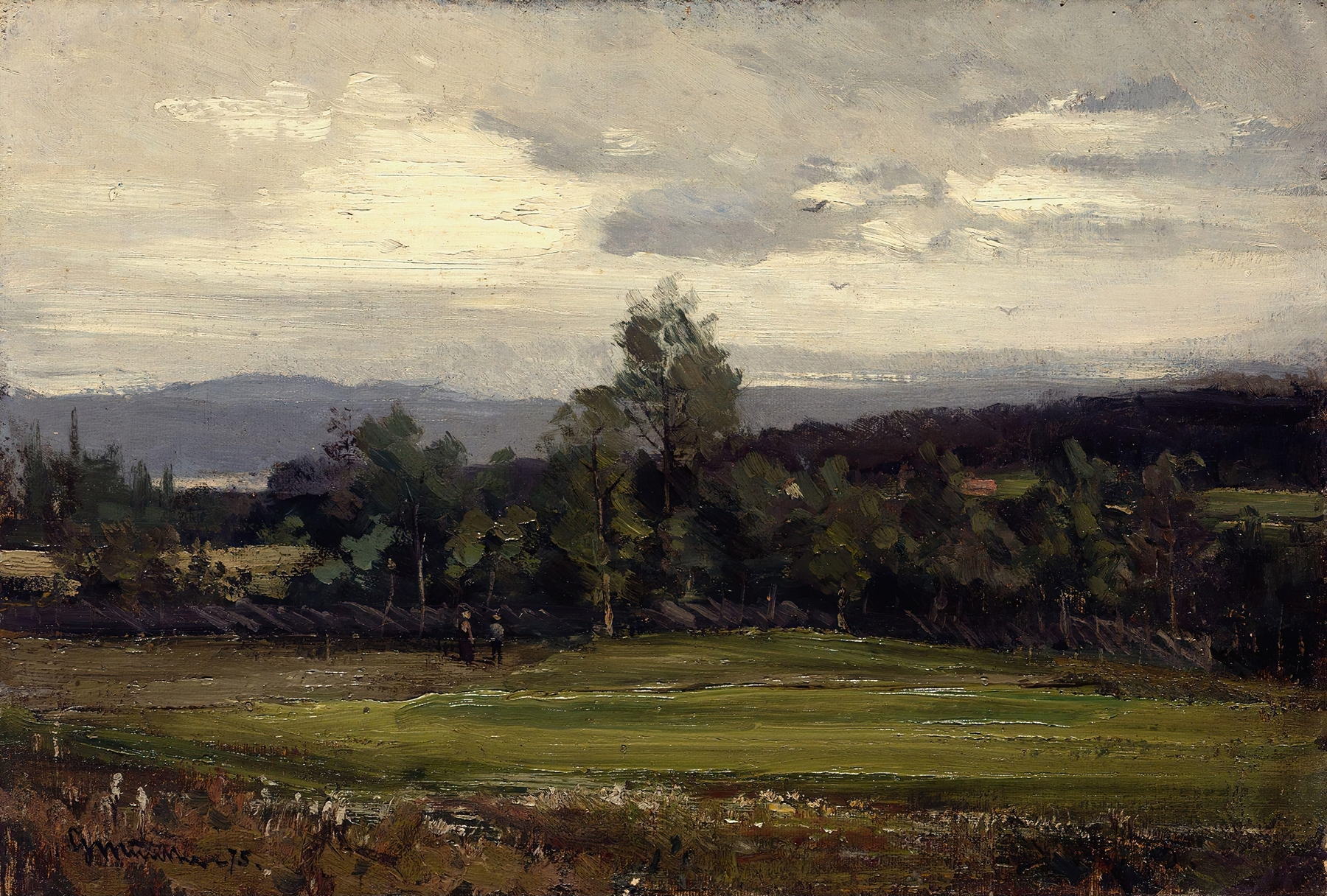
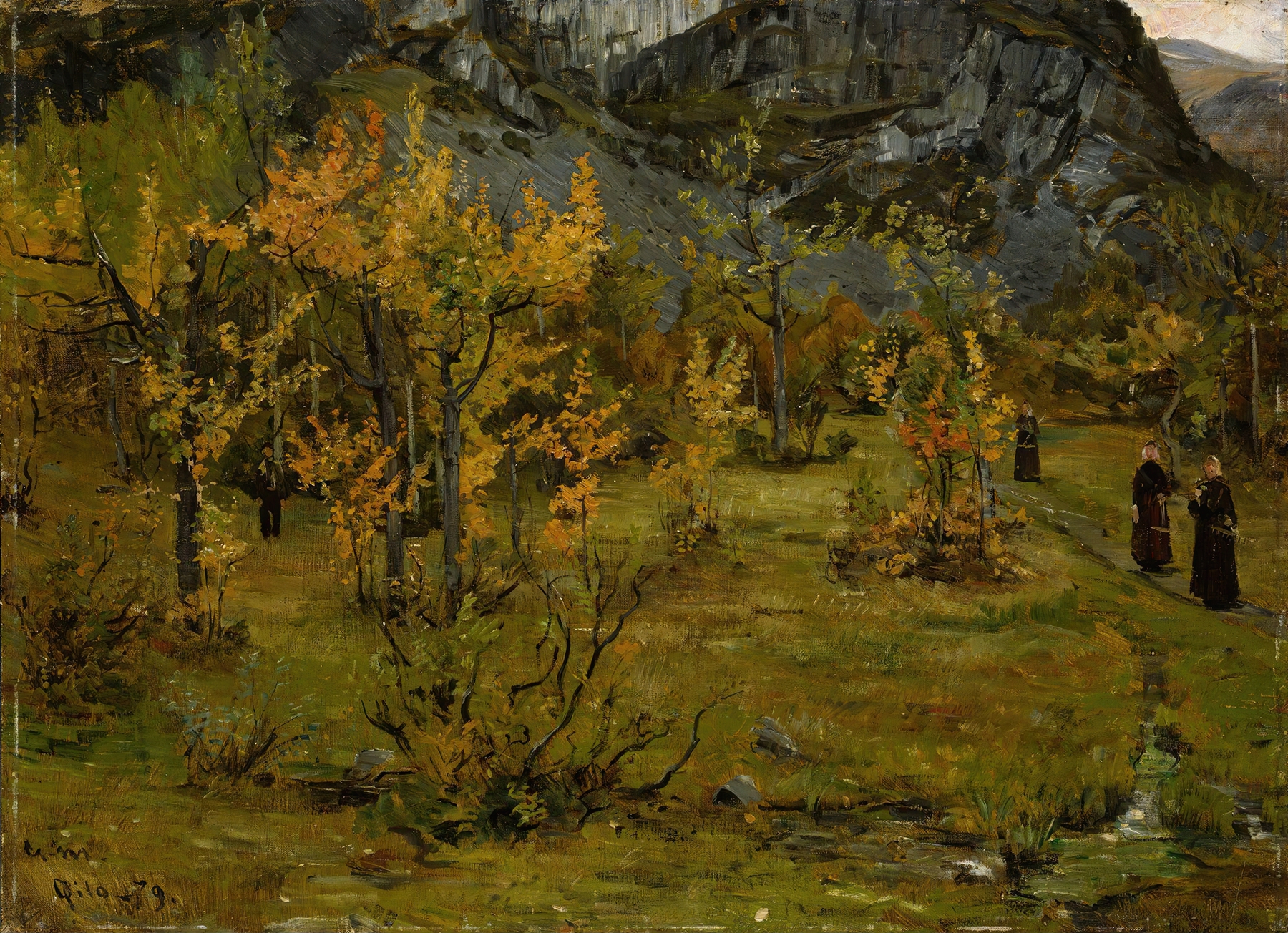
What secret hides in the quiet of the canvas? As rays of soft sunlight gently embrace the undulating hills, a serene beauty emerges, inviting contemplation and connection to something divine. Look to the left at the tranquil waters, reflecting an azure sky, where delicate brushstrokes suggest ripples that seem to dance with an unspoken grace. Notice how the lush greens of the landscape contrast with the subtle earth tones of the distant hills, creating a balance that grounds the ethereal quality of the scene.
The composition leads the eye across the horizon, whispering promises of distant adventures while mirroring the stillness of the foreground. Delve deeper into the painting, and you will find an interplay of solitude and divinity. The expansive landscape captures a fleeting moment, symbolizing a harmony between man and nature, where silence speaks louder than words. The soft hues convey a sense of tranquility, yet the rising hills suggest an elevation of the spirit, an invitation to contemplate one's place in the vastness of existence.
Each brushstroke echoes the unyielding connection to nature, evoking emotions of reverence and humility. In 1886, during his time in Norway, Gerhard Munthe created View from Bærum amidst a burgeoning appreciation for the Norwegian landscape in art. At this moment, the Symbolist movement was gaining momentum, encouraging artists to explore emotional depth and the spiritual essence of their subjects. Munthe's work reflects these currents, as he sought to capture the sublime beauty of his surroundings while seeking a deeper understanding of life’s mysteries through art.