View from Vågå — History & Analysis
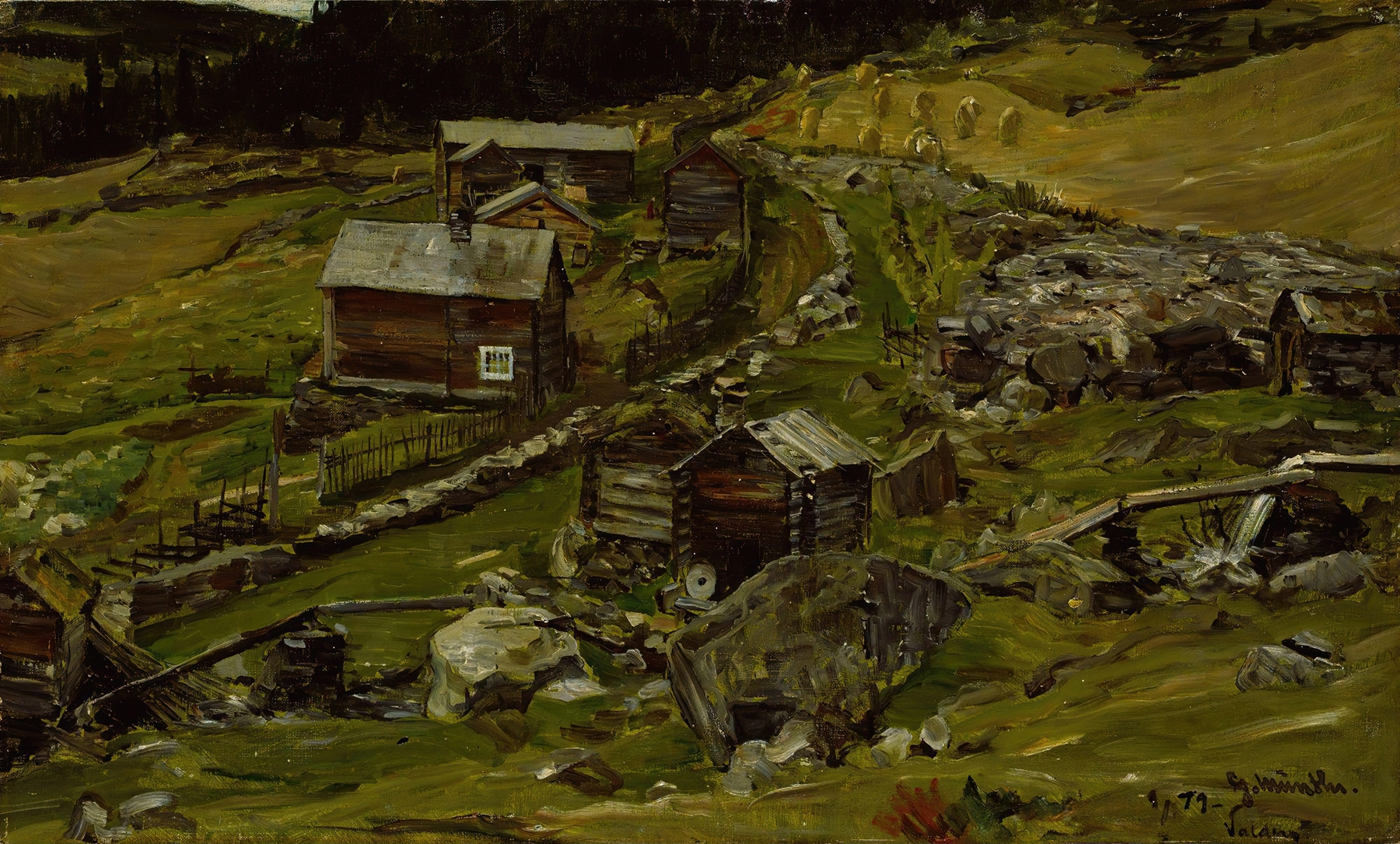
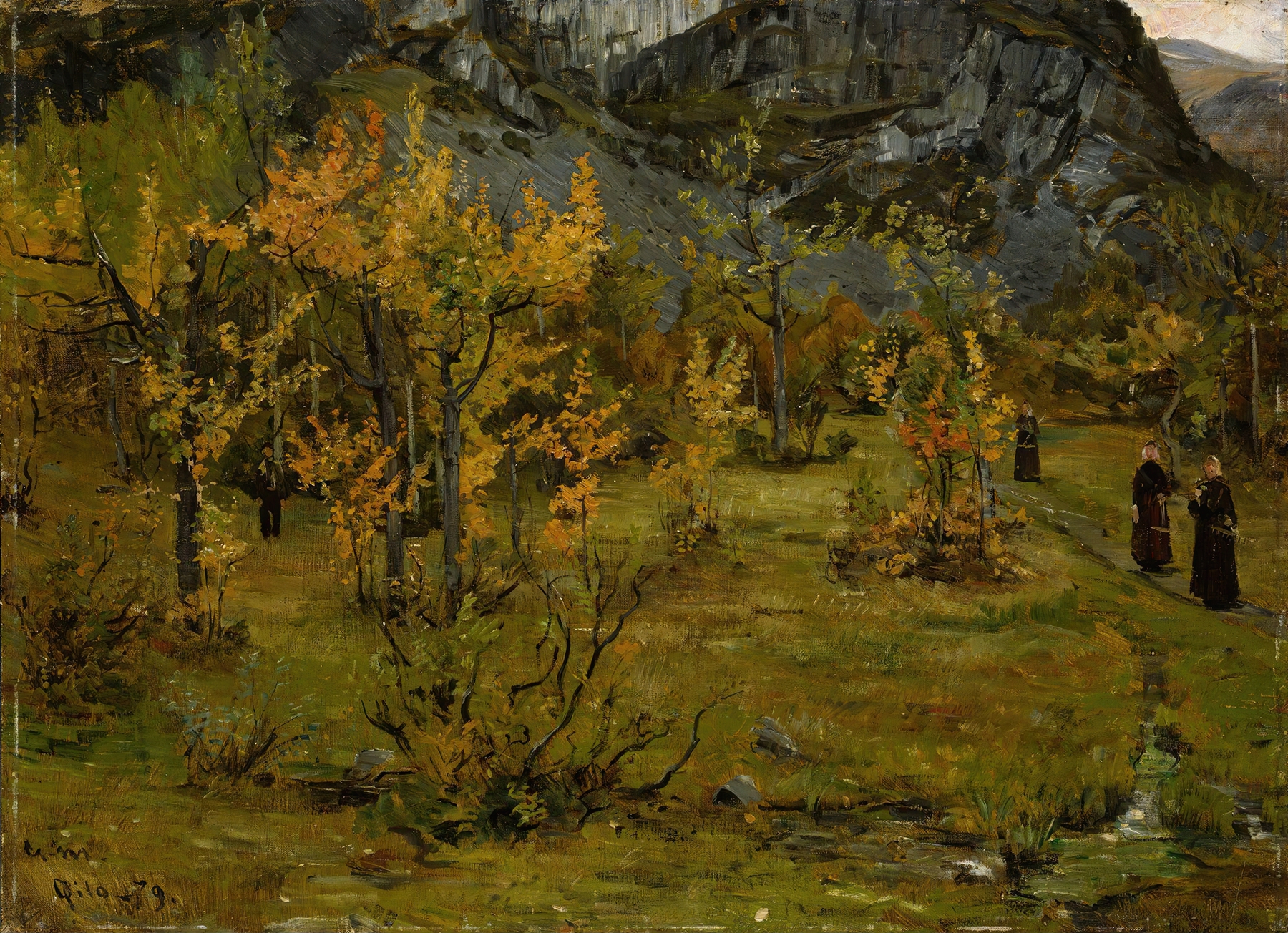
What if beauty was never meant to be finished? The lingering shadows in Gerhard Munthe's View from Vågå evoke this question, inviting introspection about the transient nature of life and art. Look to the left, where the dark silhouette of a mountain looms, its jagged edges contrasting sharply with the soft, gentle hues of the sky above. The colors blend seamlessly, transitioning from deep indigo to warm coral, as if the heavens themselves sway from day to night.
Notice how the light dances across the surface of the lake, reflecting both the landscape and the fleeting moment of twilight, creating a bridge between the tangible world and the ethereal. Within this serene vista lies a profound tension: the tranquil beauty of nature against the stark, imposing shadows of the mountains. The interplay of light and dark suggests a dialogue between hope and despair, evoking emotions that linger beyond the canvas. Each brushstroke hints at the impermanence of the scene, inviting the observer to contemplate the ephemeral nature of beauty and the solace found in the embrace of shadow.
Munthe painted View from Vågå between 1905 and 1906, during a time of personal and artistic exploration. Living in Norway, his work reflected a deep connection to his homeland's landscapes while also engaging with the broader Symbolist movement sweeping through Europe. This period marked a transformation in his style, as he sought to capture not only the visual essence but also the emotional resonance of the natural world.