View of Antwerp with Frozen Schelde — History & Analysis
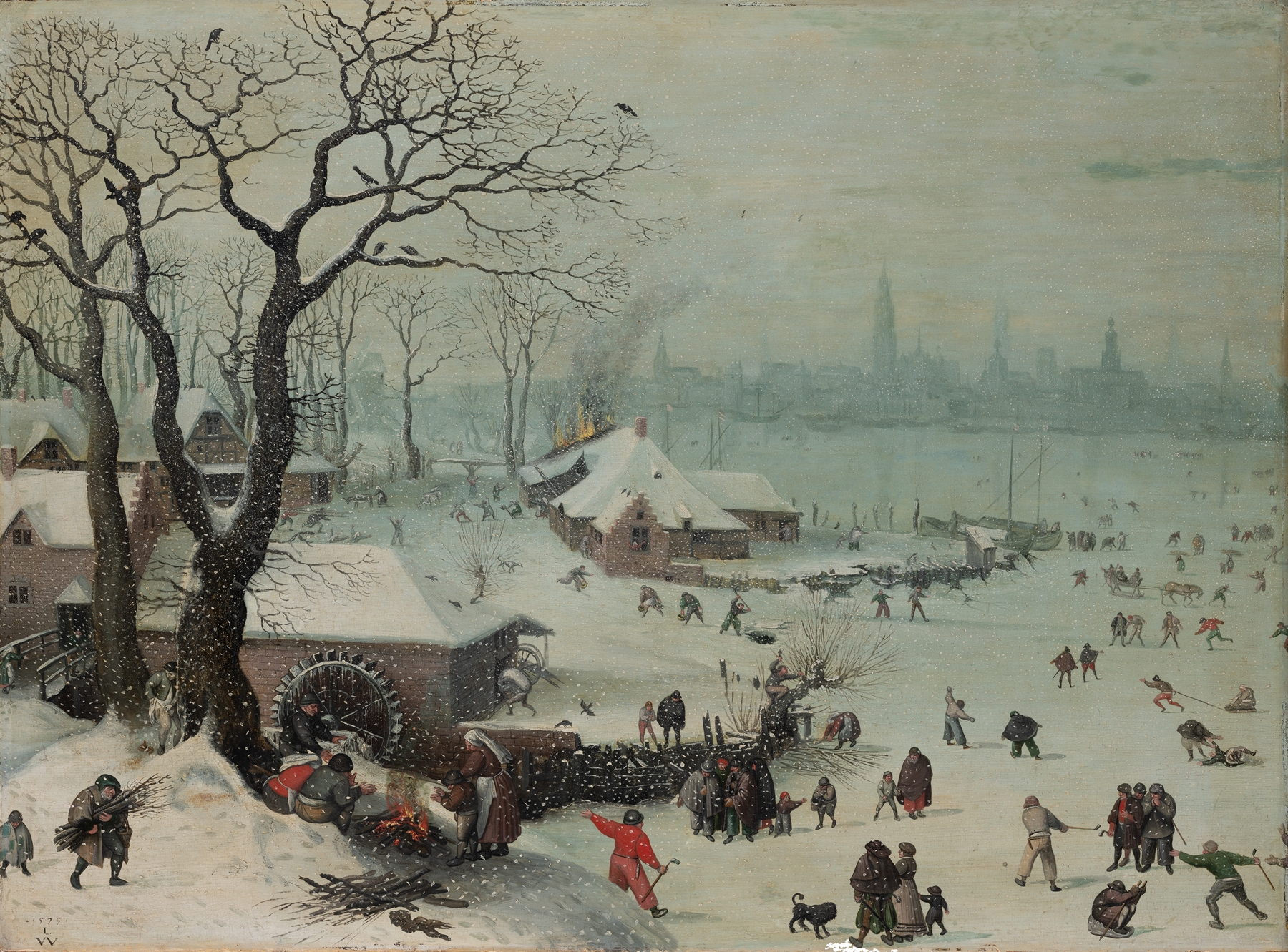
What secret hides in the quiet of the canvas? Beneath the serene veneer of a winter landscape lies a deep chaos, an unsettling tension captured in the stillness of the moment. Focus on the far left, where the silhouettes of the cityscape rise against a pale blue sky, each spire and dome emerging from the distances with grandiosity. Notice how the brilliant white of the snow blankets the scene, contrasting sharply with the muted earth tones of the buildings.
The subdued colors invite contemplation, while the crisp lines of the frozen river guide the eye toward the heart of Antwerp. Each brushstroke reveals not only the beauty of winter but also the hollowness that lingers in the cold air. In the interactions between figures on the ice and the distant city, a dichotomy unfolds: the vibrant life of the people juxtaposed against the desolation of the season. The figures, though animated, are dwarfed by their surroundings, hinting at a madness within the tranquility, a yearning for connection amidst isolation.
The frozen river, a metaphor for stagnation, captures this struggle between movement and stillness, echoing the deeper anxieties of the time. Lucas van Valckenborch painted this work in 1593 while in Antwerp, a bustling hub of commerce and culture. This period saw the clash of societal turbulence and artistic exploration, with many artists grappling with themes of duality and human experience. The duality of serenity and madness that permeates his landscape reflects the broader context of a world on the brink of change, where beauty and chaos coexist.