View of Boston Harbor from Dorchester Heights — History & Analysis
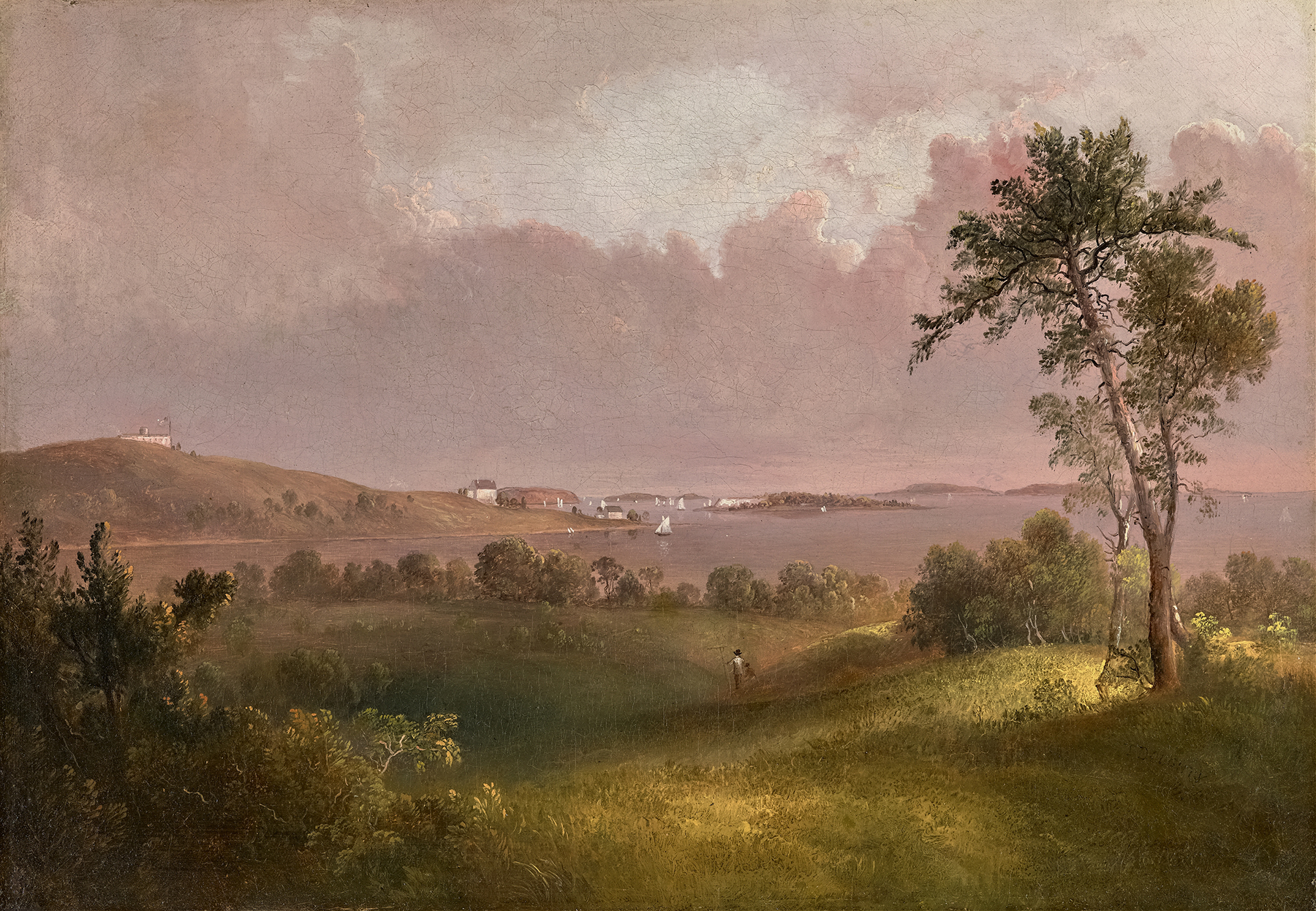
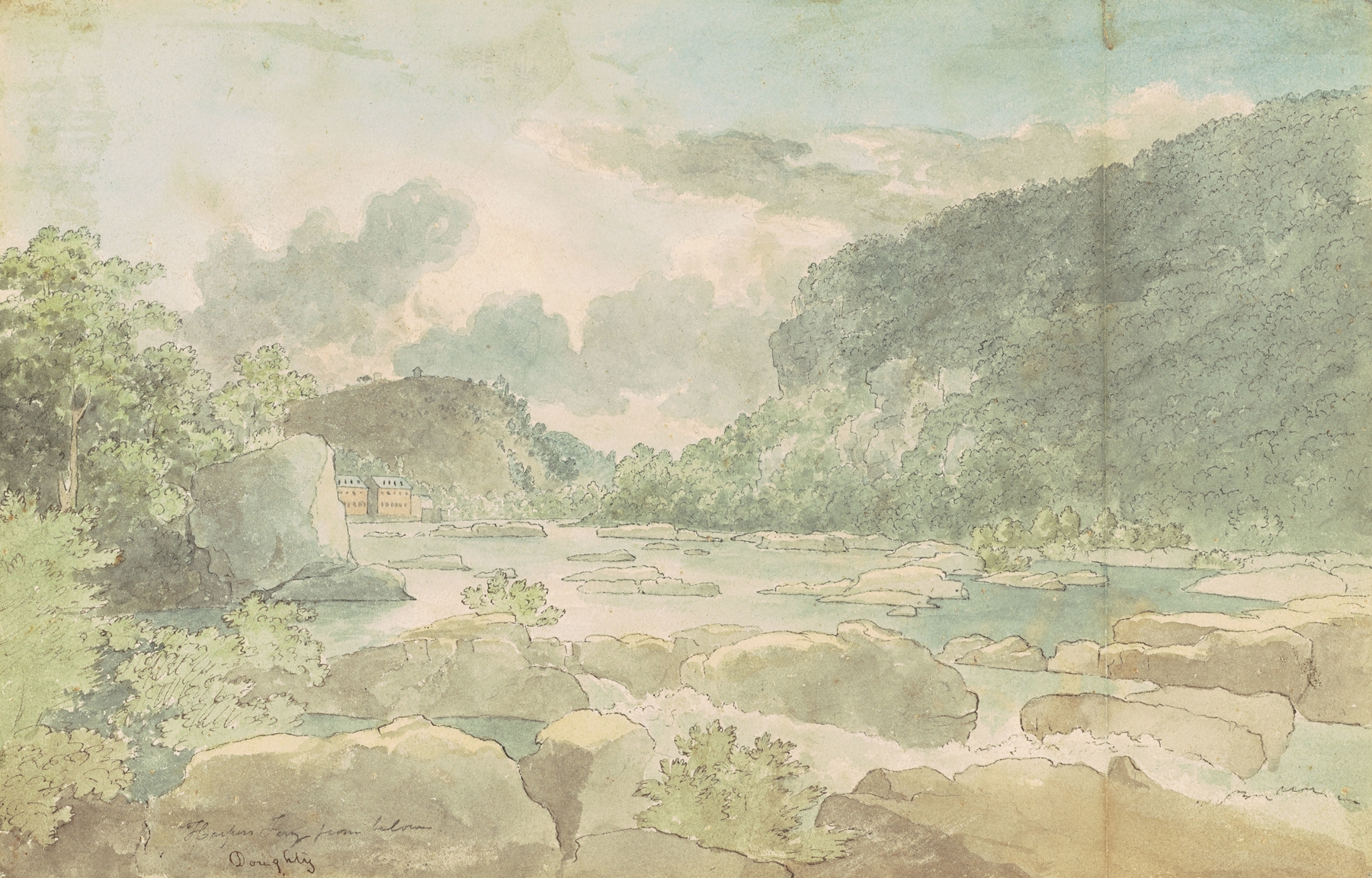
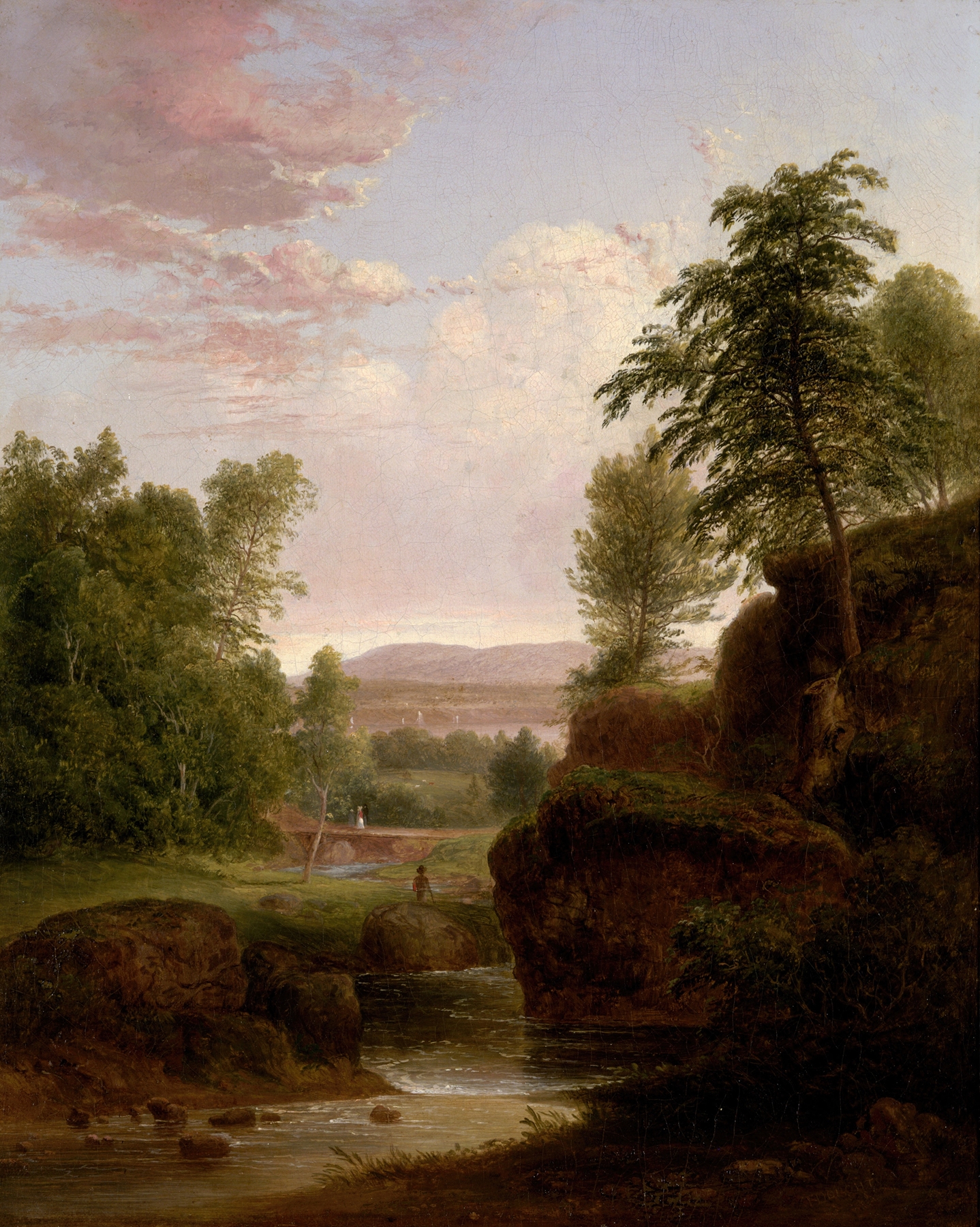
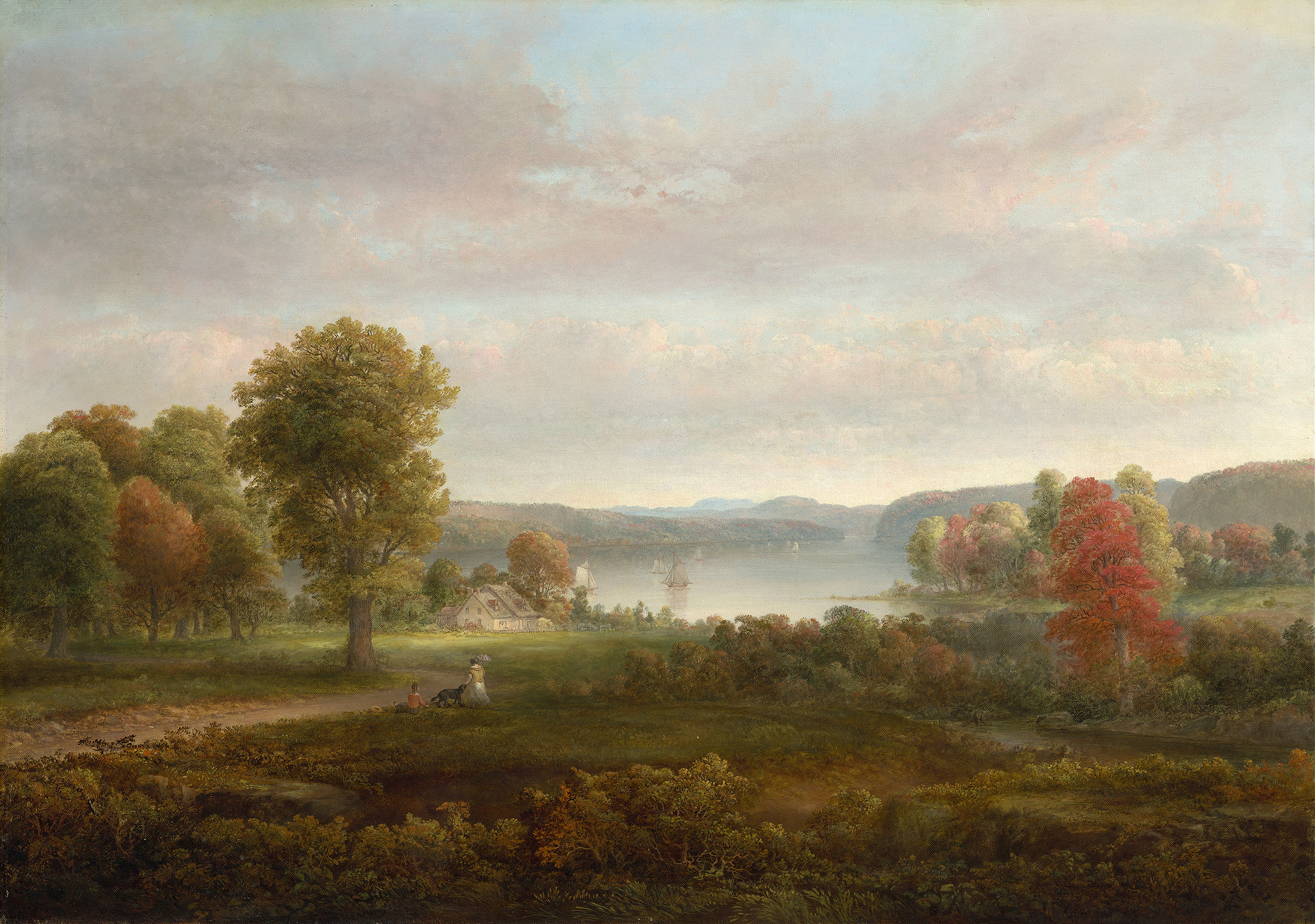
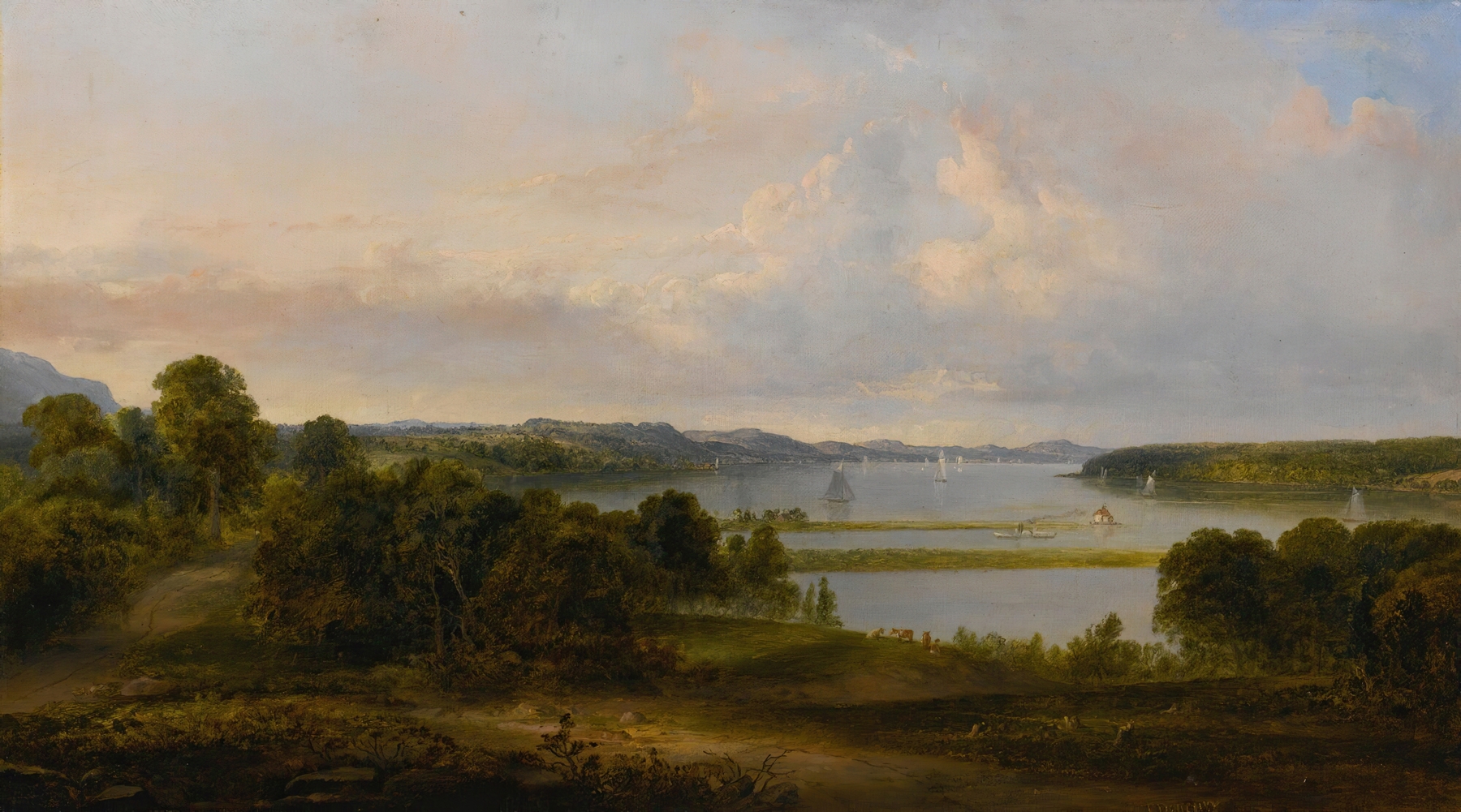
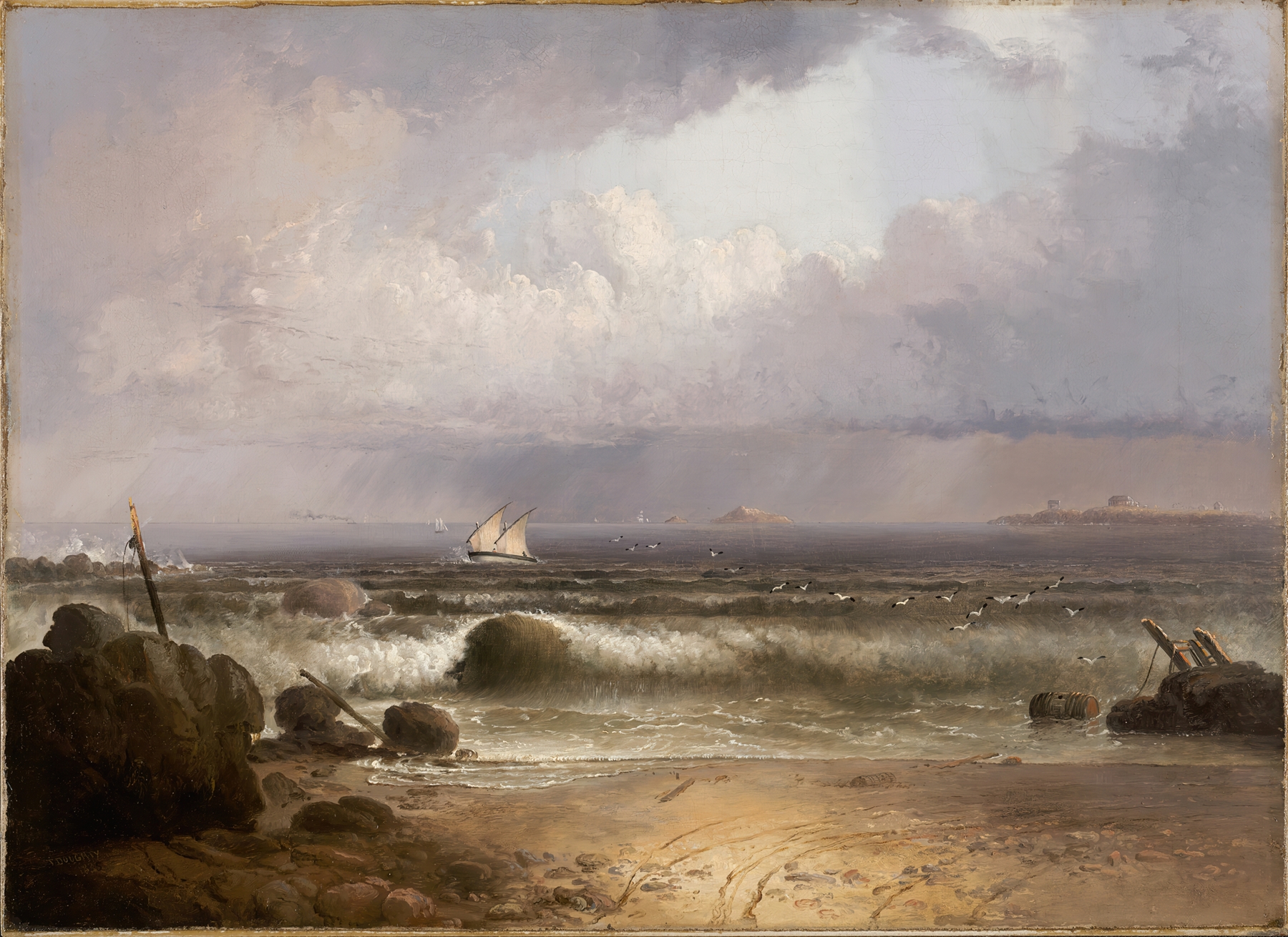
What if silence could speak through light? In Thomas Doughty's View of Boston Harbor from Dorchester Heights, the colors whisper tales of tranquility and reflection, inviting the viewer into a world suspended between day and dusk. Look to the horizon, where the soft gradient of blues and golds blends seamlessly, capturing the gentle ebb of twilight. The sky, a canvas of warm oranges and cool blues, draws your gaze upward, while below, the calm waters mirror this splendid display, creating a sense of unity.
Notice how the brushstrokes vary in intensity; the delicate touch on the clouds contrasts with the more deliberate strokes that define the distant ships, emphasizing their presence against the vast expanse of the harbor. Within this serene landscape, tensions arise between nature's stillness and the industrious pulse of the city beyond. The juxtaposition of the peaceful foreground with the distant silhouettes of buildings suggests a world on the brink of change—a moment of quiet before the bustling chaos of urban life. Each element, from the gently rolling hills to the distant skyline, embodies a dialogue between the natural and the man-made, prompting contemplation about progress and preservation.
Painted in 1843, Doughty created this piece during a period of growing industrialization in America, particularly in Boston. As an artist who embraced the romantic ideals of the sublime, he aimed to capture the beauty of the landscape while also reflecting societal transformations. This work emerged at a time when artists like him sought to evoke emotion through their depictions of nature, serving as a counterpoint to the rapid advancements of the modern world.