View of Hallstatt — History & Analysis
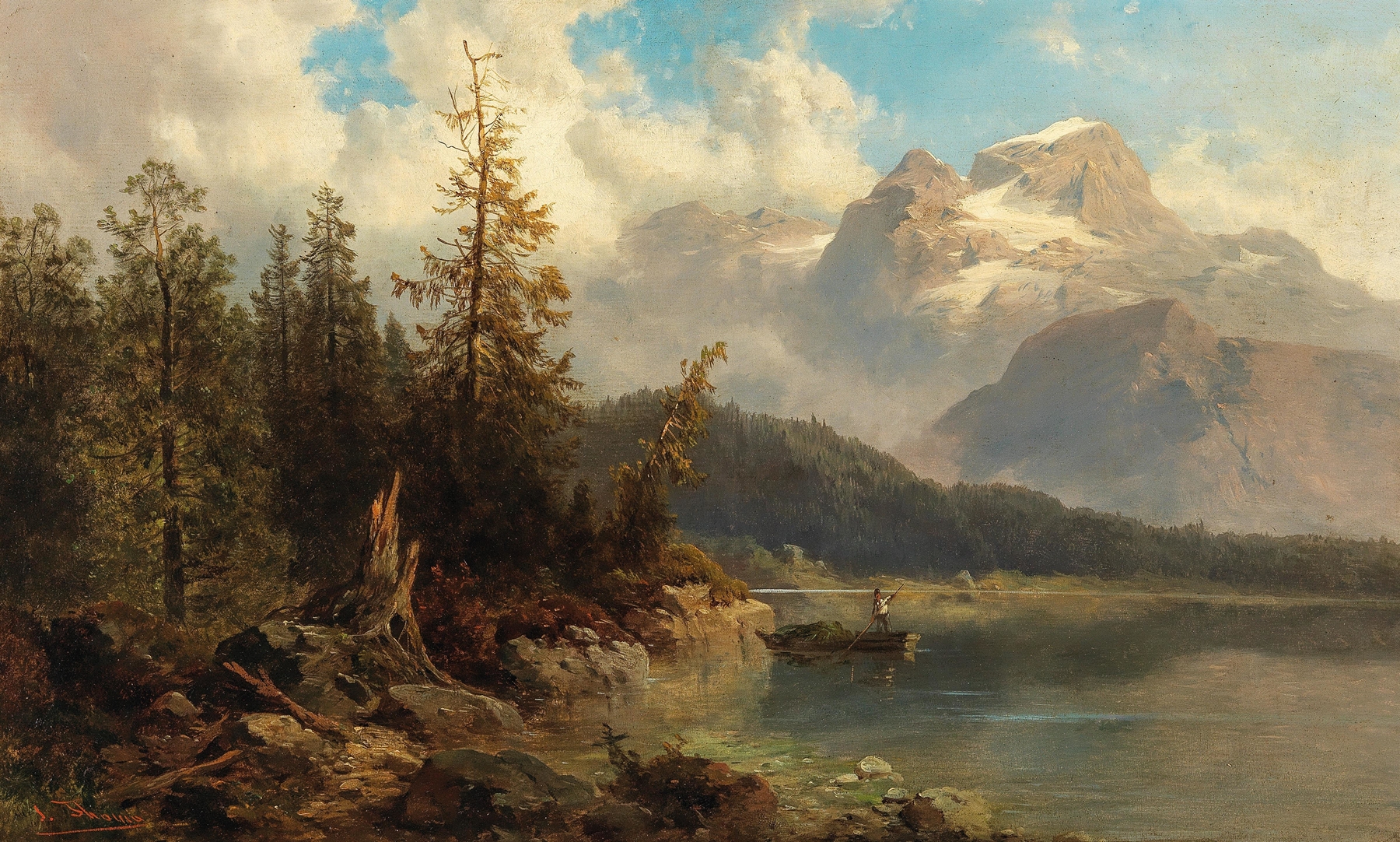
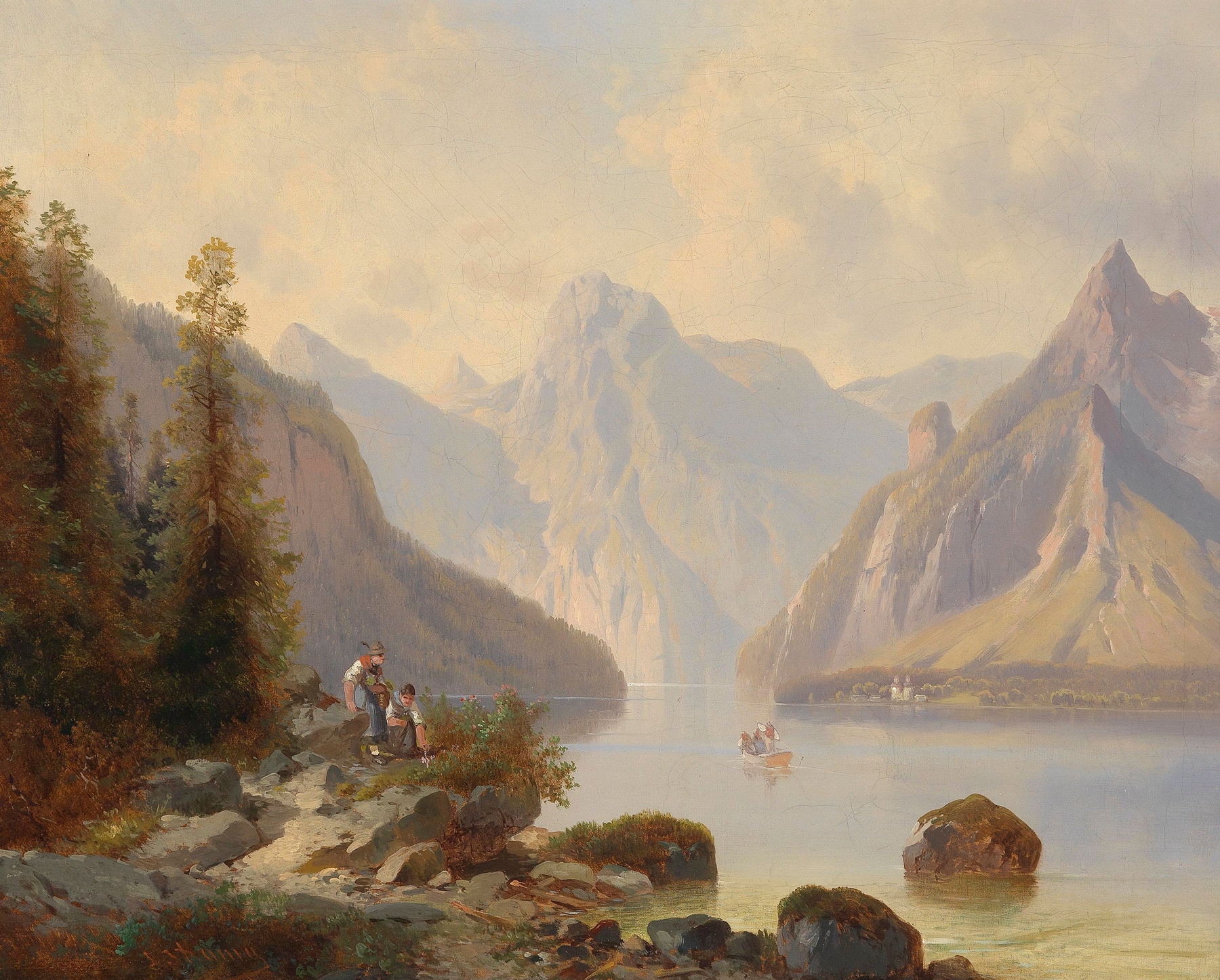
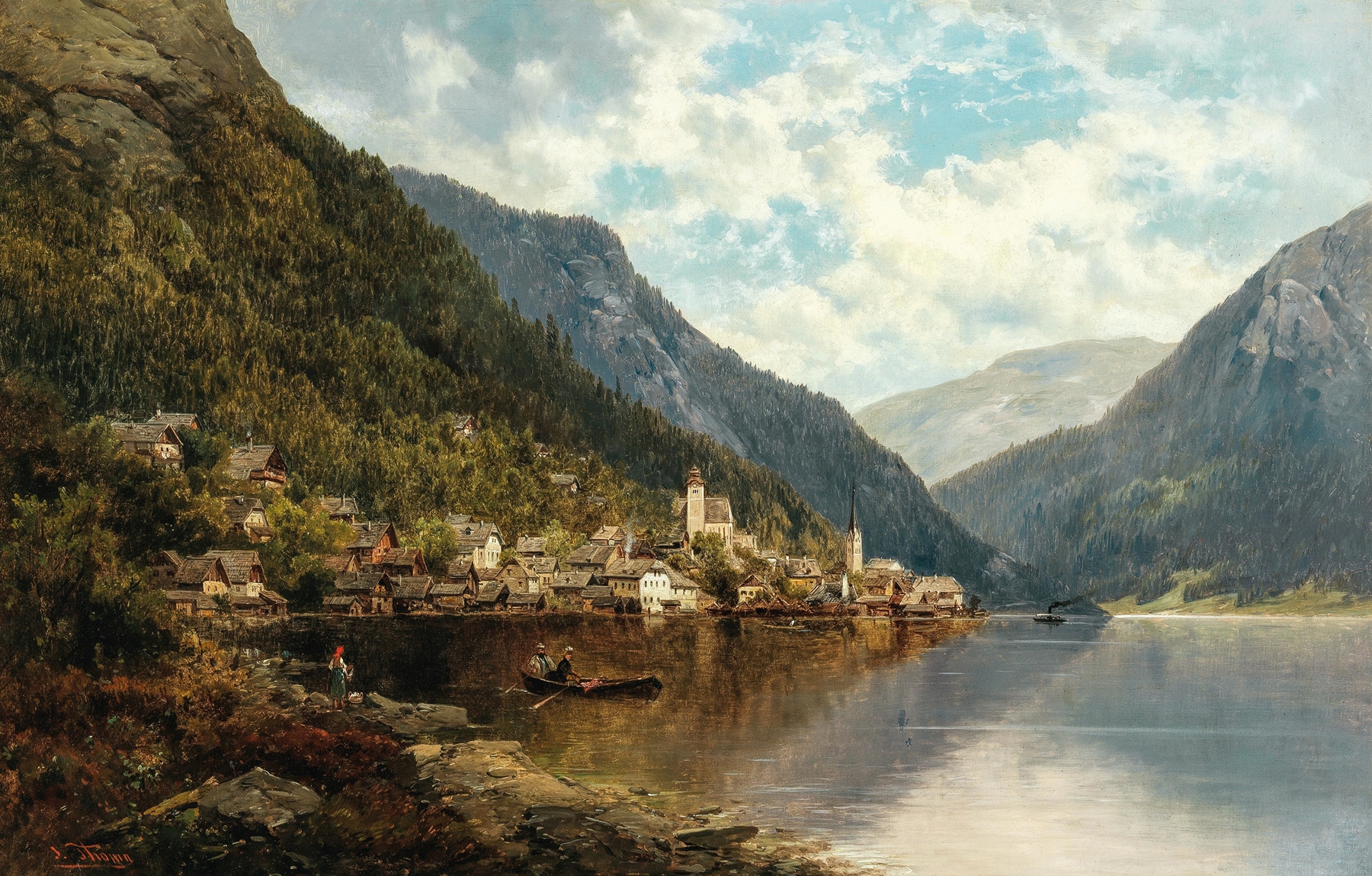
“Sometimes beauty is just pain, disguised in gold.” This notion resonates deeply within View of Hallstatt, where the ethereal landscape blurs the line between the divine and the fragile. A serene setting invites contemplation, yet whispers of the existential weight held by such breathtaking vistas linger just beneath the surface. Focus on the luminous gold and soft blues that dominate the canvas, drawing your gaze towards the tranquil lake at the center. The reflections ripple gently, suggesting an almost heavenly quality, while the surrounding mountains rise majestically, cloaked in mist.
Notice how Thoma’s brushwork captures the ethereal light, creating an aura that feels both sacred and haunting, highlighting the duality of beauty and solitude inherent in nature. Here, contrasts unfold in every brushstroke: the serene water reflects the tumultuous sky, while the craggy peaks stand as guardians over a fleeting moment. The delicate balance captured within this scene speaks to the ephemeral nature of life and the divine, yet it is tinged with a melancholy that suggests deeper stories of loss and longing. Each detail—whether the soft curve of the hills or the shimmering light—holds echoes of human experience, inviting the viewer to ponder their own connection to the world.
Josef Thoma painted View of Hallstatt during a time when the Austrian art scene was embracing naturalism, seeking to capture the intrinsic beauty of the landscape. The exact date remains unknown, but his work reflects the broader Romantic movement, which sought to evoke emotions and explore humanity's relationship with nature. This period was marked by profound changes in society, as artists responded to the industrial age’s encroachment on the pastoral, making Thoma's vision all the more poignant and relevant.