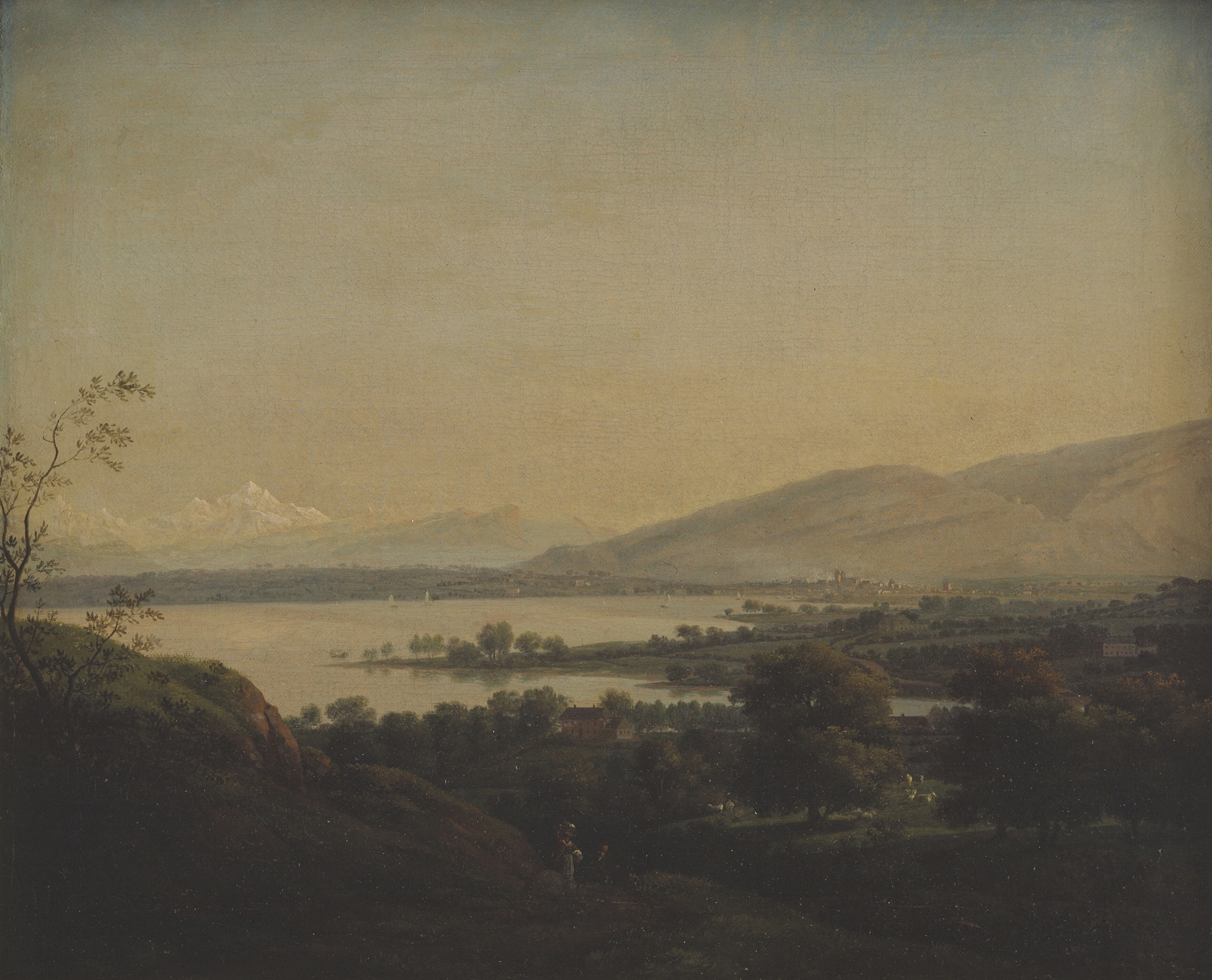
View Of The Little Belt From A Hill Near Middelfart, Funen — History & Analysis
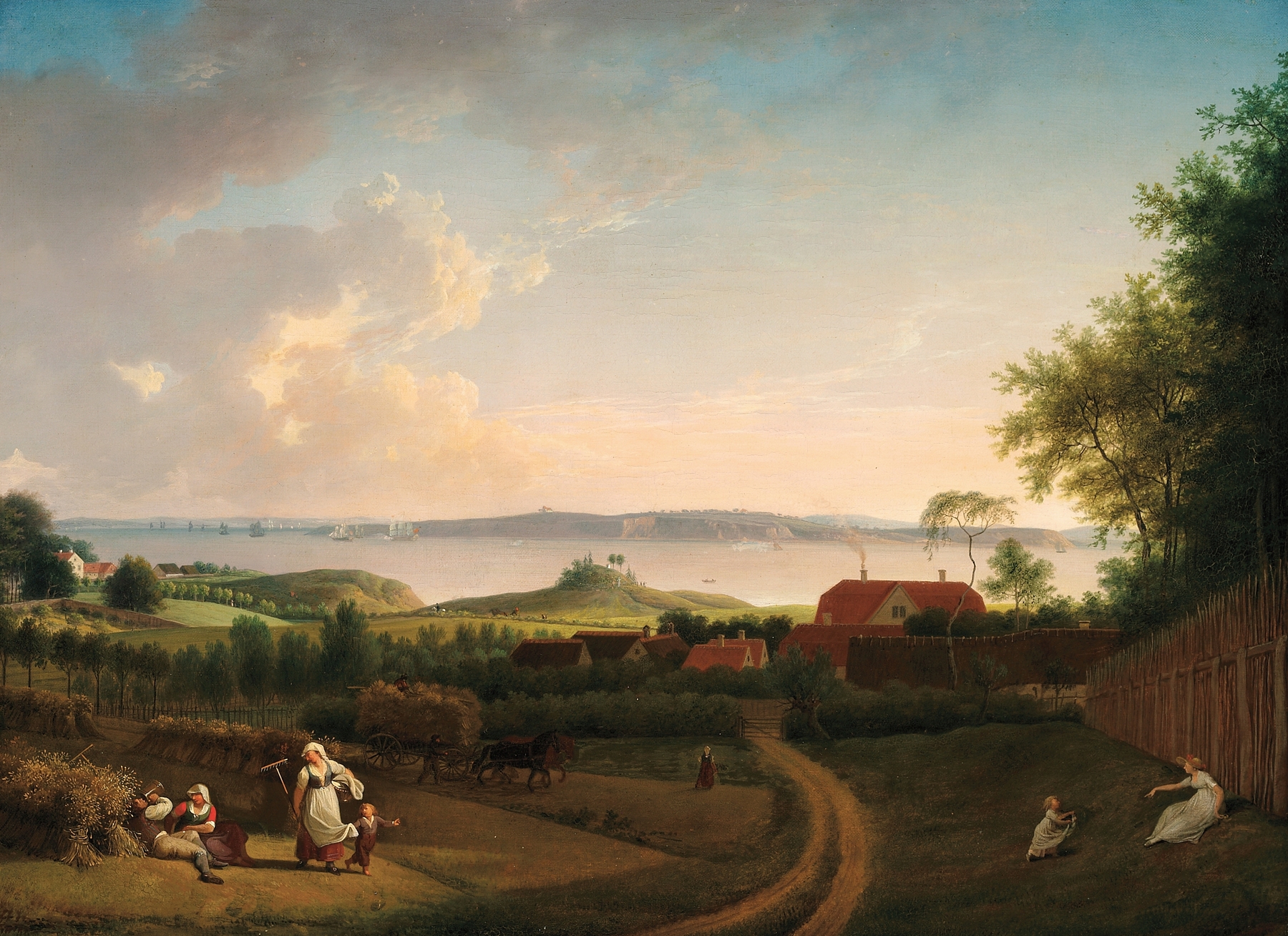
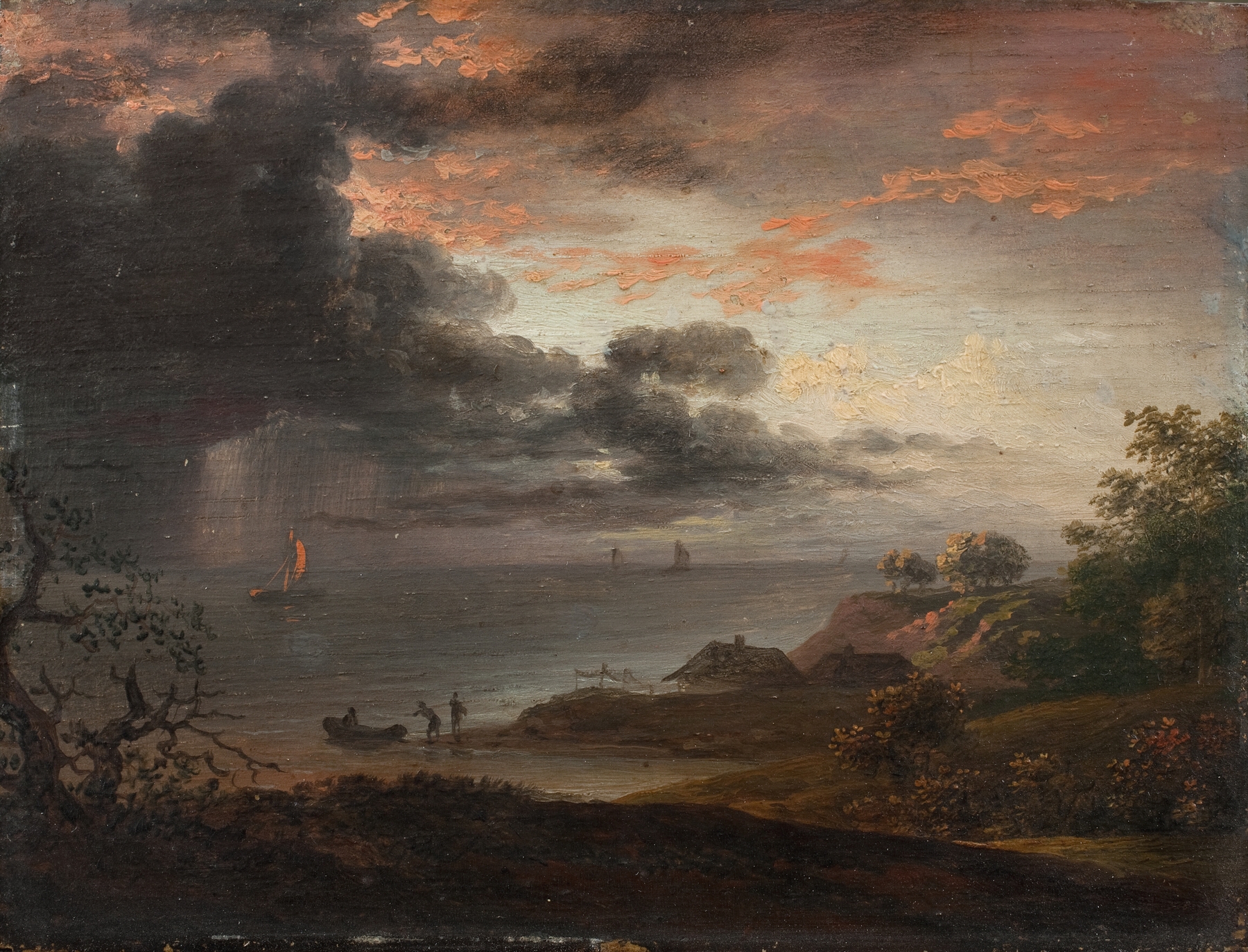
“To paint is to remember what time wants us to forget.” In a world where transience reigns, art becomes a vessel for the eternal. It captures fleeting moments, inviting us to pause and reflect on the passage of time and our own mortality. Look toward the horizon where the undulating waters of Little Belt blend seamlessly with the sky. The muted palette of blues and greens creates a serene backdrop, evoking a sense of tranquility. Notice how the gentle strokes of the brush articulate the lush, sloping hills that cradle the foreground, drawing your gaze toward the distant shoreline.
The subtle interplay of light and shadow across the landscape highlights the delicate balance between nature and human presence, whispering stories of life’s impermanence. Amidst this calm, there lies a tension between the lushness of the natural scene and the underlying sense of loss. The tranquil water reflects not just the sky above, but also a deeper yearning for memories that fade with time. Hidden within the serene beauty are hints of mortality, as the viewer is reminded that even the most picturesque landscapes are subject to change and decay.
This duality imbues the work with a haunting depth, encouraging contemplation on both the beauty and fragility of existence. Jens Juel created this landscape around 1800, during a time of growing Romanticism in art, where emotion and nature began to take precedence over classical ideals. Living in Denmark, he was influenced by a burgeoning interest in depicting his homeland's natural beauty while grappling with the societal changes of the age. This piece reflects his commitment to capturing the essence of place, weaving together both personal and collective memory in a rapidly evolving world.