Kanefart i Rimfrost — History & Analysis
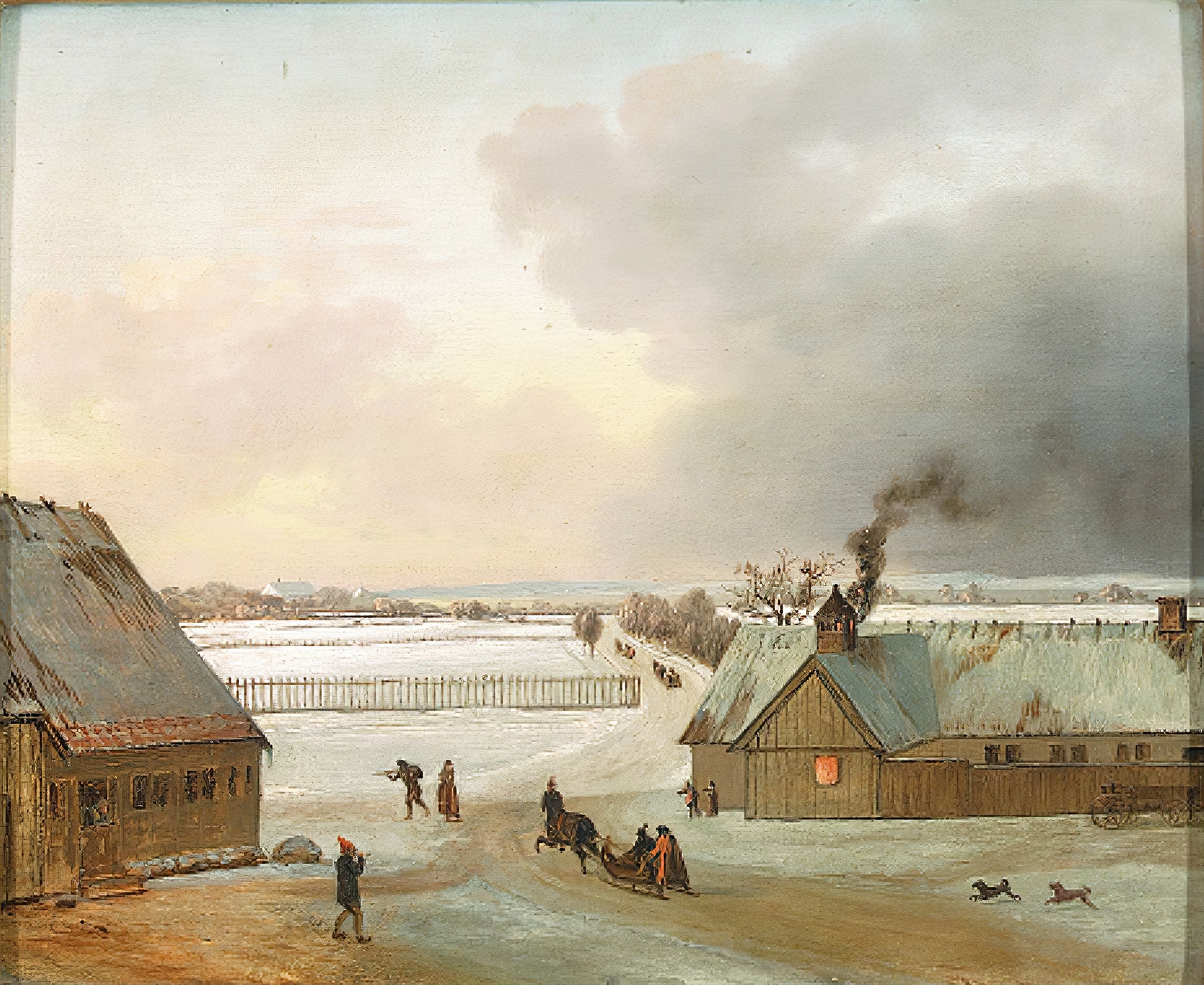
“To paint is to remember what time wants us to forget.” In Kanefart i Rimfrost, an ephemeral truth is captured, a moment suspended in the cold embrace of winter. It invites contemplation on the fine line between memory and experience, revealing the intricate dance between reality and illusion. Look to the center of the canvas, where a sleigh glides through a glittering, frost-kissed landscape. The stark contrast of the white frost against deep blues and grays creates an almost magical aura. Juel's meticulous brushwork captures the textures of the snow, the delicate lace of frost forming on the sleigh's edges, while light refracts through the chill, animating the scene with an ethereal glow.
The composition draws the eye along the winding path, leading viewers deeper into this tranquil yet vibrant winter world. Beneath the surface, the painting speaks of solitude and fleeting joy. The solitary figure upon the sleigh is both a participant and an observer, suggesting a moment of introspection amidst the beauty of nature. The pristine snow hints at unblemished potential, contrasting the inevitable passage of time that shifts all things.
Juel captures the transient nature of winter, as the crisp air envelops the senses, invoking nostalgia for moments that, like snowflakes, can never be recaptured. Jens Juel painted this work between 1790 and 1799 during a time of significant change in European art, embracing neoclassicism while also hinting at romantic themes. Living in Denmark, he was influenced by the burgeoning appreciation for landscapes and everyday life. His focus on natural scenes like this one marked a departure from the grand historical narratives prevalent in earlier periods, allowing for an intimate exploration of existence and truth.