View of the Tiber towards the Aventin Hill in Rome — History & Analysis
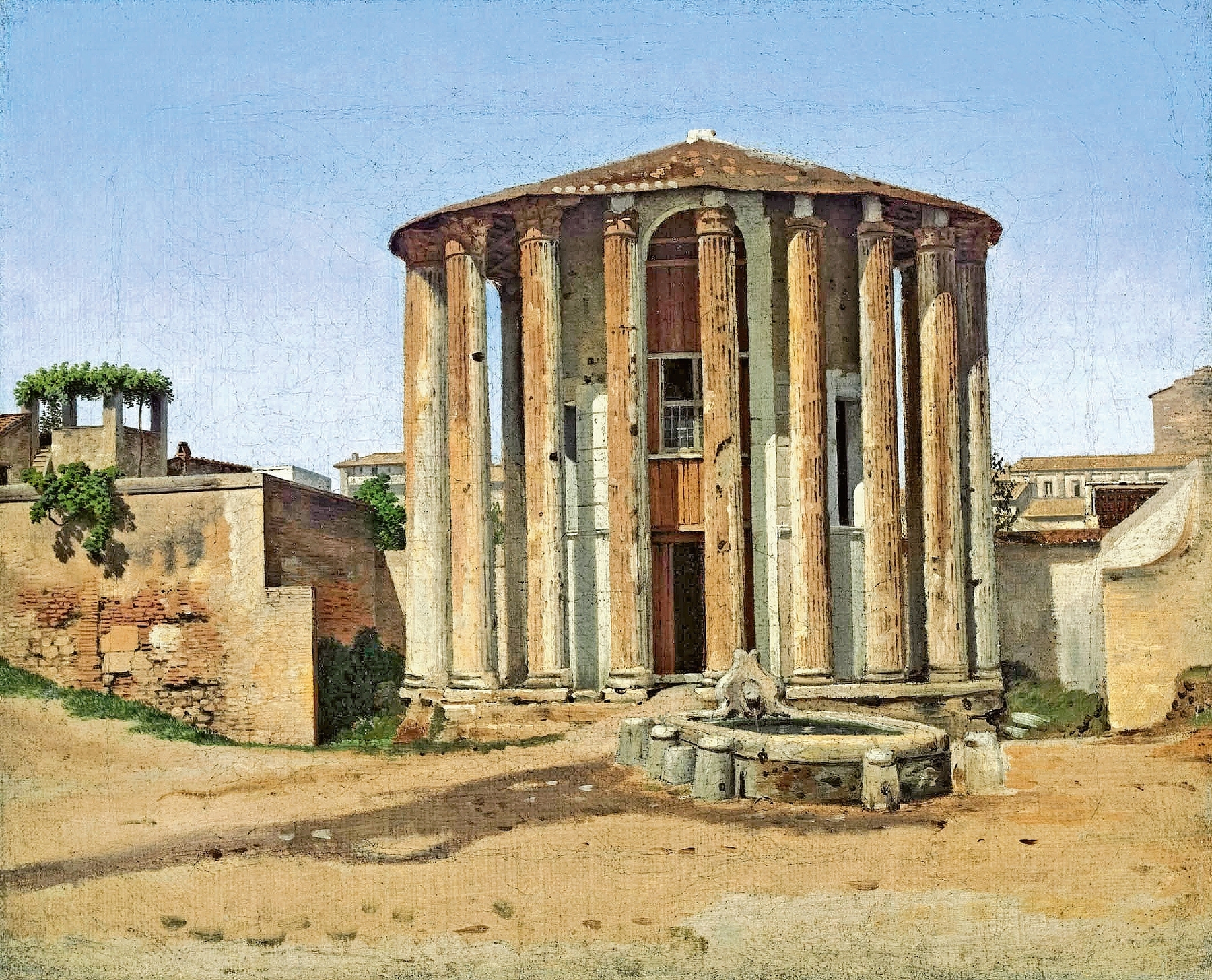
What secret hides in the quiet of the canvas? In View of the Tiber towards the Aventin Hill in Rome, the stillness captures the essence of a moment suspended in time, inviting reverence for the beauty of nature and architecture intertwined. To begin your exploration, look to the gentle curves of the Tiber River, a shimmering ribbon that leads the eye towards the softly rendered Aventine Hill. Notice how the light dances across the water's surface, reflecting a palette of blues and greens, while the idyllic sky above, strewn with delicate clouds, envelops the scene in an ethereal glow.
The composition masterfully balances the grandeur of Rome's ancient architecture with the tranquility of nature, grounding the viewer in an exquisite harmony. Delve deeper into the emotional landscape of the work, where contrasts emerge. The stillness of the river juxtaposes the dynamism of the billowing clouds, hinting at the ever-changing nature of life beneath the surface. The verdant greens of the hills evoke vitality, suggesting a connection to the earth, while the distant city stands as a monument to human achievement, a reminder of civilization's transient yet enduring presence.
This interplay invites contemplation on the delicate balance between nature and humankind. Eckersberg painted this piece between 1813 and 1815 while living in Rome, a city that profoundly influenced his artistic vision. During this period, he was immersed in the Neoclassical movement, where artists sought to revive the grandeur of classical antiquity. The artist's experiences in Rome allowed him to capture its timeless beauty, blending reverence for the past with an innovative perspective that would later distinguish him in the Danish Golden Age.