Visserspink te Katwijk — History & Analysis
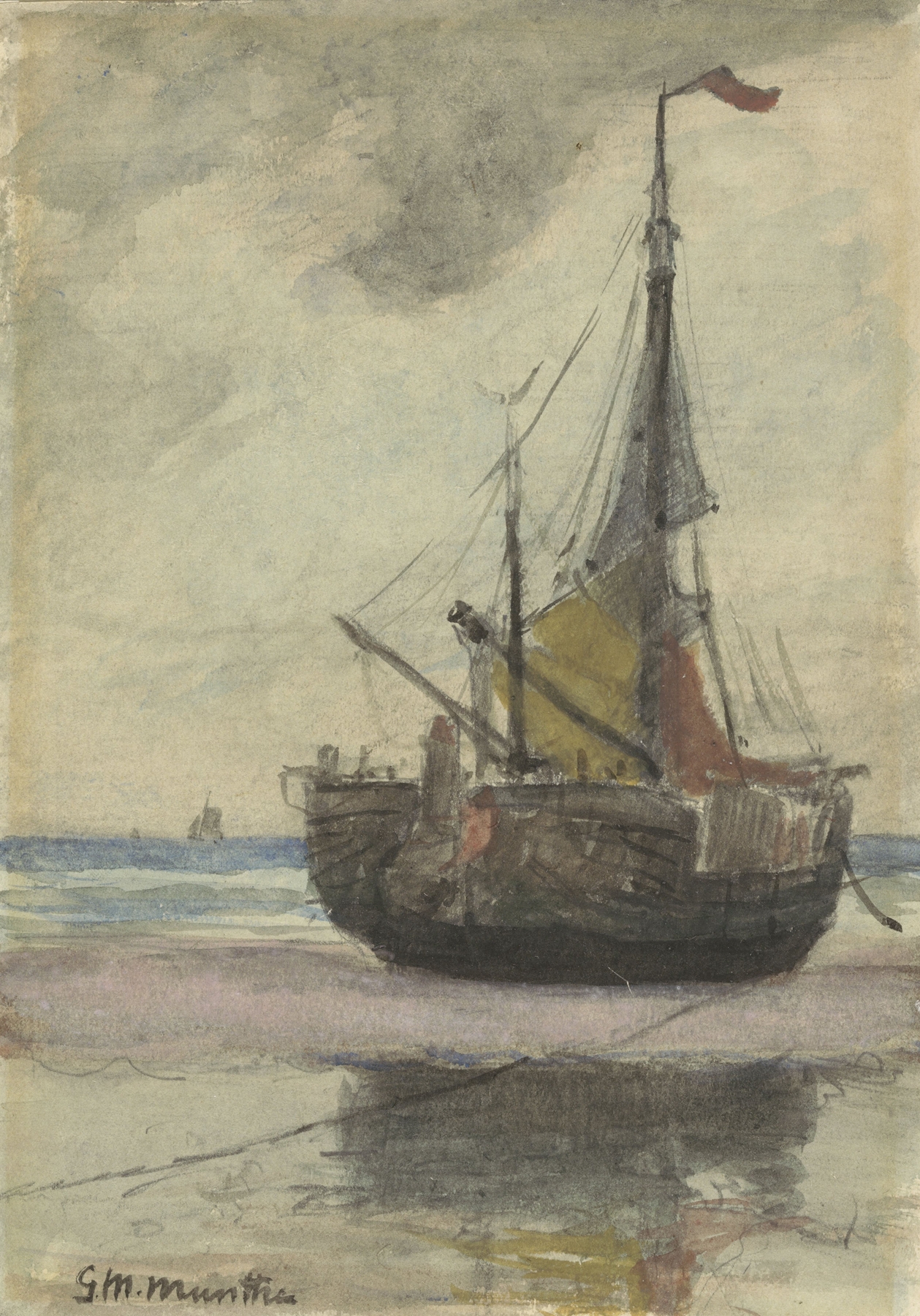
Who listens when art speaks of silence? In Visserspink te Katwijk, the quietude of the scene reverberates with faith and introspection, inviting the viewer to ponder the unspoken stories etched into the canvas. Focus first on the delicate interplay of light and shadow in the foreground, where a solitary figure stands near the water's edge. The fluid brushstrokes mimic the gentle ripples on the surface, while the soft blues and greens evoke a sense of calm.
Notice how the figure's silhouette melds with the landscape, almost as if they are an integral part of the serene surroundings, embodying the essence of the quiet fishing village captured in this moment. The painting reveals a deeper emotional landscape, hinting at the connection between humanity and nature. The distant boats bobbing in the water represent the daily toil of fishermen, while the expansive sky embodies hope and faith in the horizon beyond. Each brushstroke captures a stillness that suggests both solitude and communion, prompting reflections on the balance between isolation and belonging.
Created during the 1880s, Munthe painted this work in a time of artistic experimentation and the rise of regionalism. Living in Norway, he was influenced by the natural beauty surrounding him and the local fishing culture, which resonated with his own experiences. This painting not only showcases his keen observation of life but also illustrates the broader trends in art as artists sought to capture the authenticity of their environments.