Wannseegarten – Haus mit roten Stauden — History & Analysis
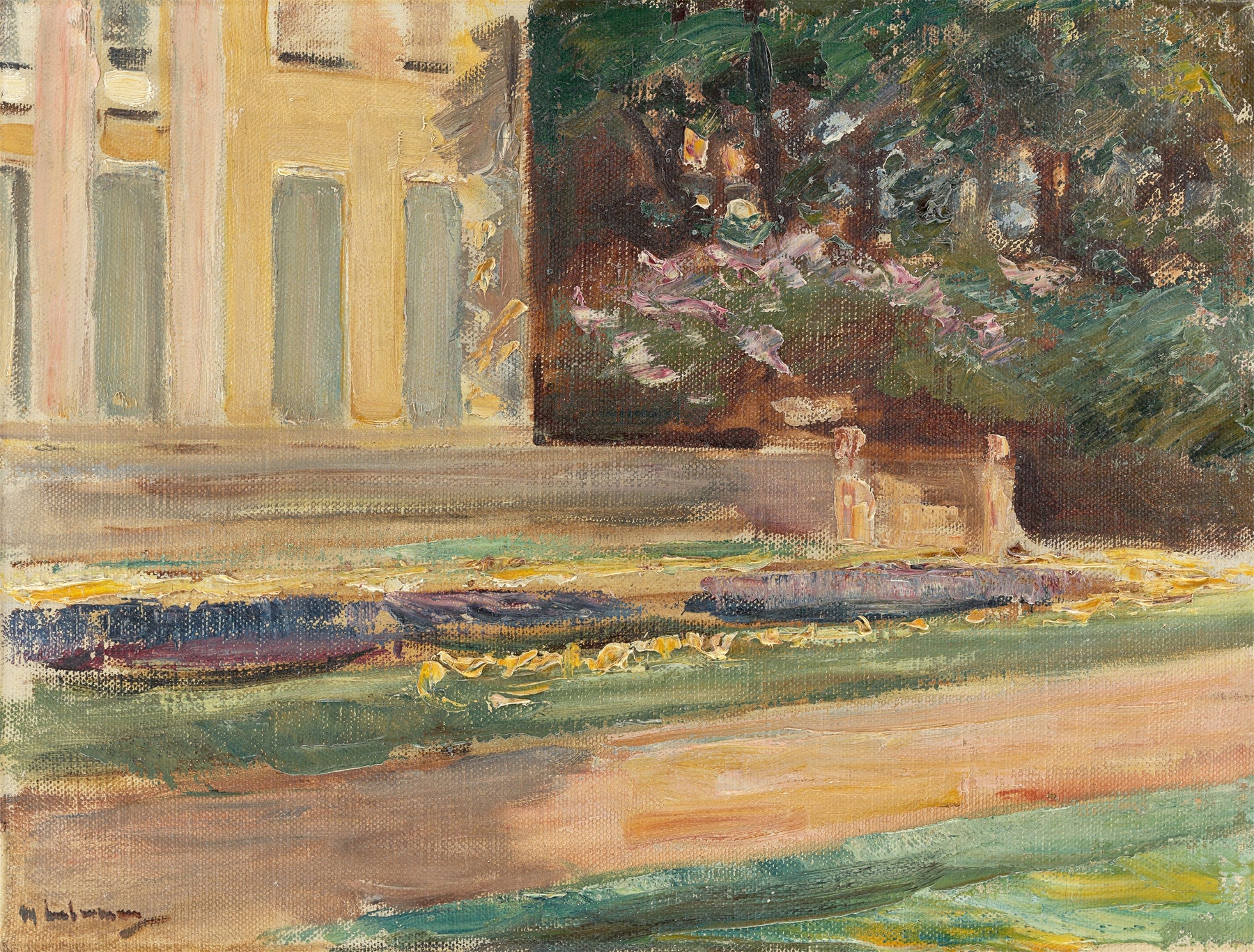
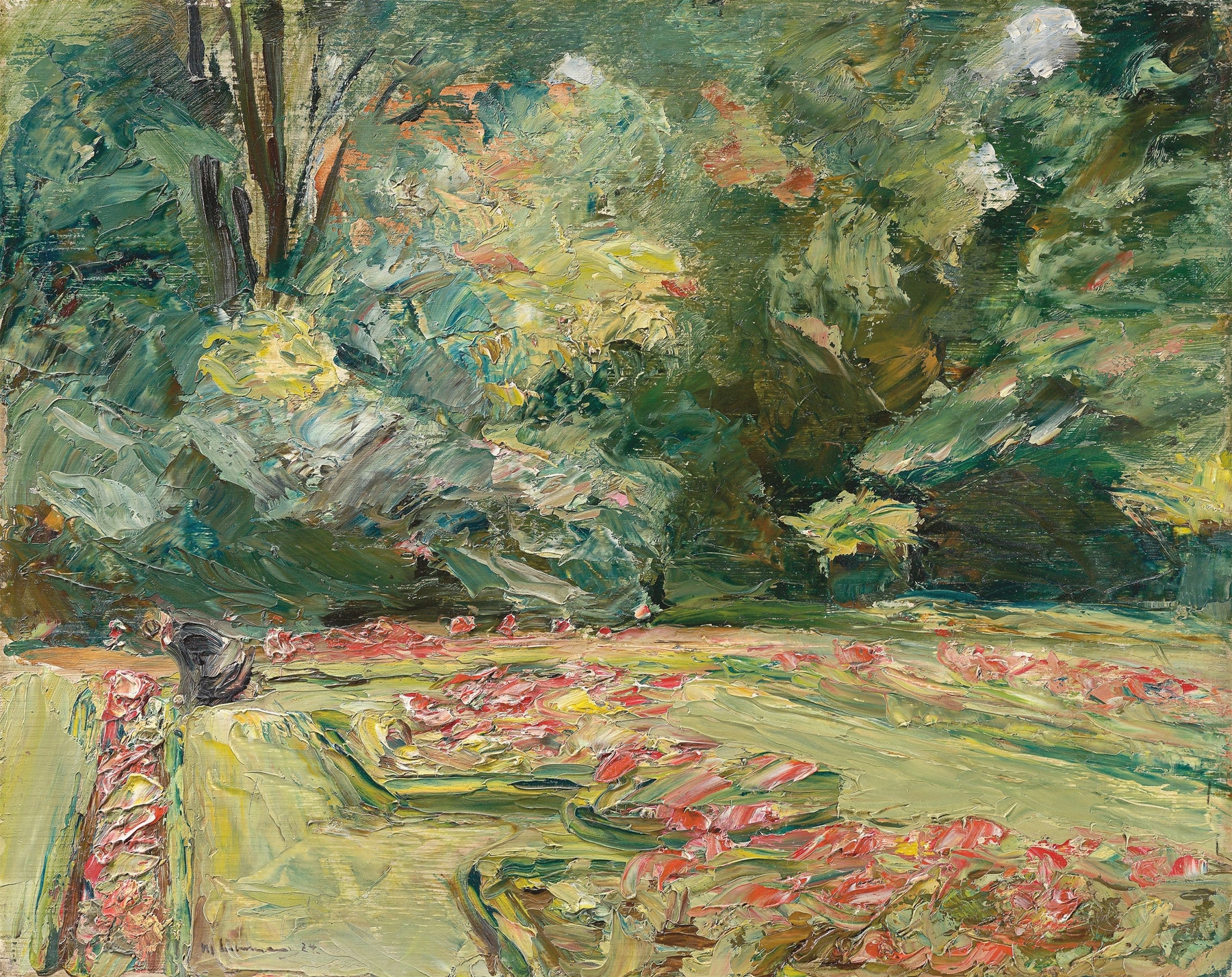
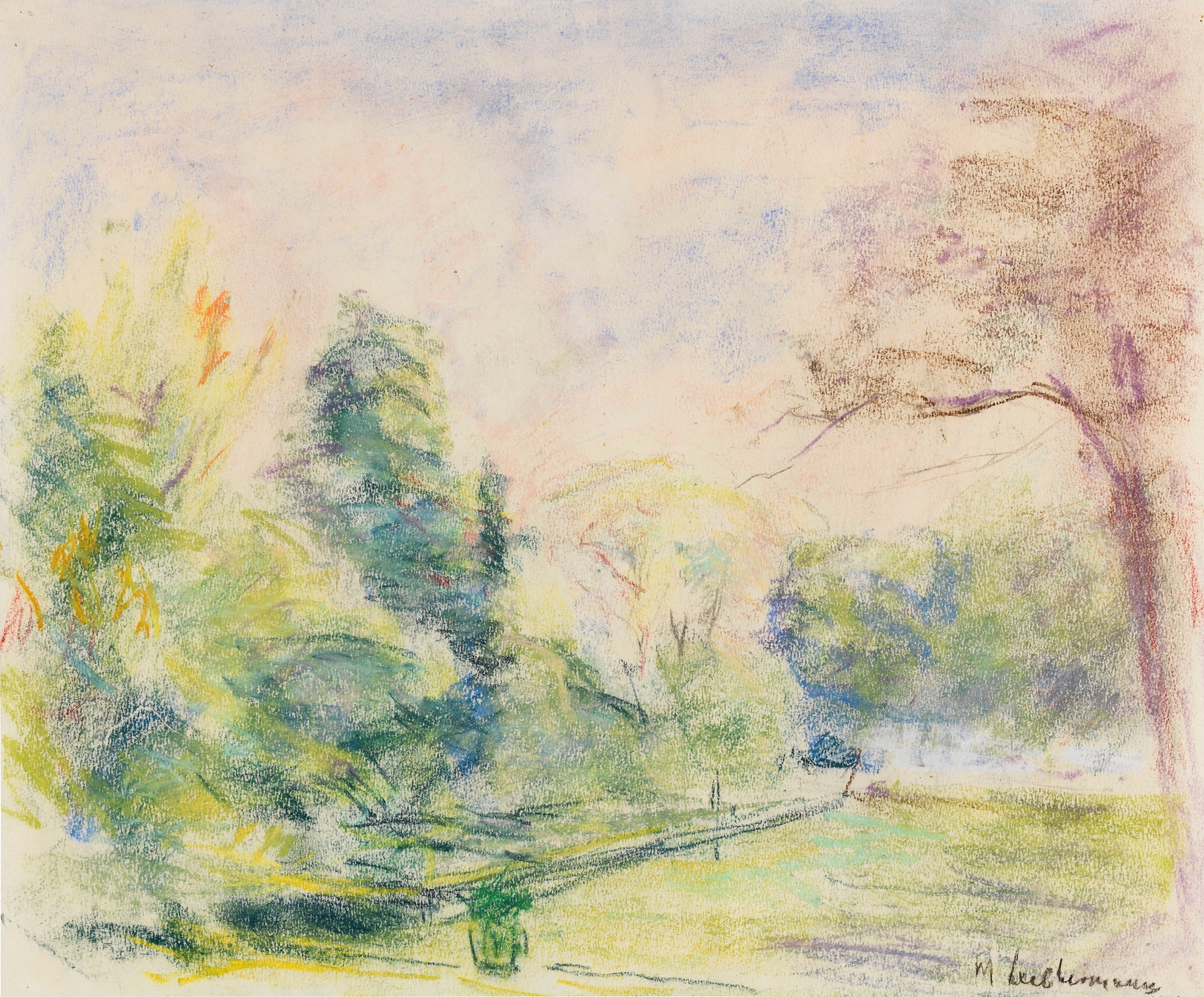
Could a single brushstroke hold eternity? In Wannseegarten – Haus mit roten Stauden, the essence of rebirth flows through every vibrant hue and delicate line, inviting us to reflect on the passage of time. Look closely at the foreground, where bursts of red blooms dominate the canvas, their vibrancy contrasting against the serene backdrop of a house nestled among lush greenery. Notice how Liebermann skillfully employs thick, impasto strokes to bring life and texture to the flowers, each petal almost pulsating with energy.
The sunlight filters through the leaves, illuminating the scene with a warm glow that imbues a sense of tranquility, as if the garden itself breathes. Yet, beneath this idyllic surface lies a nuanced exploration of transience. The juxtaposition of the vibrant flowers against the steadfast architecture suggests a dialogue between nature's ephemeral beauty and human permanence. The red blossoms may symbolize passionate life, while the house stands as a testament to stability and memory, prompting us to ponder what endures and what fades.
Their coexistence invites contemplative thoughts on the cycles of life, evoking a bittersweet emotion. In 1926, during a period of introspection and change in the art world, Liebermann painted this piece in his beloved garden in Wannsee, Berlin. As the artist grappled with the shadows of his past and the tumultuous events shaping Europe, he found solace in the beauty of his surroundings. This work encapsulates both his personal journey and the broader artistic movement that sought to embrace the simplicity and immediacy of nature, affirming the significance of everyday life in a changing world.