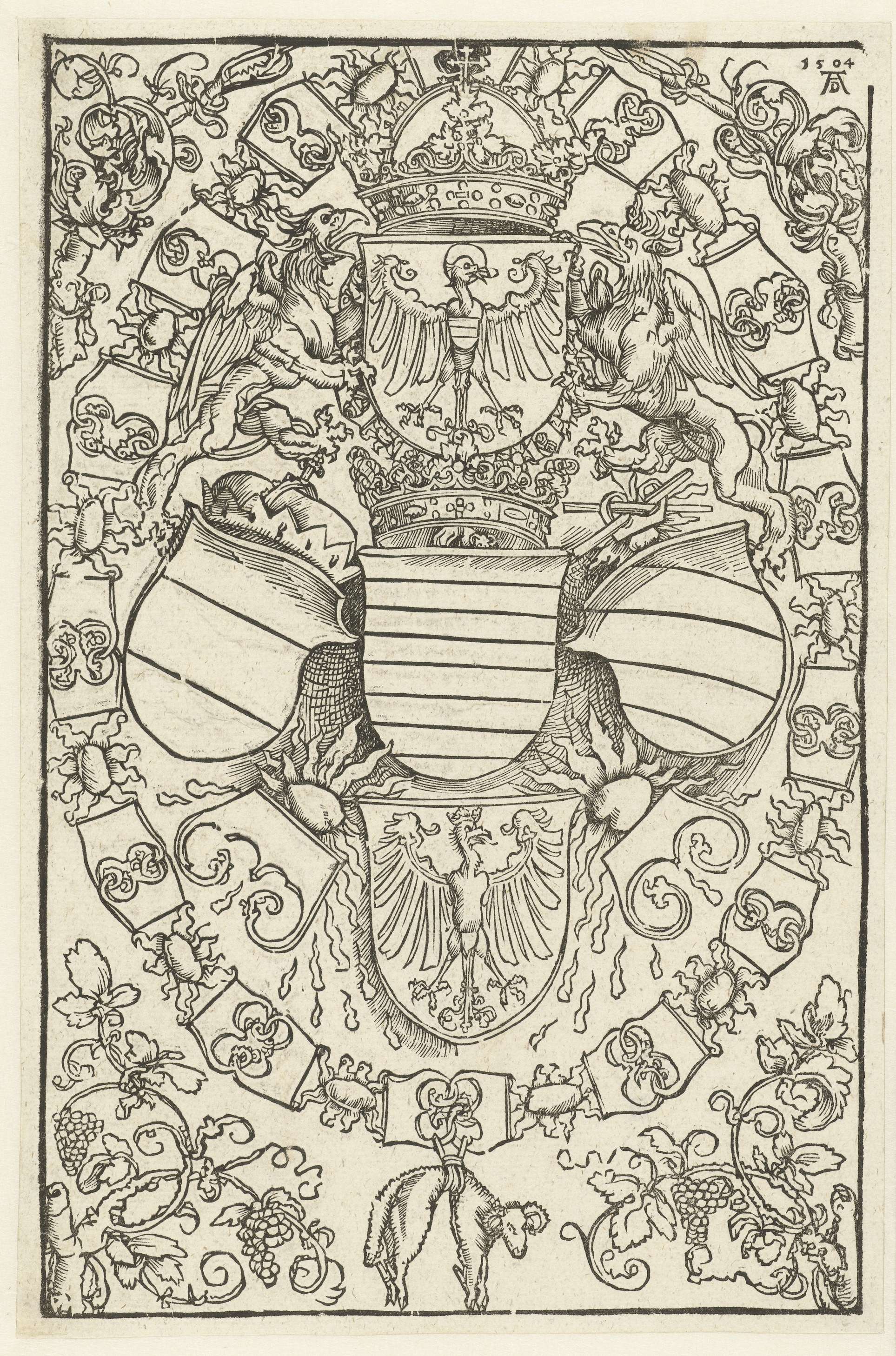
Wapen van rooms-koning Maximiliaan — History & Analysis
“Under the brush, chaos becomes grace.” In the hands of a master, the turmoil of existence transforms into a symphony of form and color, where even the most violent elements find their place in a serene order. Focus your gaze on the intricate heraldic shield that dominates the composition, adorned with bold lines and vibrant hues. Surrounding it, a rich tapestry of flora intertwines, each petal and leaf meticulously detailed, leading your eye to the delicate interplay between the chaotic natural world and the structured emblem of power. The stark contrast between the organic and the geometric creates a tension that invites reflection on the fragility of beauty amidst the clashing realities of life.
As you delve deeper, notice the subtle symbols embedded within the floral designs—each petal whispers stories of conquest and legacy, hinting at the violent histories from which this shield emerges. The dark, brooding colors juxtaposed with the brightness of the blooms speak to the duality of strength and vulnerability. This tension encapsulates not only the spirit of a sovereign but also the fragility of the peace they seek to uphold.
During the late 1550s, Dürer was reflecting on the weight of legacy and power in a tumultuous era marked by political shifts and religious strife. Living in Nuremberg, he was deeply engaged with the humanist ideals of his time, seeking to reconcile the chaos of the world with the pursuit of beauty through art. This piece encapsulates not only his technical prowess but also a profound commentary on the nature of authority and conflict.