Wapenschild met vrouw en wildeman — History & Analysis
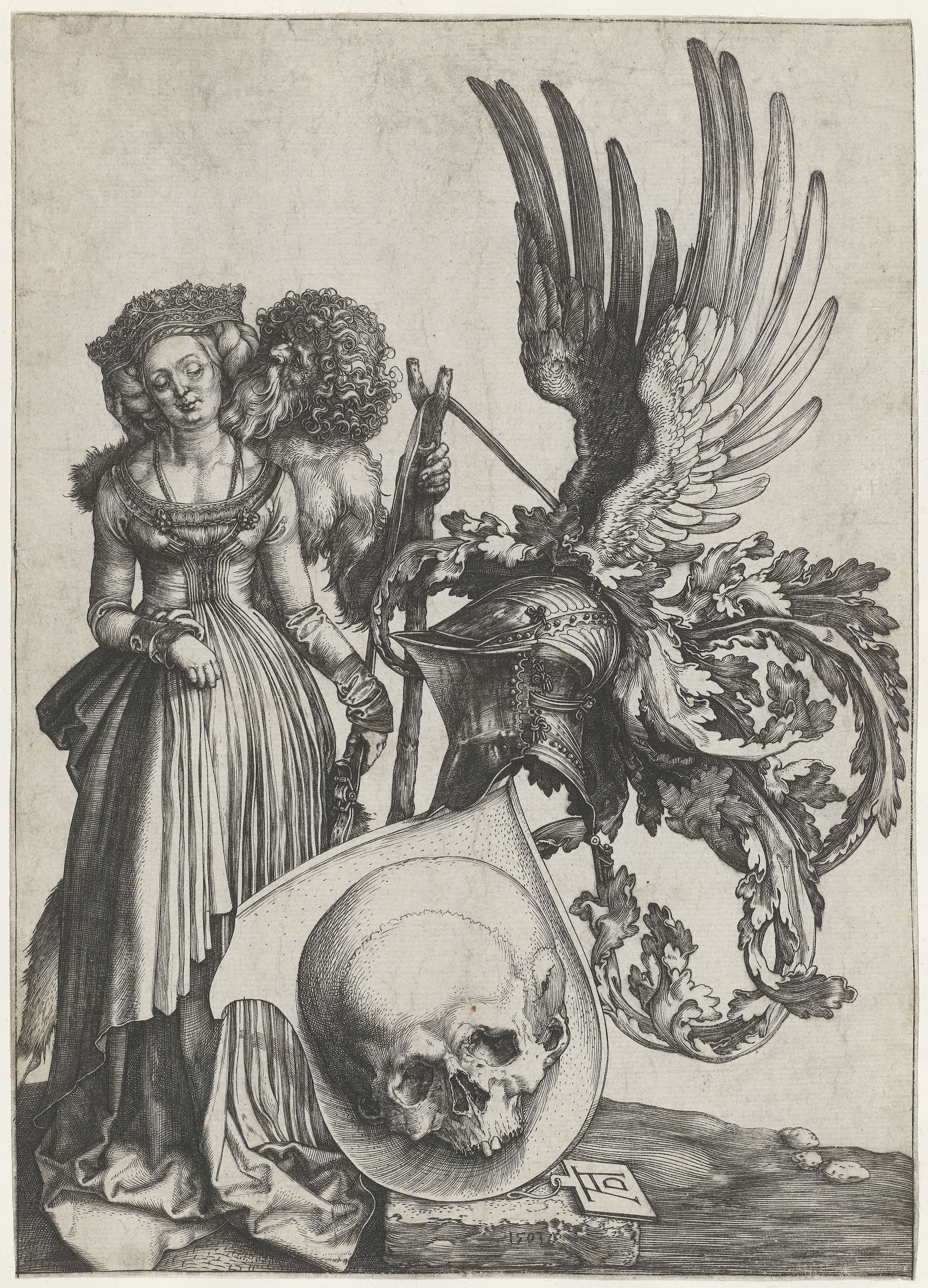
“Every silence here is a confession.” In the rich tapestry of color and shadow, truths unfold quietly, revealing the intricate interplay between humanity and nature. Focus first on the vivid hues of the figures, where the bright reds and greens contrast sharply with the somber background. The woman, adorned in elegant garments, stands poised yet enigmatic, drawing the viewer's gaze immediately. Notice how the brushwork captures the delicate texture of her clothing, which seems to shimmer in the light, suggesting both opulence and vulnerability. Just beside her, the wildeman’s earthy tones evoke a primal spirit, his wild hair and rugged features setting him apart from the refinement of the woman, crafting a compelling dialogue between civilization and the untamed. The emotional tension lies in the juxtaposition of these two contrasting figures. The woman embodies grace and societal order, while the wildeman represents instinct and raw nature. Together, they stand as metaphors for the duality of human existence—civilization intertwined with our primal origins. The shield they flank becomes a powerful symbol, reflecting not only protection but also the complexities of identity and the struggle between restraint and freedom. Dürer painted this piece in 1503, during a time when he was establishing himself in Nuremberg amid the Renaissance's flourishing of humanist ideals. This was a period of personal and artistic growth for him, marked by exploration into intricate symbolism and the natural world, as he sought to blend meticulous detail with profound meaning. The artwork resonates with the evolving philosophical landscape of the era, capturing a pivotal moment in the artist’s journey.