Wartburg von Süd-West — History & Analysis
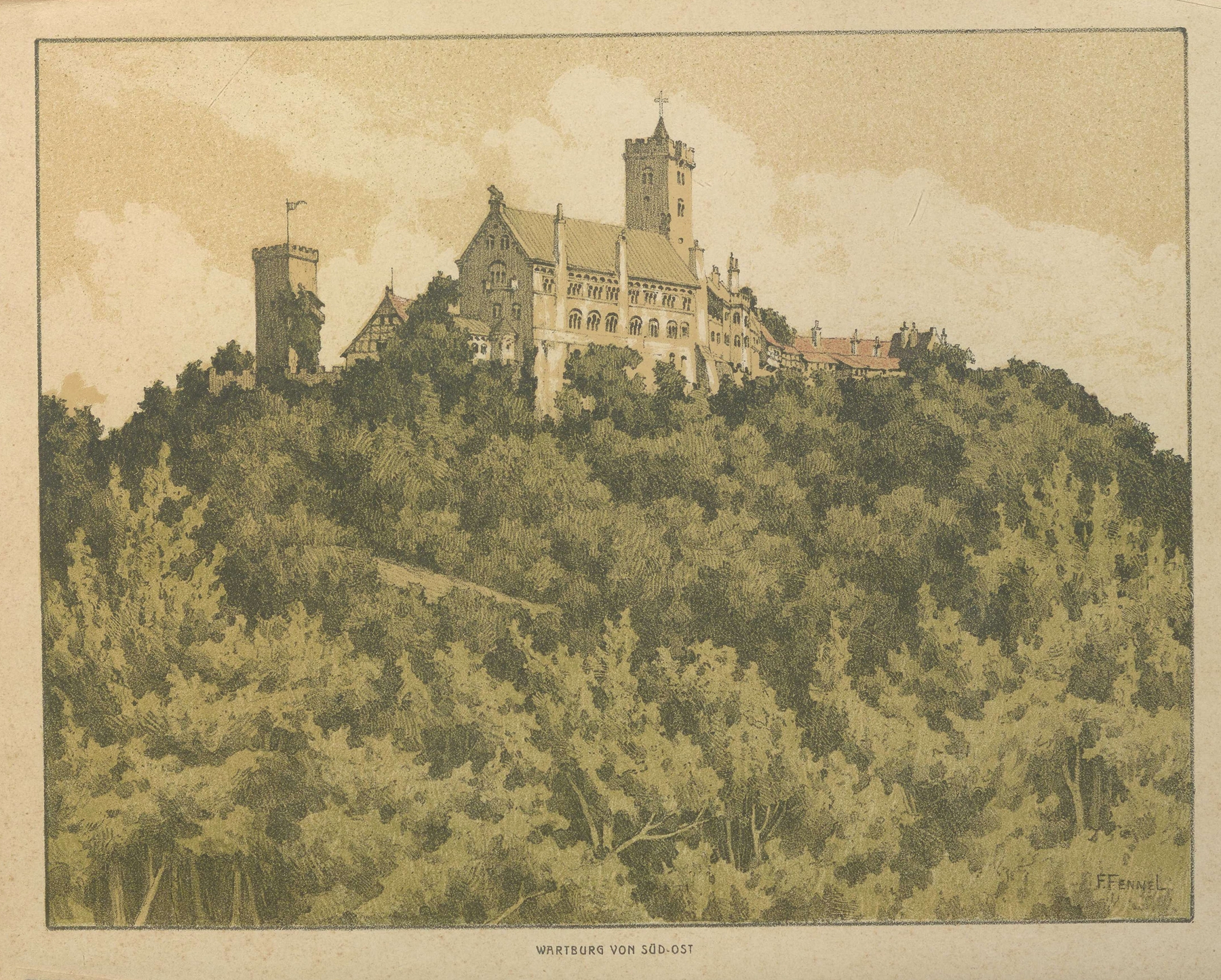
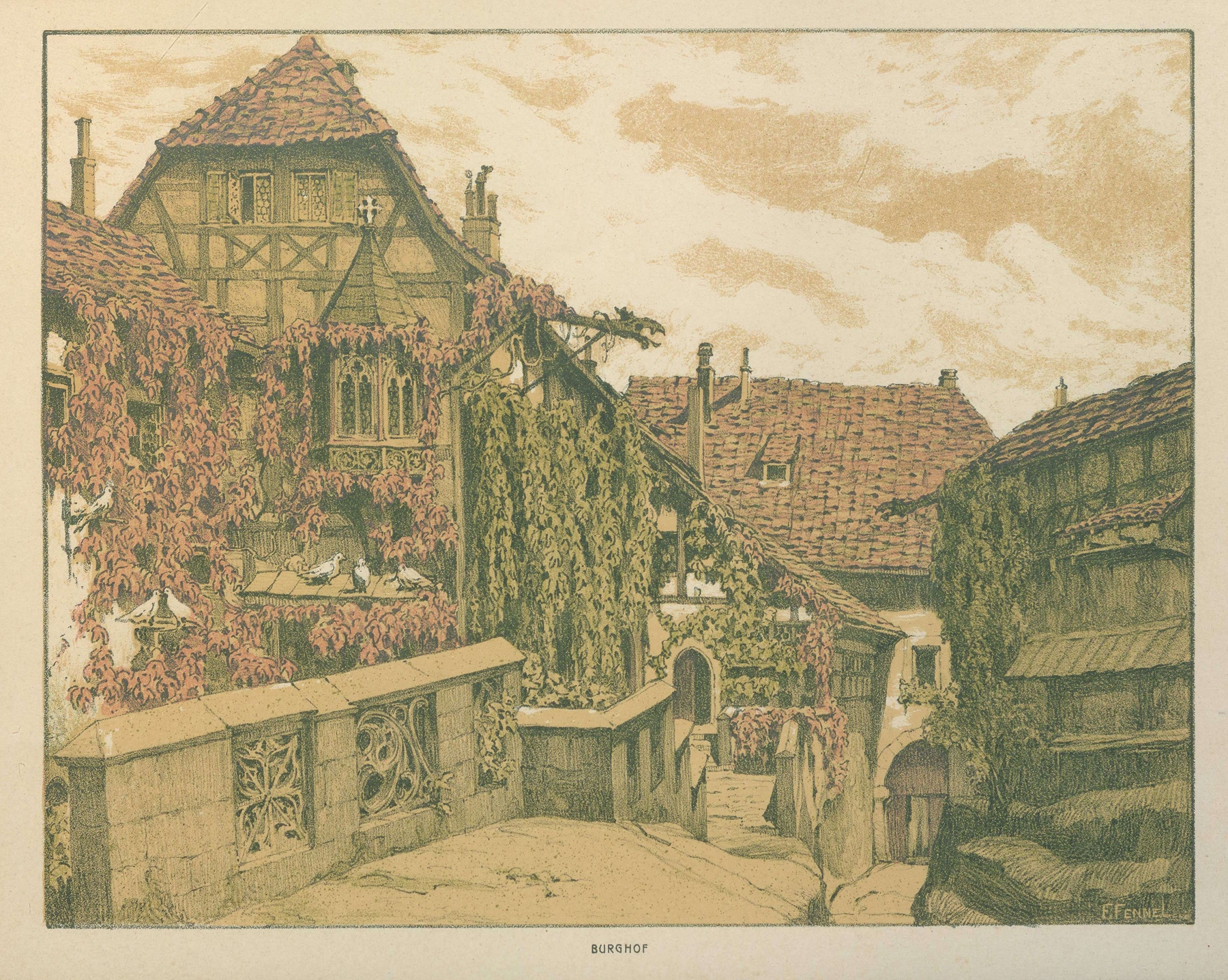
Where does light end, and longing begin? In the gentle interplay of luminous hues and soft contours, a serene landscape unfolds, inviting contemplation and stillness. Look to the left at the broad swath of rolling hills, painted in tender greens and muted browns that cradle the castle. Notice how the light falls upon the tower, illuminating its sandstone walls, creating an ethereal glow that draws the eye.
The calm blue sky above, with wisps of clouds, acts as a tranquil backdrop, while the subtle brushstrokes convey both depth and texture, suggesting an embrace of nature that complements the architectural marvel. Beneath the surface of this serene vista lies a tension between the permanence of the castle and the fleeting nature of the surrounding landscape. The contrast between the solid fortress and the ephemeral clouds evokes a sense of yearning for stability in a changing world. The shadows cast upon the hills hint at the passage of time, mirroring our own struggles between aspiration and acceptance in the face of the inevitable.
Friedrich Fennel painted Wartburg von Süd-West after 1900, during a period marked by a growing interest in the Romantic landscapes of Germany. At the time, he was navigating his artistic identity amidst a shift towards modernism, drawing inspiration from both the natural beauty of his homeland and the historic significance of the Wartburg Castle. The era was rich with cultural revival, as artists sought to reconnect with traditional themes while exploring new artistic boundaries.