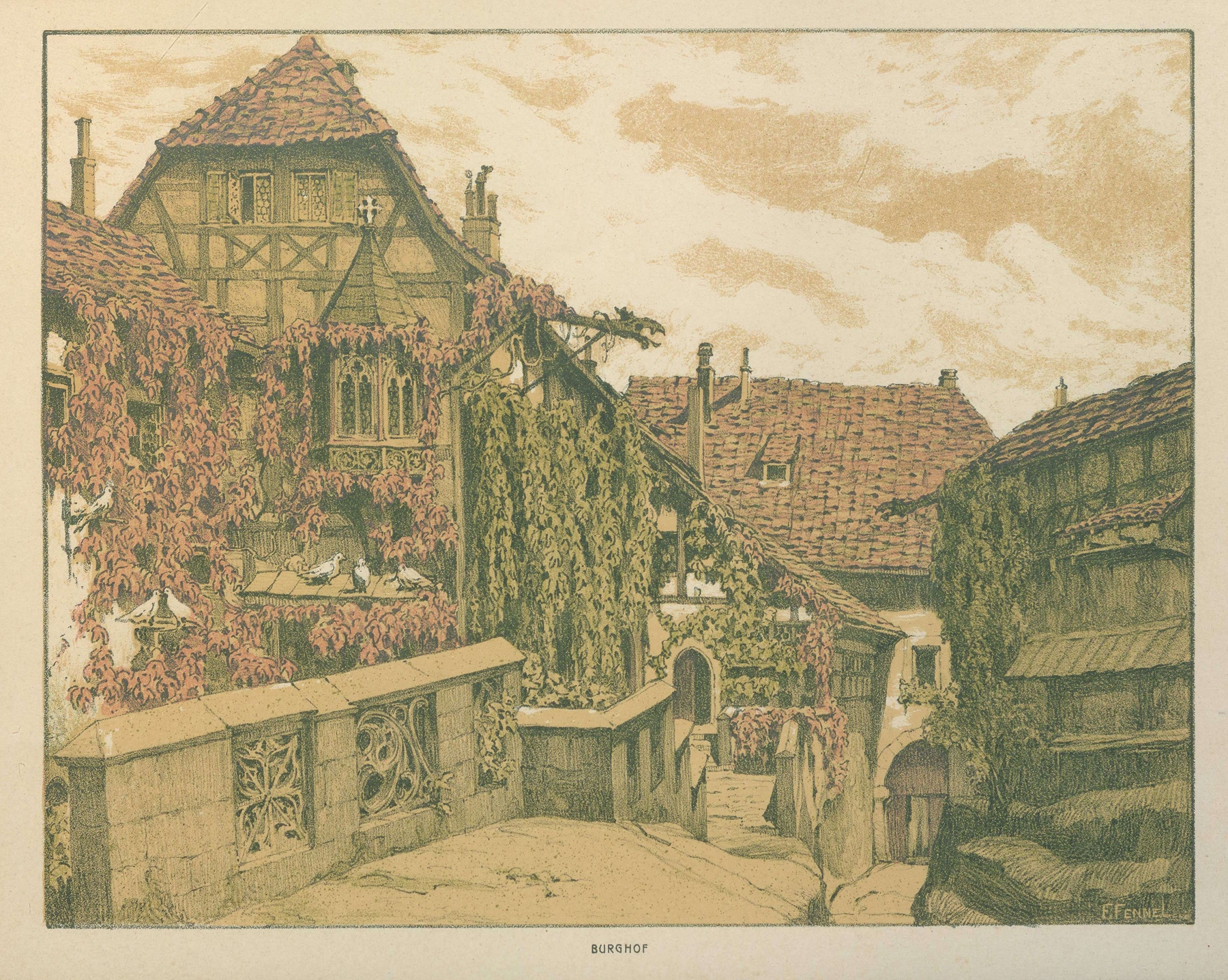
Am Nikolaitor — History & Analysis
Did the painter know this moment would outlive them? An echo of hope and renewal resonates through the canvas, inviting reflection on life’s fleeting yet enduring beauty. Look to the left, where gentle hues of soft blue and green meld, suggesting dawn’s light breaking the horizon. Notice how the brushstrokes dance across the surface, each stroke both tender and deliberate, capturing the essence of awakening.
The composition draws the eye toward a central figure, poised amidst nature, symbolizing a bridge between humanity and the world’s vibrant rebirth. Delve deeper into the subtle contrast between light and shadow — the illuminated face of the figure exudes warmth, while the surrounding darkness hints at the unknown. It speaks to the journey of transformation, where each heartbeat pulses with potential and every shadow holds a whisper of challenge. The juxtaposition between the serene expression and the tumultuous background encapsulates the tension of existence, a reminder that beauty often emerges from struggle.
Created in the aftermath of the 1900s, this work reflects Friedrich Fennel’s exploration of themes related to transition and awakening. At this time, Europe was experiencing a shift in artistic movements, with emerging modernism challenging traditional narratives. Fennel, influenced by his environment and personal experiences, painted Am Nikolaitor as a response to these changes, capturing a moment that speaks to the universal human desire for renewal and hope amid uncertainty.