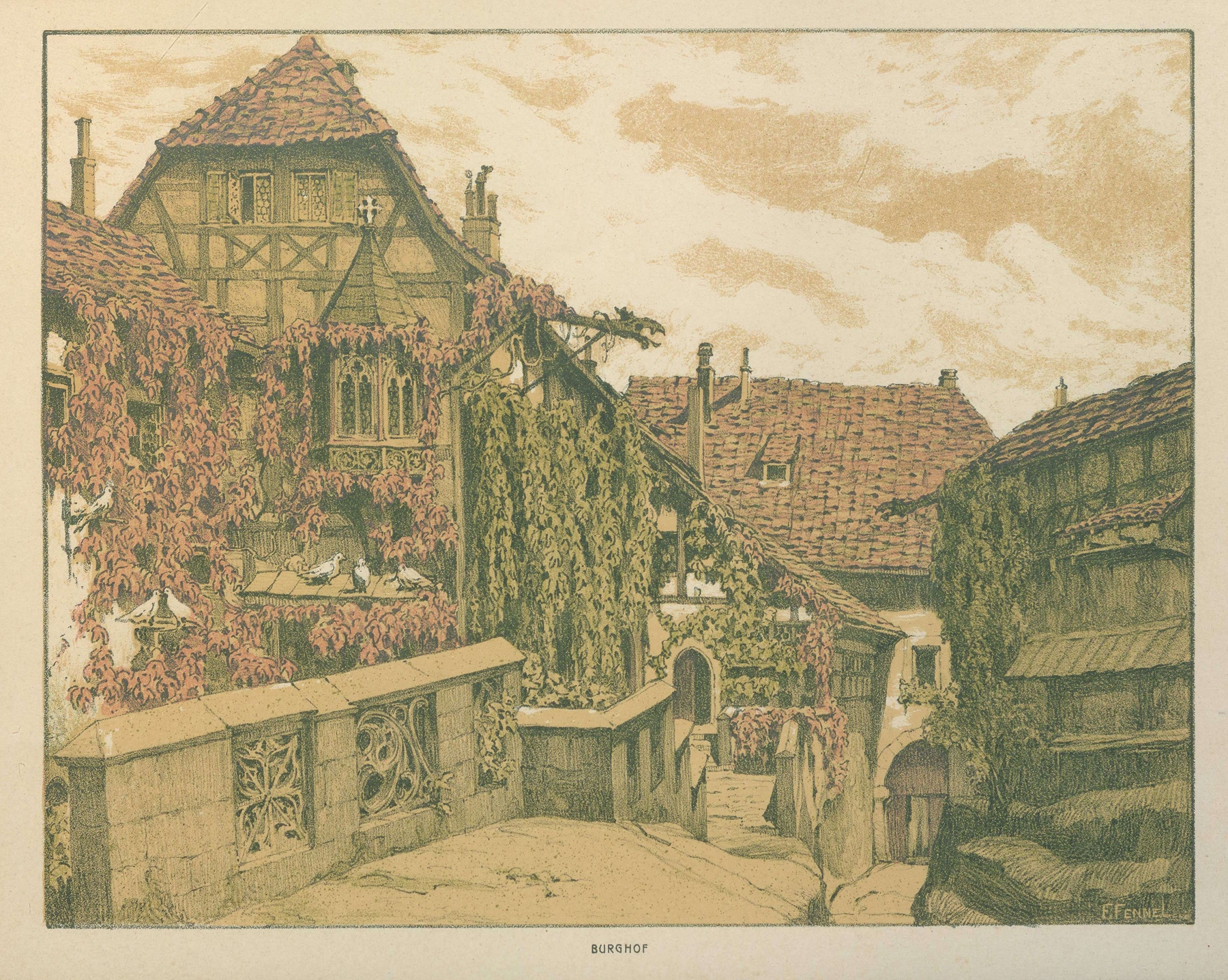
Marienhöhe mit Hörselberg — History & Analysis
Is this a mirror — or a memory? In the quiet embrace of twilight, a landscape emerges, one that invites reflection on loss and longing. The soft hues of the sky blur into a delicate palette of blues and golds, creating an ethereal space that feels both familiar and distant. Focus your gaze on the gentle undulations of the hills, where the sweeping lines draw you into an intimate dialogue with nature. Notice how the light falls upon the distant Hörselberg, illuminating its contours with a ghostly warmth.
The artist's brushwork conveys a sense of fluidity, mingling the elements of land and sky, while the muted colors evoke a poignant stillness that lingers in the air, suggesting the weight of unspoken grief. Delve deeper into the emotional undercurrents of the piece. The contrasting serenity of the landscape belies the turmoil of memory, as the evocative colors may remind one of both beauty and sorrow. The interplay of shadow and light serves as a metaphor for the complexities of the human experience, where moments of joy are often intertwined with feelings of loss. Each brushstroke carries an echo of nostalgia, urging the viewer to contemplate their own memories and the landscapes they inhabit.
Friedrich Fennel created this piece after 1900, during a transformative period in his artistic journey. Living in a world still reeling from upheaval, he found solace in the natural world, expressing his inner conflicts through landscapes. This period marked a critical shift in art, as artists began to explore emotional depth and personal experiences, moving beyond mere representation to capture the essence of human sentiment. Fennel's work reflects this evolution, inviting contemplation in a time of change.