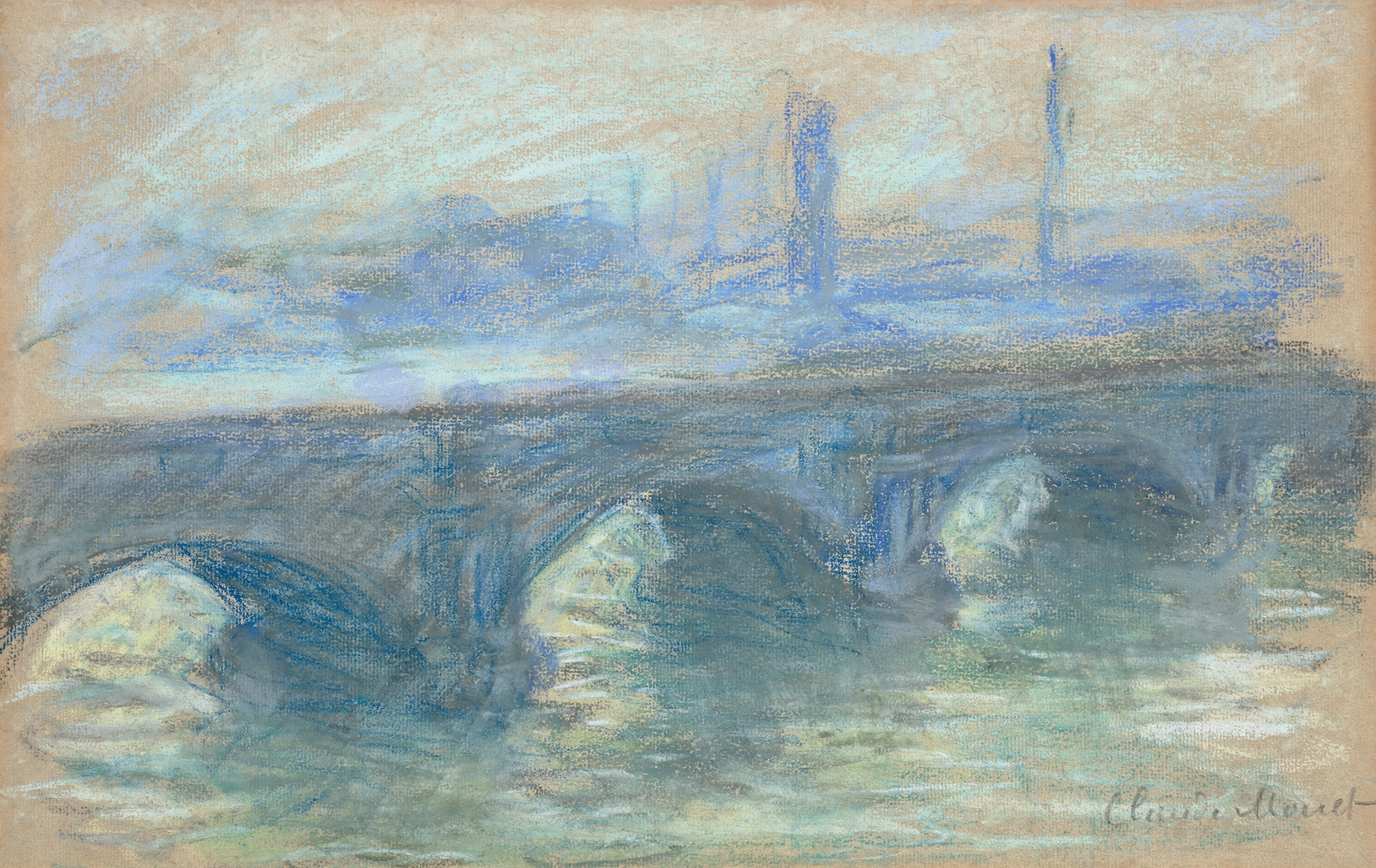
Waterloo Bridge — History & Analysis
“The canvas doesn’t lie — it simply waits.” In the fleeting moments between memory and reality, where light dances and shadows whisper, we find ourselves reflecting on the impermanence of life. Look to the soft hues that envelop the bridge, where muted blues and gentle pinks blend seamlessly, creating a dreamlike atmosphere. Notice how the fog clings to the arches, blurring the boundaries between structure and nature, as if Monet captures not just a scene, but a memory fading in and out of focus. The delicate brushstrokes convey movement, with impressions of figures on the bridge almost dissolving into the mist, inviting you to question who they are and where they are going.
Beneath the surface, this work reveals the tension between memory and reality. The indistinct figures suggest a sense of anonymity, emphasizing the universal nature of these fleeting moments. This painting speaks to nostalgia, a yearning for times past, while the ethereal quality of the colors evokes the fragility of recollection itself. The bridge, both an architectural wonder and a metaphor for connection, hints at the relationships we forge that may, like the fog, vanish when least expected.
In 1901, Monet painted this piece while living in France, amidst a period of personal loss and artistic reflection. It was a time when he explored the effects of light and atmosphere on his surroundings, seeking to capture the essence of transient beauty. His innovative approach was pivotal in the Impressionist movement, which sought to portray the world not as it is, but as it is felt — a task beautifully embodied in this poignant work.