Wilgen en populieren langs een rivier — History & Analysis
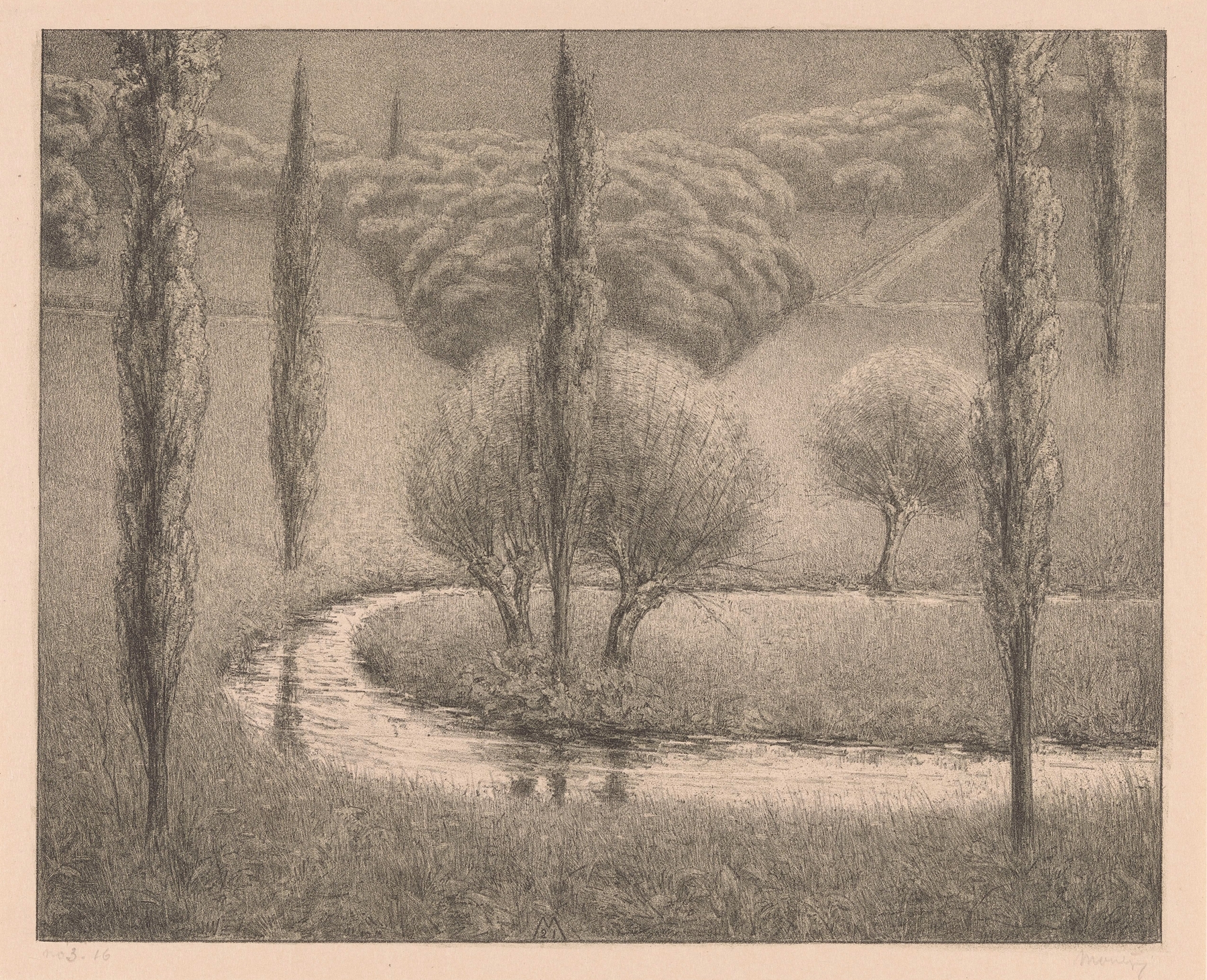
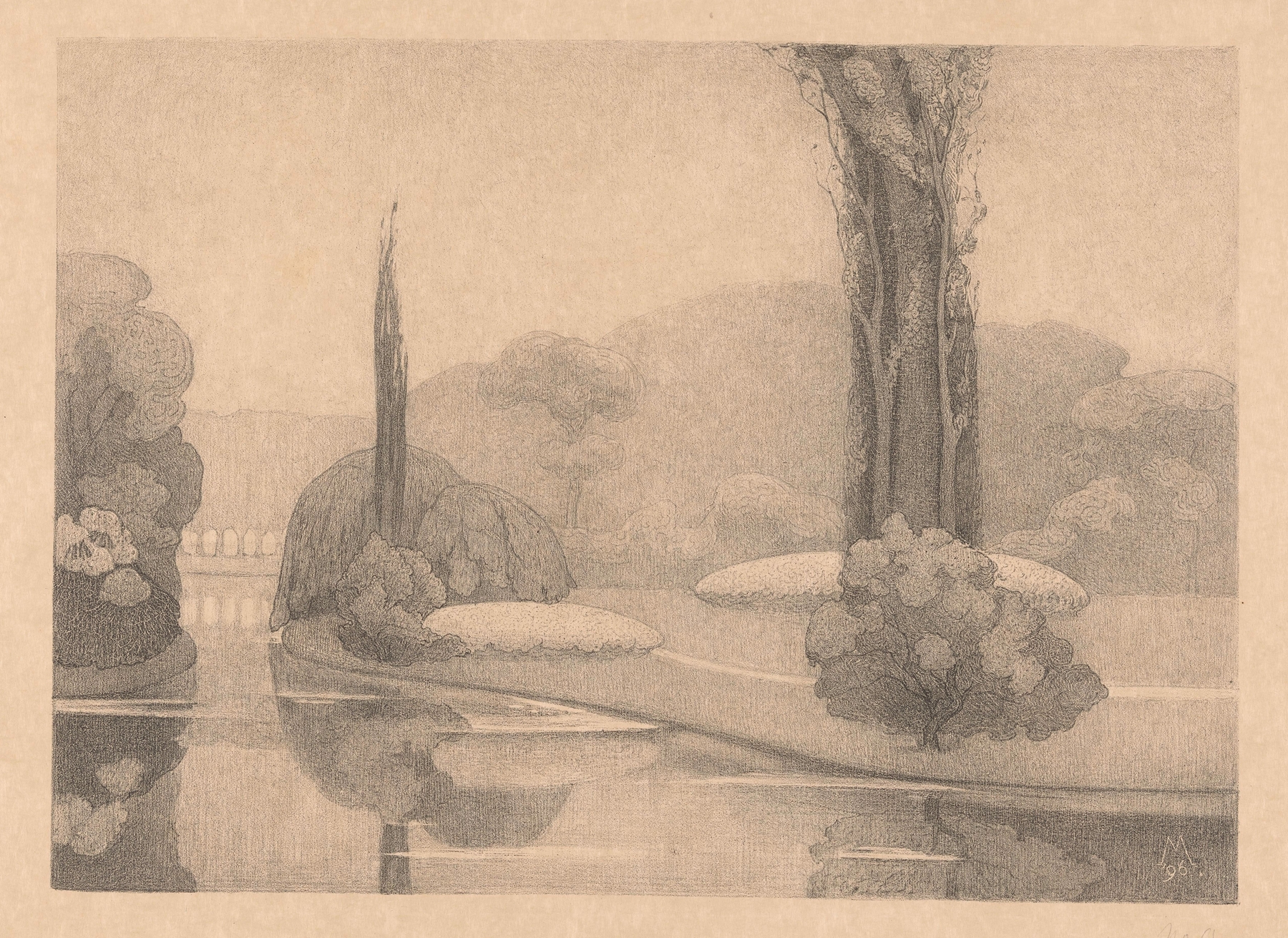
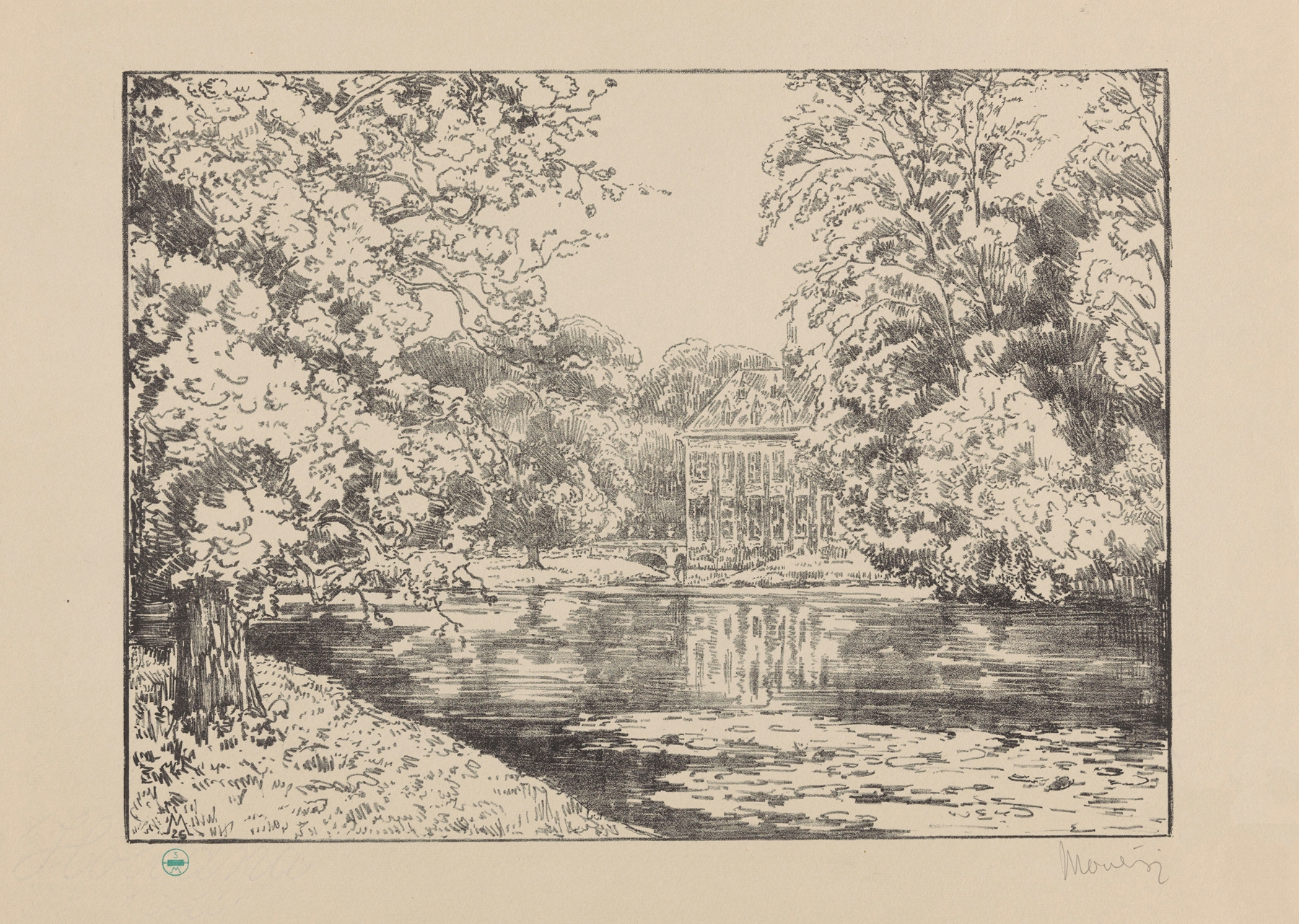
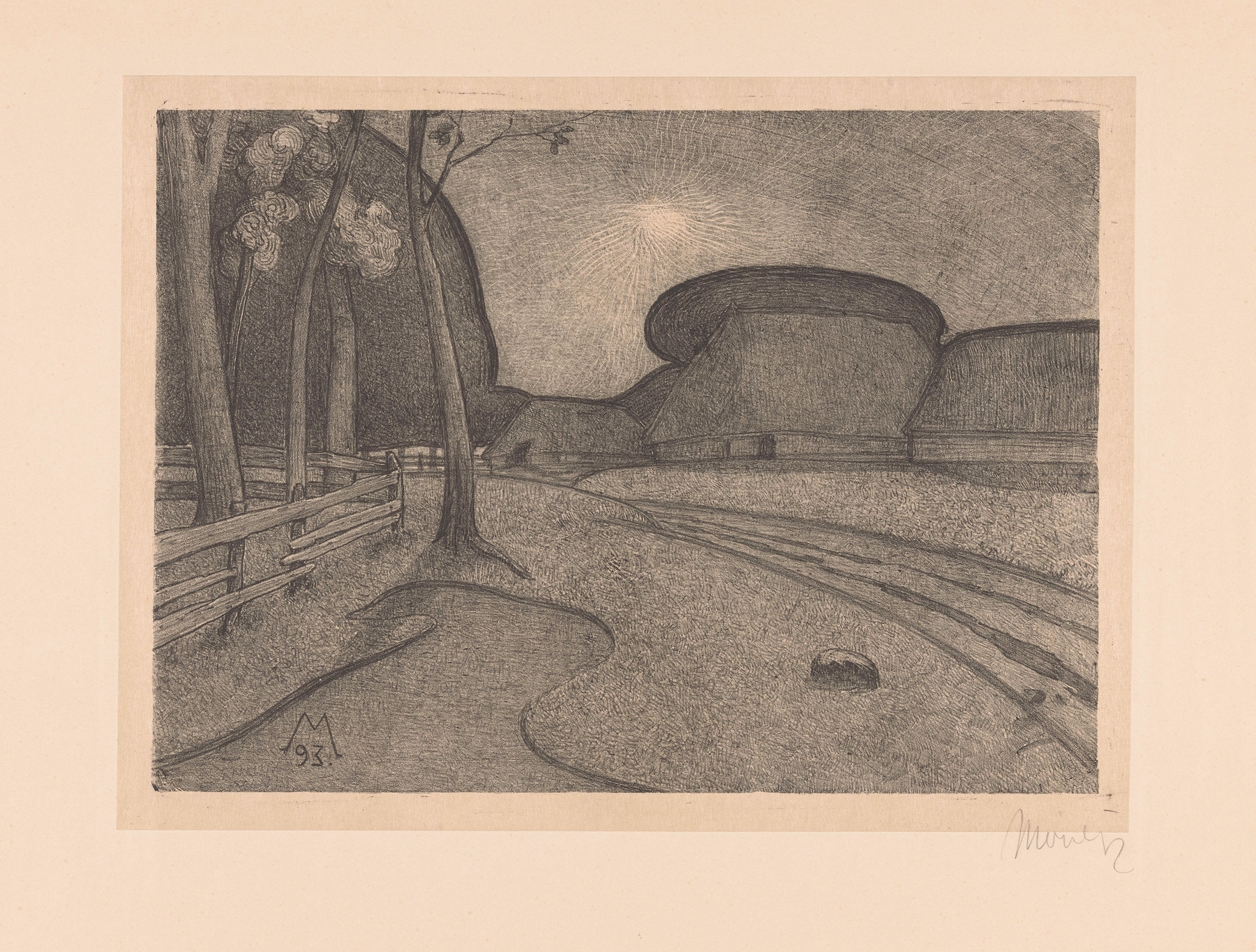
Where does light end, and longing begin? In Wilgen en populieren langs een rivier, the interplay of nature and time creates an echo of yearning that resonates deeply within us. Focus on the gentle bend of the river as it meanders through the canvas, inviting the eye to follow its shimmering trail. The willows and poplars stand sentinel along the bank, their soft greens and warm browns striking a balance between earth and sky.
Notice how the light filters through the branches, casting dappled patterns on the water’s surface, each ripple a whisper of the moment's transience. This masterful use of color and light speaks volumes about the artist's intent to capture a fleeting encounter with nature. Within the tranquil setting lies a tension between stillness and movement, a reminder of the passage of time. The swaying trees, while rooted, seem to sway in a dance with the wind, embodying the bittersweet notion of impermanence.
The reflection in the water acts as a mirror, prompting contemplation about what is real and what is merely a fleeting impression. It’s a poignant reminder that while nature remains constant, our experiences within it are ephemeral. In 1898, Simon Moulijn painted this piece during a time of great change in the art world, as Impressionism was gaining momentum in the Netherlands. Moulijn, influenced by the serene beauty of his surroundings, sought to convey a sense of immediacy and intimacy with the landscape, reflecting both his personal journey and the broader movements within contemporary art.