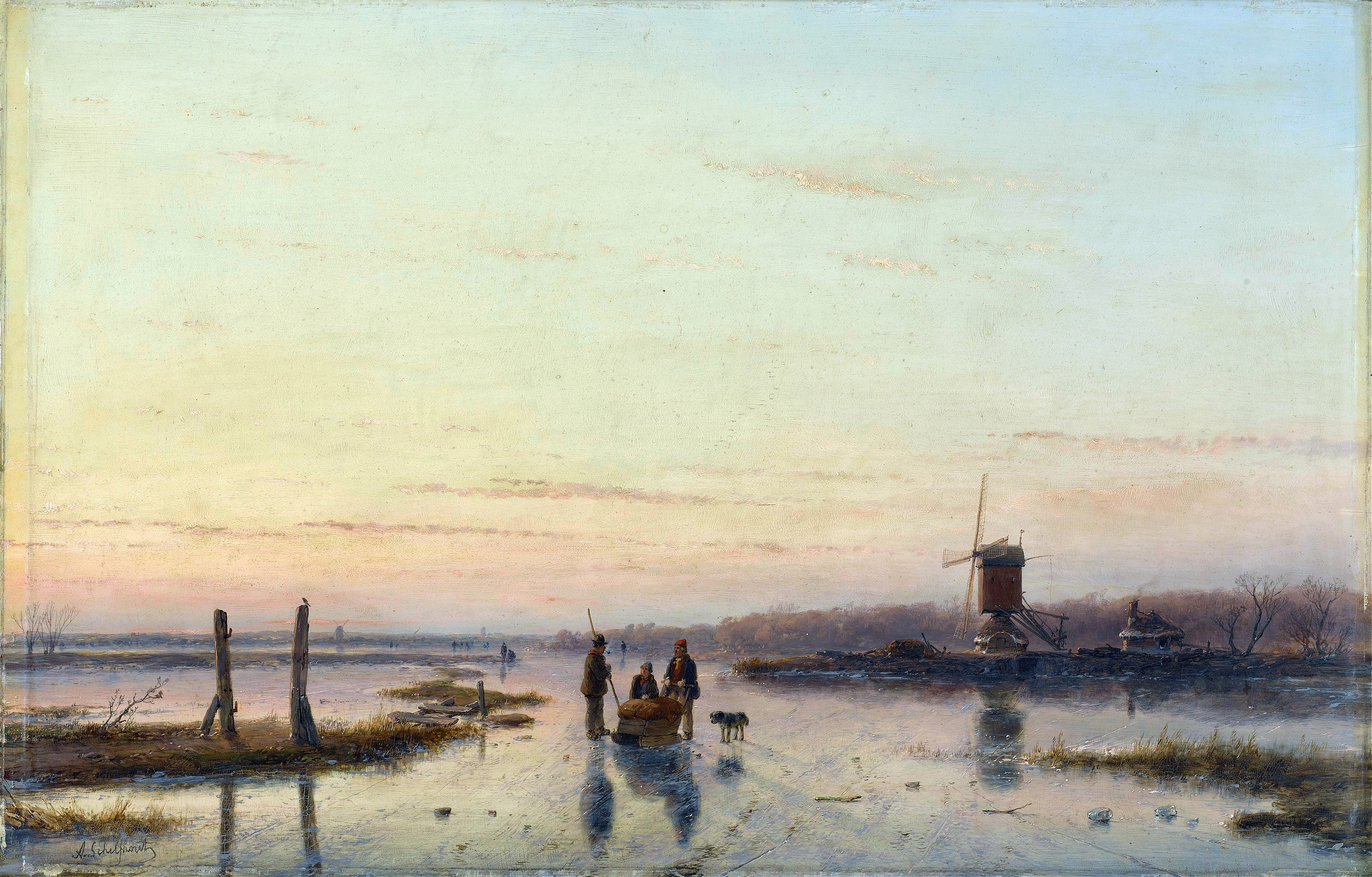
Winter landscape with figures by a boat on a frozen waterway — History & Analysis
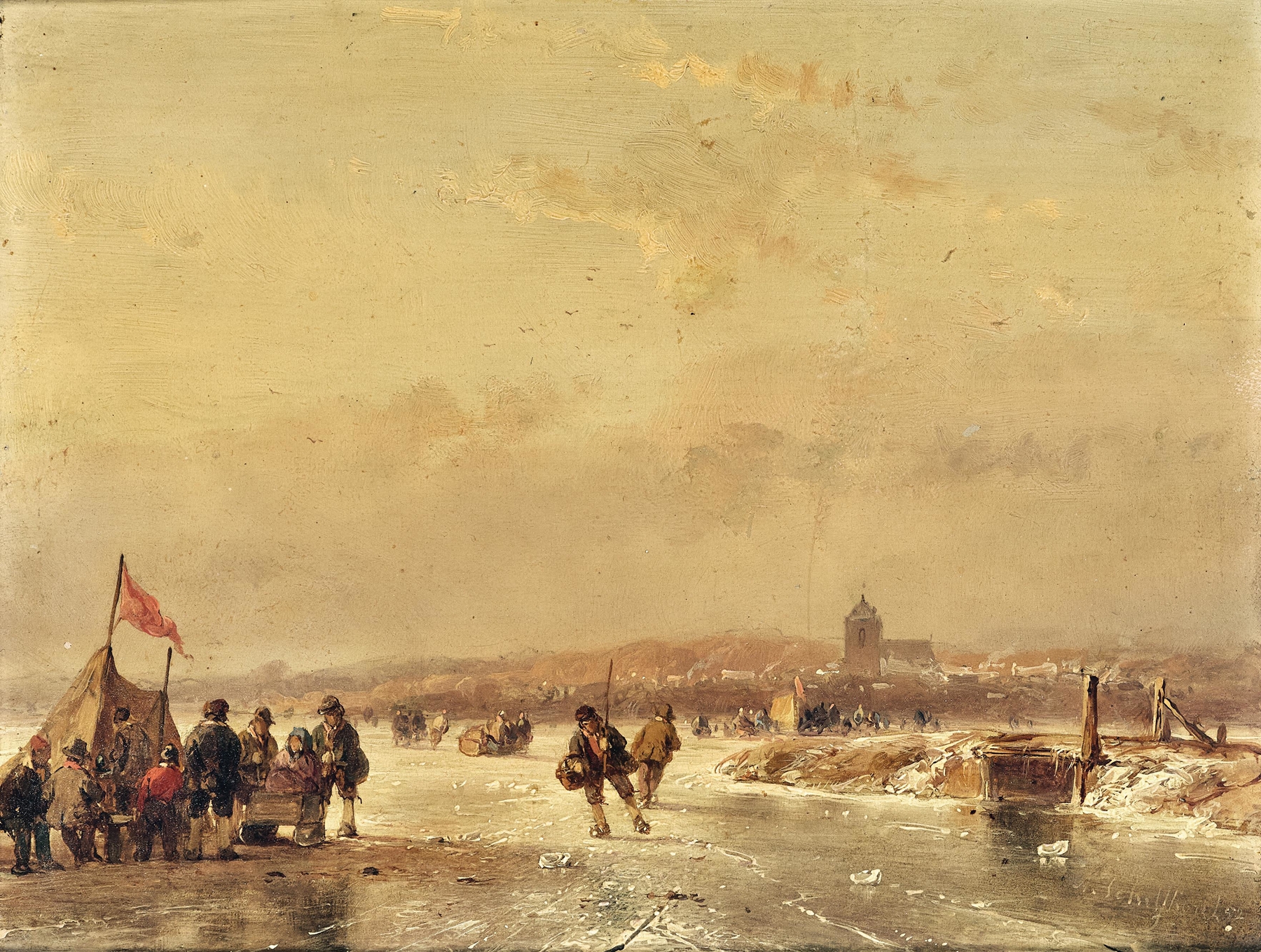
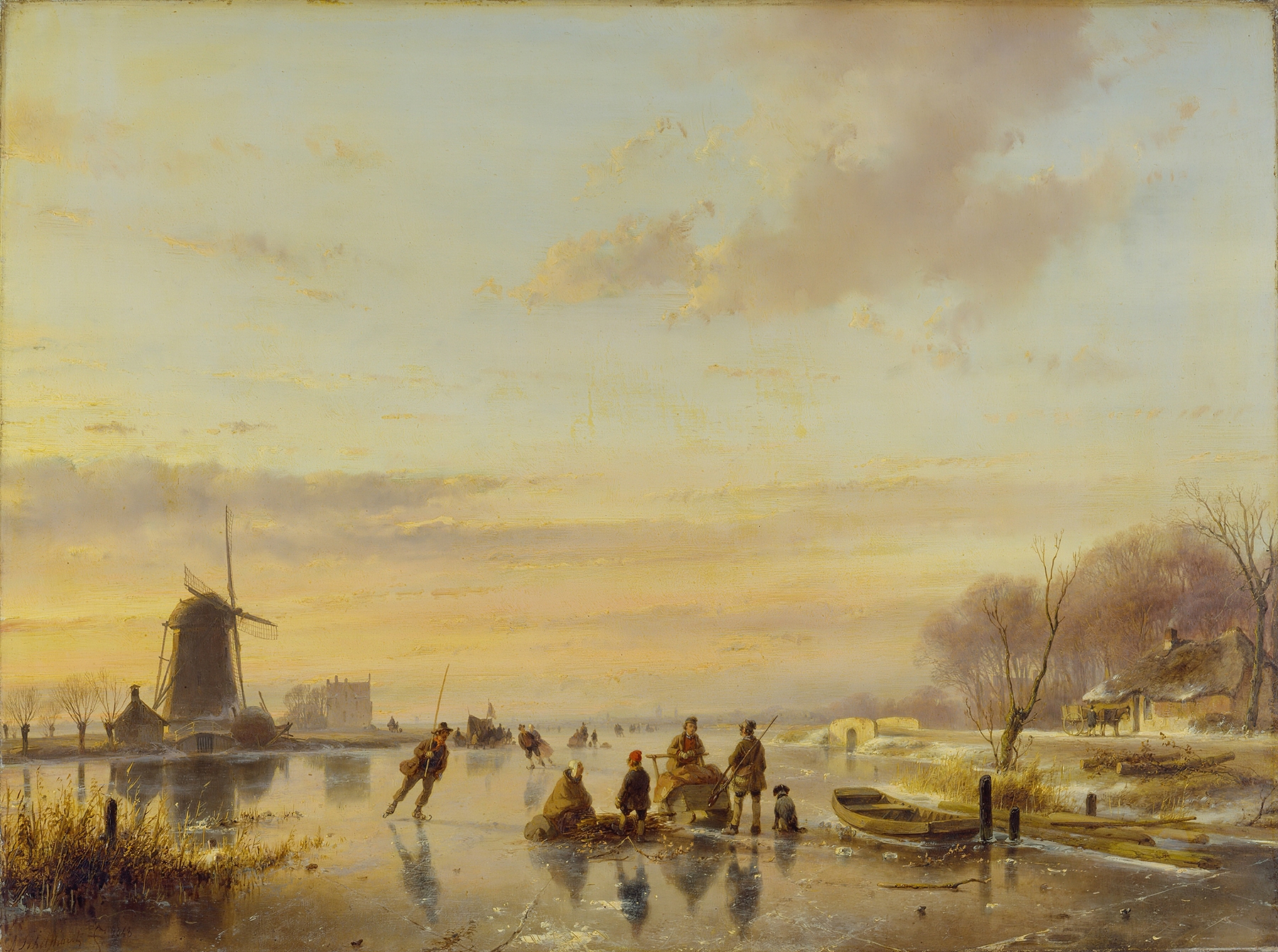
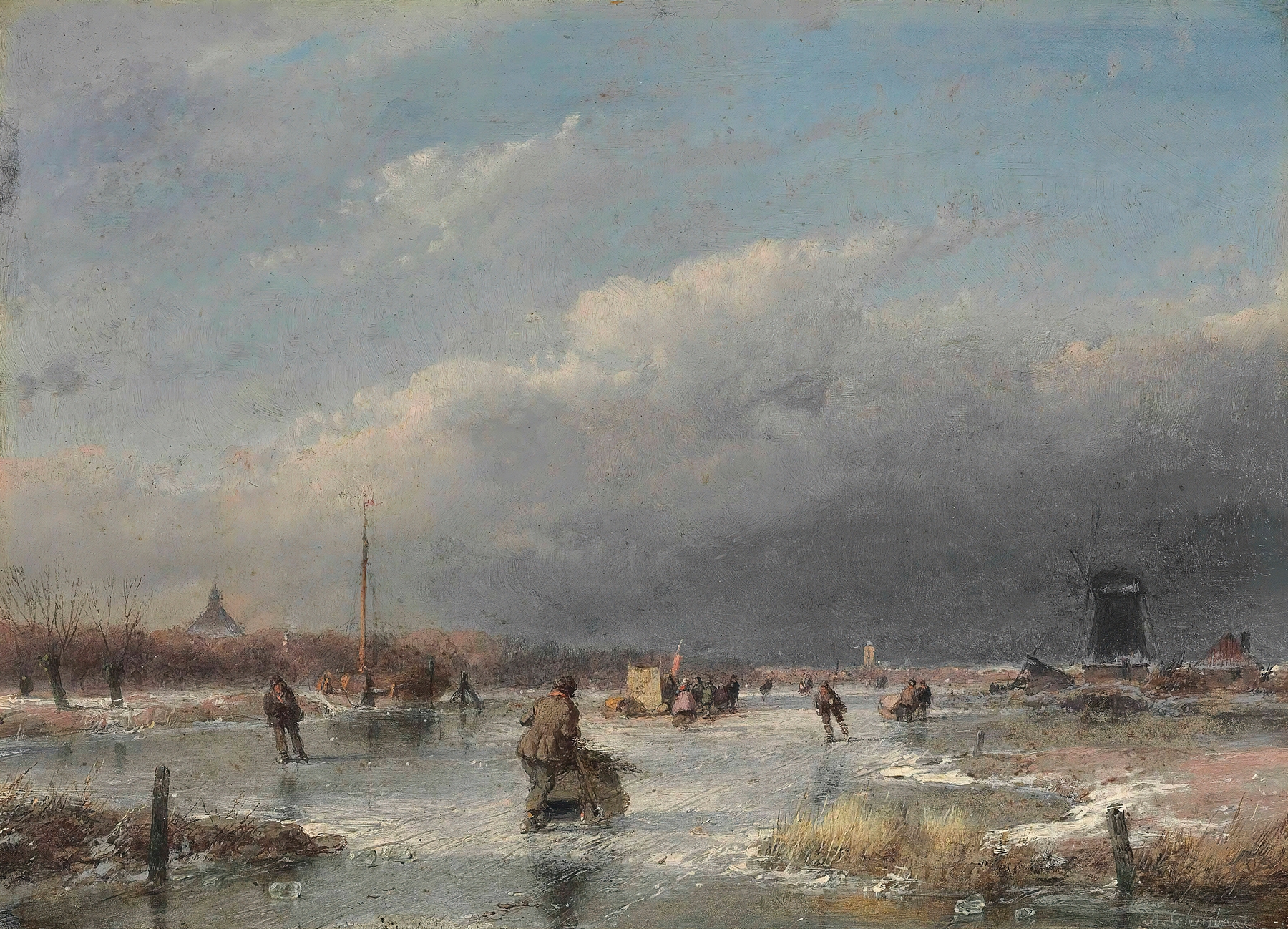
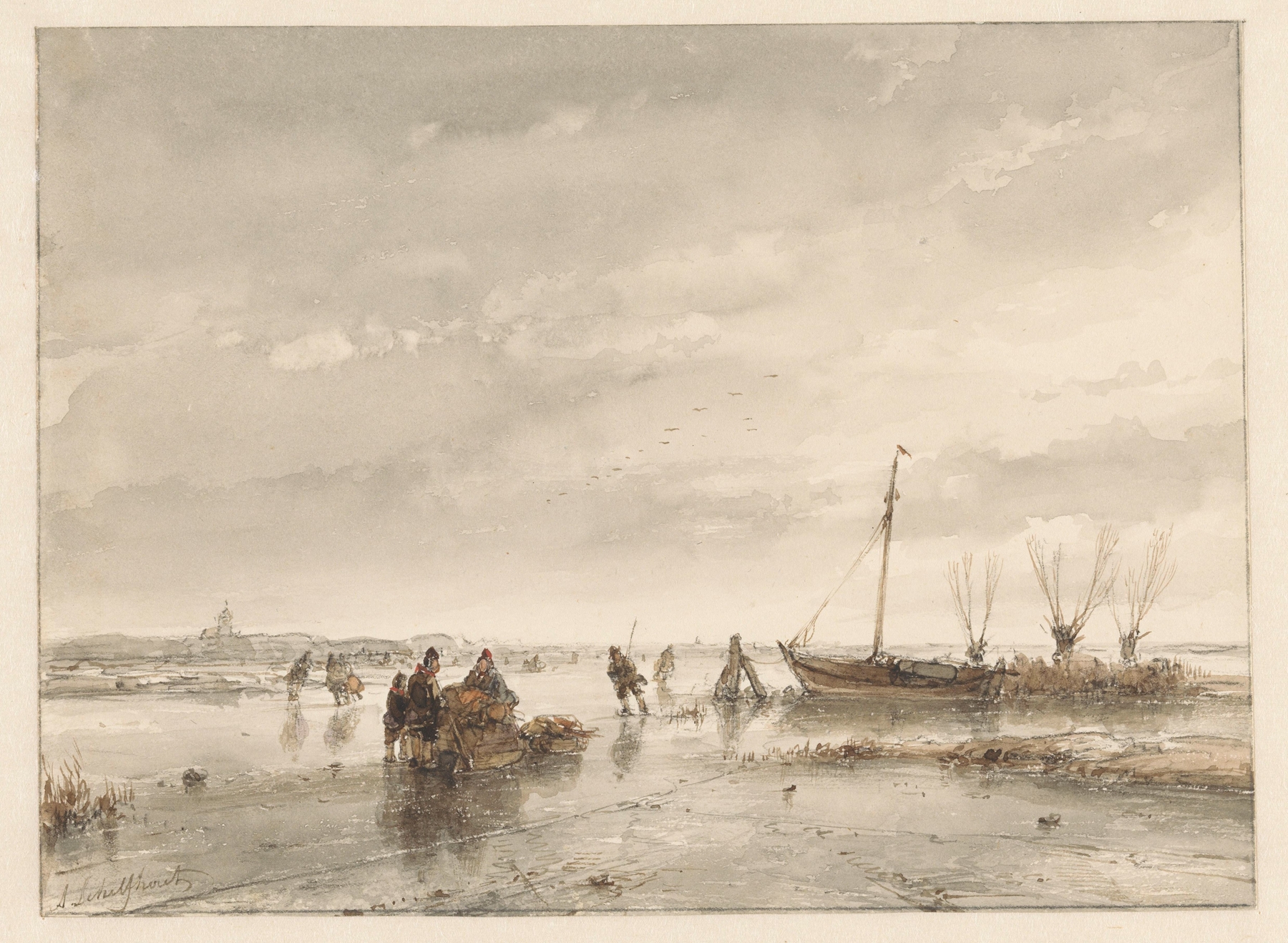
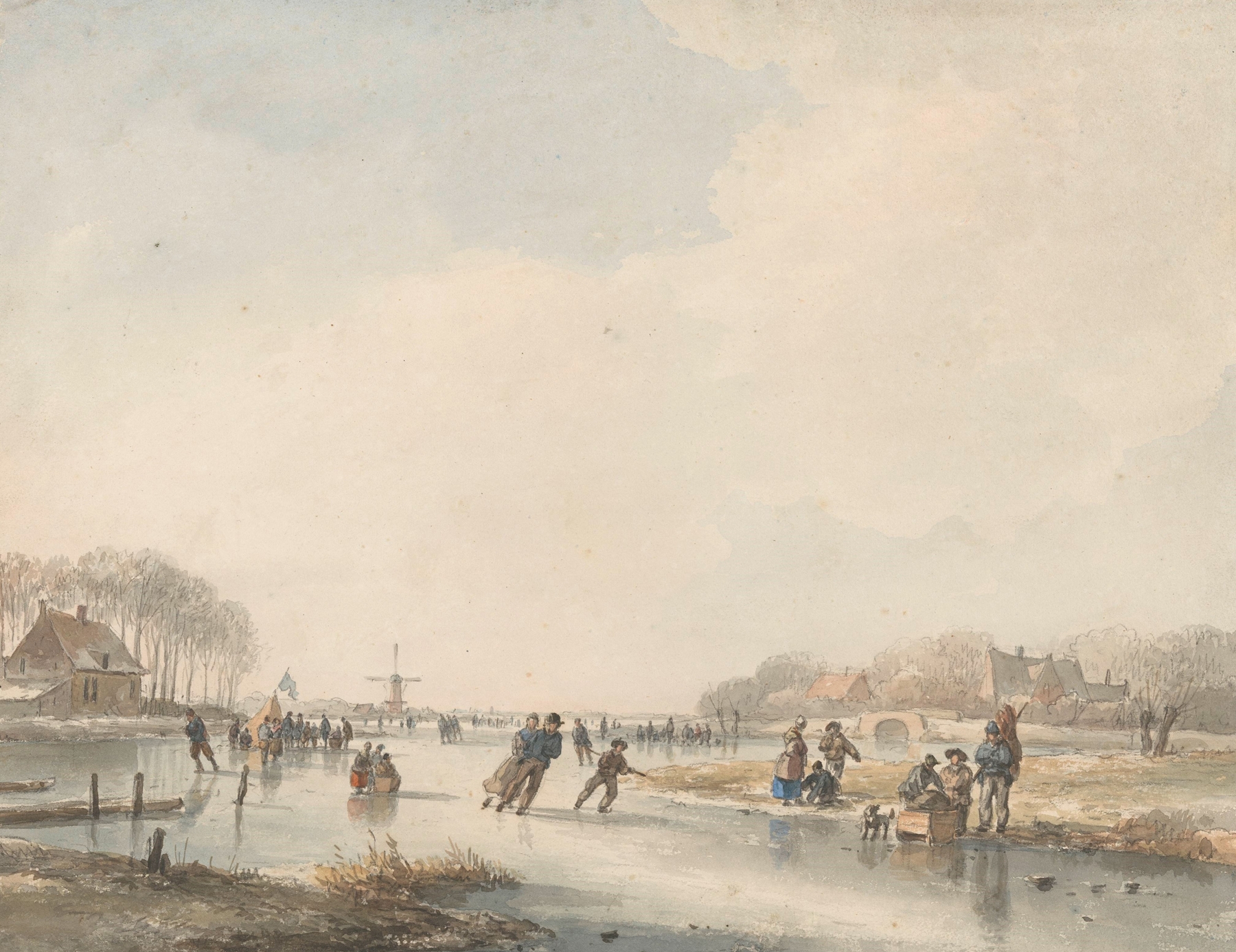
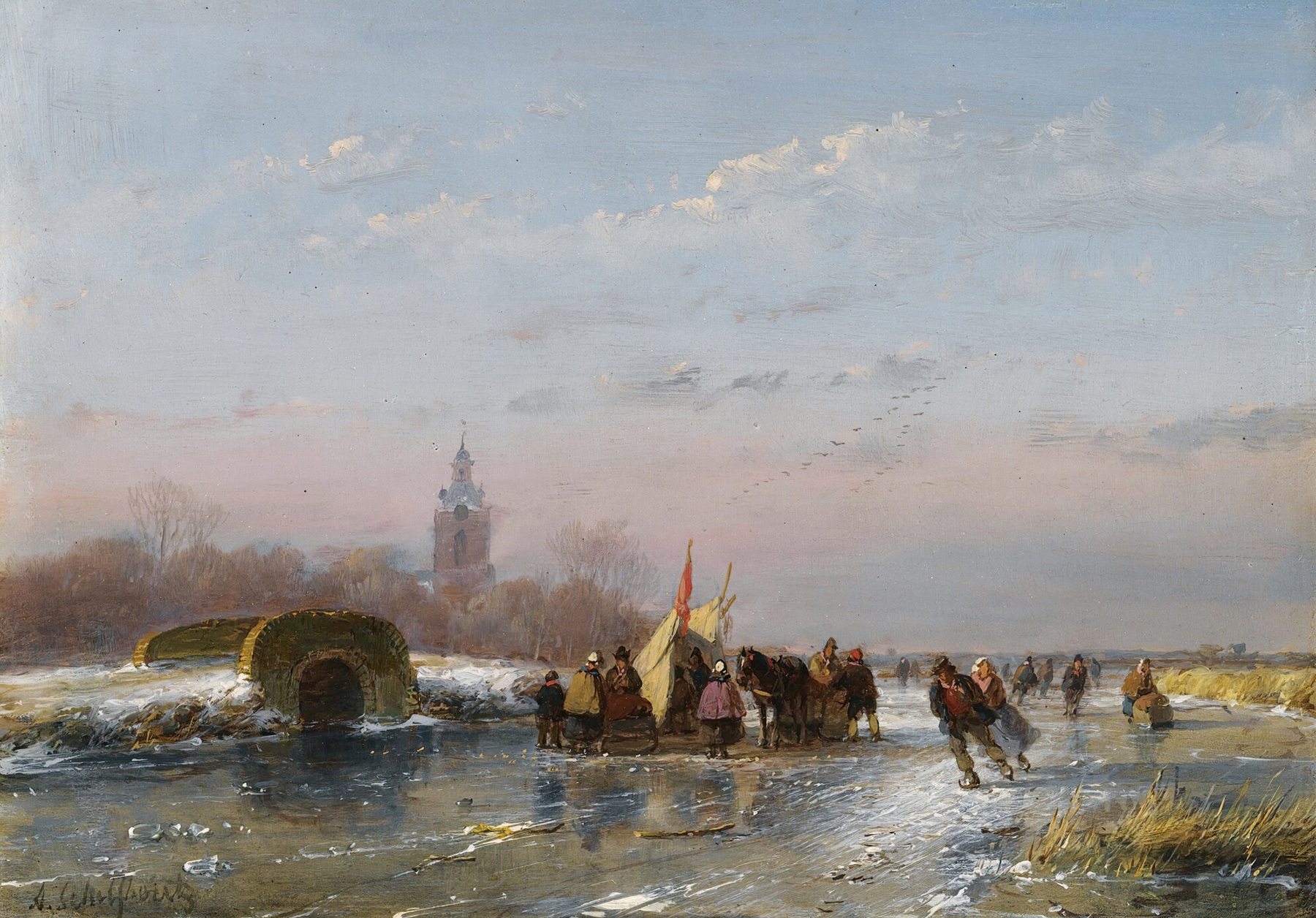
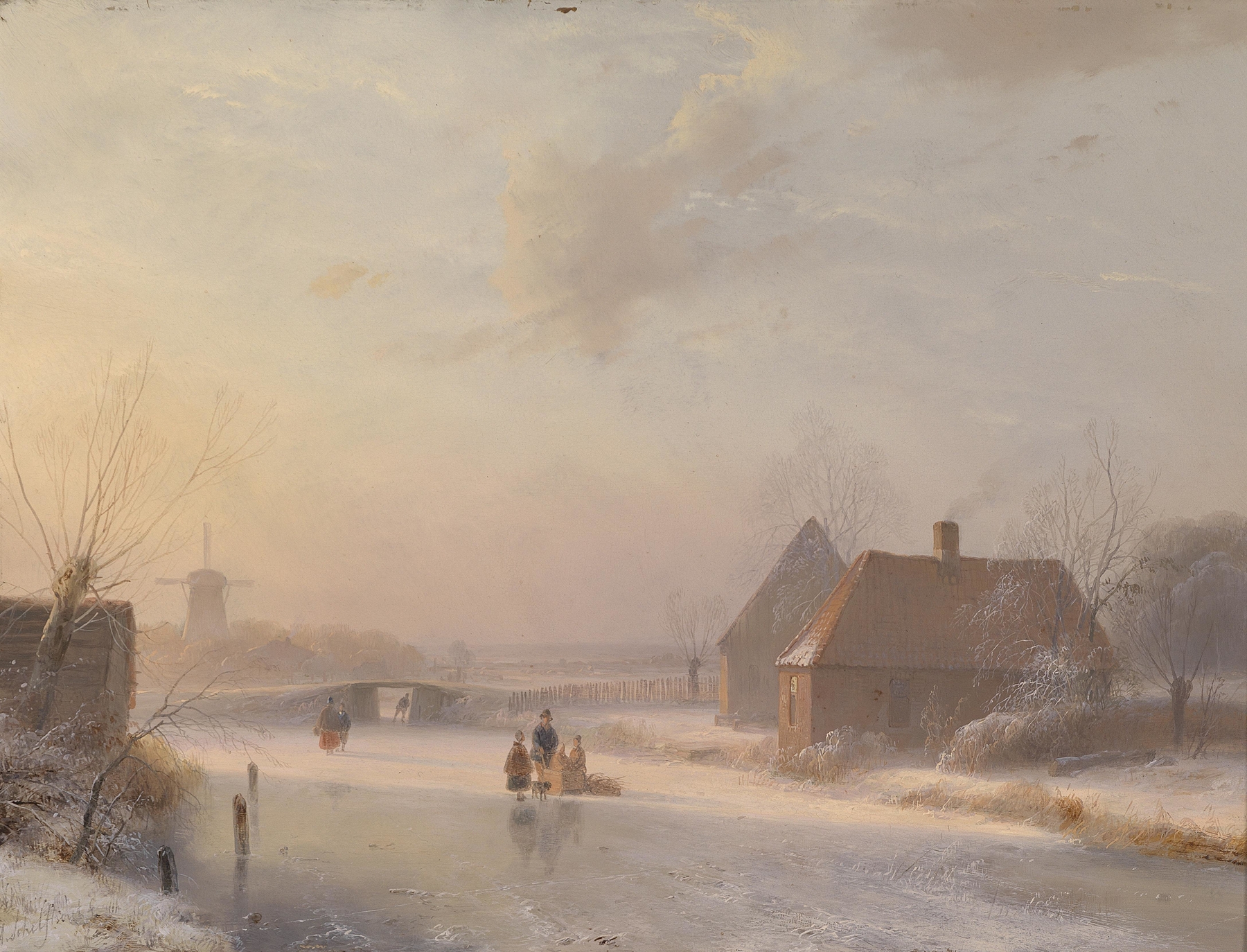
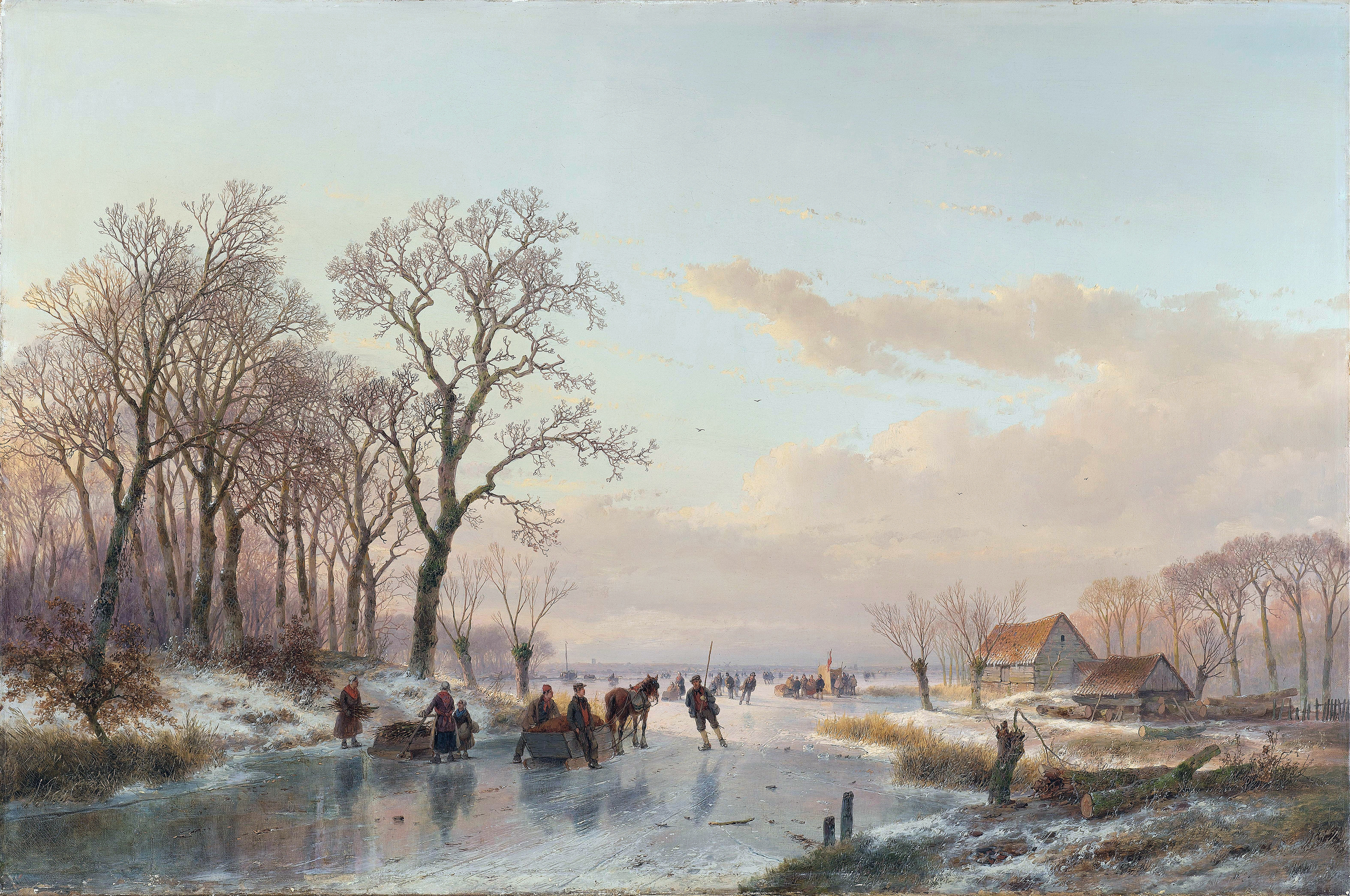
What secret hides in the quiet of the canvas? As the cold blue expanse stretches before us, a world both serene and unsettling unfolds, inviting contemplation and reflection on faith’s resilience amid the winter chill. Look to the center where figures, small yet deliberate, engage in the delicate act of navigating a frozen waterway. Their silhouettes are set against a backdrop of muted whites and grays, where the frigid light dances subtly upon the surface.
Notice how the gentle brushstrokes create a sense of movement, leading your gaze toward the distant horizon, while shadows deepen the sense of isolation. The starkness of the scene is softened by the warm hues of their clothing, a visual reminder of hope and perseverance. Yet, beneath this tranquil surface lies a complex interplay of contrasts—between man and nature, warmth and cold, action and stillness. The figures, though engaged in their tasks, appear almost contemplative, as if pondering the very essence of their existence in this frozen realm.
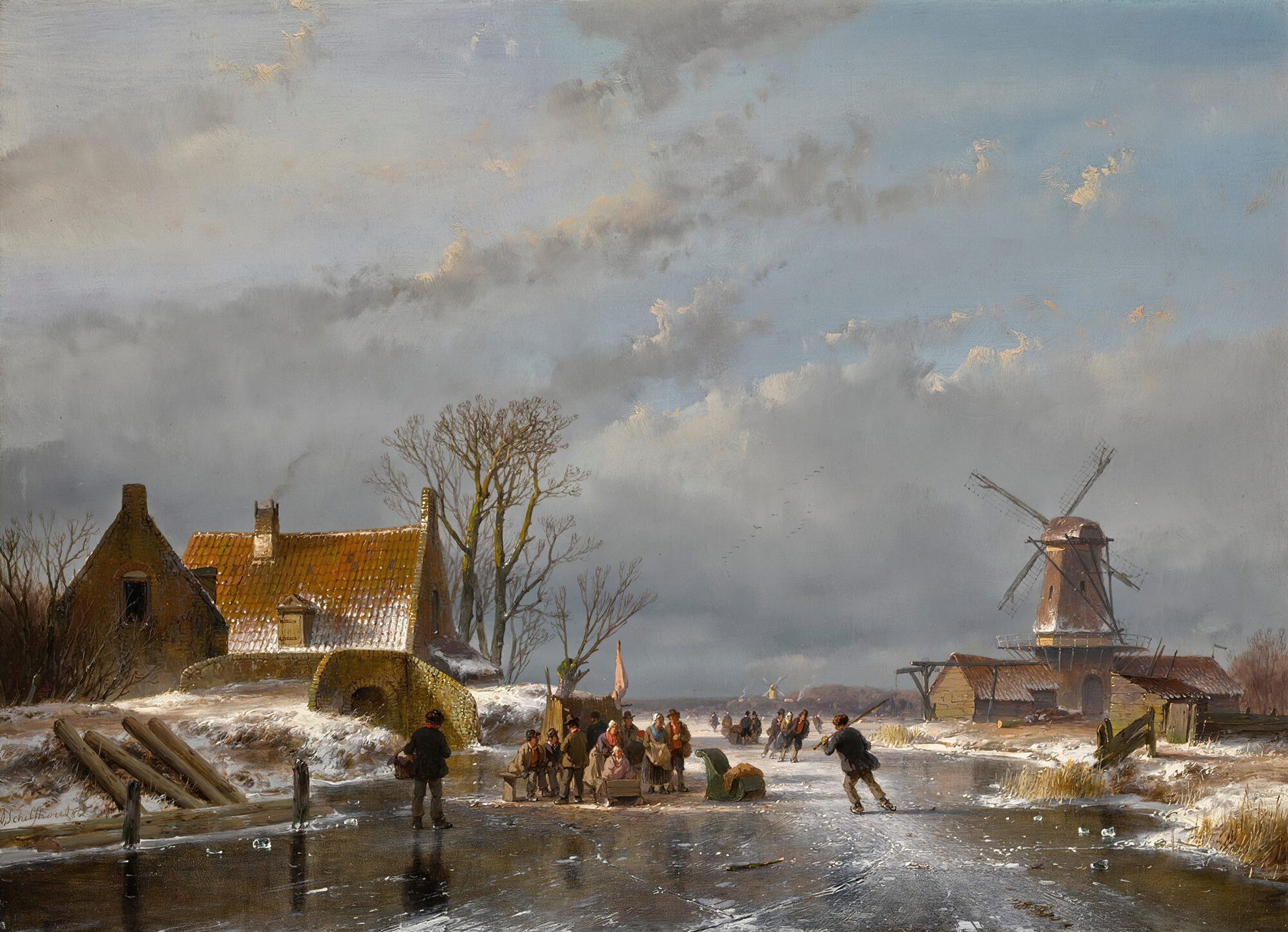
The juxtaposition of the vibrant blues and the muted earth tones suggests a fragile balance between despair and faith, evoking a deeper emotional resonance that transcends mere observation. Andreas Schelfhout painted this landscape in the 19th century, a time when the Romantic movement was shaping the art world. Working in the Netherlands, he sought to capture the beauty of nature, often drawn to the starkness of winter landscapes. This period reflected a growing appreciation for the sublime in nature, as artists explored the emotional depths of their subjects, echoing the broader philosophical inquiries of their time.