Winter Landscape with Snow-covered Trees — History & Analysis
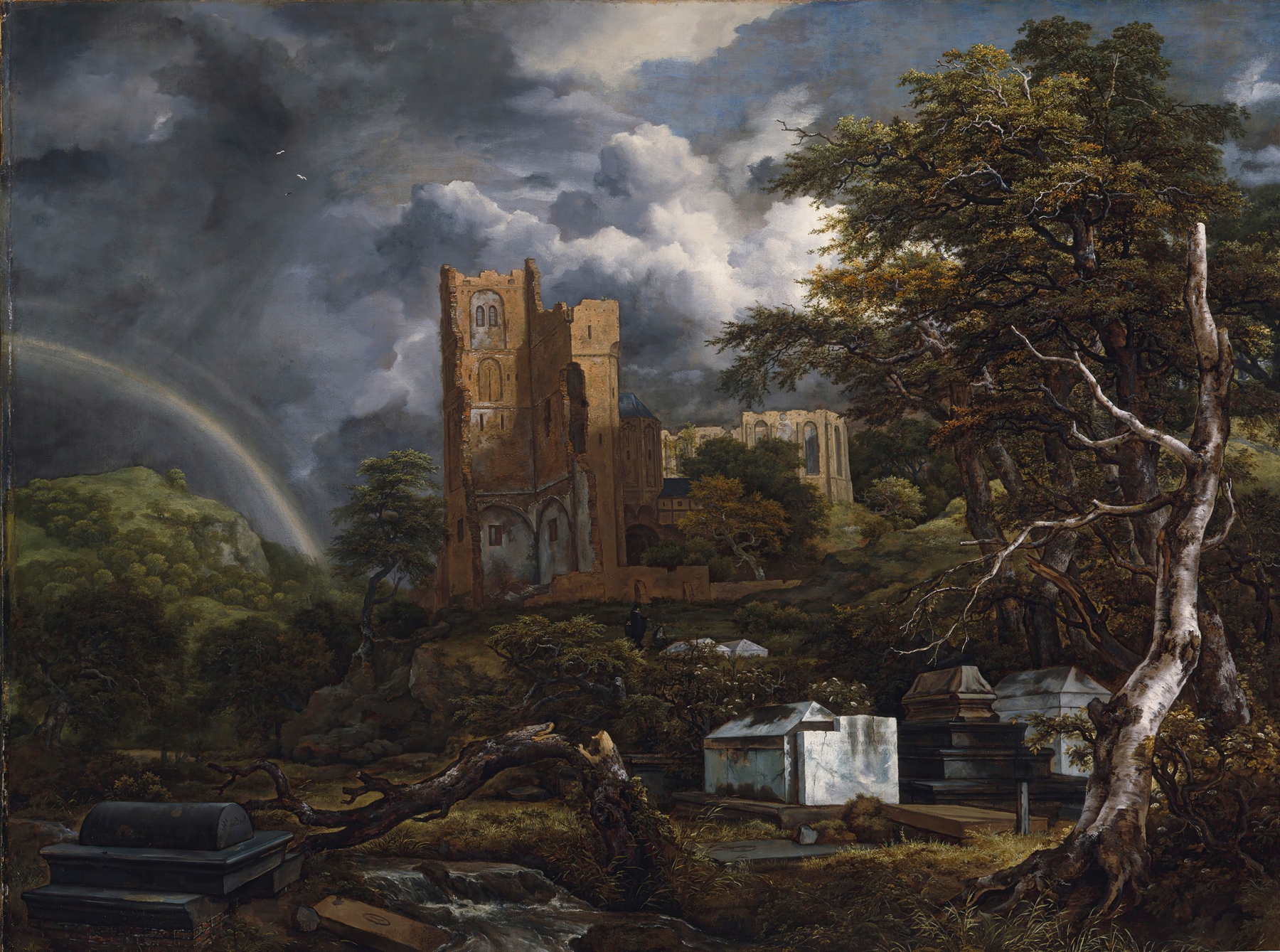
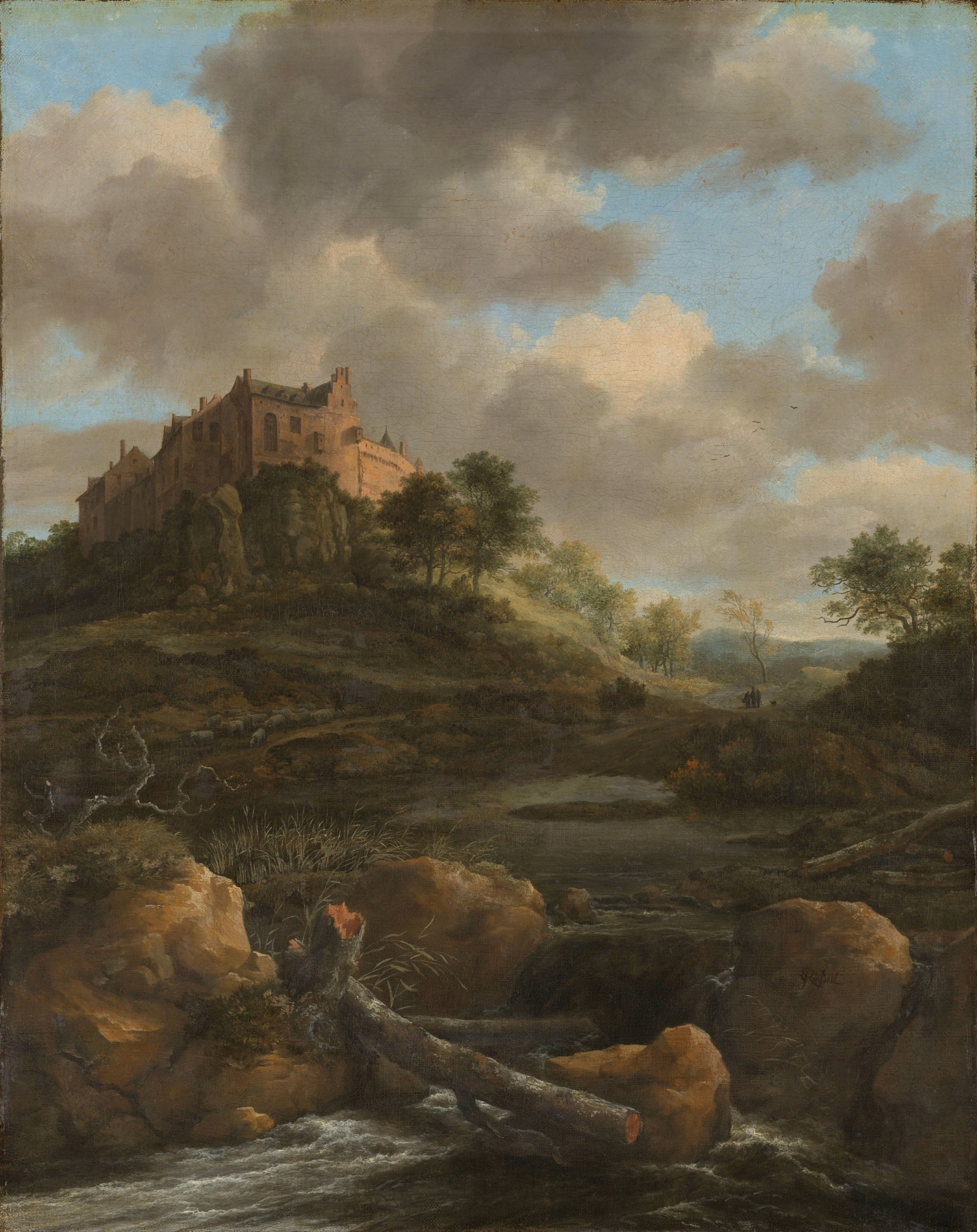
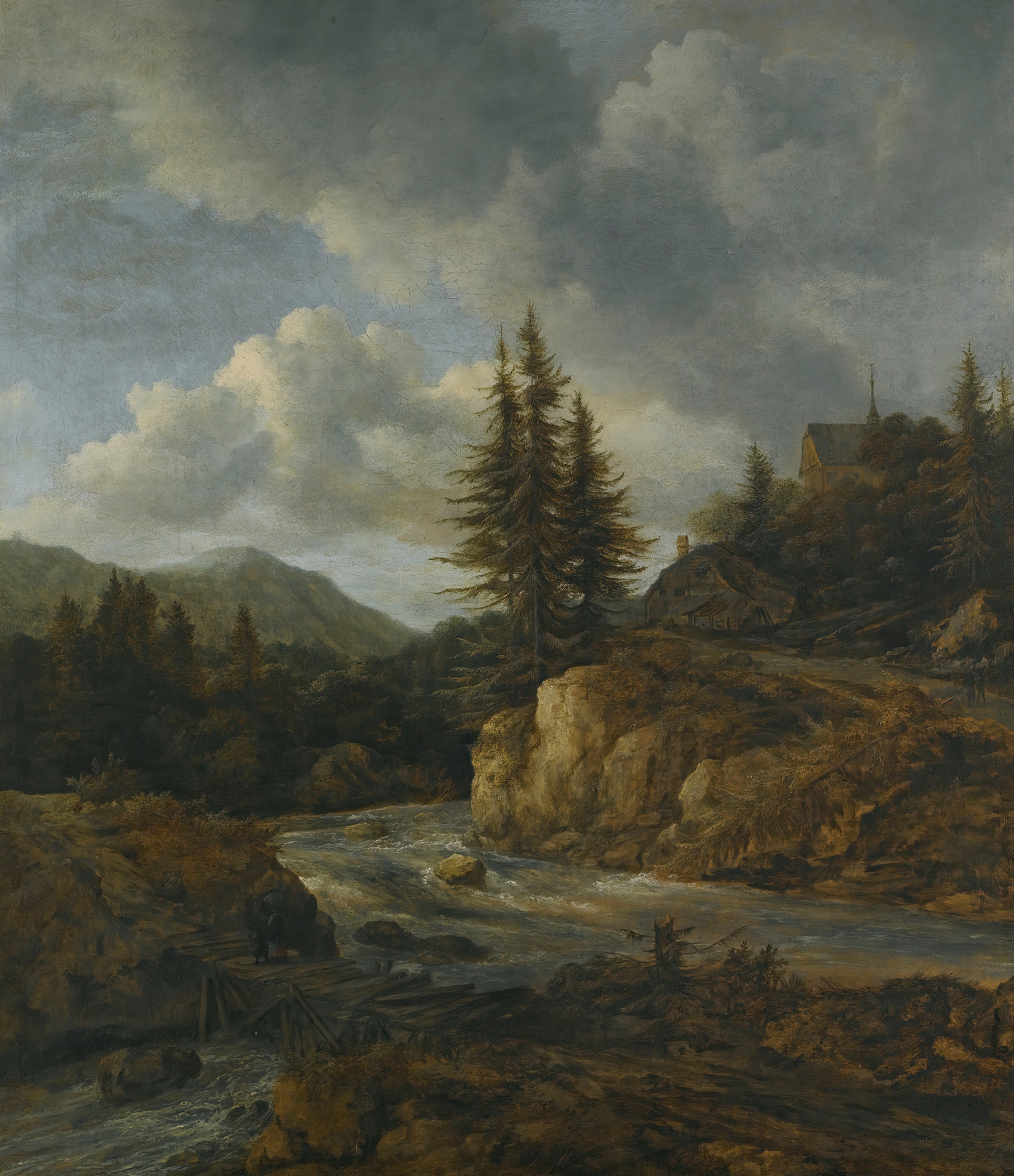
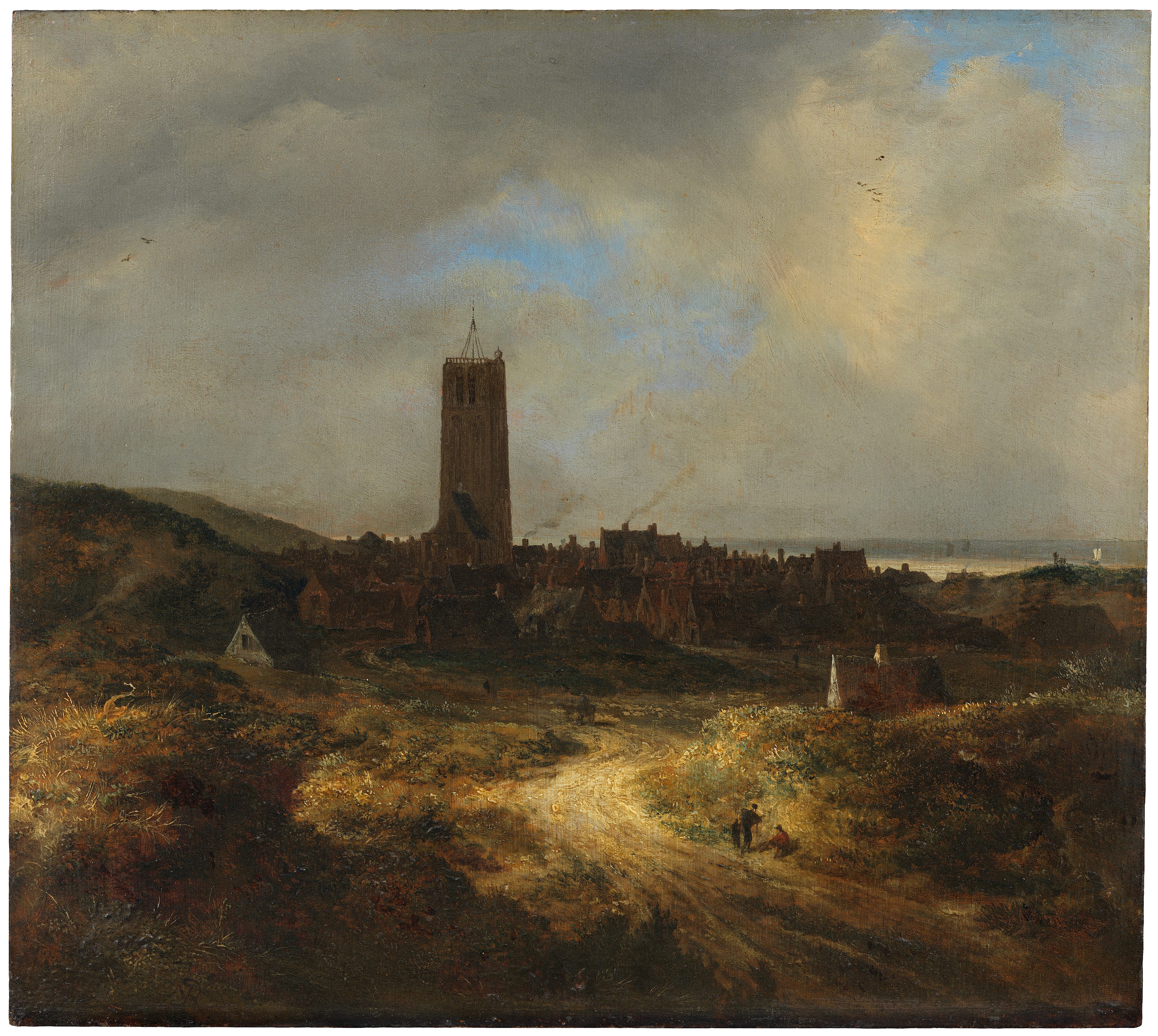
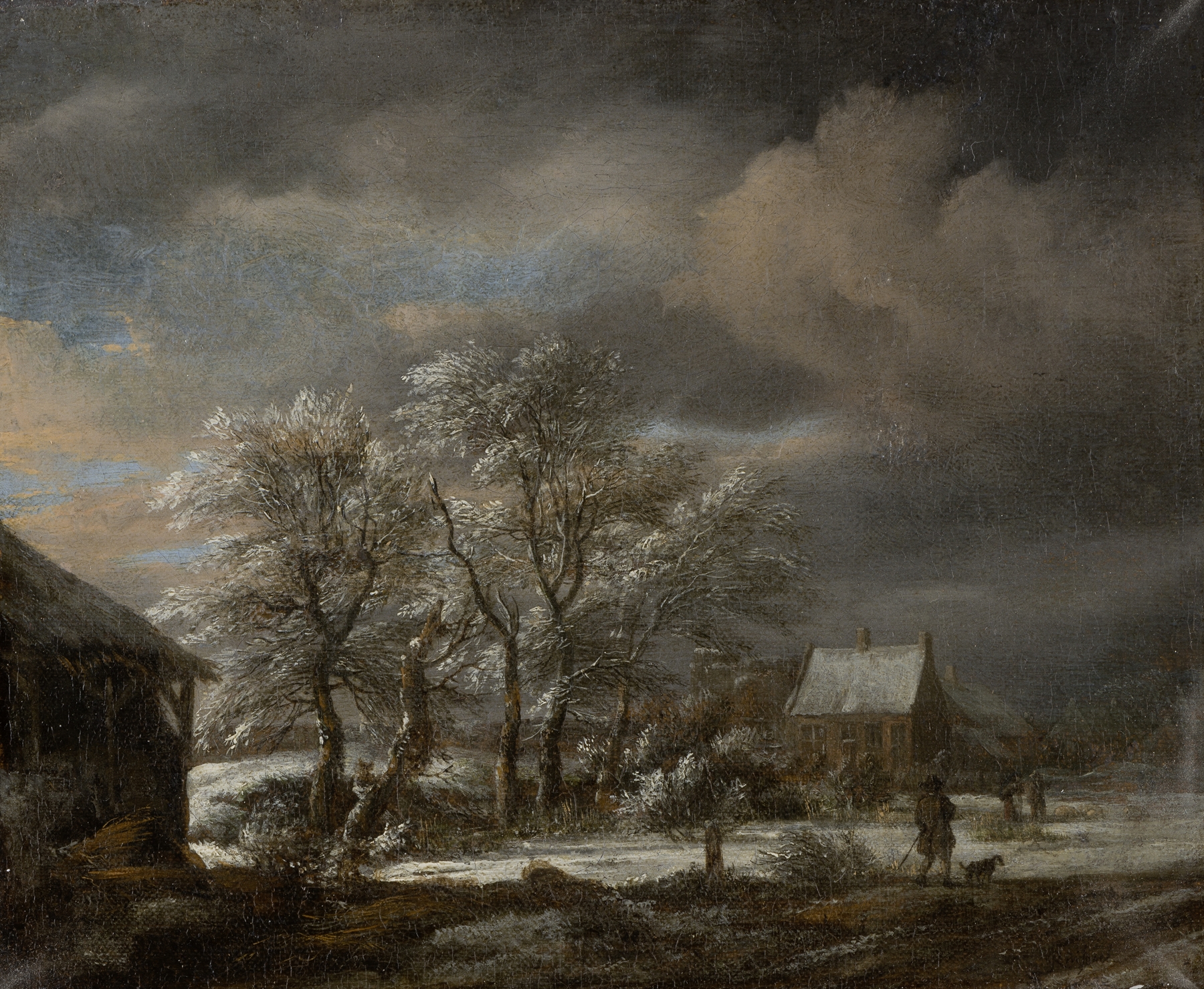
Is this a mirror — or a memory? The tranquil beauty of a winter landscape, captured in delicate strokes, invites viewers to wander through a dreamlike, snow-draped world. Look to the left at the towering, snow-covered trees that frame the canvas, their dark trunks contrasting against the pure white drifts. The gentle gradient of blues and grays in the sky transforms into a luminous glow near the horizon, hinting at the possibility of a hidden sun.
Notice how Ruisdael plays with the composition: the winding path invites you deeper into the scene, creating a sense of movement and exploration, while the soft light caresses the contours of the snow, showcasing the artist's mastery of natural illumination. The painting is rich with emotional tension; the stillness of winter evokes both serenity and isolation. The delicate interplay of light and shadow suggests a fleeting moment, where time feels suspended. The distant figures, diminutive against the vast landscape, convey a sense of solitude, yet they also symbolize human resilience in the face of nature’s grandeur.
Each brushstroke captures not just the physical beauty of winter but also the introspective melancholy that often accompanies the season. Jacob van Ruisdael created this work between 1670 and 1680, during a period when he was honing his skills in landscape painting amidst the Dutch Golden Age. He was living in Haarlem at the time, a hub for artists exploring the nuances of nature and light. This period marked a shift in the representation of landscapes, as artists began to infuse their works with personal emotions, reflecting the societal transformations and philosophical inquiries of the era.