Winter Scene on the Ice with Wood Gatherers — History & Analysis
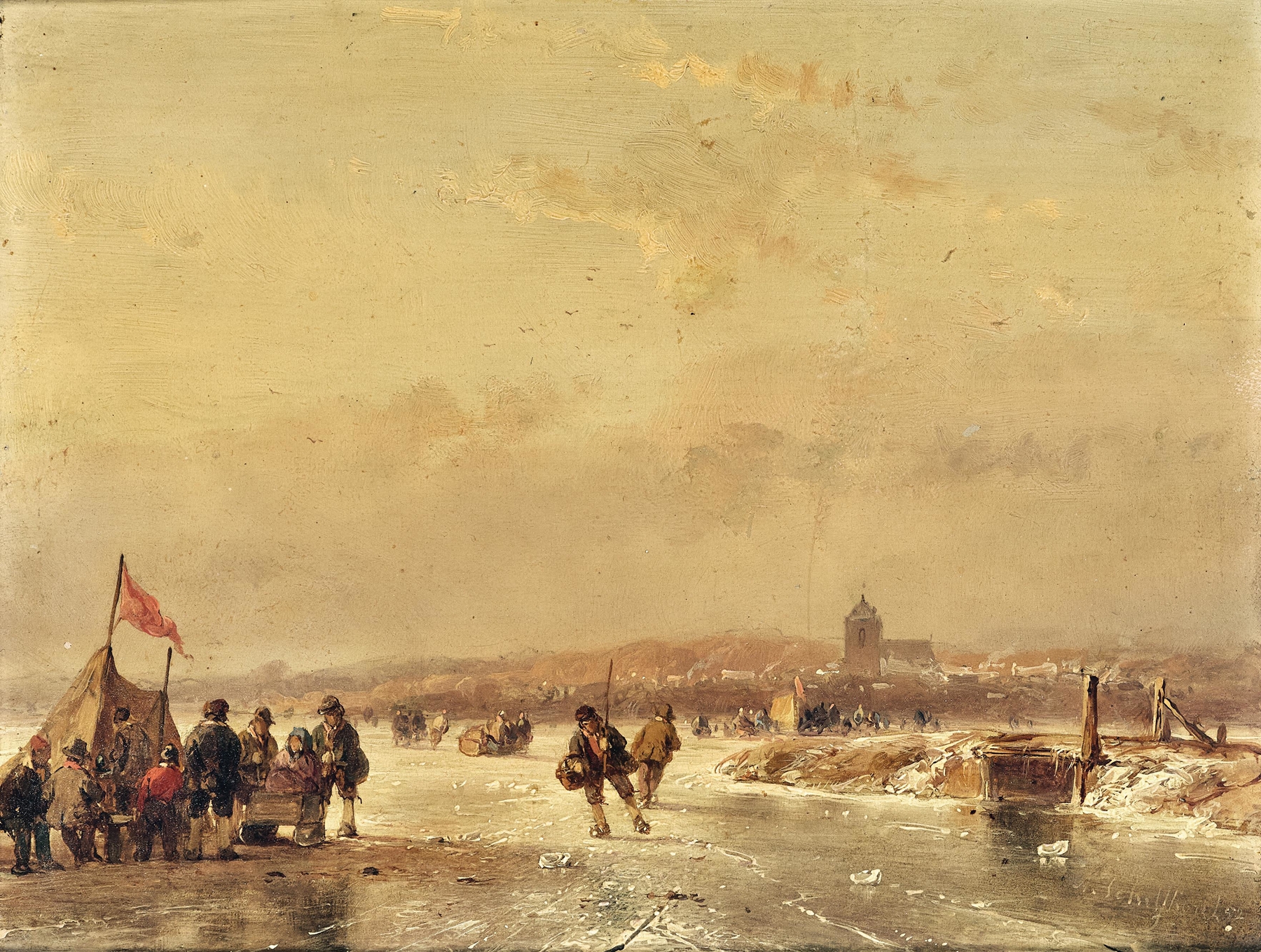
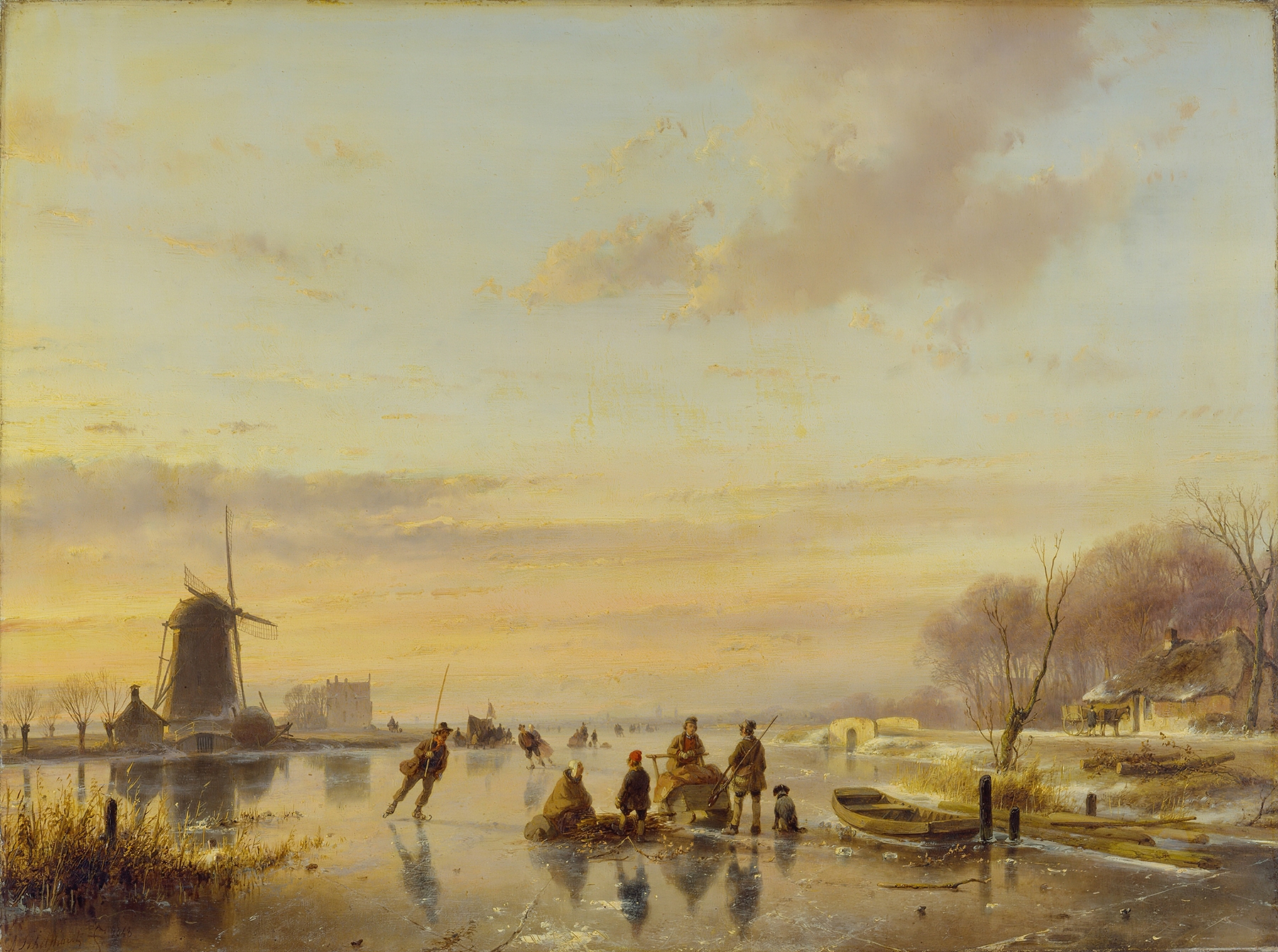
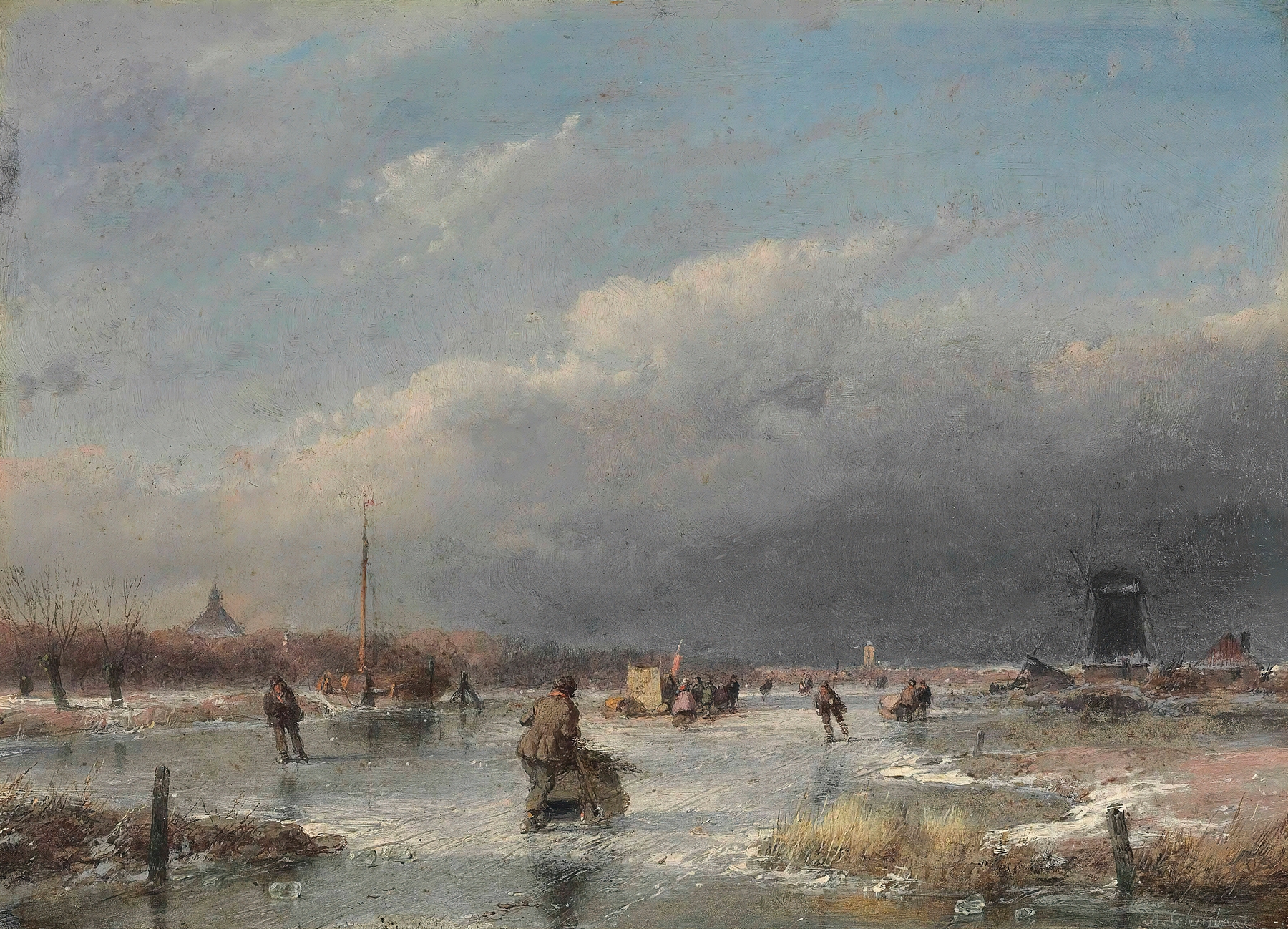
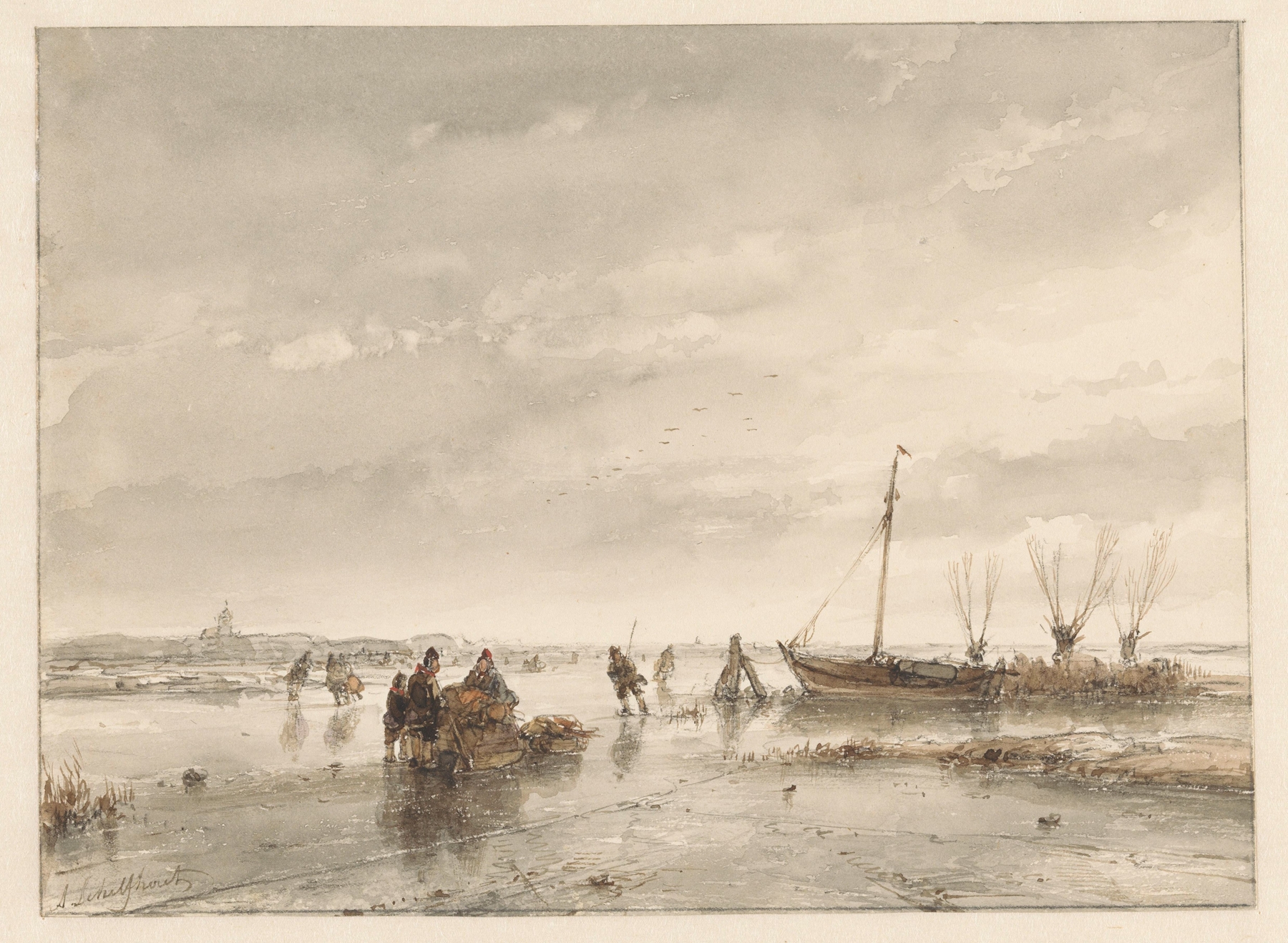
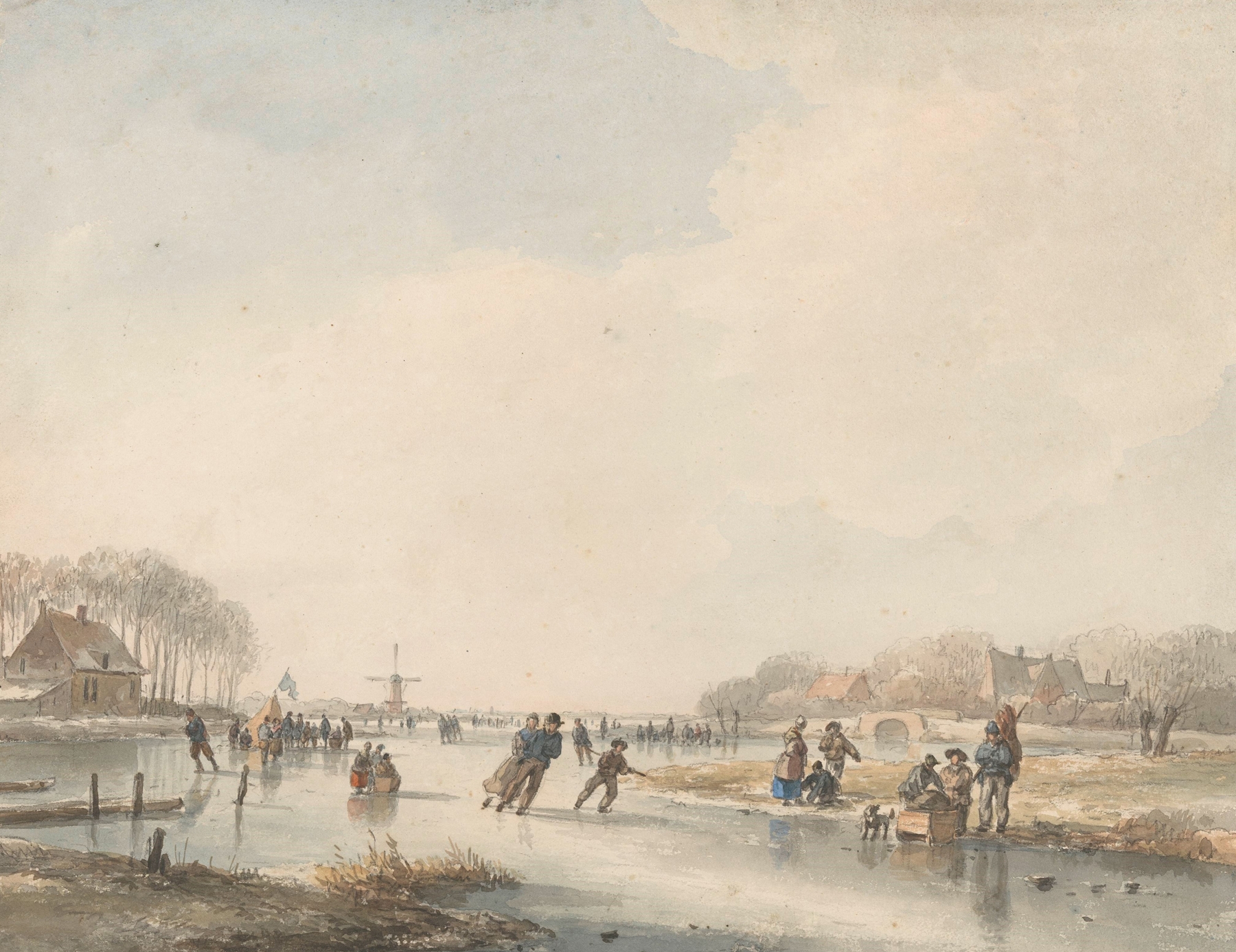
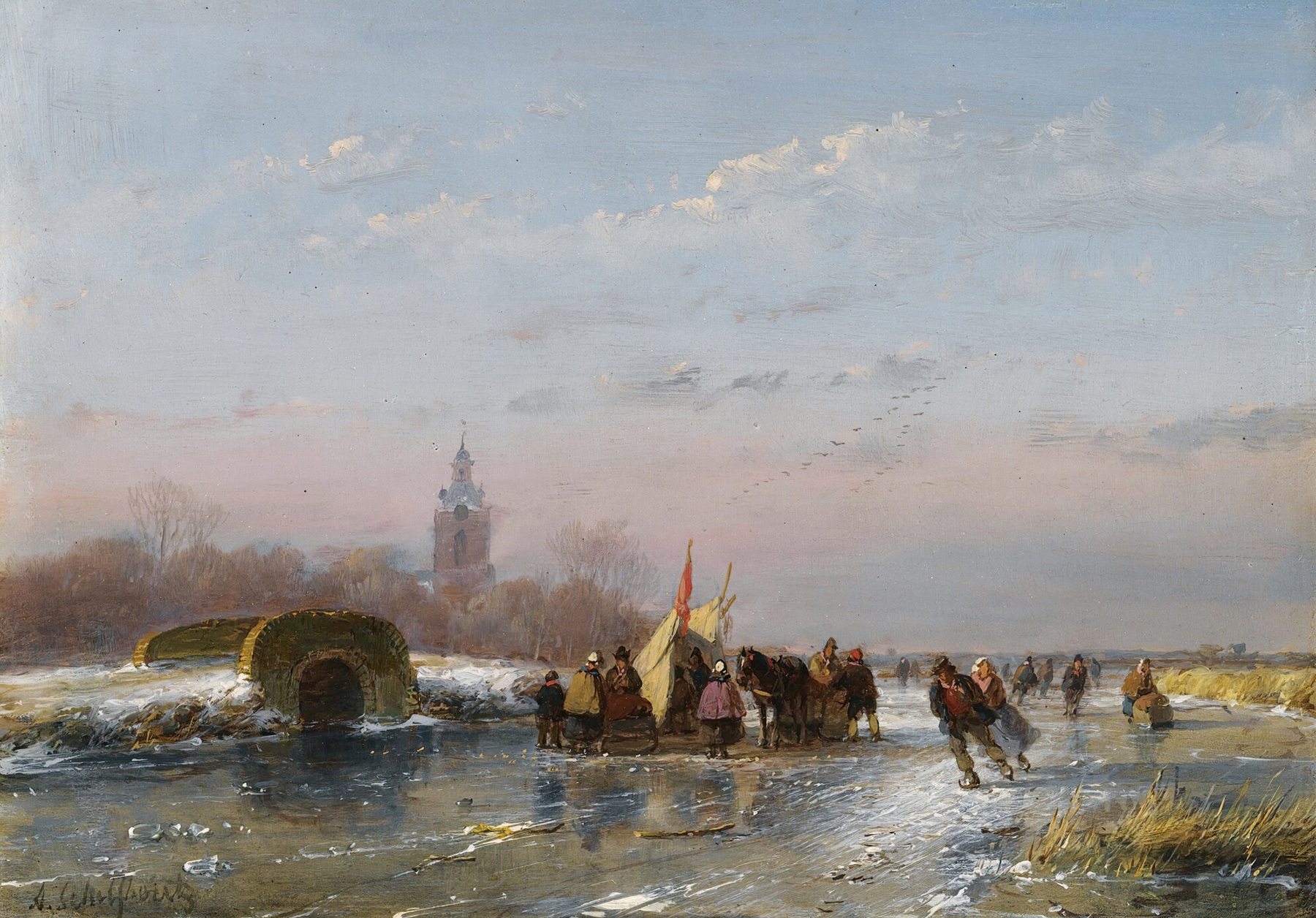
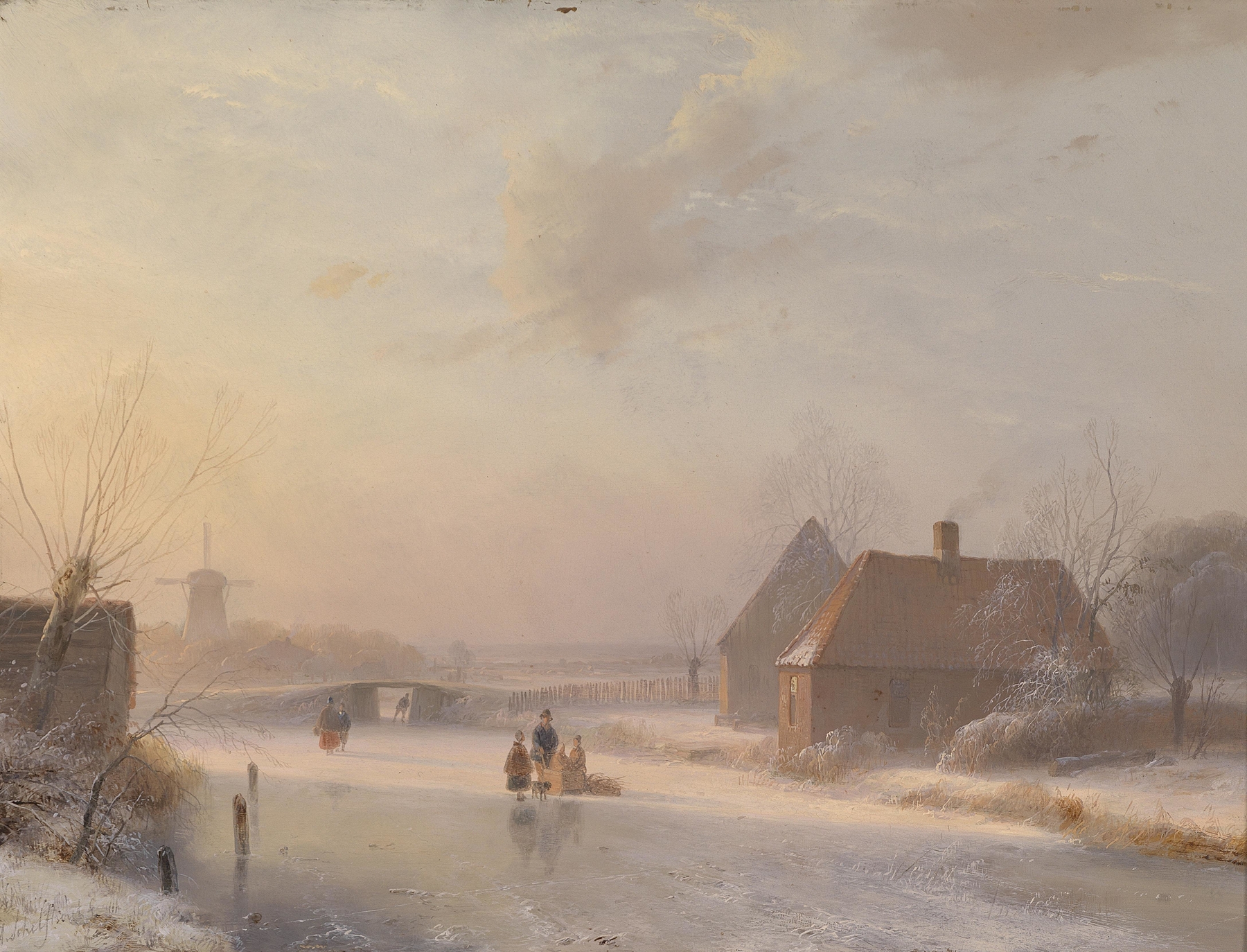
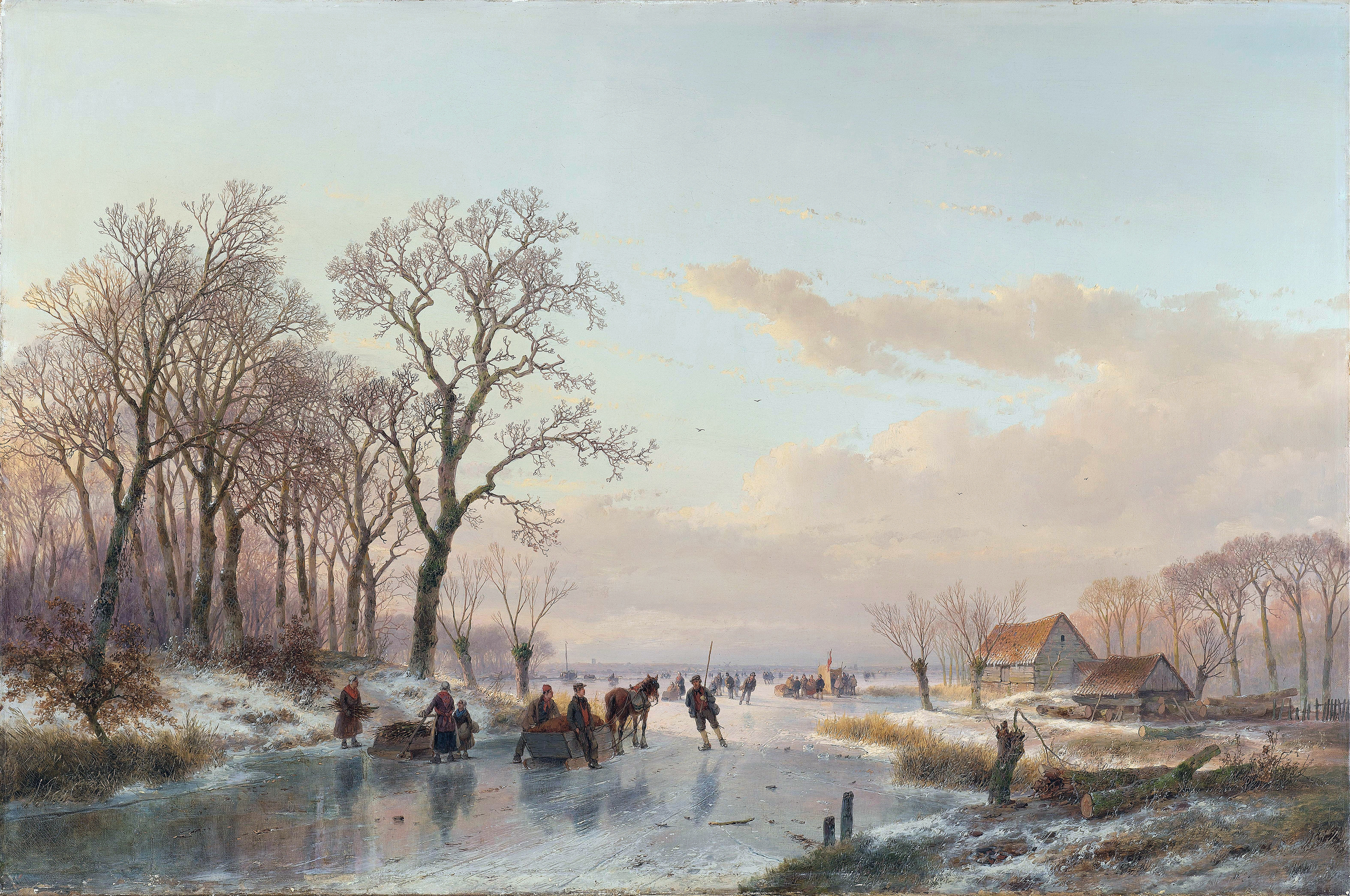
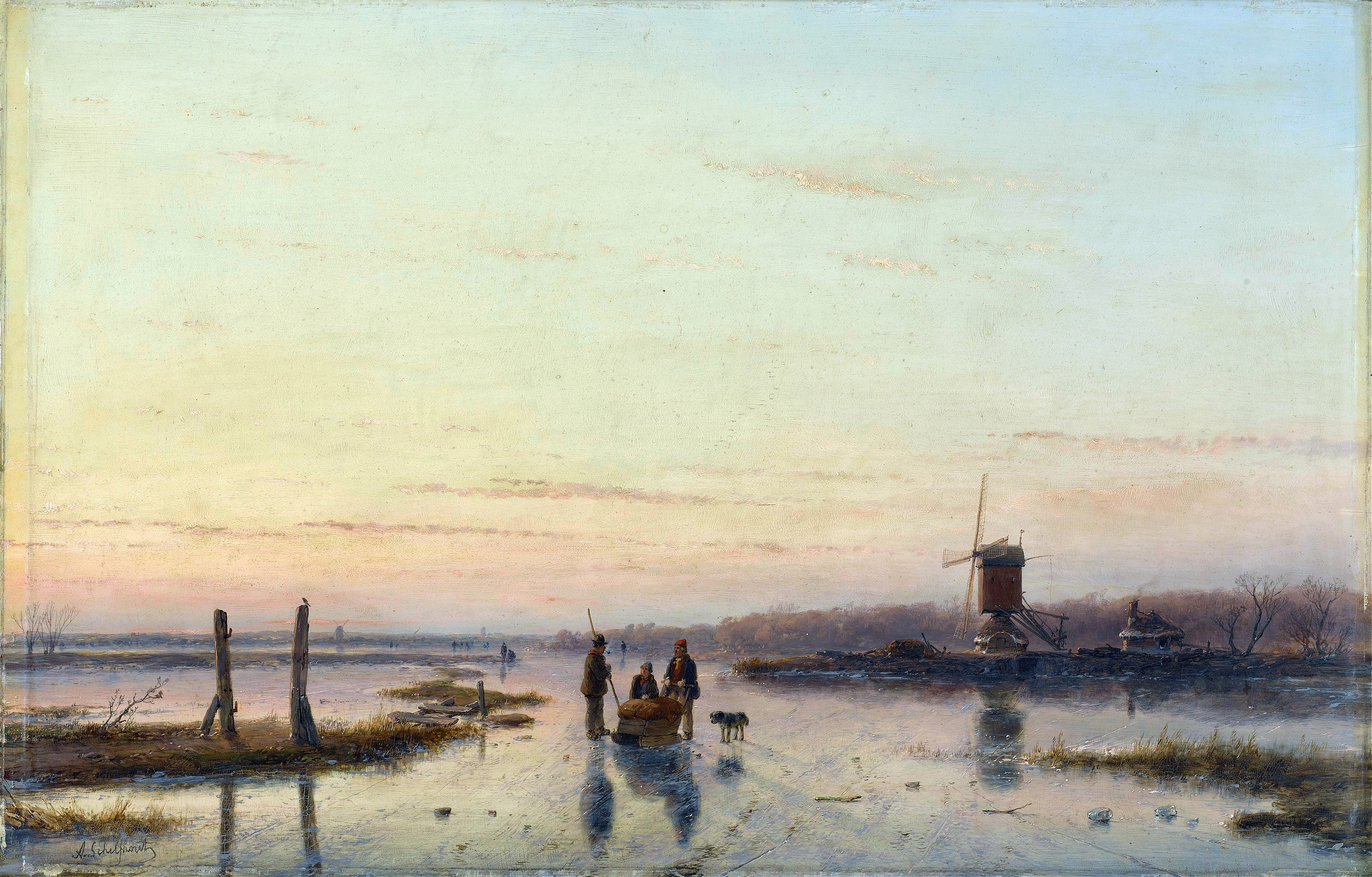
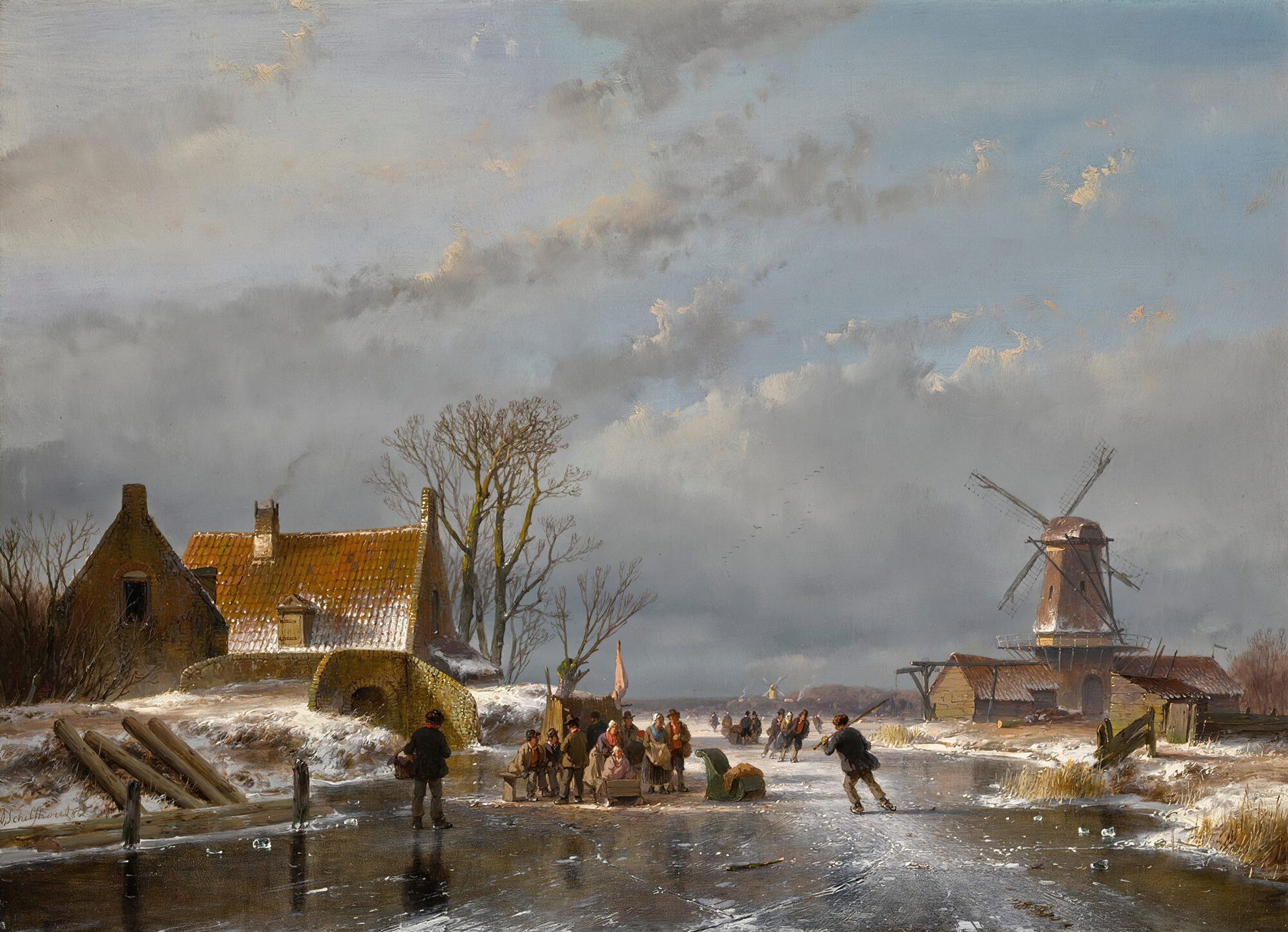
Could beauty survive in a century of chaos? In Winter Scene on the Ice with Wood Gatherers, the answer lies in a serene snapshot of life amidst the harshness of winter, where muted colors breathe tranquility into a cold world. Look to the left, where the gentle hues of pale blues and grays blend seamlessly with the canvas, evoking the chill of the season. The figures, clad in earthy tones, are engaged in their labor, their movements frozen in time as they gather wood against the stillness of the ice. Notice the delicate play of light reflecting off the frozen surface, creating a shimmering effect that contrasts beautifully with the dark silhouettes of the trees in the background.
This careful composition invites the viewer to explore both the foreground and the subtle details of the landscape, fostering a sense of quiet contemplation. Beneath its seemingly simple exterior, the painting reveals a poignant tension between toil and tranquility. The laborers, though diligent, are dwarfed by the expansive natural world, hinting at humanity’s fragility against the grandeur of nature. The ice, both a barrier and a canvas, symbolizes the duality of winter: a time for rest and reflection, yet also a period of harsh survival.
This delicate balance reflects a deeper commentary on the resilience of life, inviting us to ponder the moments of beauty that persist even in adversity. In 1849, when this piece was painted, Andreas Schelfhout was deeply entrenched in the Dutch Romantic movement. Living in The Hague, he was surrounded by a growing fascination with landscape paintings that captured the emotional resonance of nature. The era was marked by political turmoil and societal changes, yet Schelfhout’s work offered solace, reminding viewers of the enduring beauty found in the simplicity of everyday life.