Wooded Landscape at the Hermitage — History & Analysis
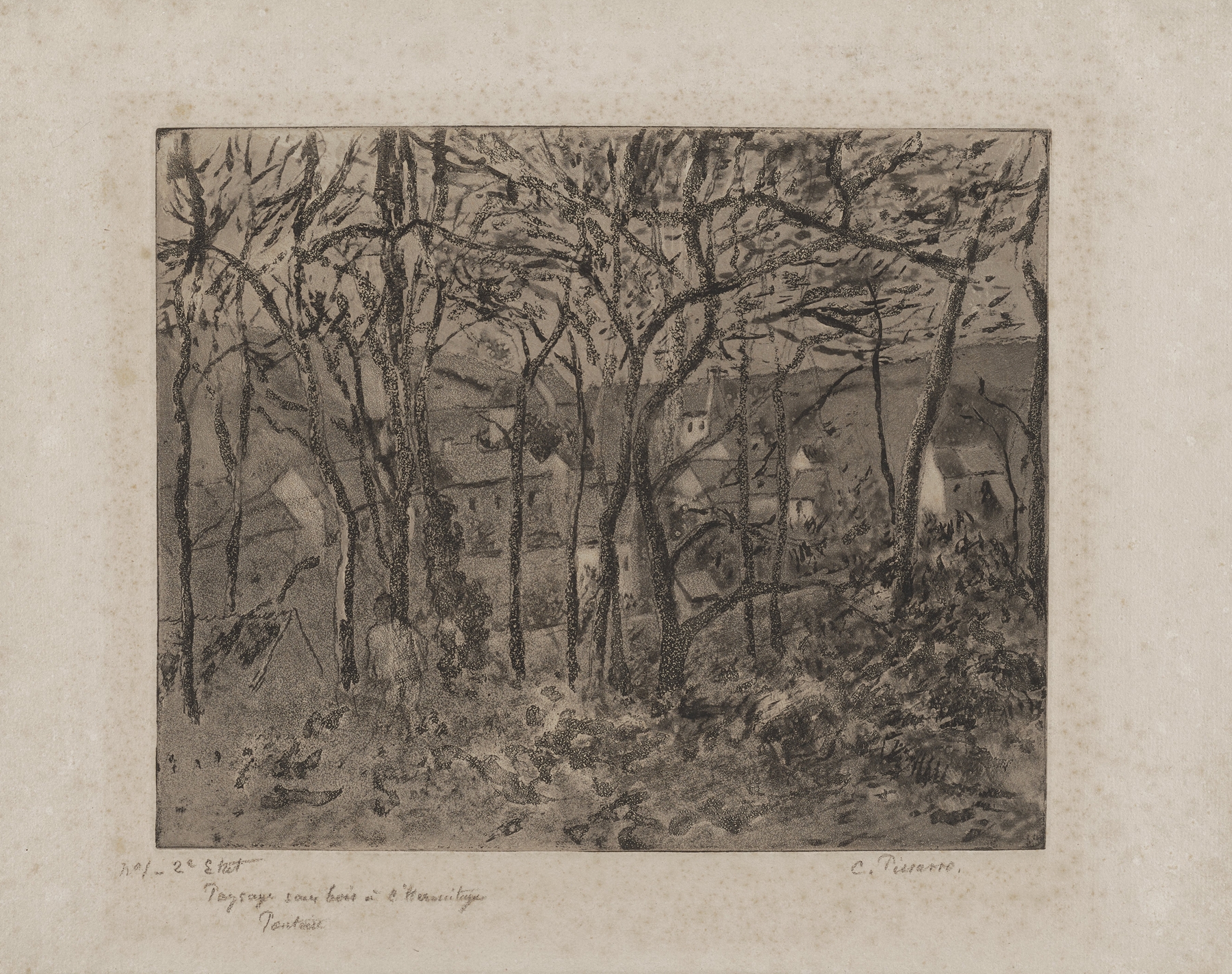
“To paint is to remember what time wants us to forget.” In the haunting stillness of Camille Pissarro's Wooded Landscape at the Hermitage, grief lingers in the air like a whisper of lost moments, beckoning us to reflect on our own impermanence. Look closely at the foreground, where soft, muted greens emerge from the canvas, creating a tranquil setting that feels both vibrant and subdued. The gentle brushstrokes depict trees with delicate detail, inviting a sense of intimacy with nature. Notice how the dappled sunlight breaks through the foliage, casting playful shadows that dance on the earthy path, coaxing the viewer to walk deeper into the scene.
This interplay of light and dark speaks to the transient nature of memory, illustrating how grief can transform the familiar into something bittersweet. Within the painting lies a profound contrast between serenity and melancholy. The lush greenery offers a sense of refuge, yet there’s an underlying tension that suggests loss, as though the landscape holds untold stories of what was once vibrant. The winding path, which leads our gaze beyond the trees, symbolizes the journey of life and the inevitability of parting from what we hold dear.
Pissarro’s careful use of color evokes a lingering nostalgia, reflecting the complex layers of human emotion intertwined with our experience of the natural world. Created in 1879 amid a period of artistic exploration in France, this work marks Pissarro’s embrace of Impressionism. During this time, he grappled with personal challenges, including the loss of loved ones, which impacted his artistic vision. As the movement evolved, he sought to capture fleeting moments of beauty, framing them within the larger narrative of existence—reminding us that even in nature, the echoes of grief resonate deeply.