Wooded Landscape with Cows at a Watering Place, Figures and Cottage — History & Analysis
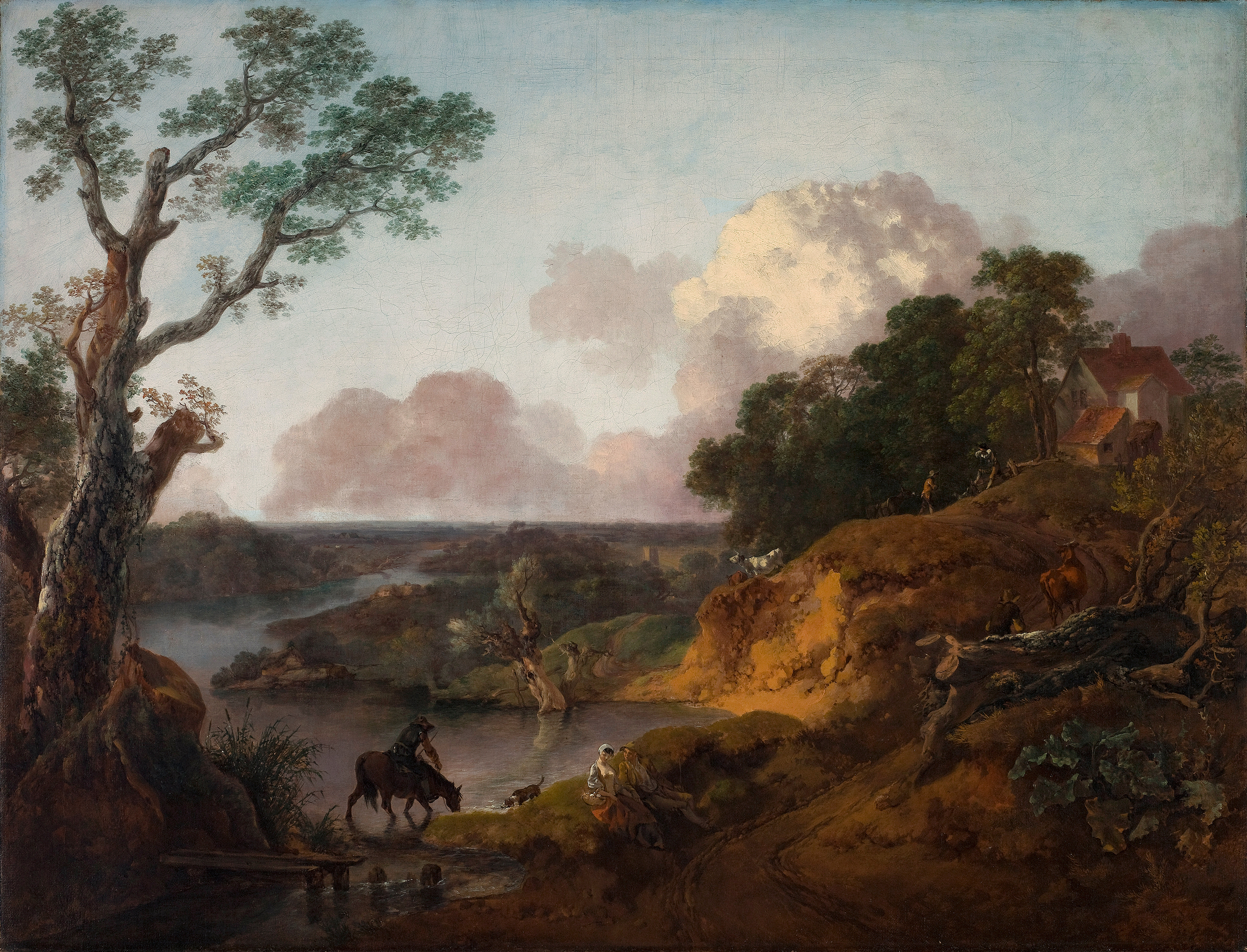
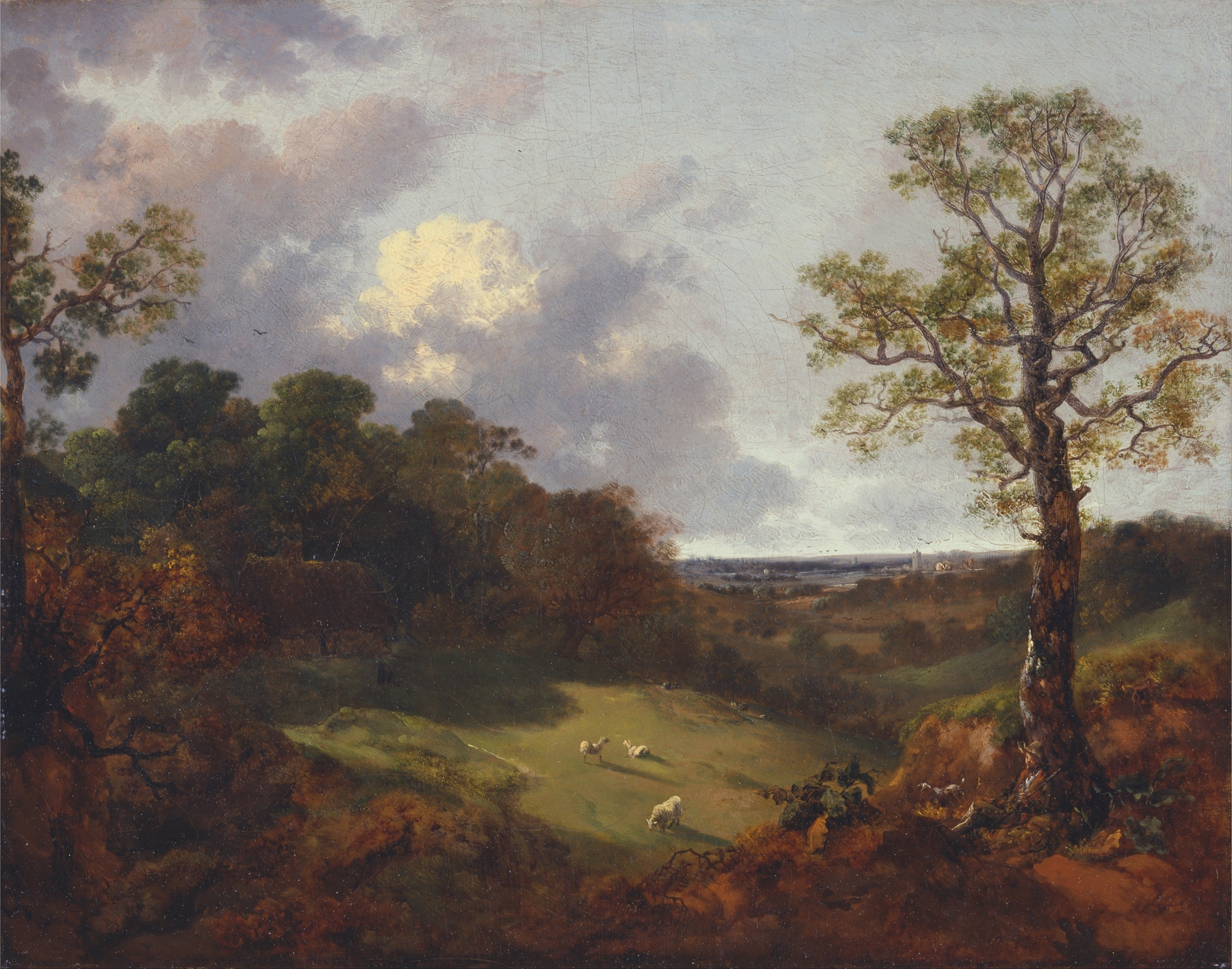
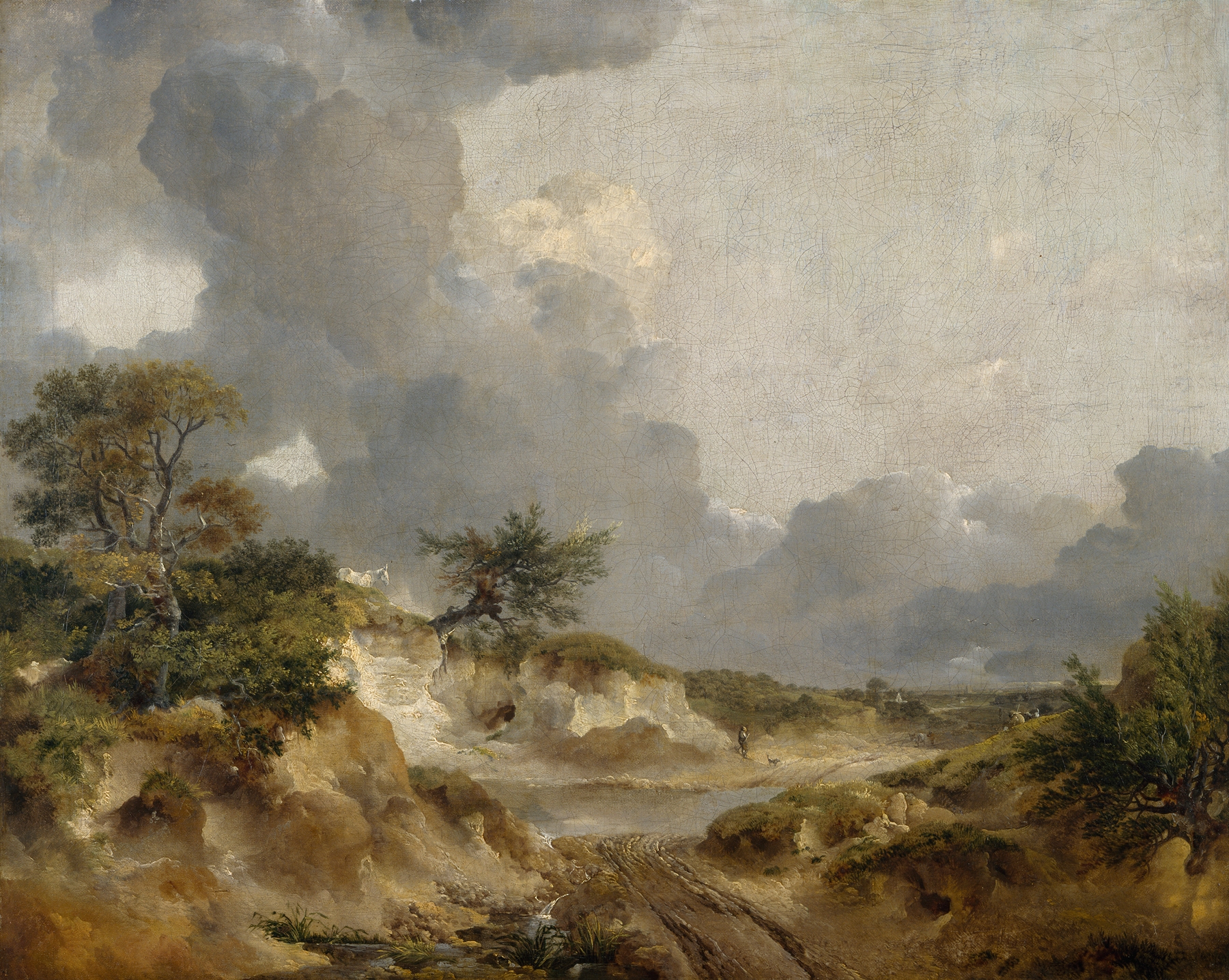
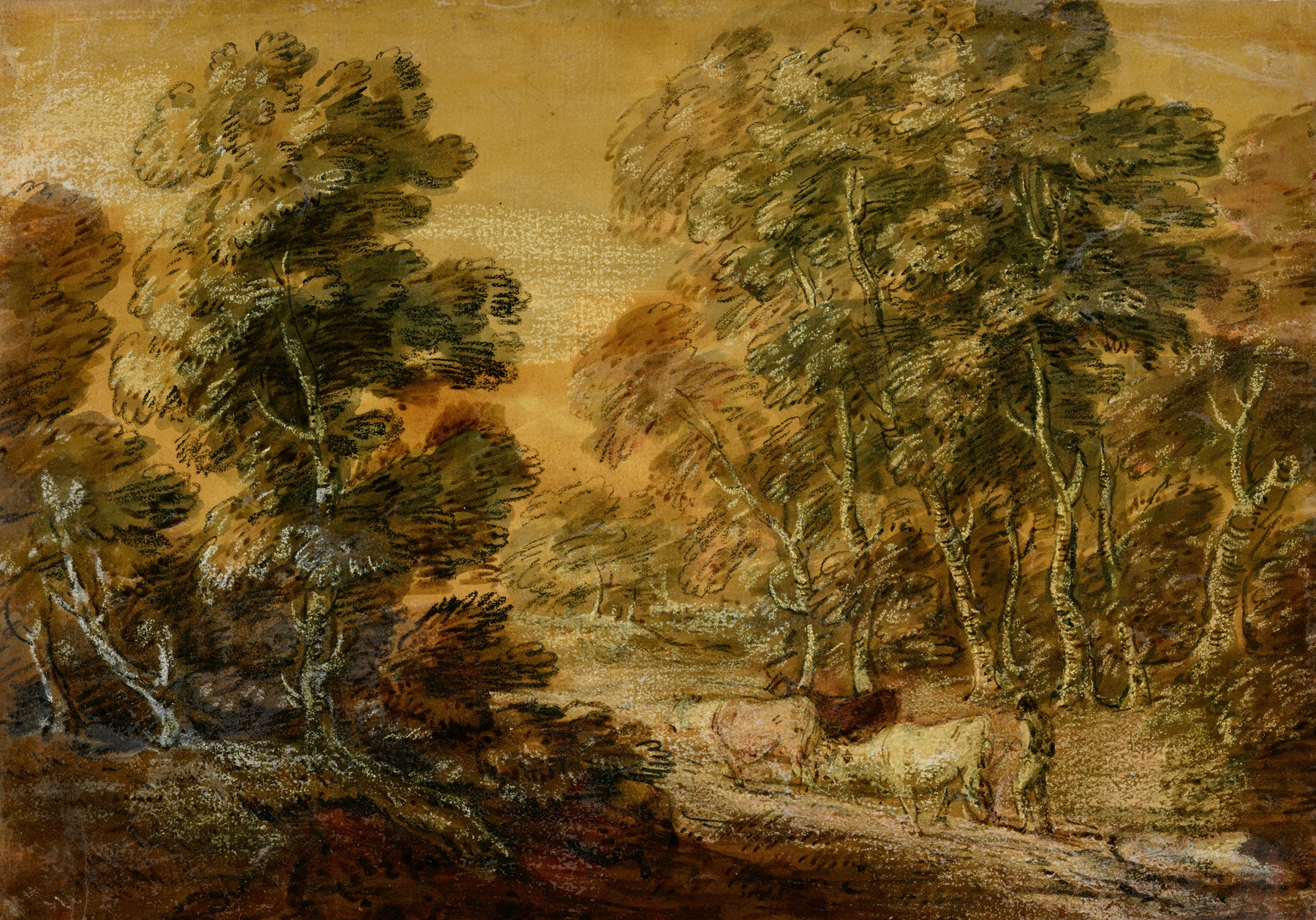
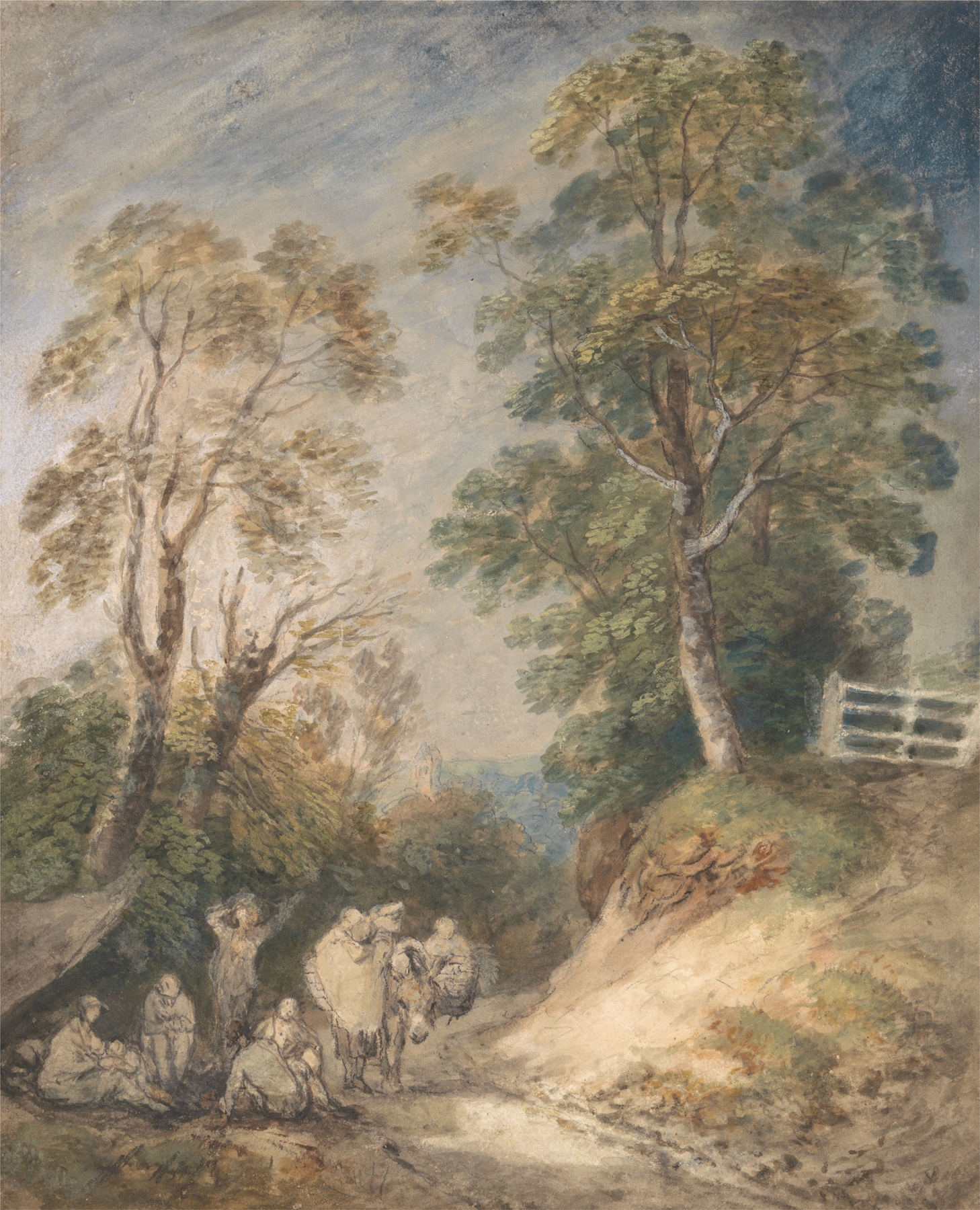
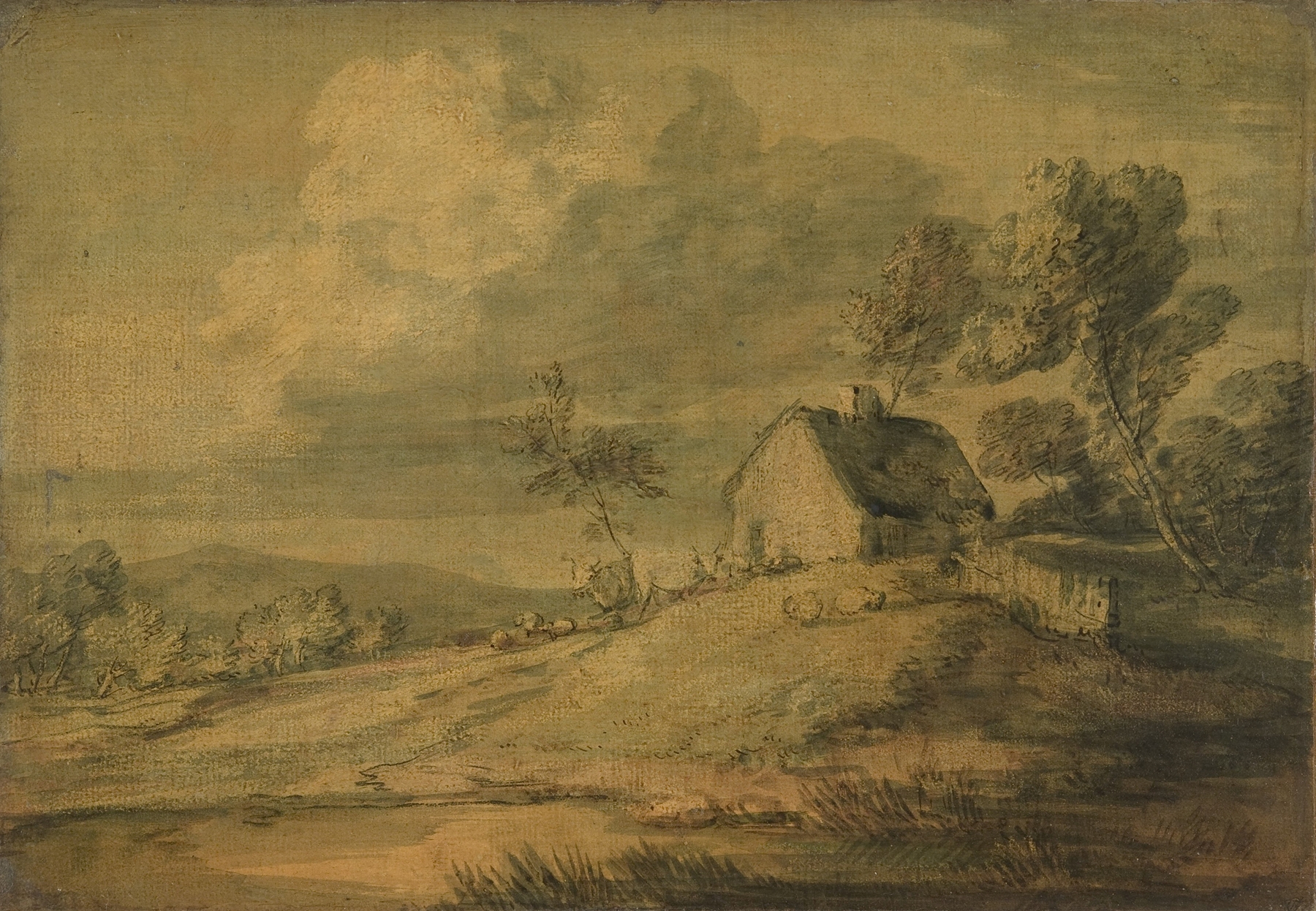
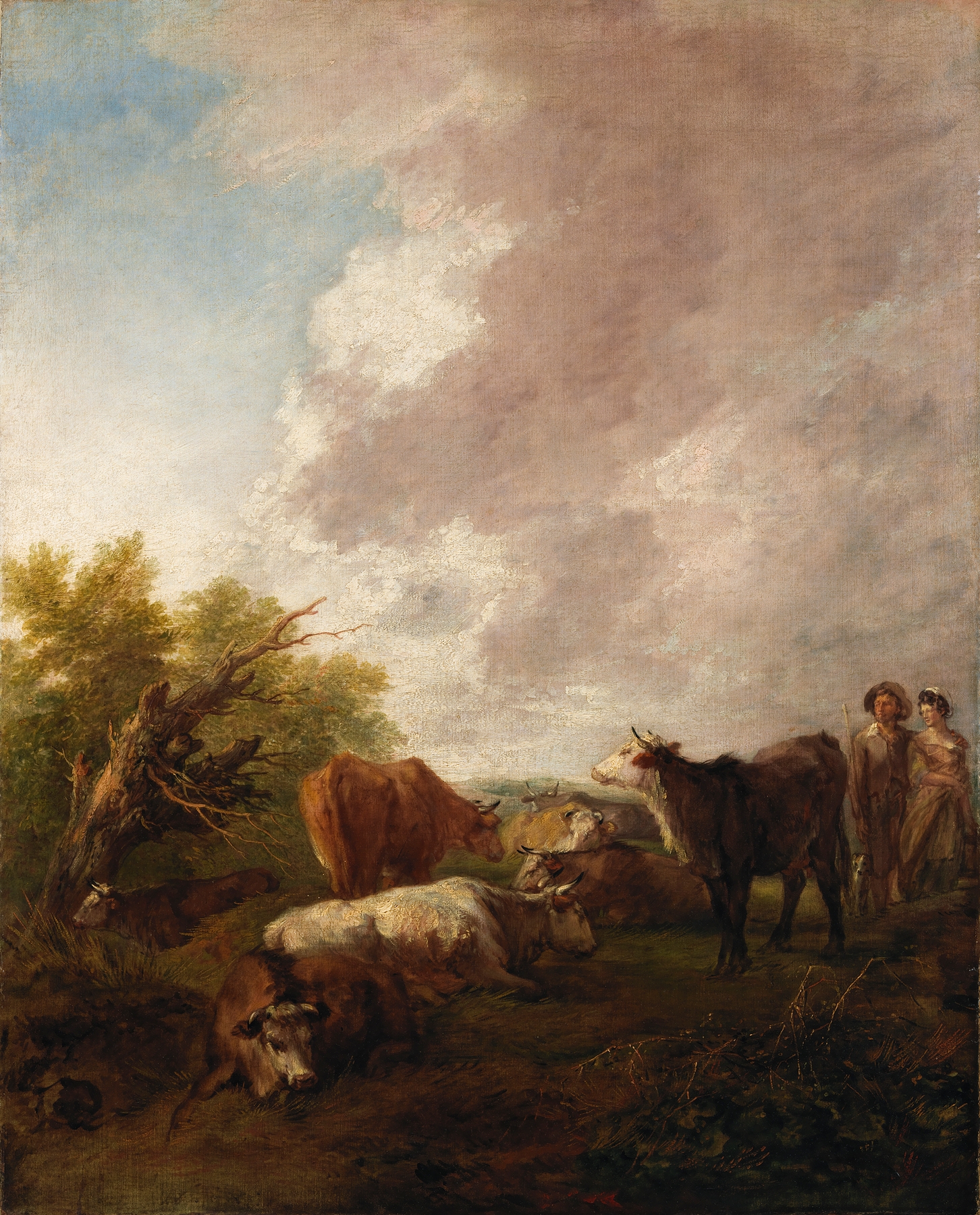
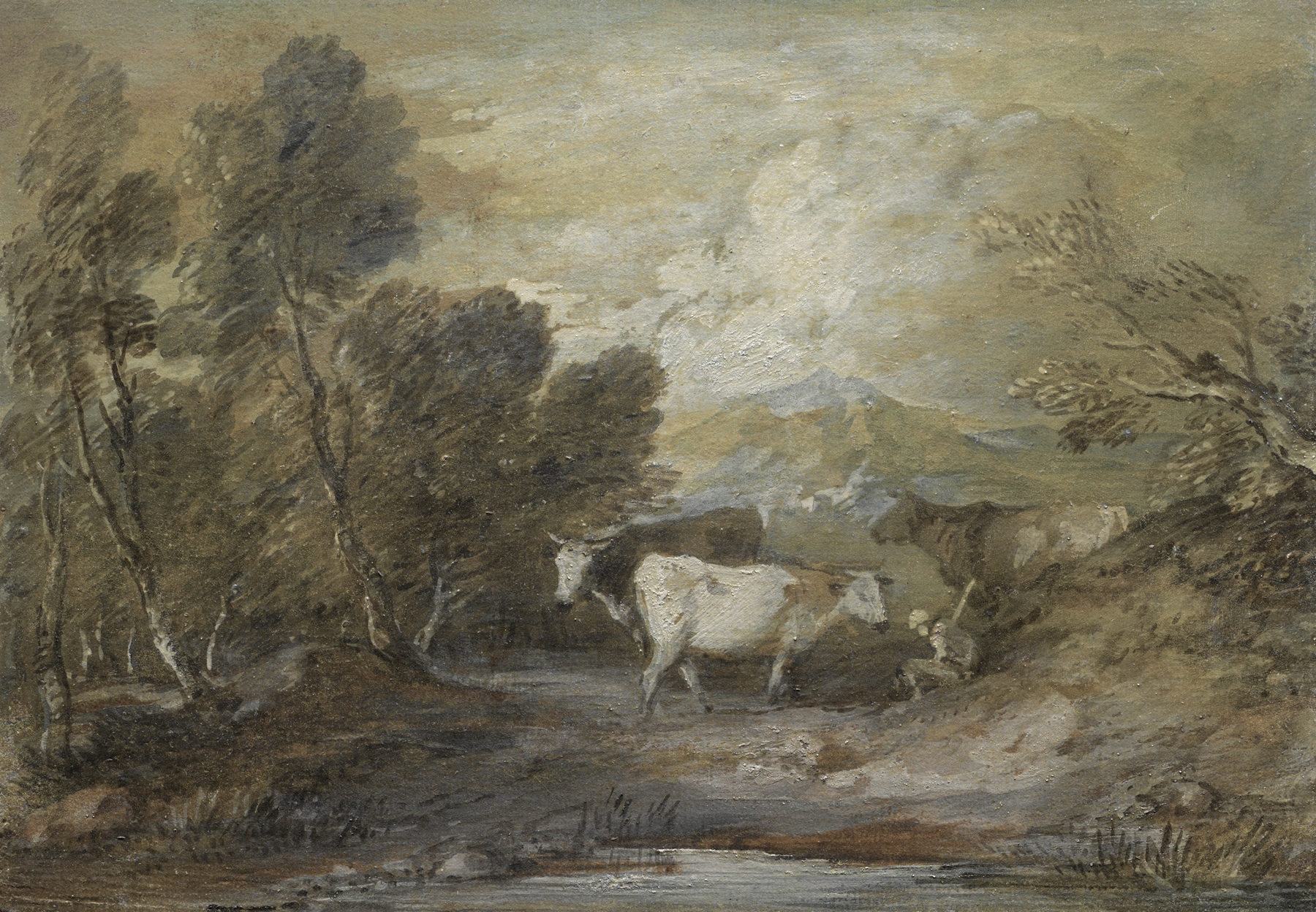
Where does light end, and longing begin? In Wooded Landscape with Cows at a Watering Place, Figures and Cottage, the answer lies in the soft embrace of natural hues that evoke a serene yet poignant atmosphere. Look to the center where the light dances upon the water’s surface, a shimmering invitation that draws the eye to the cows at play. Notice how Gainsborough masterfully blends earthy greens and browns with delicate touches of pastel pink and blue, creating a harmonious palette that reflects both tranquility and intimacy.
The gentle brushstrokes impart a sense of movement, as if the wind whispers through the trees, while the sun's warmth envelops the scene, offering a fleeting moment of pastoral bliss. Yet, beneath this idyllic representation lies a contrast of life and stillness. The cows, though seemingly at ease, symbolize the fleeting nature of pastoral existence, while the distant cottage hints at human presence and the complexity of rural life.
The interplay of light and shadow not only brings depth to the landscape but also captures the essence of longing—the desire to connect with a simpler, deeper truth in nature. Created around 1785, this painting emerges from a time when Gainsborough was firmly established as a leading figure in British art. Located in England amidst a flourishing appreciation for landscape painting, he sought to blend emotional expression with the beauty of the natural world, celebrating the pastoral ideal while subtly questioning its permanence.