Wooded Landscape with Watermill — History & Analysis
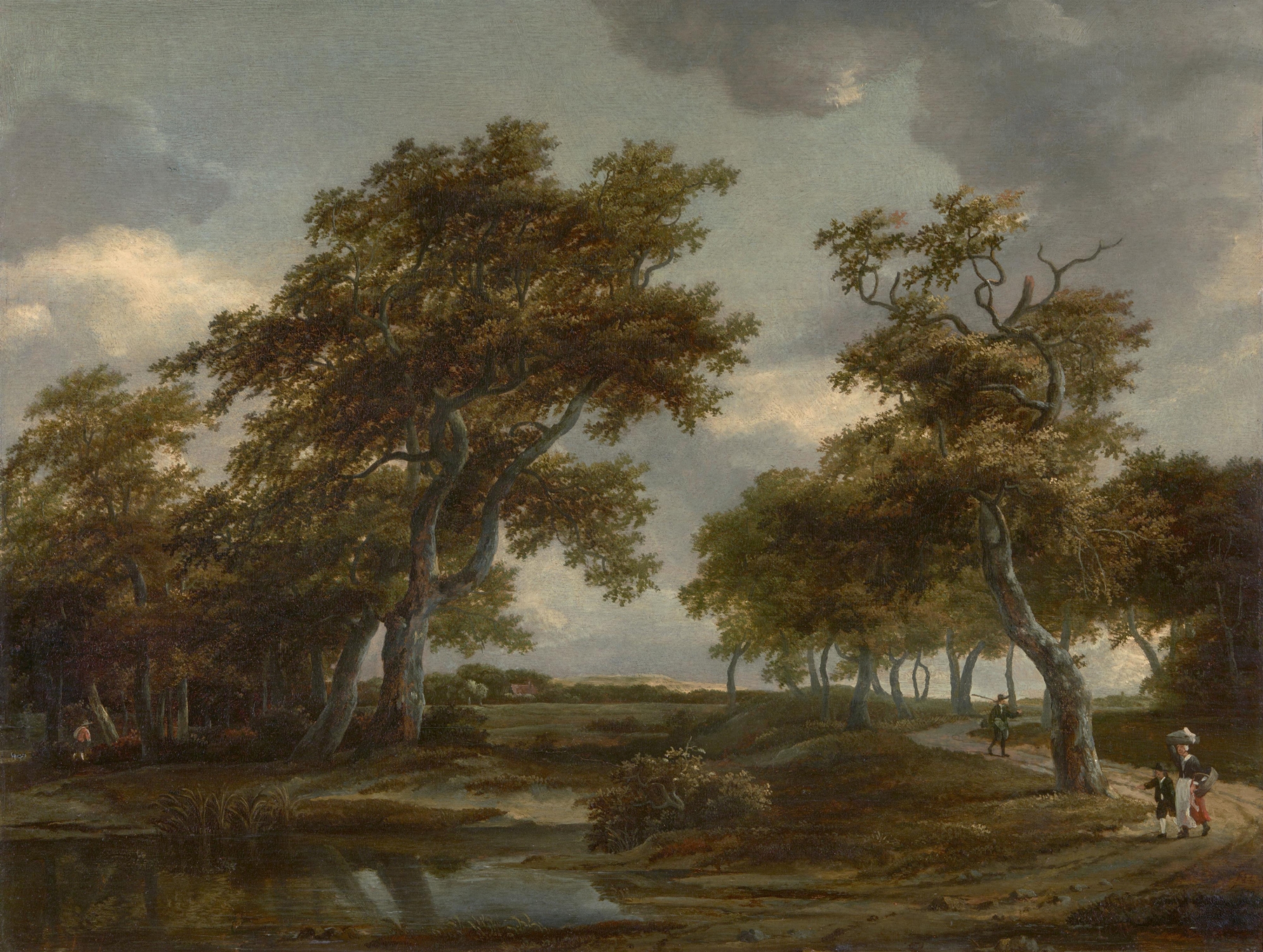
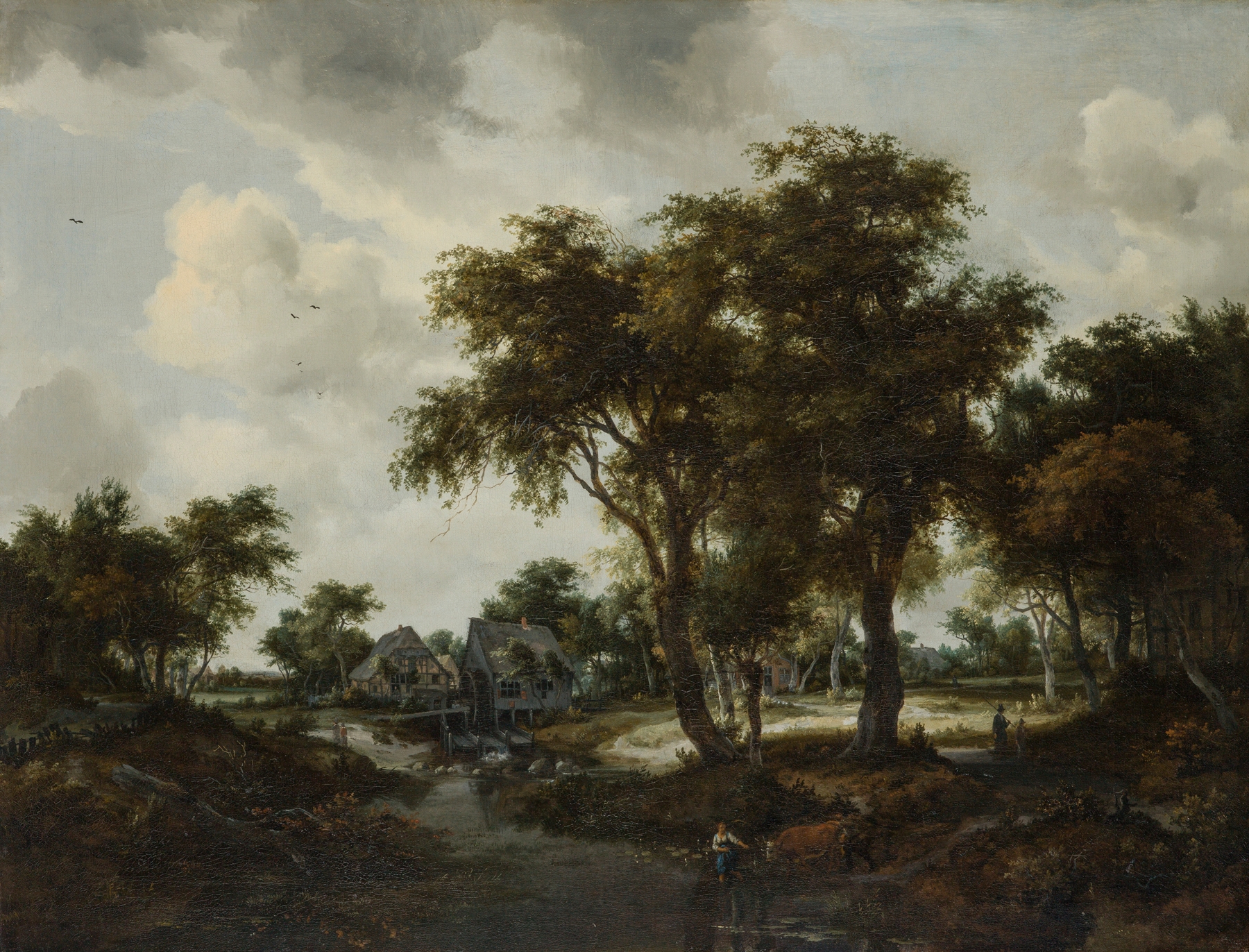
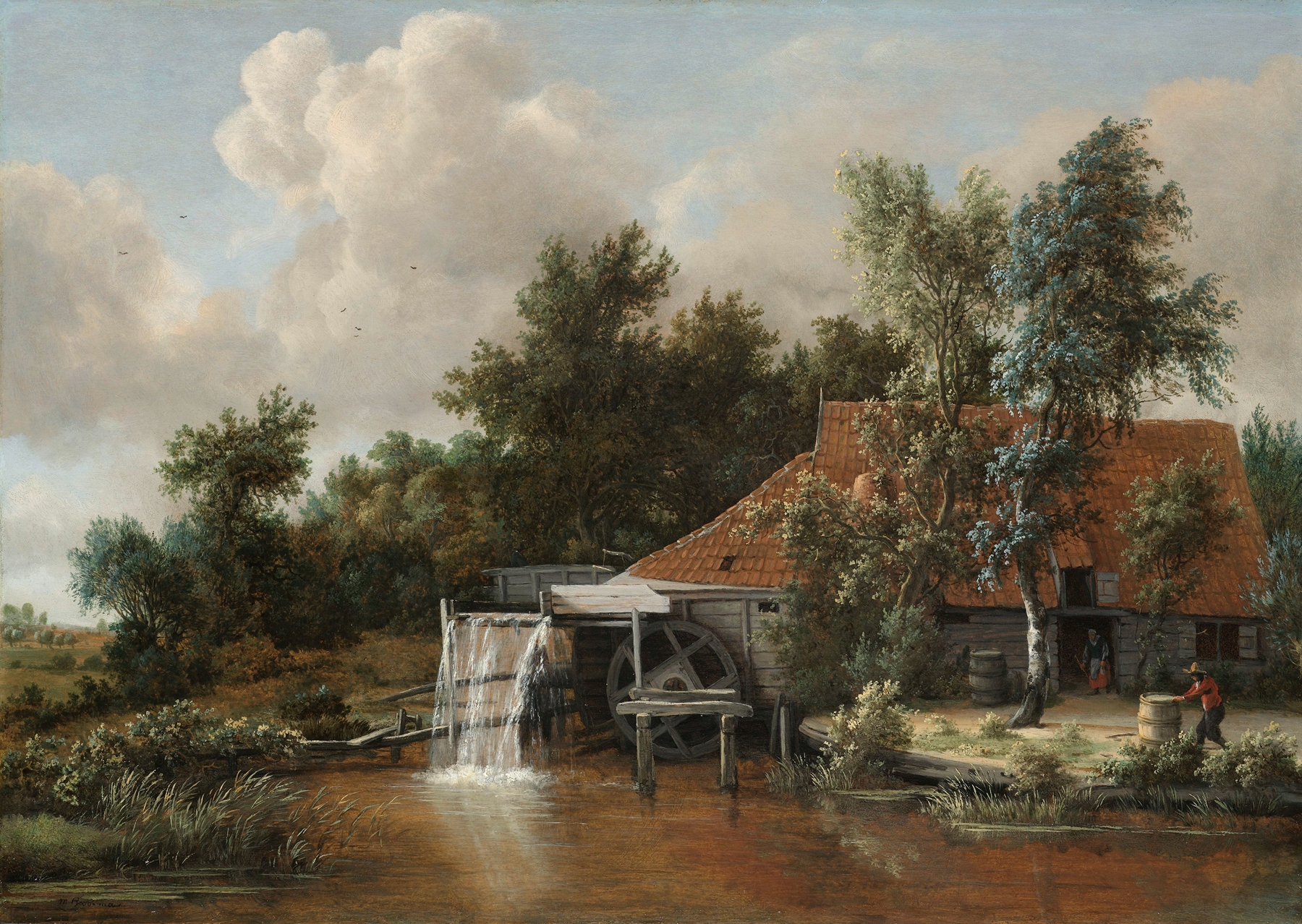
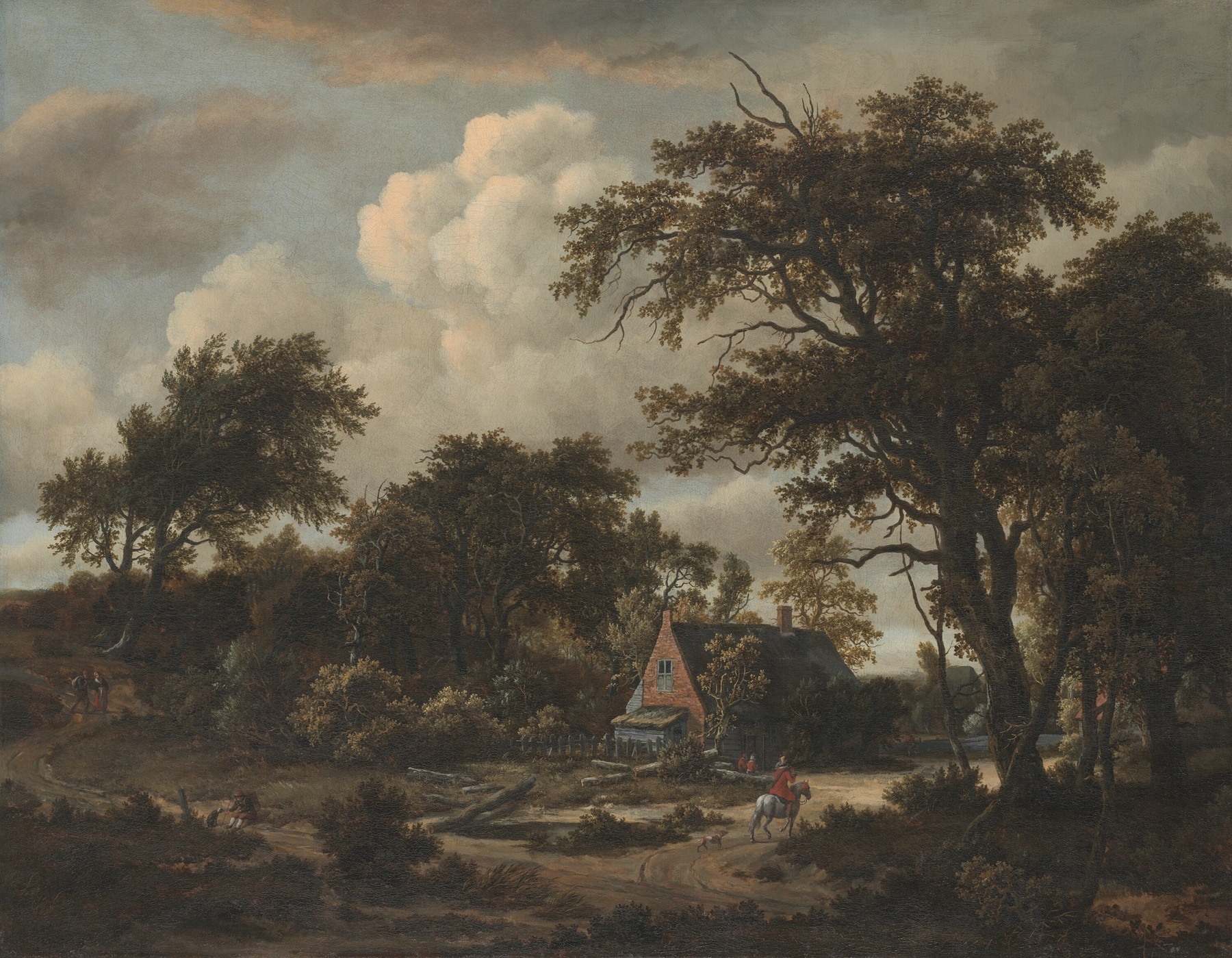
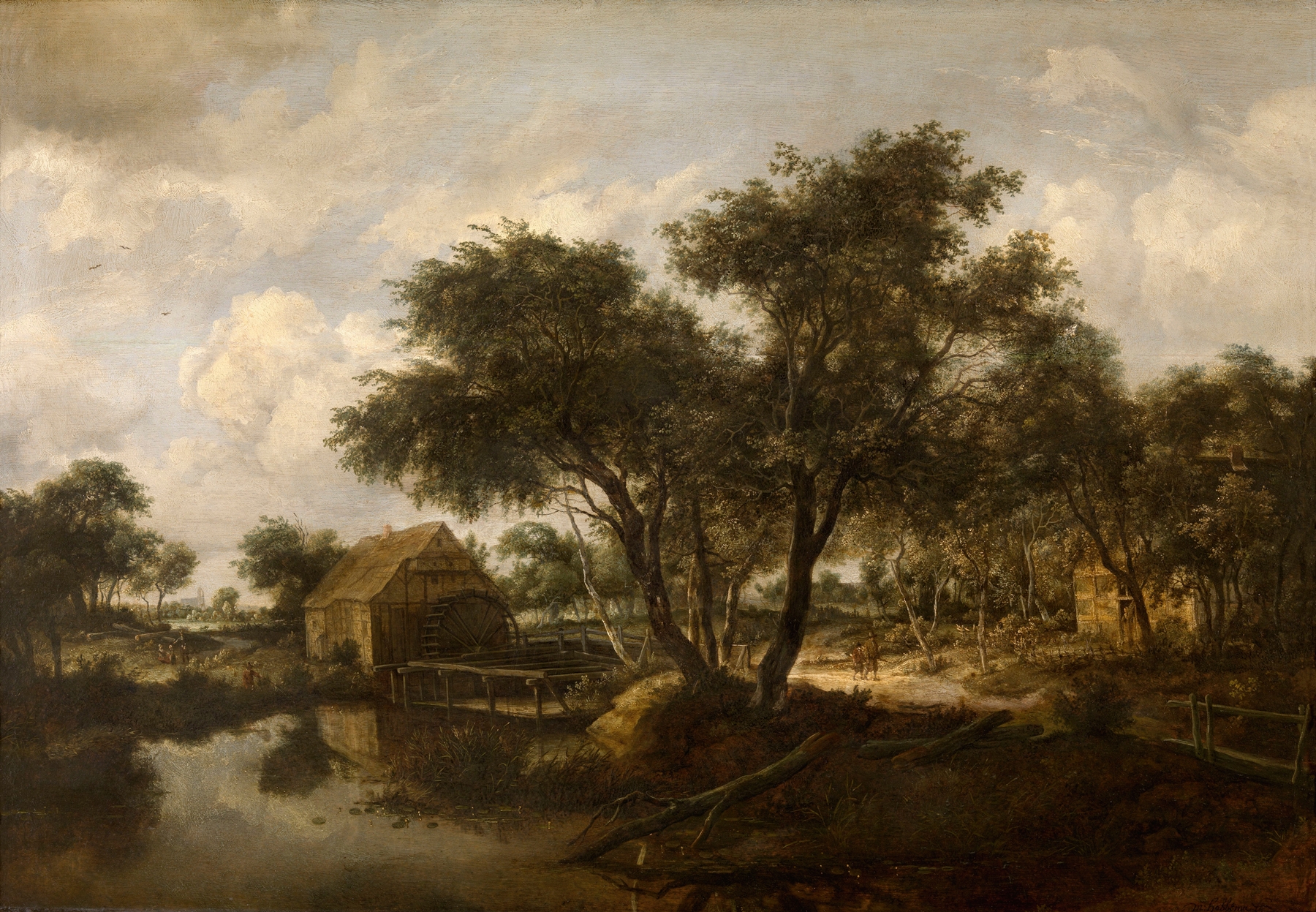
“Every silence here is a confession.” In the stillness of a wooded landscape, the essence of ecstasy emerges through nature’s quiet embrace. The viewer is drawn into a moment suspended in time, where tranquility lingers just beyond the grasp of the senses. Look to the left at the watermill, its wooden structure nestled among the trees, blending seamlessly into the lush green surrounding. The dappled sunlight filters through the leaves, casting playful shadows on the water's surface, while the gentle flow of the stream serves as a soothing counterpoint to the stillness.
Hobbema's deft brushwork brings the scene to life, the rich greens and earthy browns amplifying the sense of harmony within the landscape. The juxtaposition of movement and stillness speaks volumes; the rushing water contrasts with the calm of the woodland. Subtle details, like the sunlit patches on the path and the soft ripples in the water, convey an underlying joy, a hidden ecstasy that pulses beneath the serene façade. Each element, from the swaying trees to the distant figures, suggests a narrative of quiet contentment—of connection to nature, to oneself, and to the moment.
In the mid-1660s, Hobbema created this masterpiece during a time when Dutch landscape painting was flourishing. Living in Amsterdam, he found inspiration in the serene beauty of his surroundings, navigating the complexities of an artist's life amid the evolving art scene. His work reflects not only personal expression but also the broader cultural appreciation for nature, grounding the viewer in a world both tranquil and profoundly alive.