Zweites Tiergartentor in Schönbrunn — History & Analysis
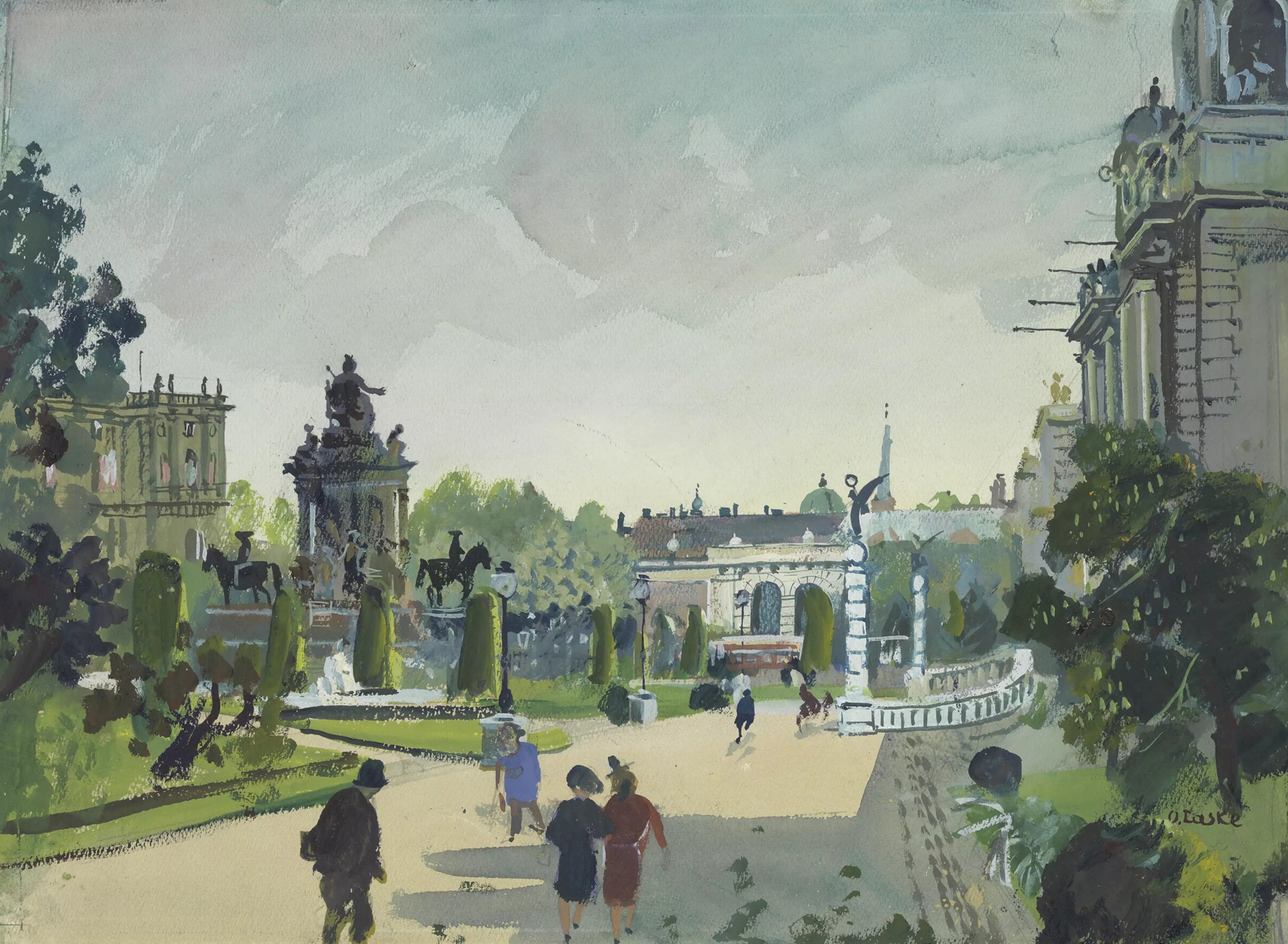
What if silence could speak through light? In the stillness of an afternoon, the muted hues of a serene garden whisper the secrets of fate, hinting at destinies entwined with nature’s design. Focus on the soft interplay of light and shadow across the intricate details of the gate, drawing your gaze to the delicate ironwork that frames the scene. The cool greens and warm earth tones meld harmoniously, inviting you deeper into this tranquil world.
Notice how the gentle play of sunlight dapples the ground, illuminating the path that beckons toward the unseen, suggesting both a destination and a journey yet to unfold. In the composition, a profound contrast emerges between the sturdy structure of the gate and the ephemeral beauty of the surrounding foliage. This juxtaposition speaks to the tension between human constructs and the organic world, where destiny seems woven into the very fabric of the landscape. The absence of figures evokes a contemplative solitude, allowing viewers to reflect on their own life's pathways and the choices that define them.
Oskar Laske painted Zweites Tiergartentor in Schönbrunn in 1951, a time marked by the post-war reconstruction of Austria. Settling in Vienna, he engaged with the emerging modernist movements while also celebrating the historical charm of his surroundings. This period of his life saw a deep exploration of light and form, revealing his intent to meld architectural elements with the natural world, capturing both the external beauty and the internal resonance of human experience.