
Wanderer above the Sea of Fog — Historia y Análisis
Wanderer above the Sea of Fog (1818) by Caspar David Friedrich shows a man standing on a rocky peak, looking out over a landscape covered in thick fog, with mountains rising in the distance. The figure is placed at the center and seen from behind, a common choice in Friedrich’s work, which directs attention to the view rather than the person himself. The scene is not a single real location but a combination of different landscapes Friedrich knew, arranged to create a strong visual impact. As part of Romanticism, Friedrich focused on the relationship between people and nature.
The contrast between the solid rocks in the foreground and the shifting fog below creates a sense of height and distance. The man’s position above the fog suggests control and observation, while the unclear landscape below adds a feeling of uncertainty. The use of light and layers helps guide the eye from the figure into the background. The composition is carefully balanced, with the figure acting as a focal point and the surrounding landscape expanding outward.
The walking stick and stance suggest that he has just climbed up to this point, pausing to look ahead. Instead of showing action, Friedrich captures a still moment where a person stops to take in the view, using simple elements like height, contrast, and perspective to shape the scene.
Más obras de Caspar David Friedrich
Ver todo →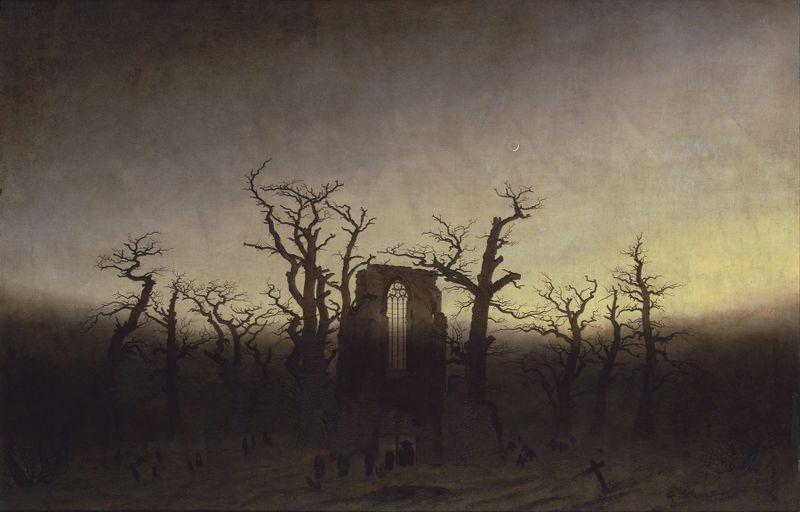
The Abbey in the Oakwood
Caspar David Friedrich
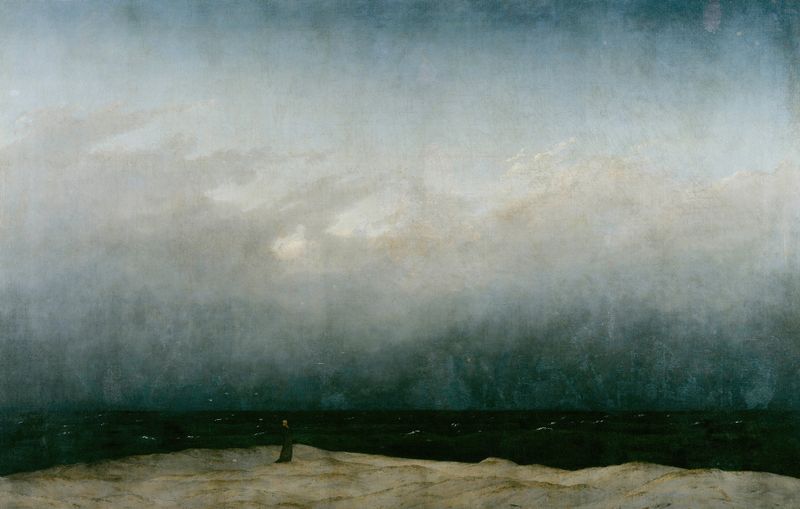
The Monk by the Sea
Caspar David Friedrich
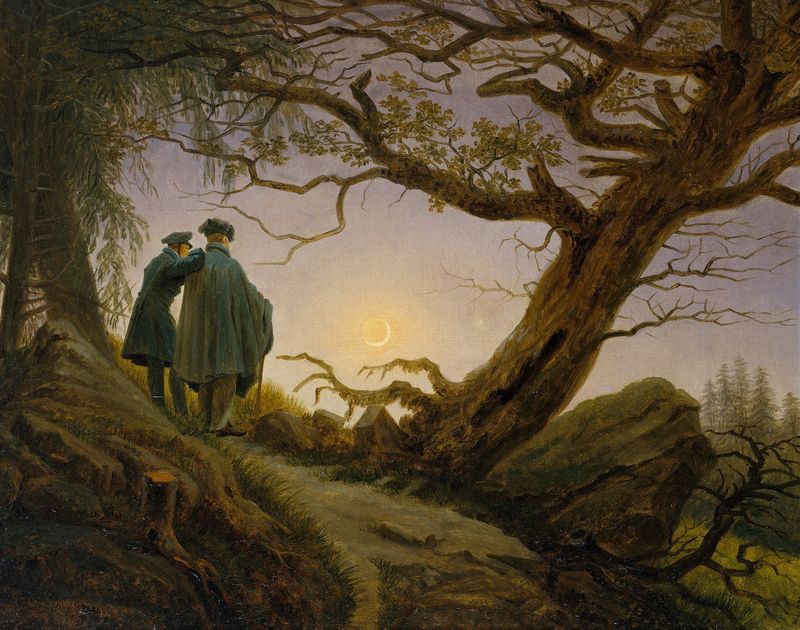
Two Men Contemplating the Moon
Caspar David Friedrich

Woman at a Window
Caspar David Friedrich
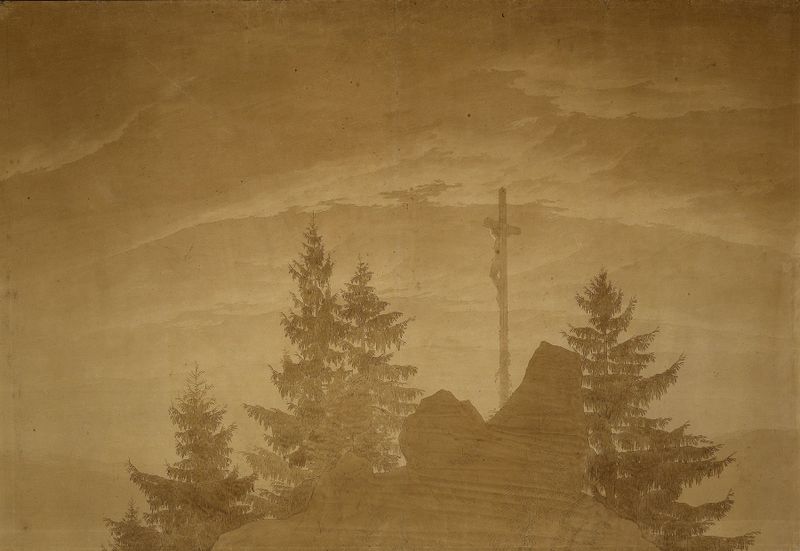
Cross in the Mountains
Caspar David Friedrich
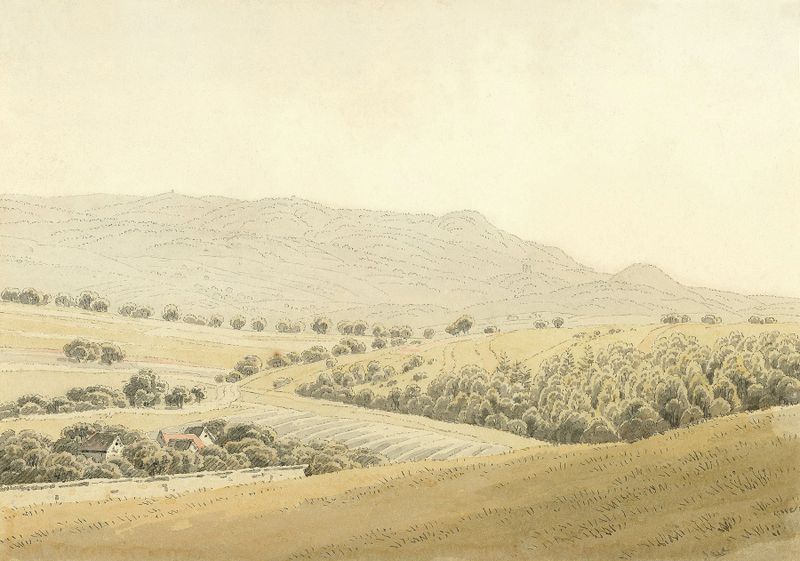
Mittelgebirgslandschaft
Caspar David Friedrich
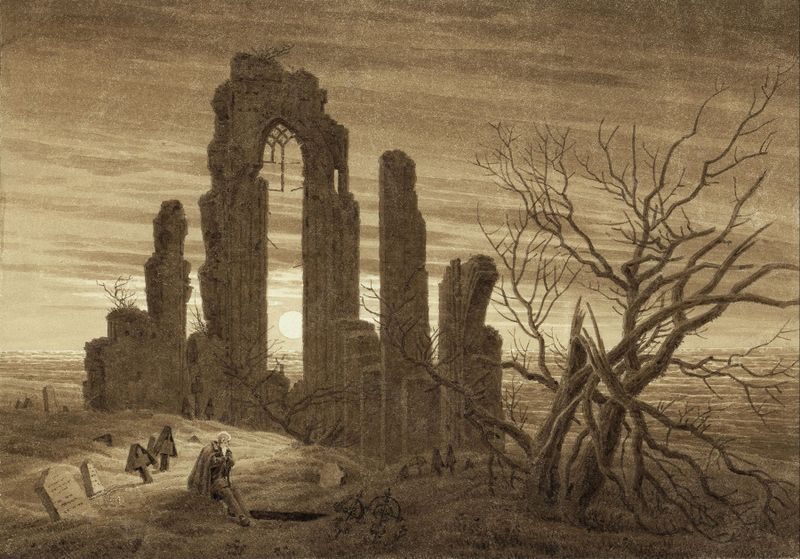
Winter – Night – Old Age and Death (from the times of day and ages of man cycle of 1803)
Caspar David Friedrich
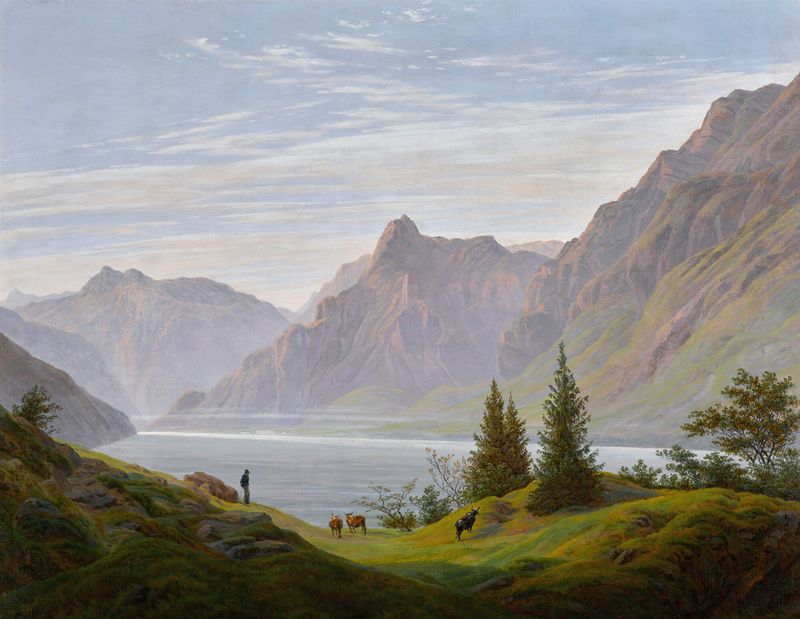
Landschaft mit gebirgsee, morgen
Caspar David Friedrich
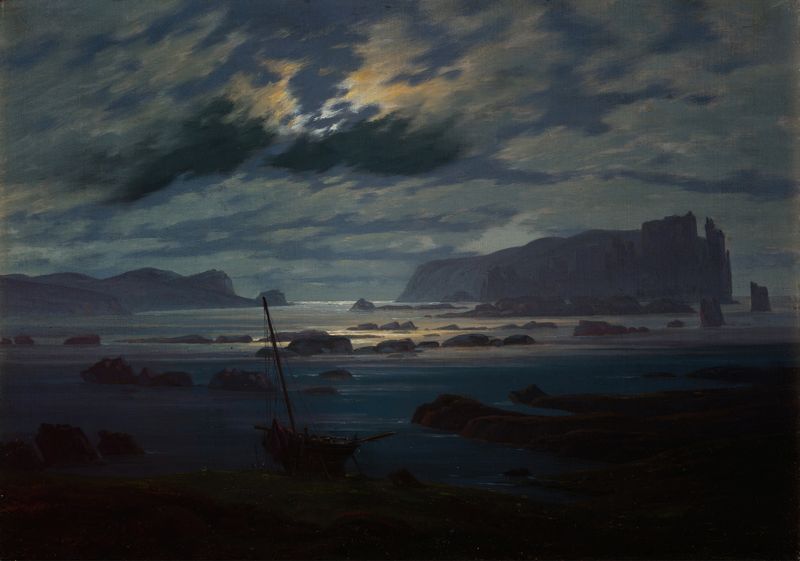
Northern Sea in the Moonlight
Caspar David Friedrich

Mountains in the Rising Fog
Caspar David Friedrich





