Woman at a Window — Historia y Análisis
Woman at a Window (1822) by Caspar David Friedrich shows a woman standing inside a simple room, looking out through an open window toward a river where the masts of ships are visible. The woman is believed to be his wife, and Friedrich chooses to show her from behind, a common approach in his work, so the viewer focuses on what she is looking at rather than her expression. The setting is based on his studio in Dresden, making the scene personal and grounded in his daily life. Friedrich was part of Romanticism, and he often painted scenes that connect people with their surroundings.
Here, the contrast between the dark interior and the brighter outdoor view is important, showing a clear difference between being inside and looking outward. The ships in the distance suggest travel and movement, something that was changing rapidly during his time, and may reflect his awareness of a wider world beyond the home. The painting is simple in composition, but carefully arranged to guide attention toward the window. The vertical lines of the window frame and the woman’s posture create a sense of stillness, while the view outside adds depth and direction.
Rather than telling a complex story, Friedrich focuses on a quiet moment, using light, space, and position to show a person observing the world beyond her immediate surroundings.
Más obras de Caspar David Friedrich
Ver todo →
Wanderer above the Sea of Fog
Caspar David Friedrich
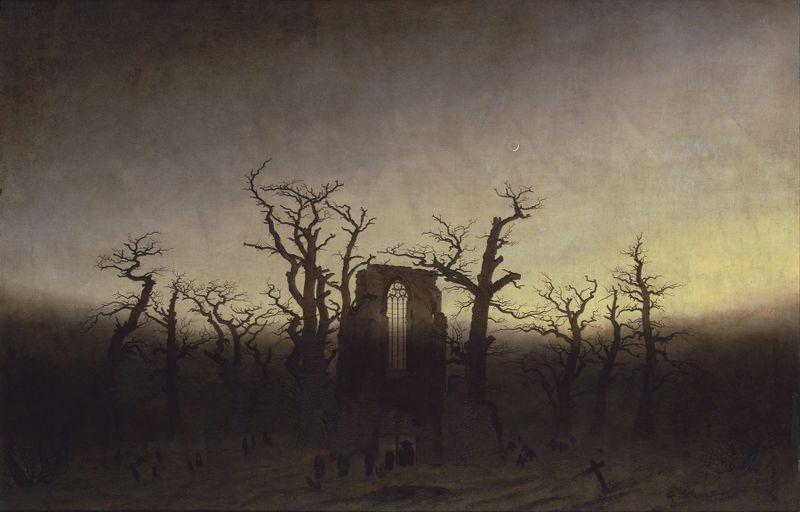
The Abbey in the Oakwood
Caspar David Friedrich
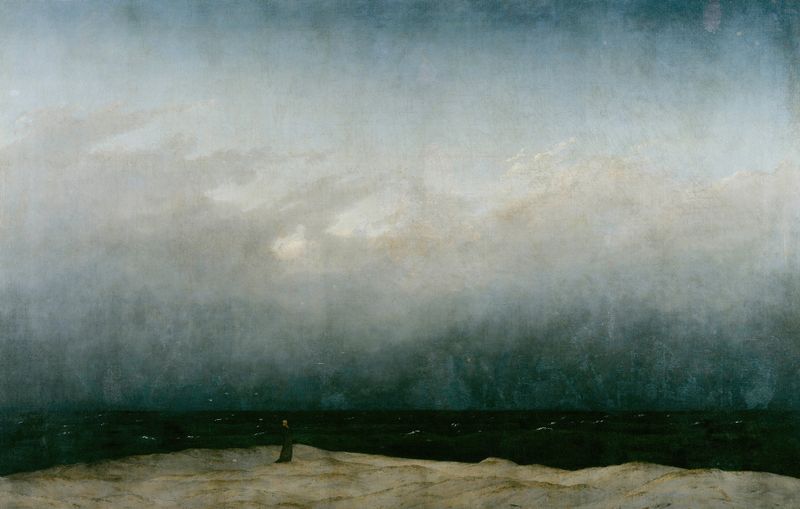
The Monk by the Sea
Caspar David Friedrich

Two Men Contemplating the Moon
Caspar David Friedrich

Cross in the Mountains
Caspar David Friedrich
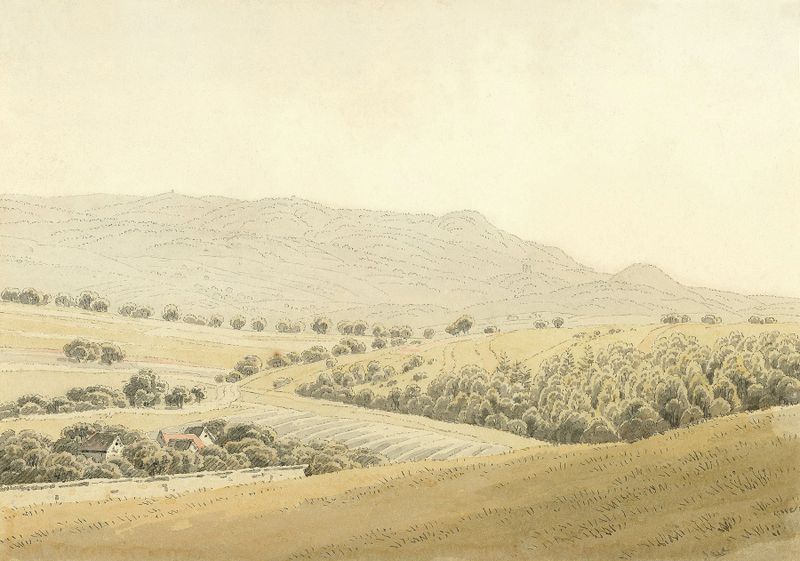
Mittelgebirgslandschaft
Caspar David Friedrich

Winter – Night – Old Age and Death (from the times of day and ages of man cycle of 1803)
Caspar David Friedrich

Landschaft mit gebirgsee, morgen
Caspar David Friedrich

Northern Sea in the Moonlight
Caspar David Friedrich

Mountains in the Rising Fog
Caspar David Friedrich