A Bazaar in Cairo — History & Analysis
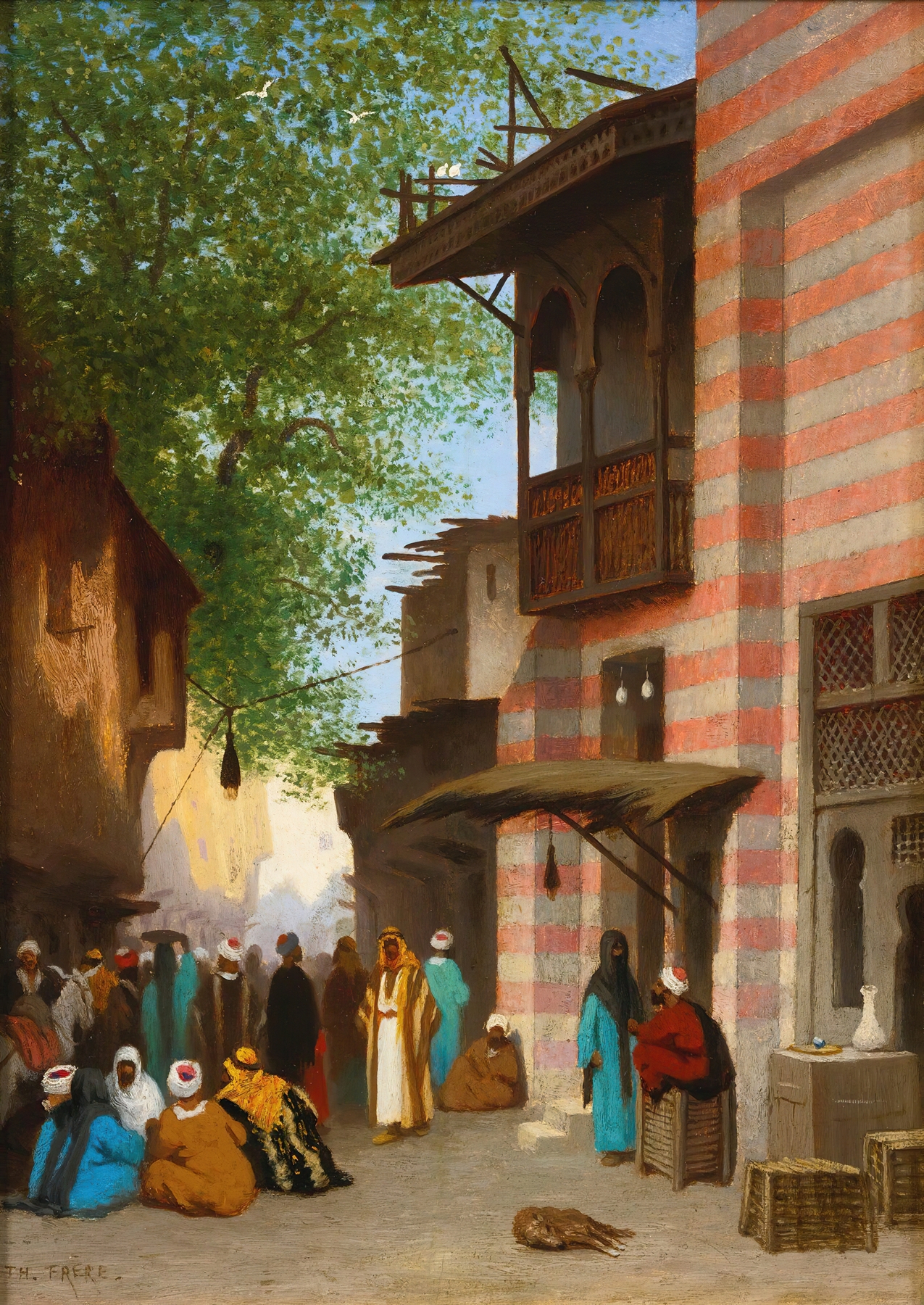
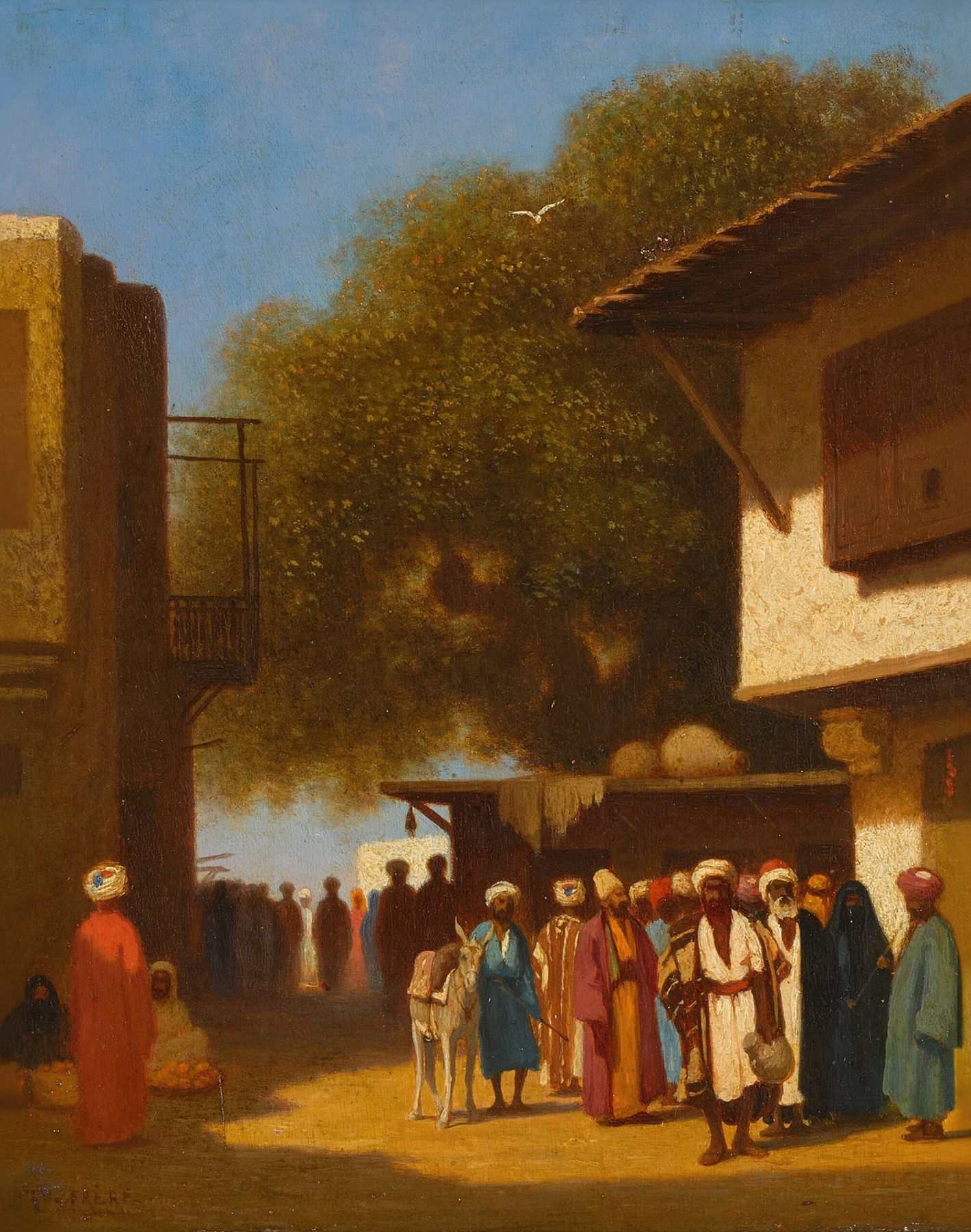
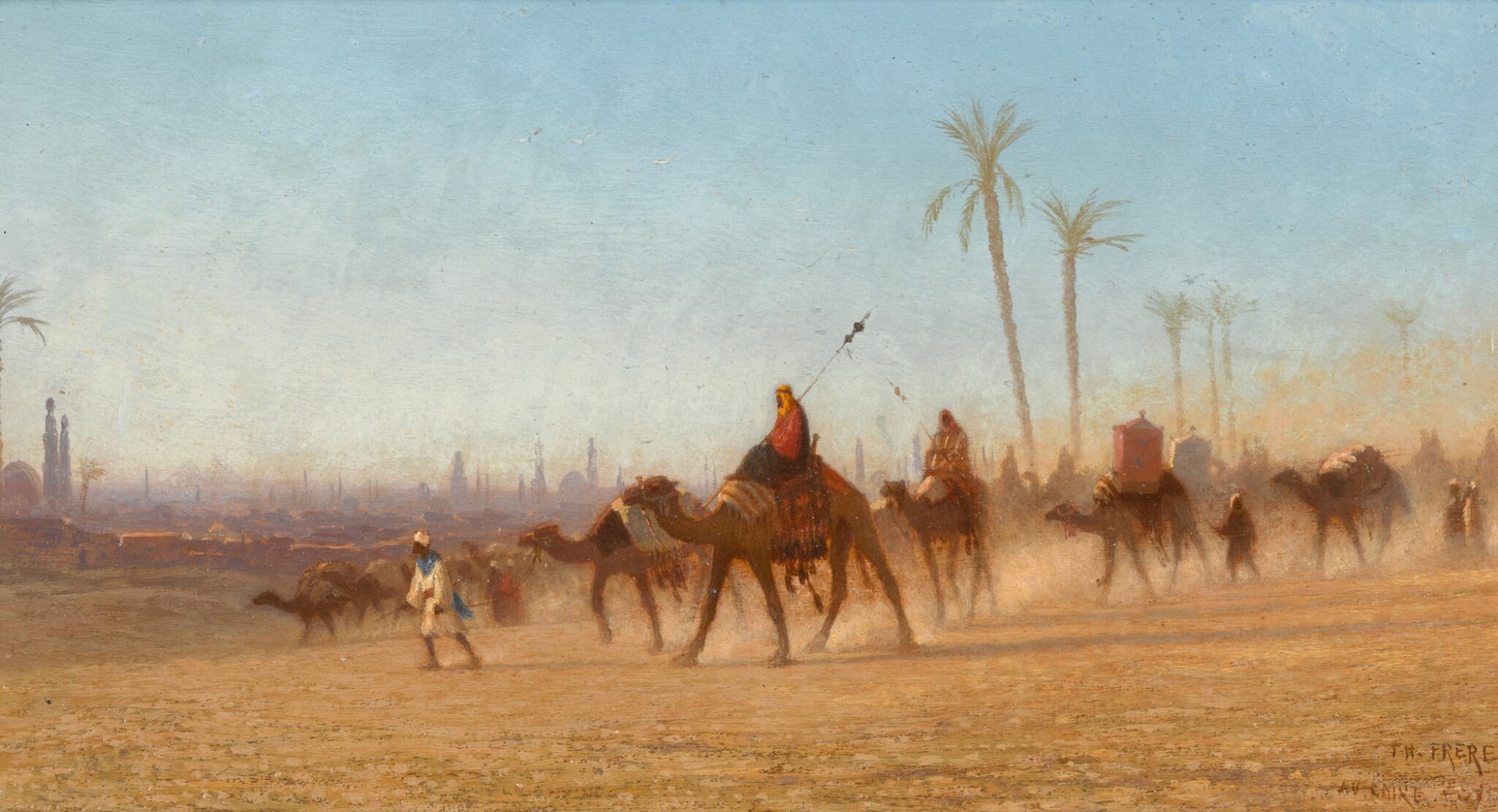
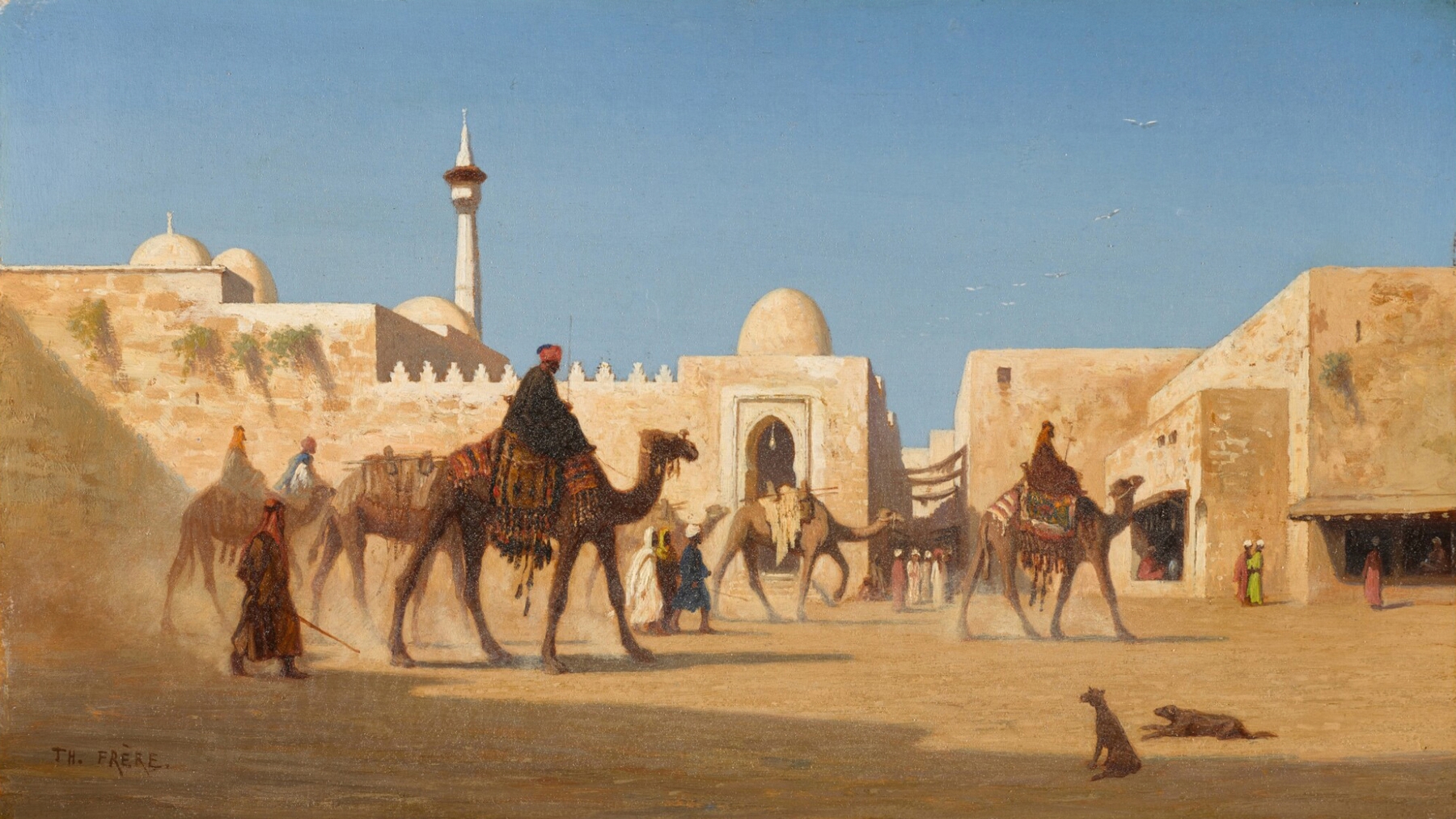
What if beauty was never meant to be finished? In the vibrant chaos of A Bazaar in Cairo, one finds a world alive with whispers of dreams and untold stories. Look to the left at the lively fabric stalls awash in a kaleidoscope of colors—deep reds, golden yellows, and tranquil blues. The composition draws the eye through bustling figures, each captured mid-motion, their garments flowing like water around the stalls. Notice how the light dances over the intricate patterns of textiles, illuminating the fine details with a warm, inviting glow.
The artist employs rich, earthy tones, grounding the scene in the essence of life while inviting viewers to lose themselves in the spirited atmosphere. Delve deeper and you’ll uncover the tensions between the vibrancy of commerce and the introspective nature of the individuals. The vendors, with their animated gestures, vibrate with the pulse of the market, yet the expressions of the patrons hint at personal reveries amid the hustle. This contrast between external activity and internal contemplation invites reflection on the nature of human experience within the crowded spaces of life.
Here, dreams and reality intertwine, suggesting that in the pursuit of beauty, one finds fragments of self. During the mid-19th century, when this piece was created, Frère was influenced by the Orientalist movement, which celebrated and romanticized Eastern cultures. He worked predominantly in France and traveled across North Africa, where the allure of bustling bazaars and rich cultural tapestries provided a wealth of inspiration. The world was changing, with colonial narratives shaping perspectives, and Frère captured this essence, merging life and art into an evocative tableau that resonates with the dreams of the time.