A street scene, North Africa — History & Analysis
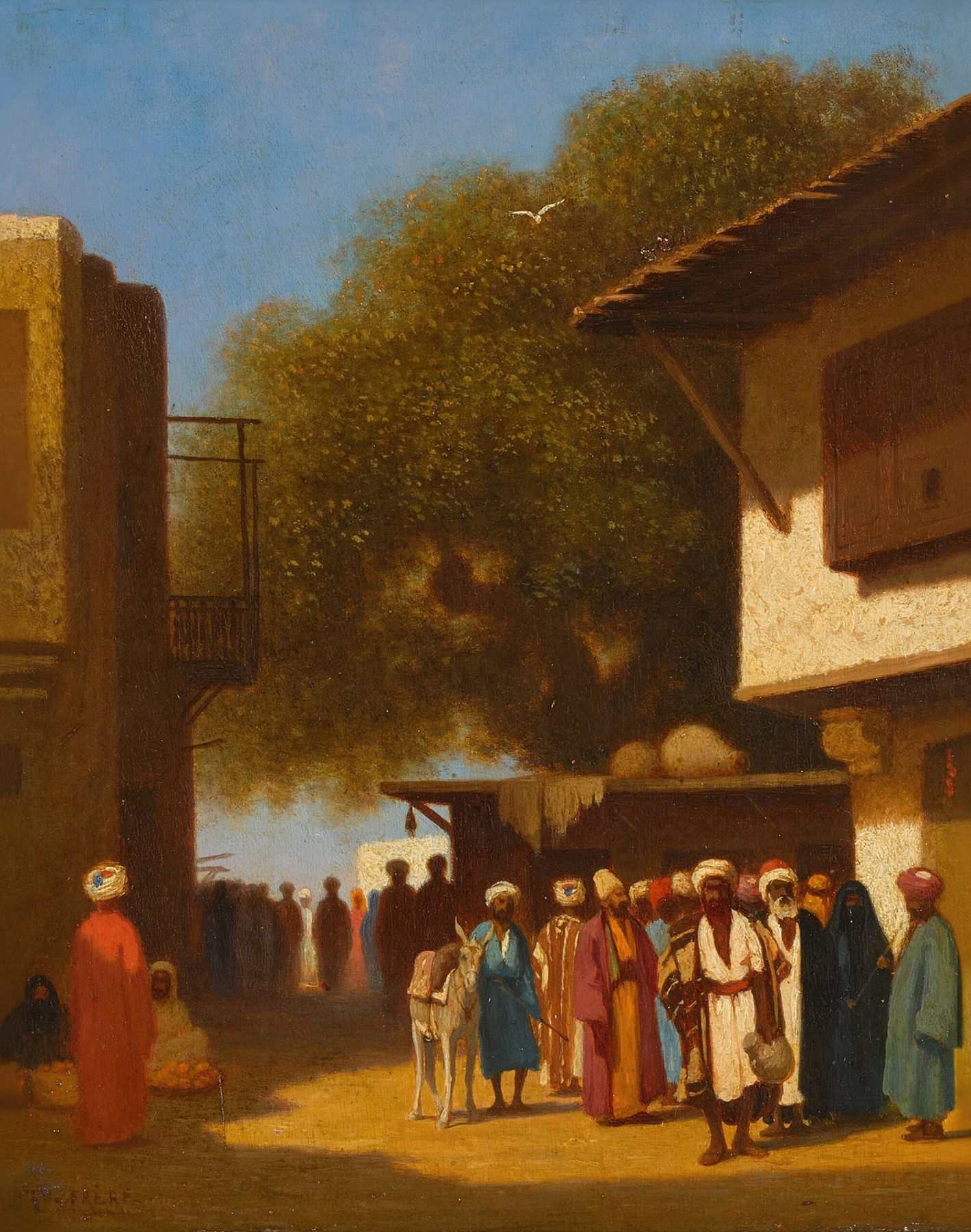
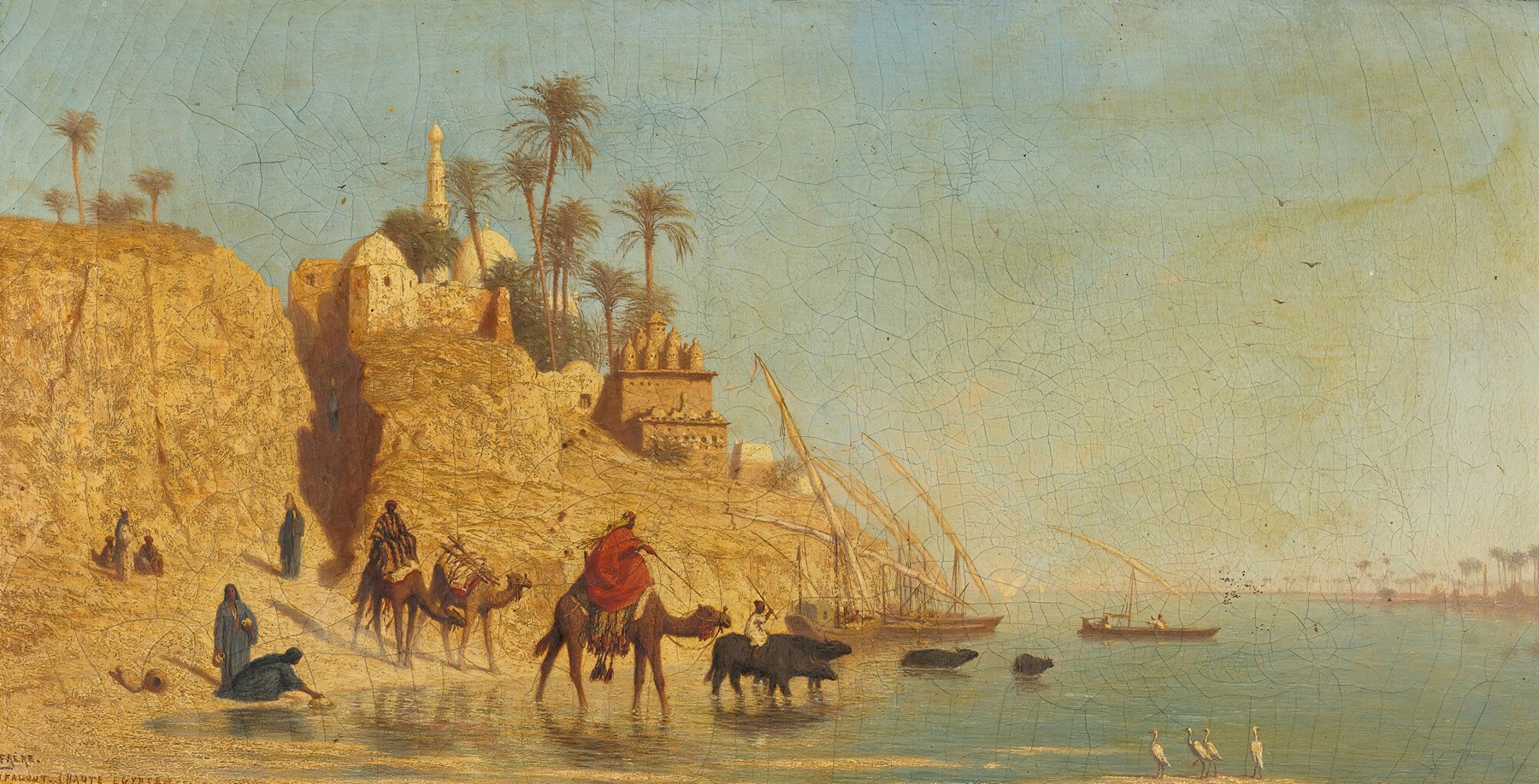
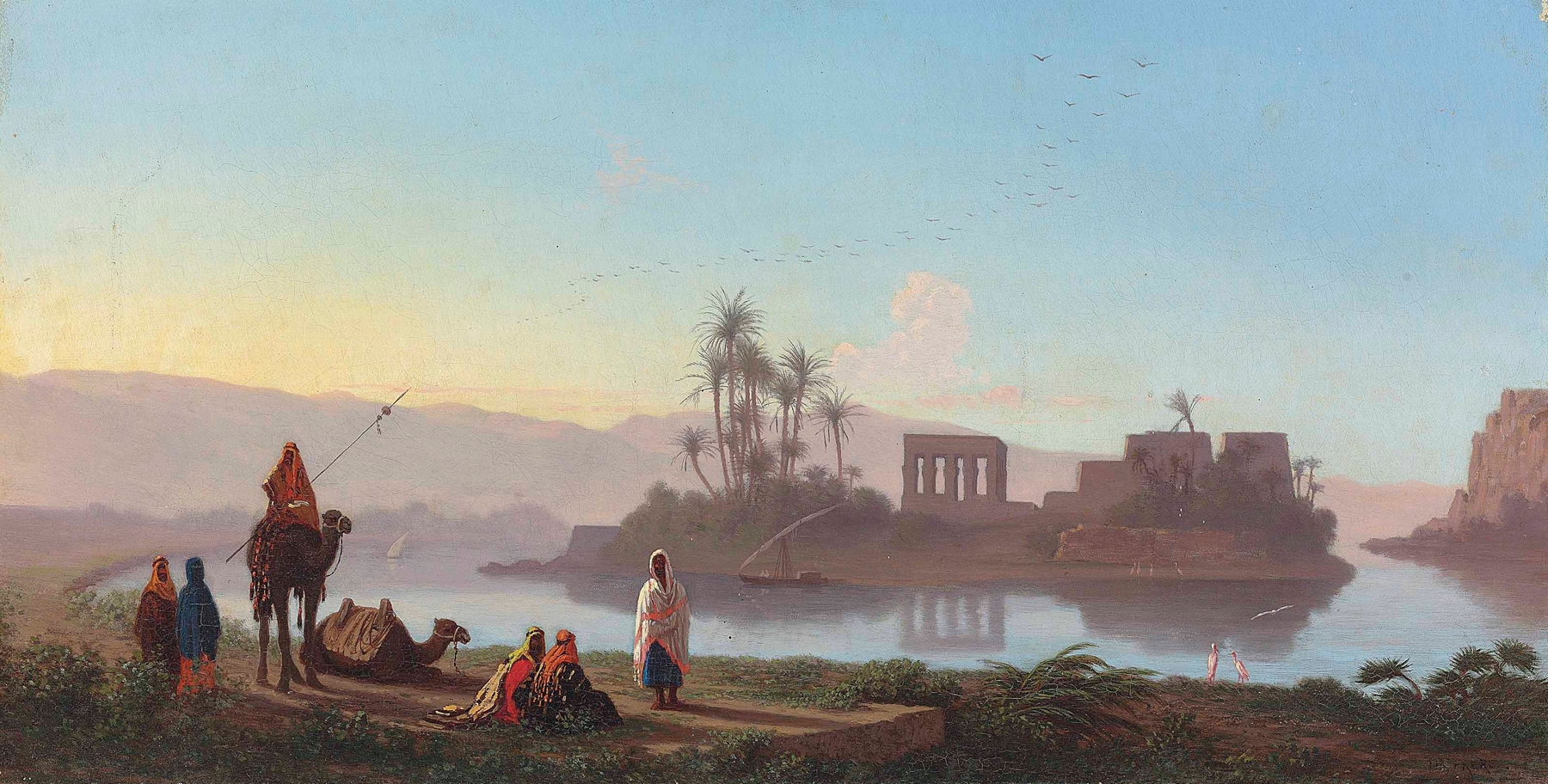
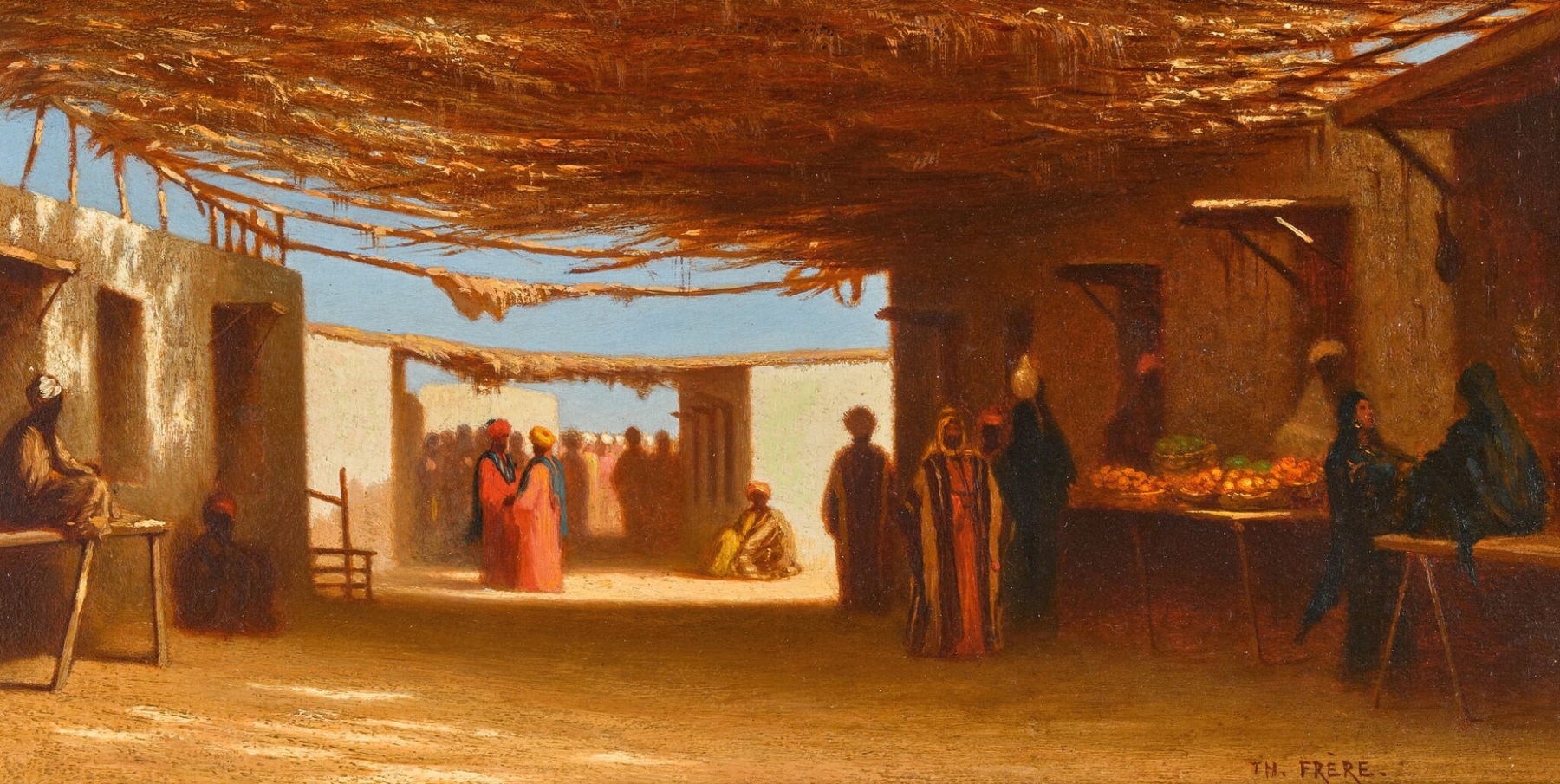
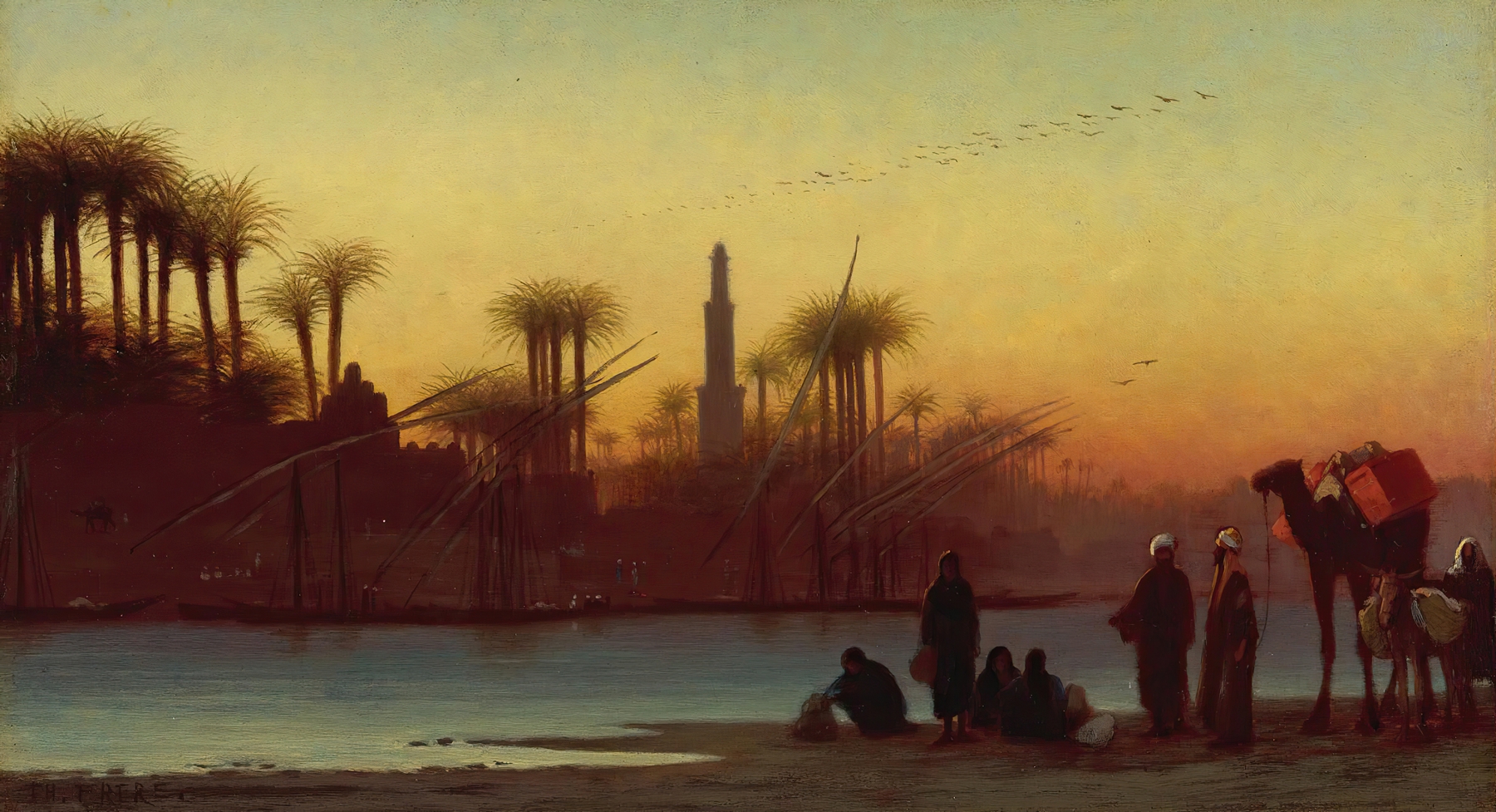
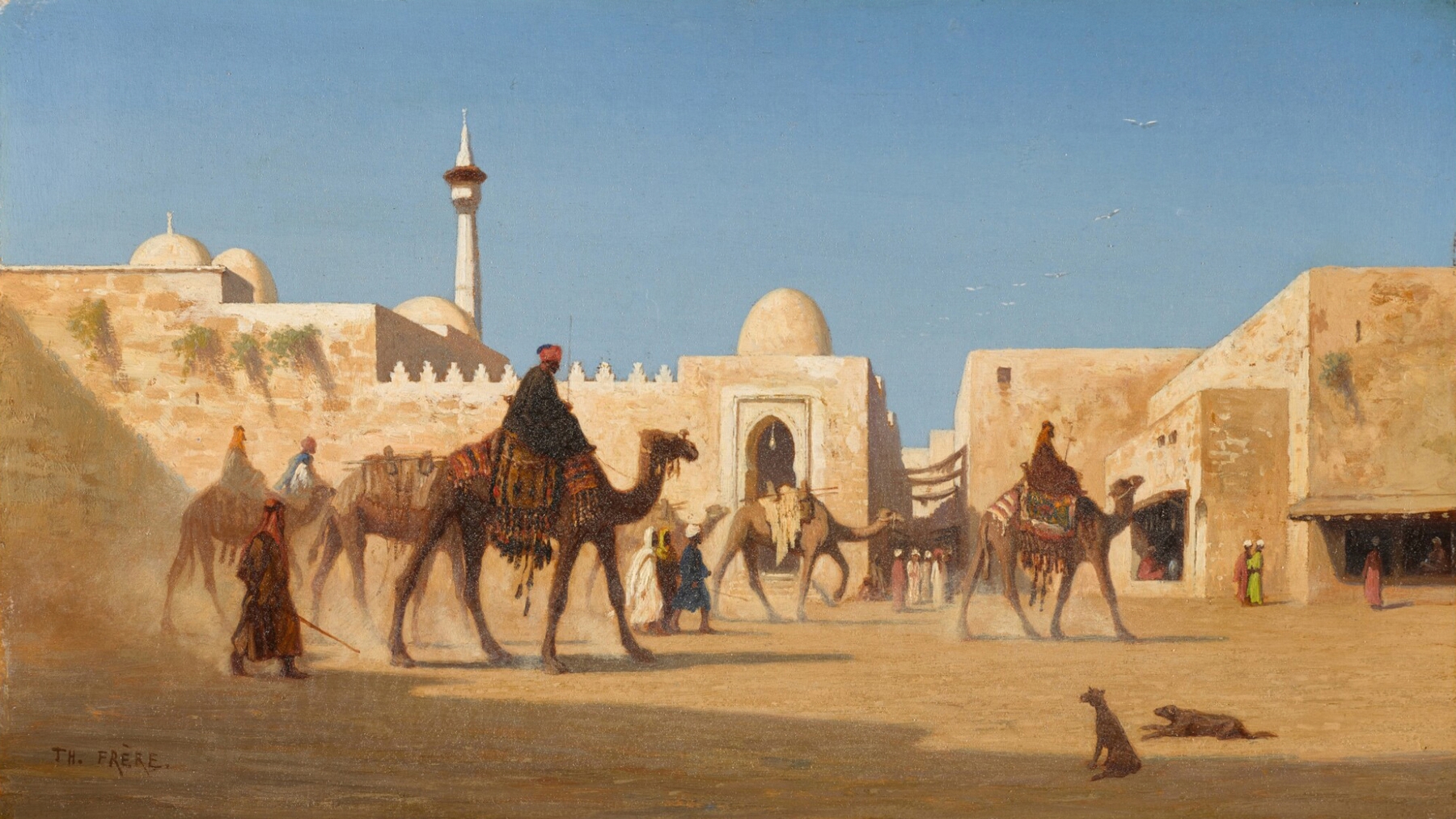
“Sometimes beauty is just pain, disguised in gold.” The vibrant tapestry of life often masks deeper sorrows, and within this harmonious chaos lies a profound truth. Look to the left at the sun-drenched buildings, their warm ochre façades glowing under the North African sun. The delicate interplay of light and shadow guides your gaze across the cobbled street, where a procession of humble figures moves with intent. Notice how the artists’ brushstrokes convey a sense of movement and purpose, capturing the rhythm of daily life while inviting the viewer to feel the heat radiating from the earth.
Amidst the vivid colors and joyous scene, subtle hints of loss emerge. The figures, though engaged, appear distant, glancing sidelong as if carrying unspoken burdens. The exquisite details—like the tattered edge of a woman’s garment or the child’s clenched hand—whisper of a history both rich and painful, threading a narrative of resilience beneath the surface cheer.
Frère painted this work during the mid-19th century, a time of burgeoning interest in Orientalism and a shift toward realism in Western art. Living in Paris, he was influenced by the vibrant culture of North Africa, which he sought to capture in his work. Yet, his portrayal reflects not just the beauty of the landscape but also the complexities of identity and belonging, hinting at the undercurrents of colonial tension that marked his era.