Mosque in the Moonlight — History & Analysis
What if silence could speak through light? In Mosque in the Moonlight, the delicate interplay of illumination and shadow suggests a haunting dialogue, one that touches the very heart of human experience. Look to the left at the cascading shadows cast by the towering minaret, its silhouette stark against the luminous moon. Notice how the gentle glow dances upon the intricate patterns of the mosque’s façade, inviting you to explore the delicate craftsmanship embedded within its walls.
The verdant hues of the surrounding trees contrast sharply with the cool blues and silvers of the night sky, creating a serene yet unsettling atmosphere that lingers in the air like a whisper. Within this serene landscape lies a tension between tranquility and underlying violence. The moonlight, casting its ethereal glow, paradoxically highlights the fragile beauty of the mosque while hinting at the tumultuous history that often shadows such sacred spaces. Each brushstroke speaks of reverence and also of conflict, inviting viewers to contemplate the duality of peace and unrest intertwined in the narrative of faith.
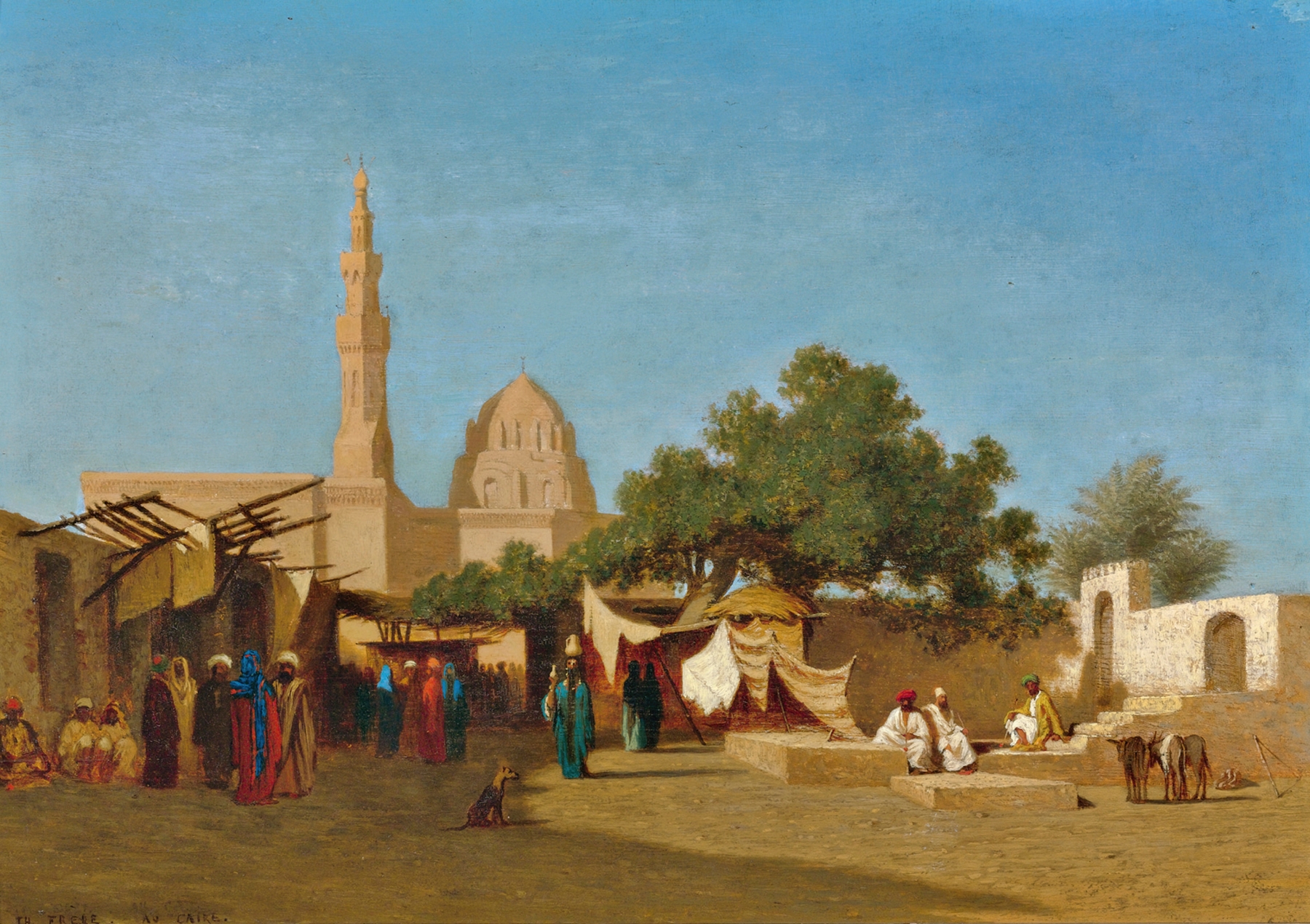
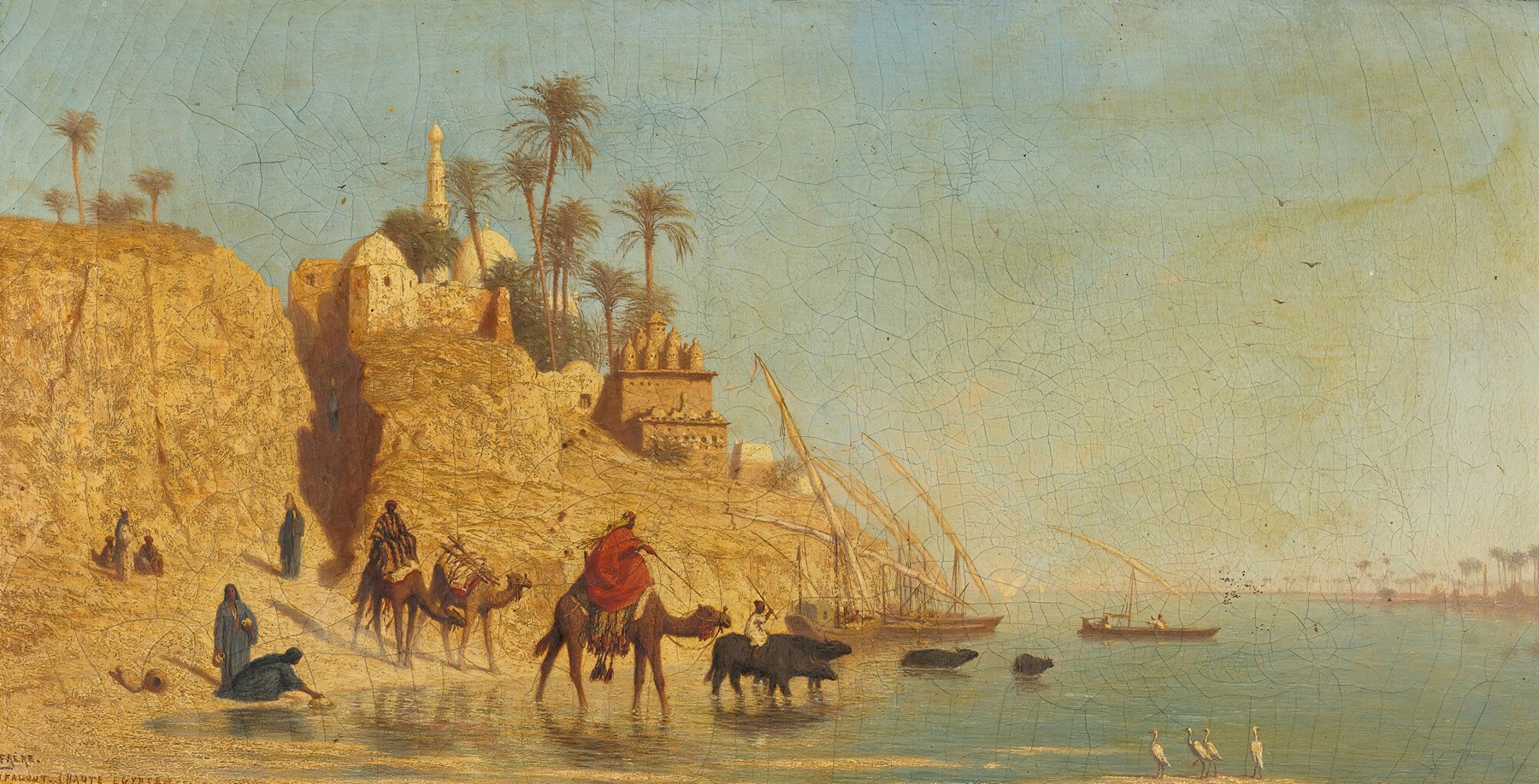
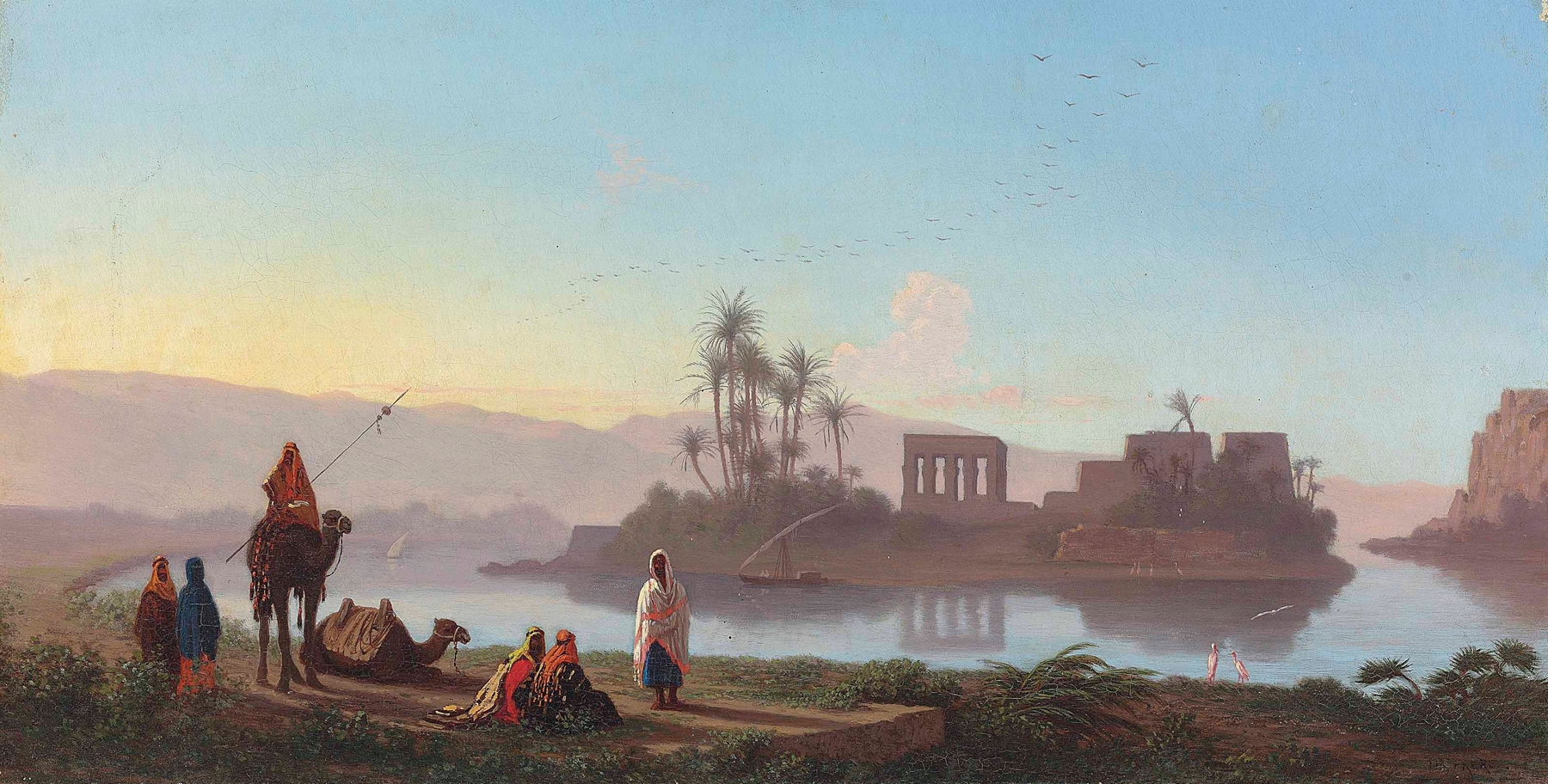
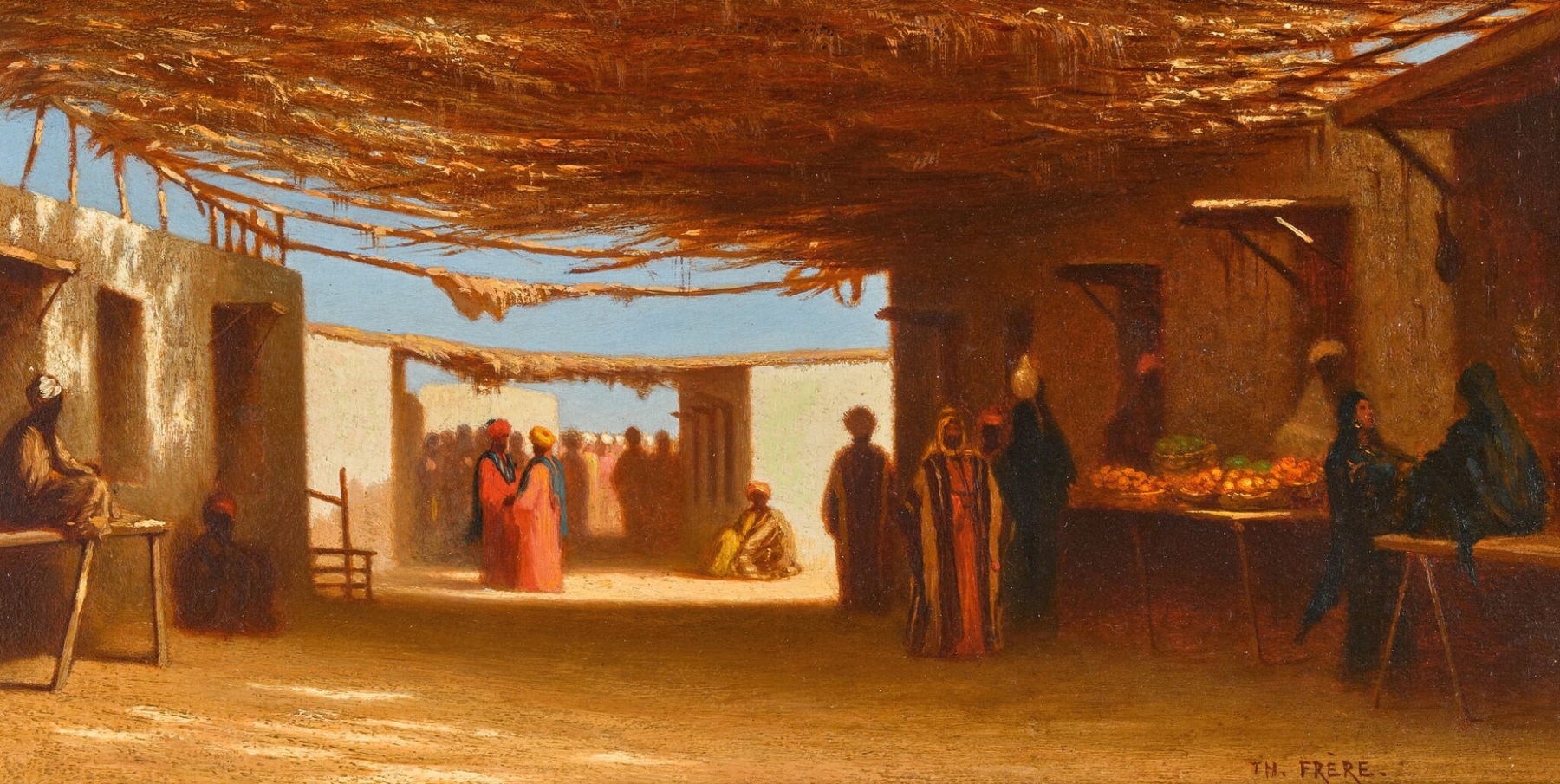
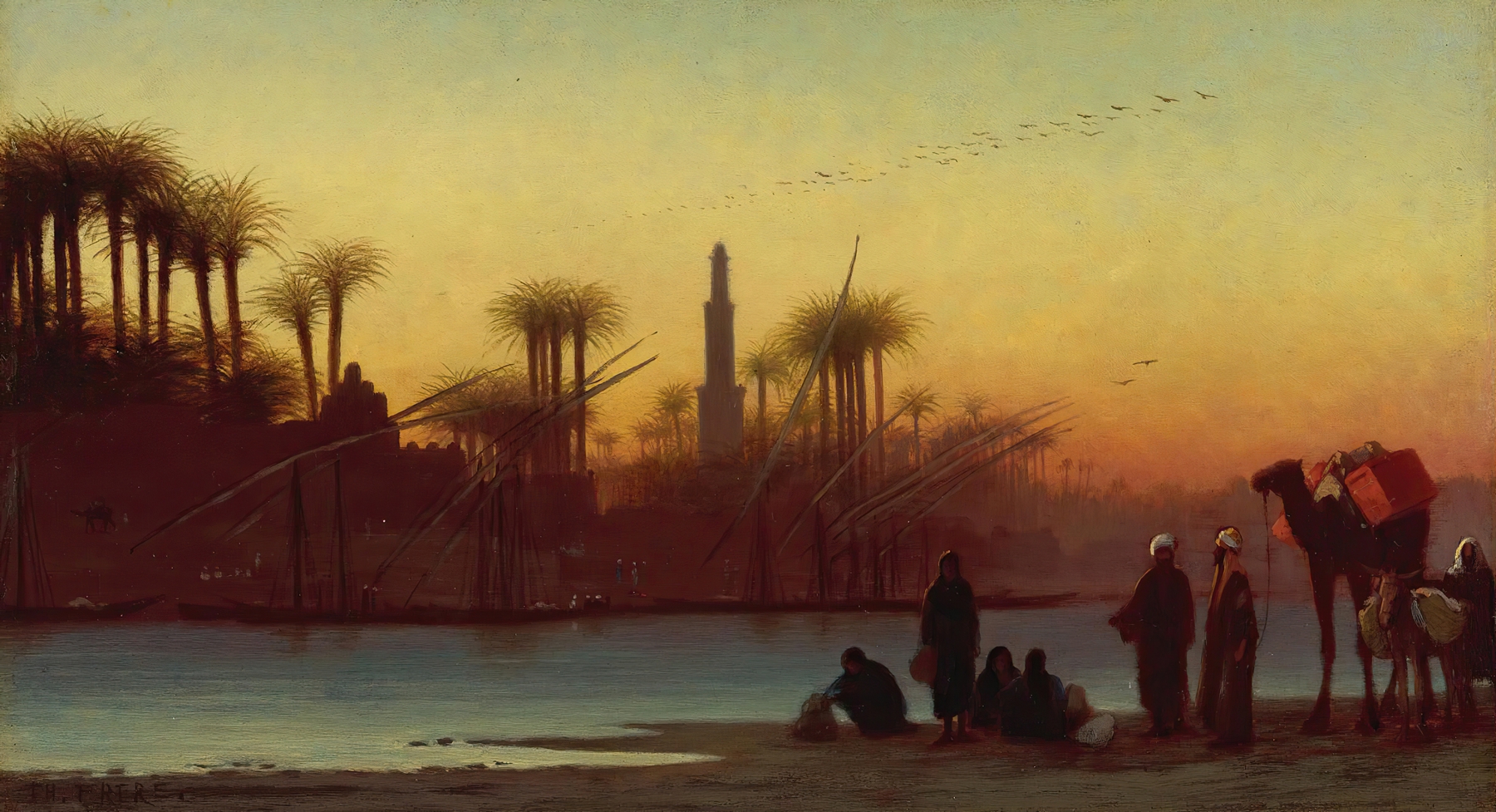
In the midst of the tumultuous political climate of 19th-century Europe and North Africa, Charles Théodore Frère captured this moment in time, possibly during his travels through the Middle East. It reflects his fascination with Islamic architecture and culture, as well as the growing interest in Orientalism within European art circles. Frère’s choice to portray this tranquil scene speaks to his desire to explore beauty amid complexity, a reflection of the world around him.