A Capriccio of Roman Ruins — History & Analysis
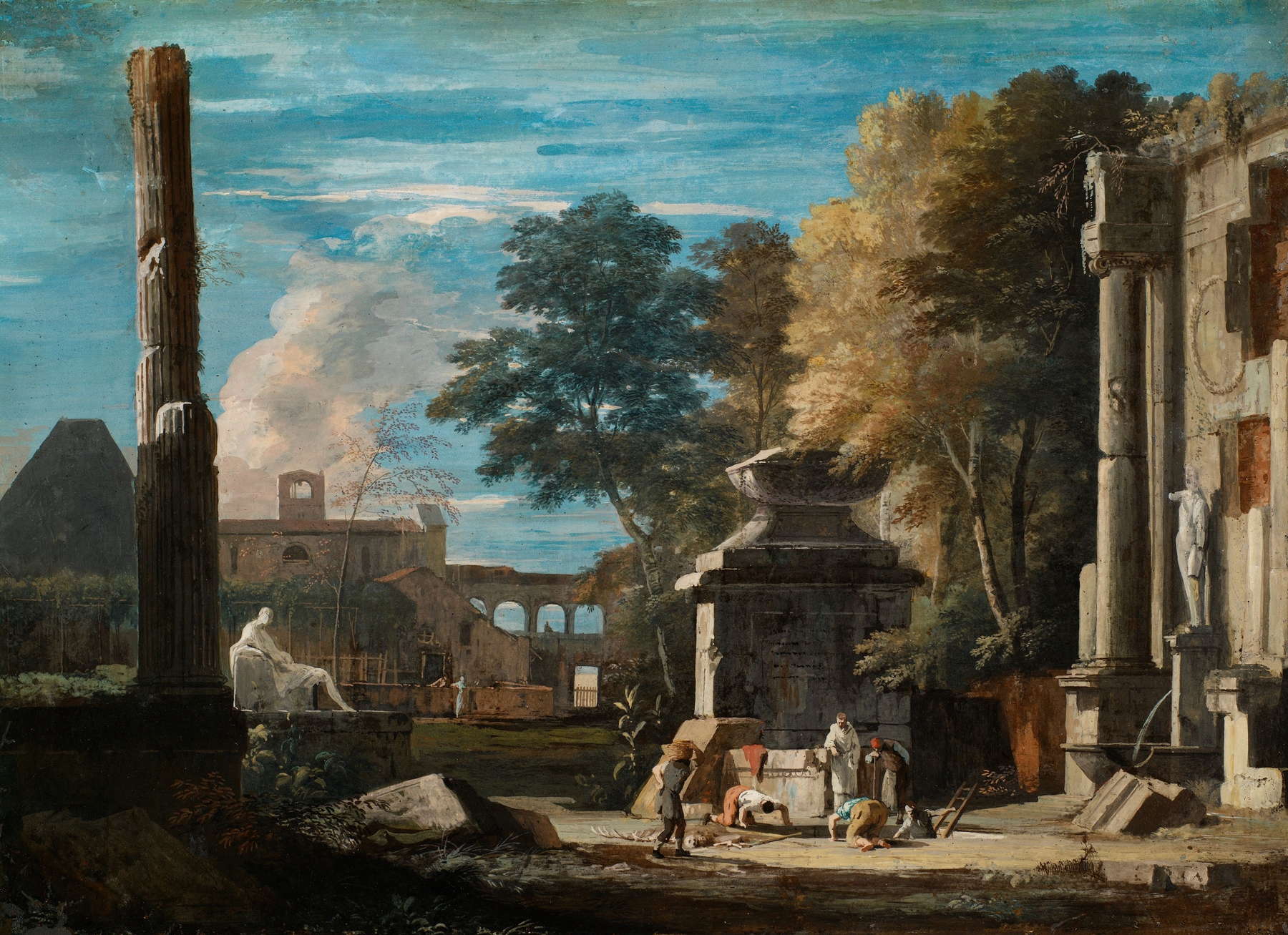
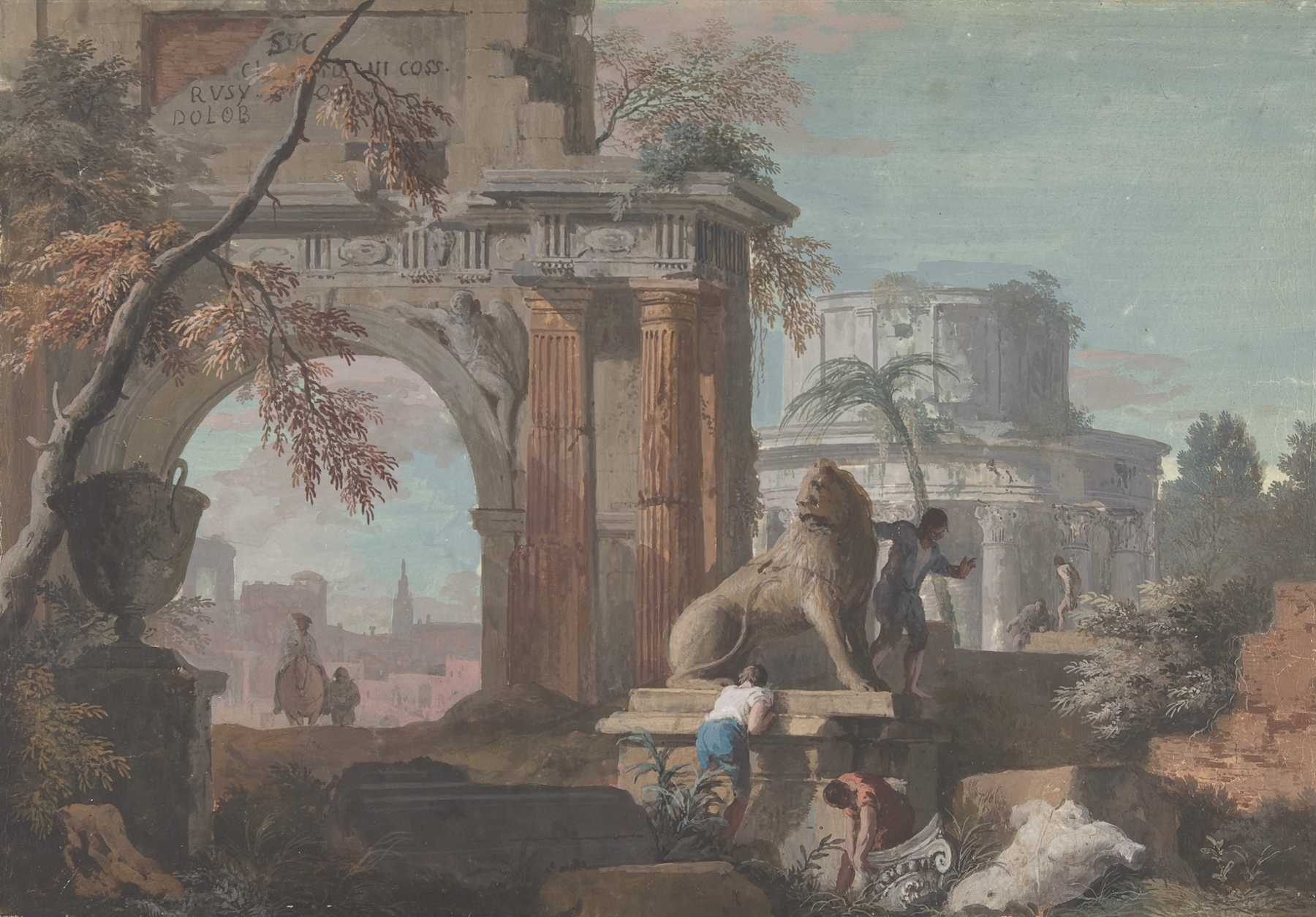
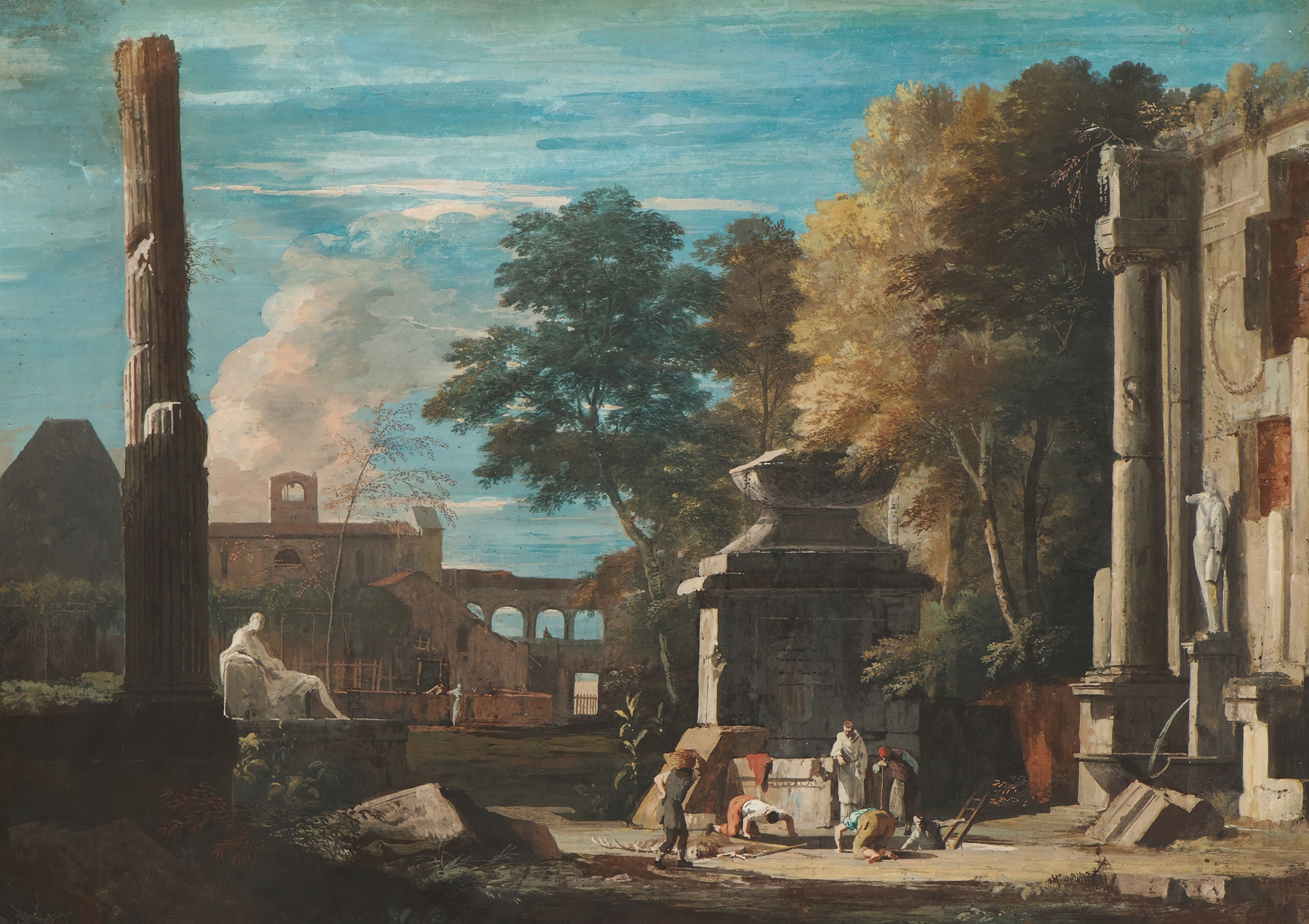
Can beauty exist without sorrow? Marco Ricci's A Capriccio of Roman Ruins captures the essence of memory, intertwining gleaming facades with the weight of time's passage, evoking a poignant reflection on what remains after loss. Look to the left at the towering remnants of a once-grand column, its surface marked by the patina of age. The warm ochres and rich greens create a symphony of color, leading the eye towards the tranquil water, where reflections of the crumbling architecture ripple gently.
Notice how the artist masterfully balances light and shadow, illuminating the ruins against a soft, dramatic sky that hints at both dawn and dusk, symbolizing the fleeting nature of splendor. In every cracked stone and bent tree, there lies a story of decay and resilience. The juxtaposition of the vibrant landscape and the dilapidated structures embodies a stark contrast between vitality and mortality.
One can almost hear the whispers of history echoing through the canvas, where beauty and sorrow coexist, challenging the viewer to confront the bittersweet essence of memory that permeates the scene. Created between 1727 and 1729, this work emerged during a time of great change in Europe, with the Baroque style waning and the Rococo beginning to take hold. Ricci, during his years in Venice, was deeply influenced by the picturesque quality of the Italian landscape, blending reality with fantasy as he navigated a world torn between the grandeur of the past and the uncertainties of the present.