A Capriccio Of A Classical Seaport City At Sunset — History & Analysis
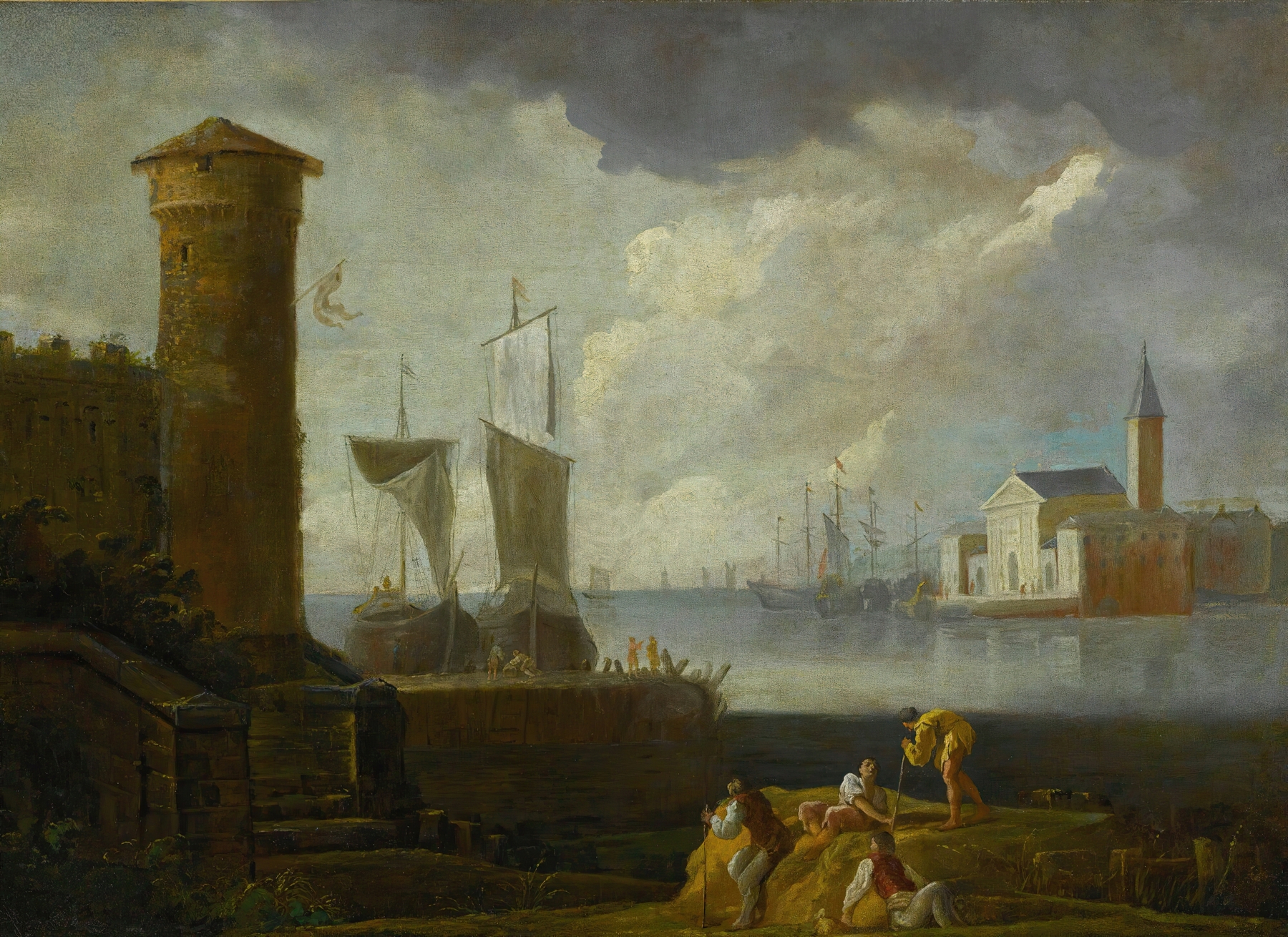
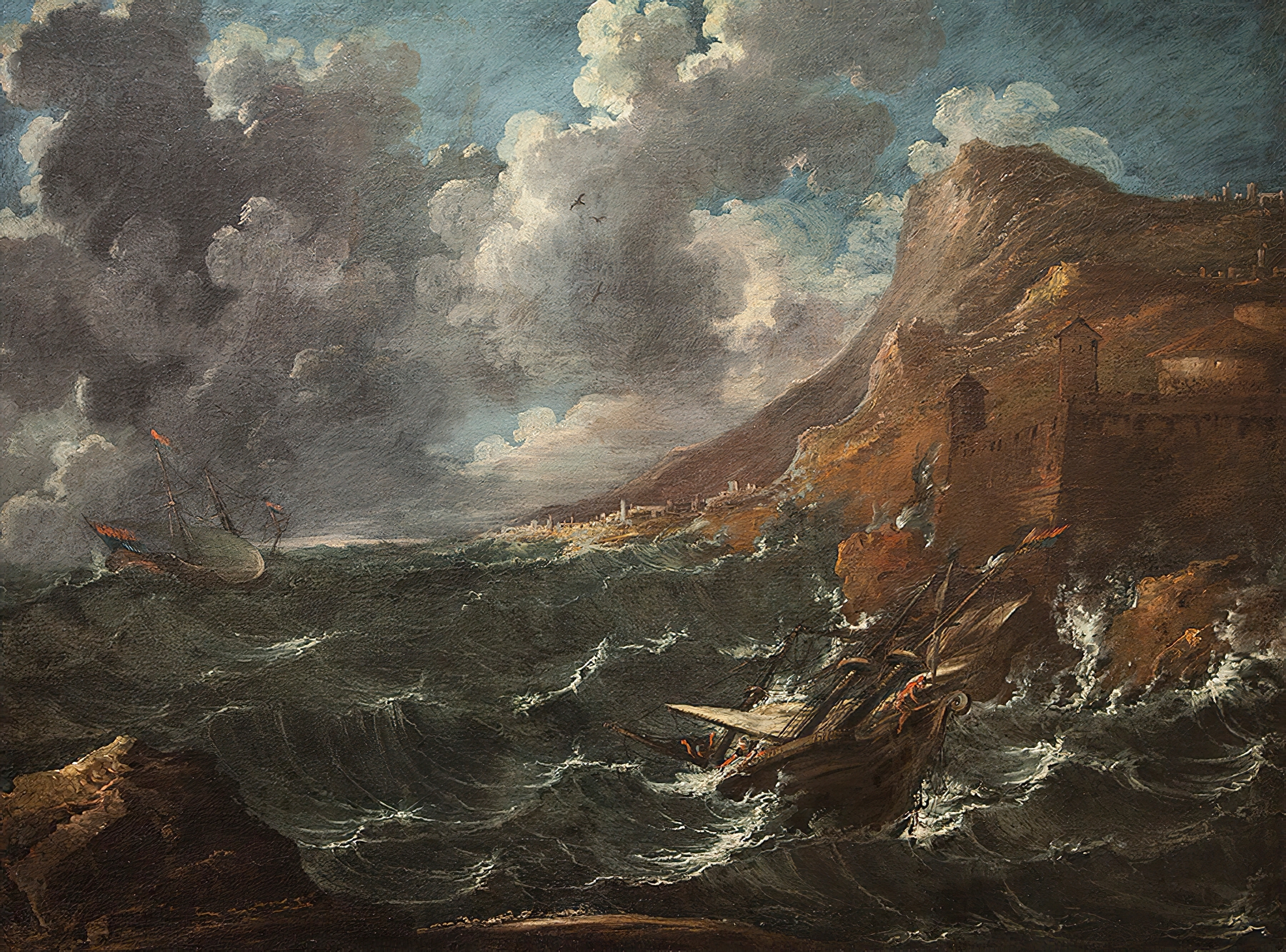
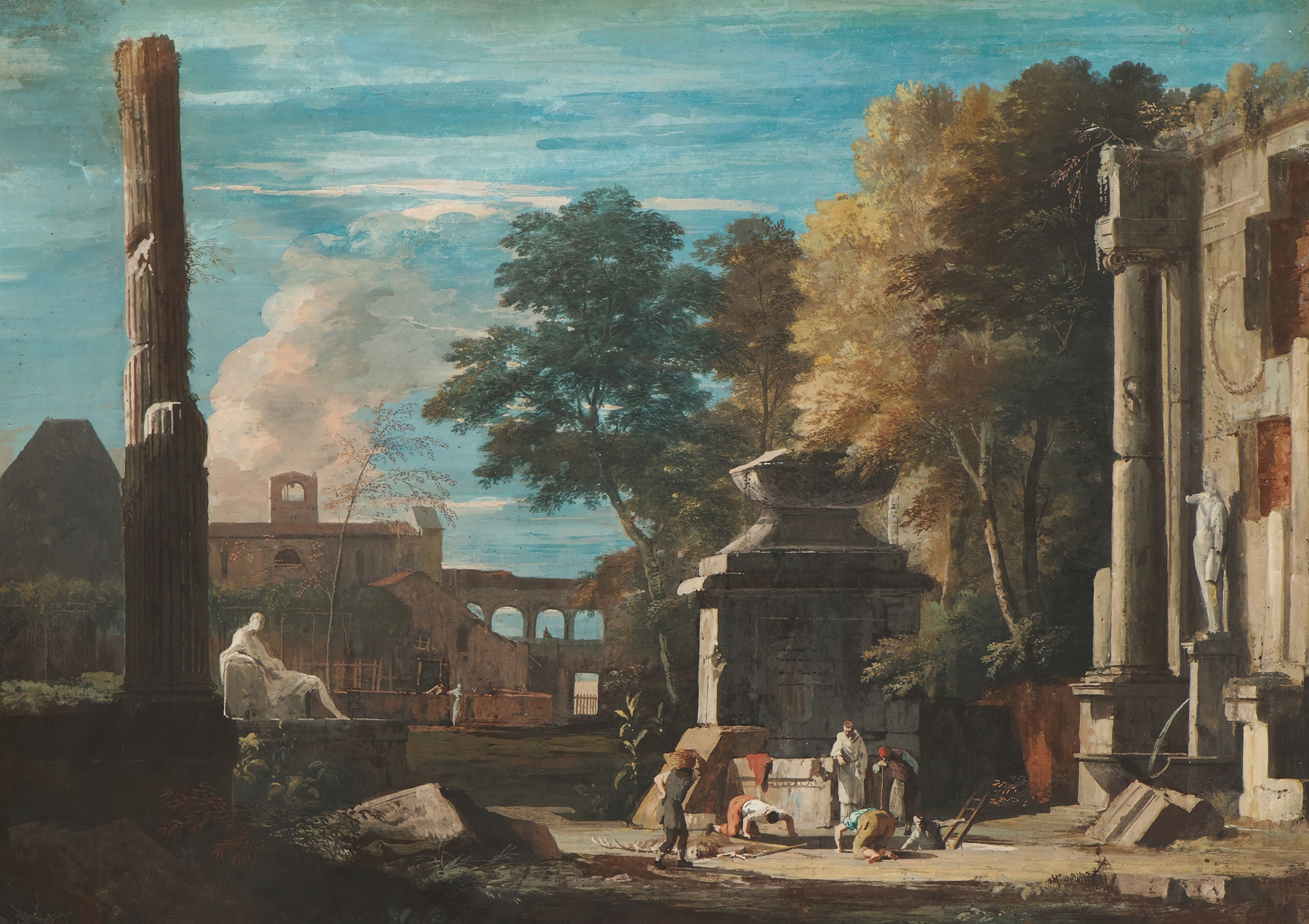
When did color learn to lie? In the vibrant strokes and blended hues of a seaport at sunset, we glimpse a world reborn, where reality bends to the whims of imagination. Look to the center of the composition, where the sun sinks into the horizon, casting warm golds and fiery oranges across the water. Notice how the light dances on the surface, creating an ethereal shimmer that draws the eye. Surrounding this luminous point, the architecture of classical buildings stands proud, their shades of faded blue and soft lavender harmonizing beautifully with the warmth of the sky.
This careful juxtaposition of light and shadow, along with the fluid brushwork, invites viewers into a dreamlike reverie. Within the intricate details lie emotional tensions and contrasts. The serene water reflects the vibrancy of the sunset, yet hints at the deeper undertones of change, perhaps suggesting the passage of time or a fleeting moment of beauty. The boats, anchored yet suspended, evoke a sense of calm, while the distant figures bustle with purpose, embodying the duality of stillness and movement.
This interplay captures the essence of existence — a perpetual cycle of life, death, and renewal. Created during a pivotal time in the late Baroque period, the artist painted this piece as he explored the intersection of reality and fantasy. While little is known about the exact date, Ricci was deeply influenced by the vibrant palettes and imaginative landscapes that characterized his era. His work reflects the cultural shifts of the time, where traditional forms began to embrace more expressive and emotional qualities, paving the way for the Romantic movement that would soon follow.