A gondolier on a Venetian backwater — History & Analysis
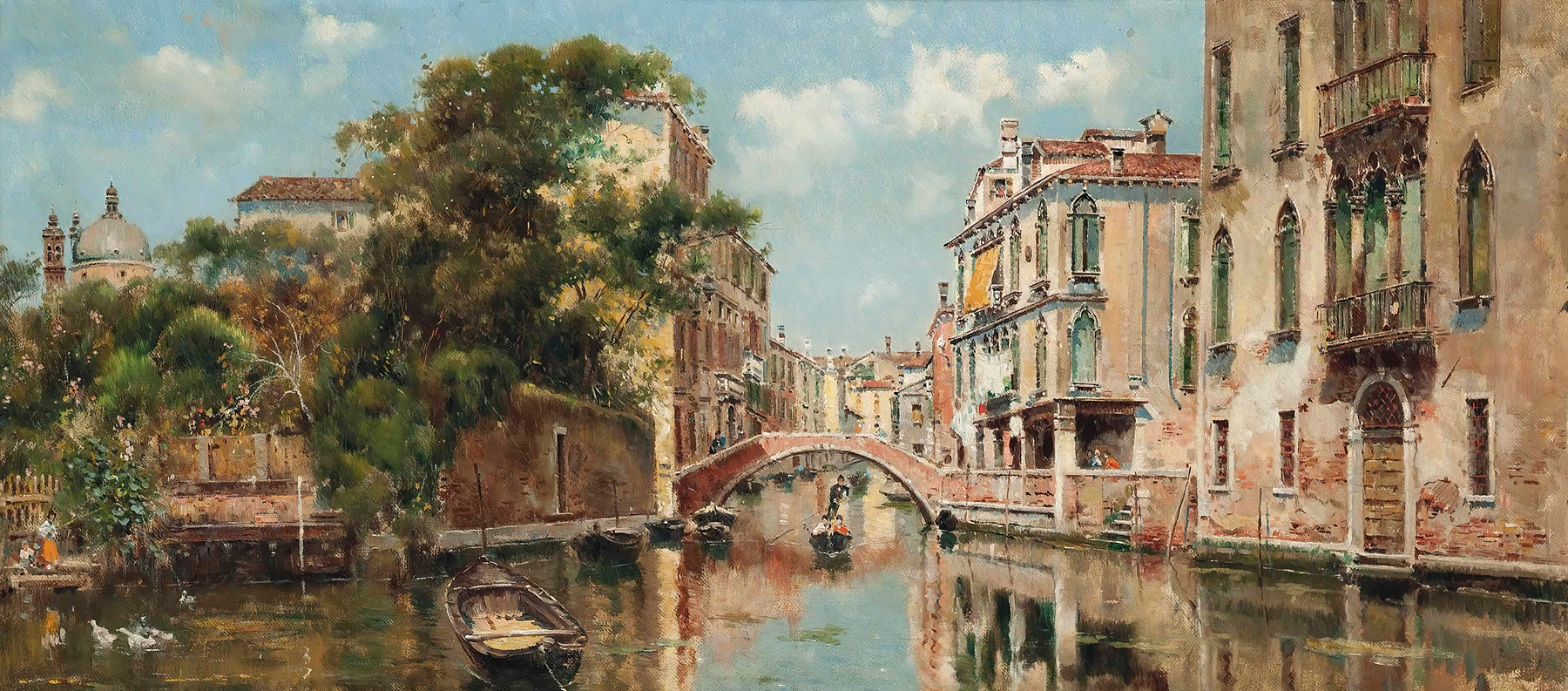
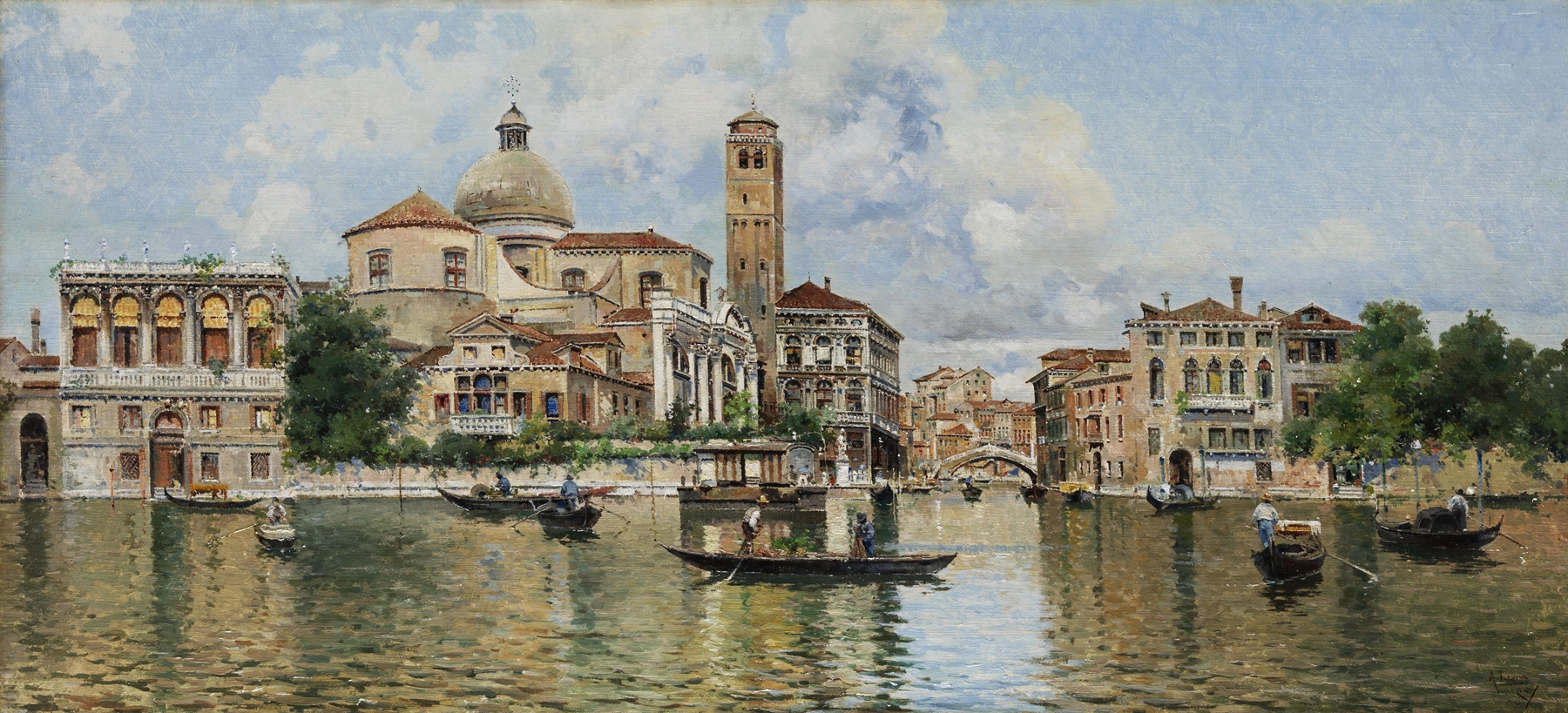
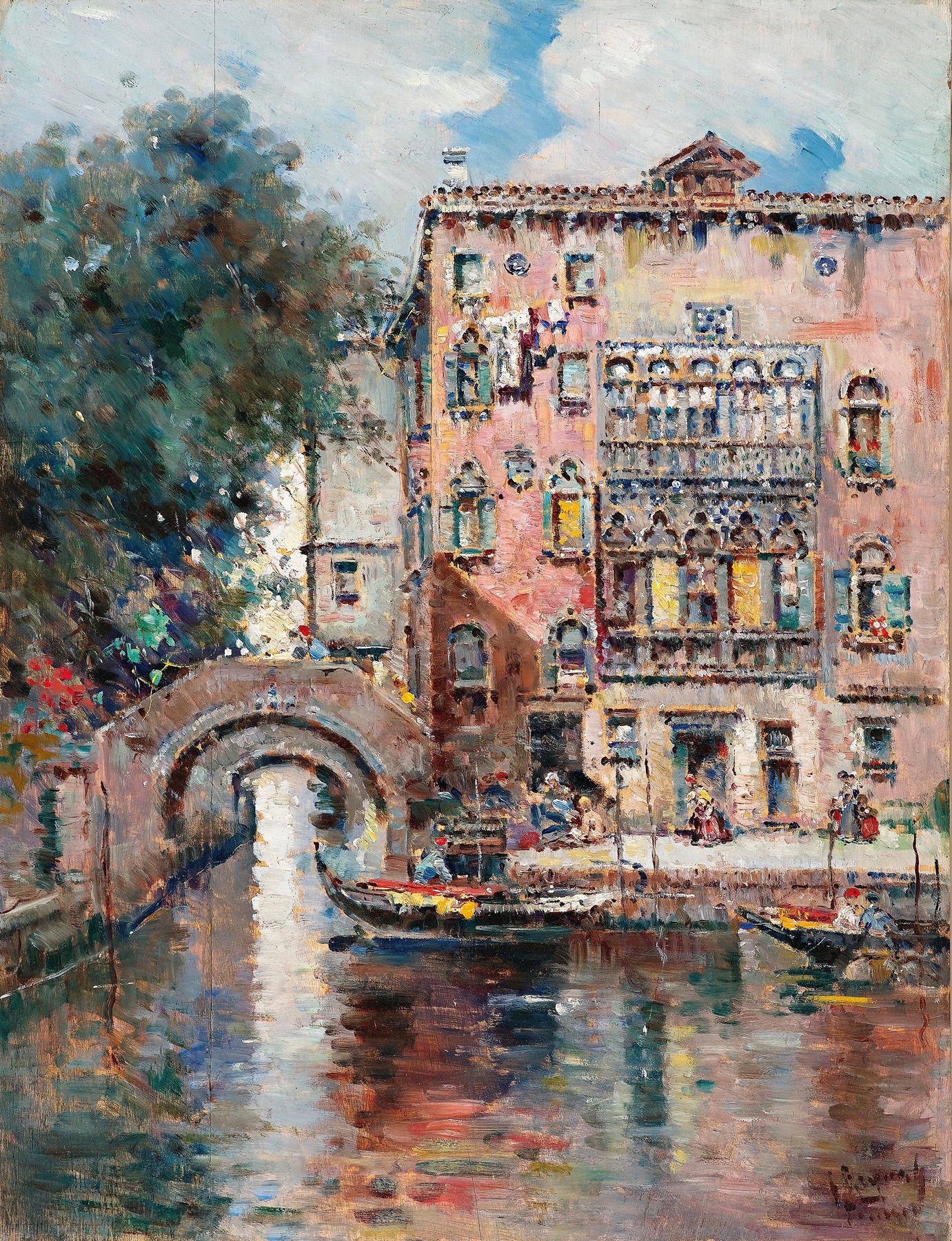
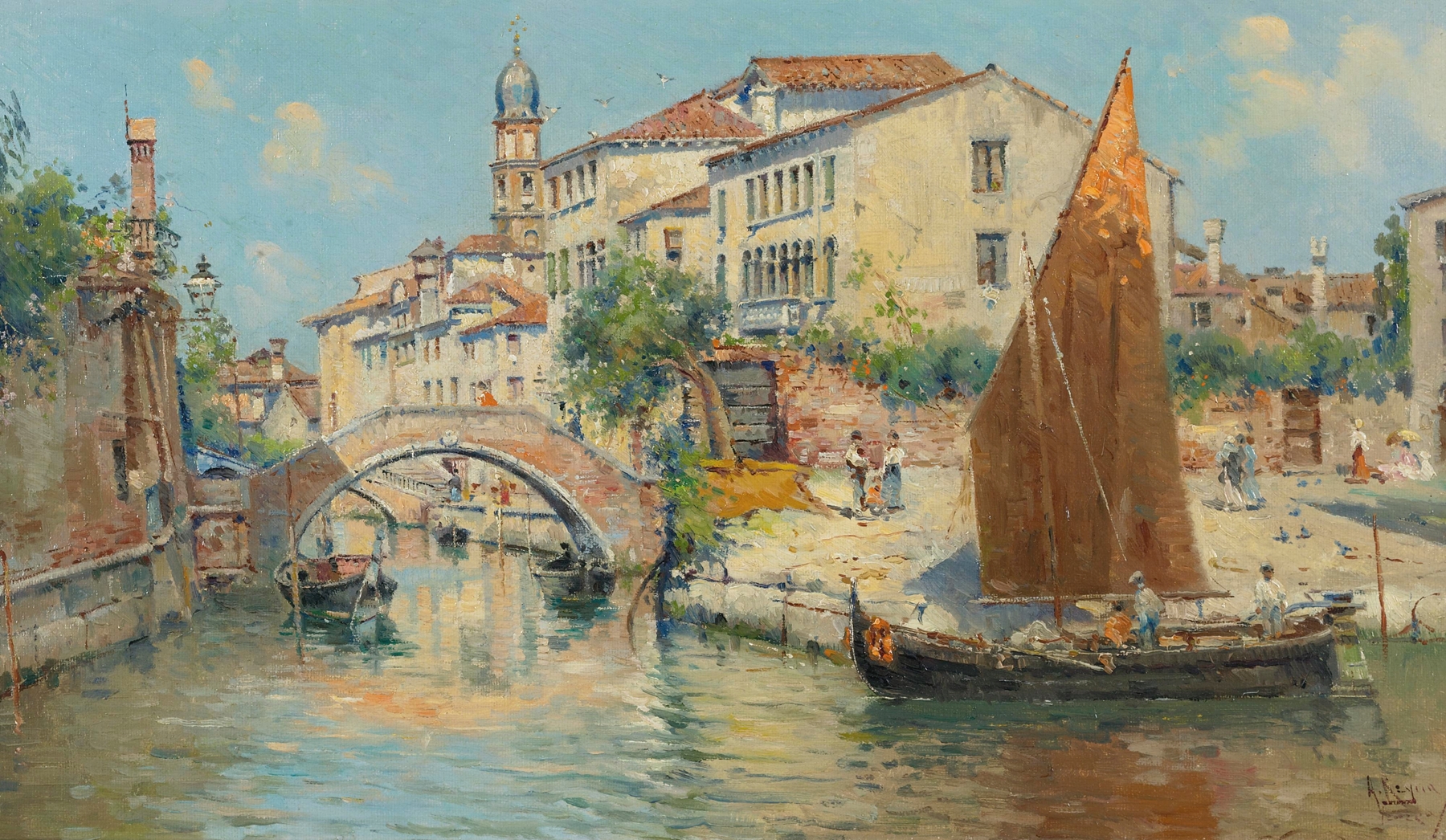
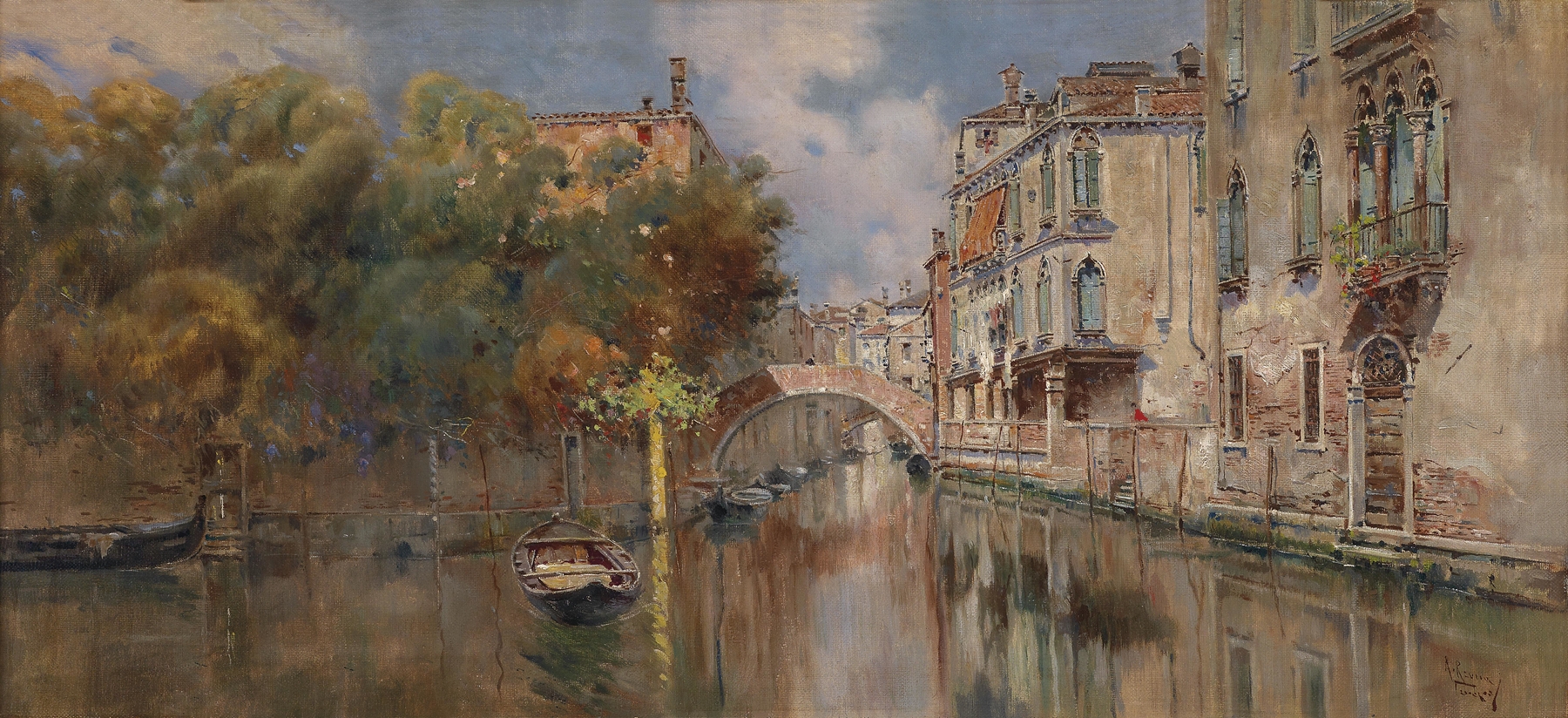
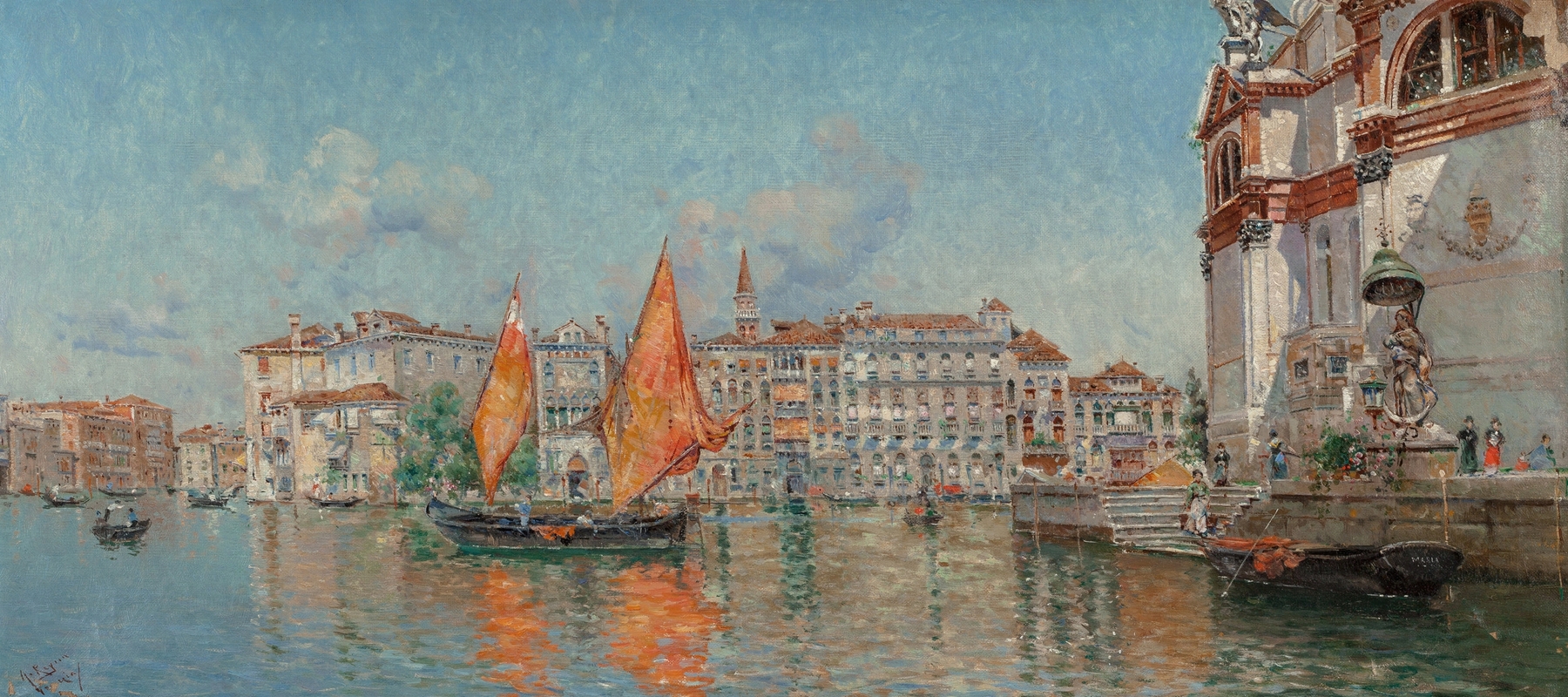
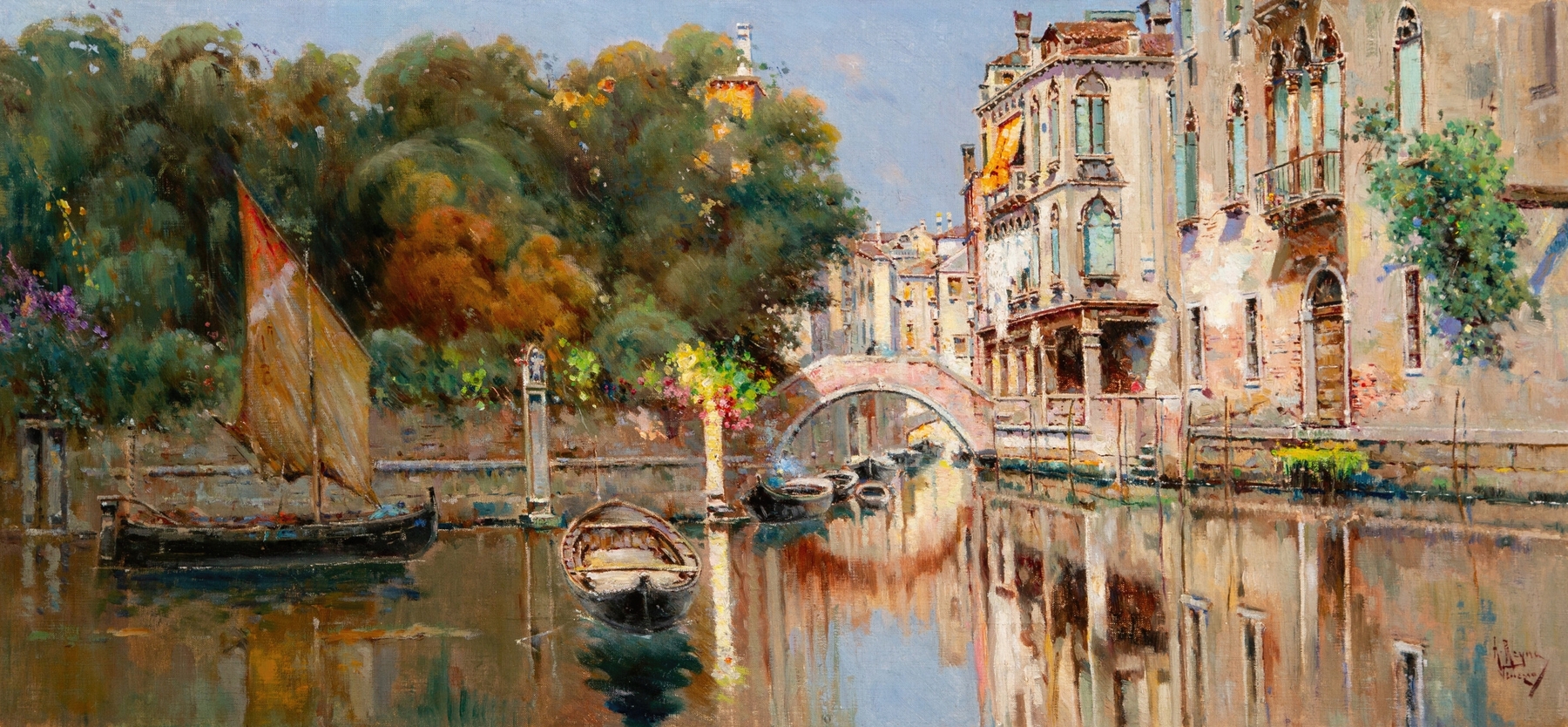
Can beauty exist without sorrow? In the soft embrace of twilight, light dances upon the water's surface, whispering secrets of joy and melancholy interwoven in the city of canals. Look to the center, where the gondolier gently navigates the narrow backwater, his silhouette framed against the warm hues of the setting sun. The nuanced gradations of ochre and azure blend harmoniously, creating a serene yet reflective atmosphere.
Notice how the delicate ripples mirror his focused expression, capturing both the grace of his movements and the tranquil pulse of the water, inviting you to linger in this fleeting moment. Yet, beneath the surface lies a deeper tension. The gondolier, a steadfast figure of solitude, seems to embody the duality of Venetian life—romance entwined with isolation. The interplay of light and shadow hints at the ephemeral nature of beauty, suggesting that every smile may be shadowed by sadness.
The serenity of the backwater belies the complexity of emotions held in this timeless city, where every canal tells a story of love and loss. The artwork was created during a period when the artist was deeply influenced by the romantic allure of Venice, capturing its essence amidst the dynamic world of 19th-century art. At this time, Reyna Manescau was exploring the interconnections between light and emotion, reflecting a broader movement among artists who sought to portray not just scenes, but the feelings they evoke.