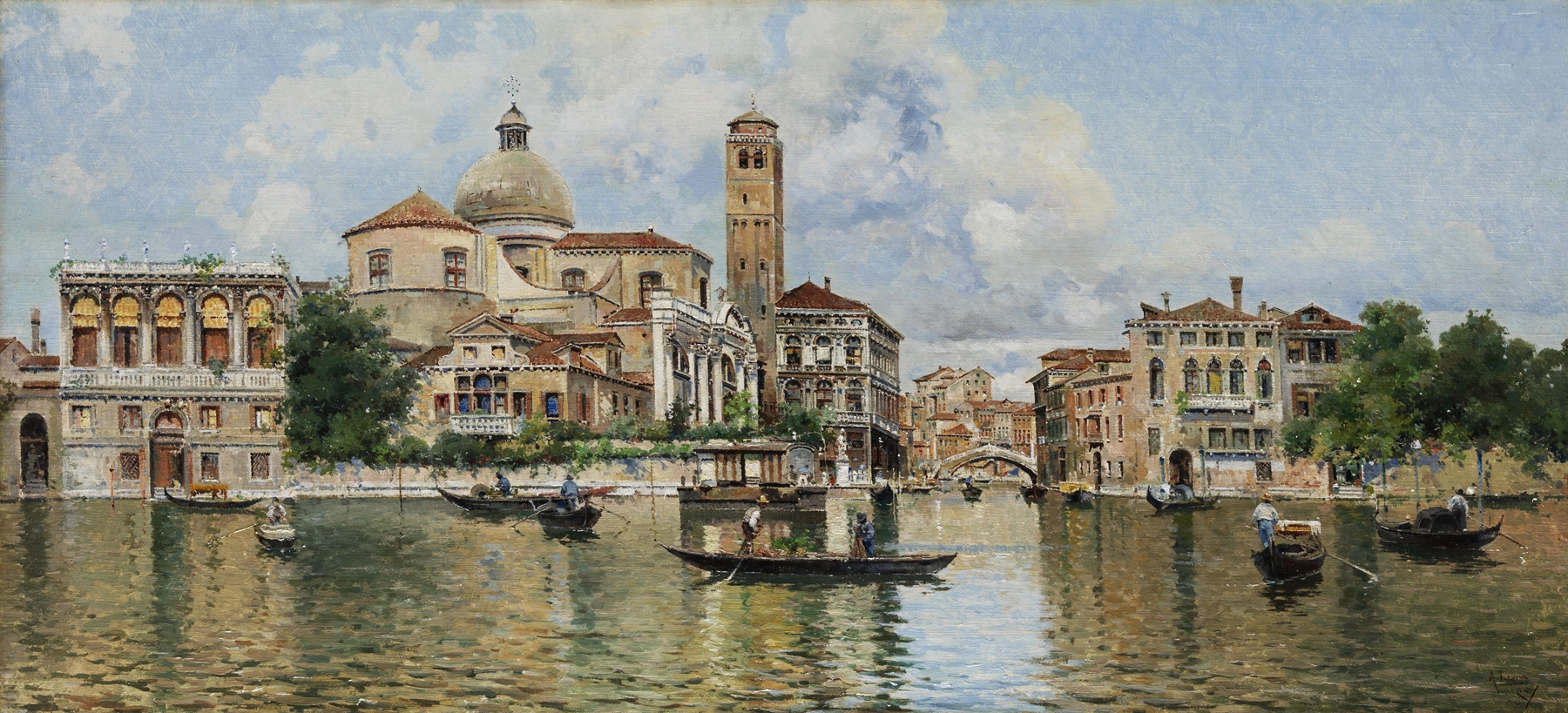
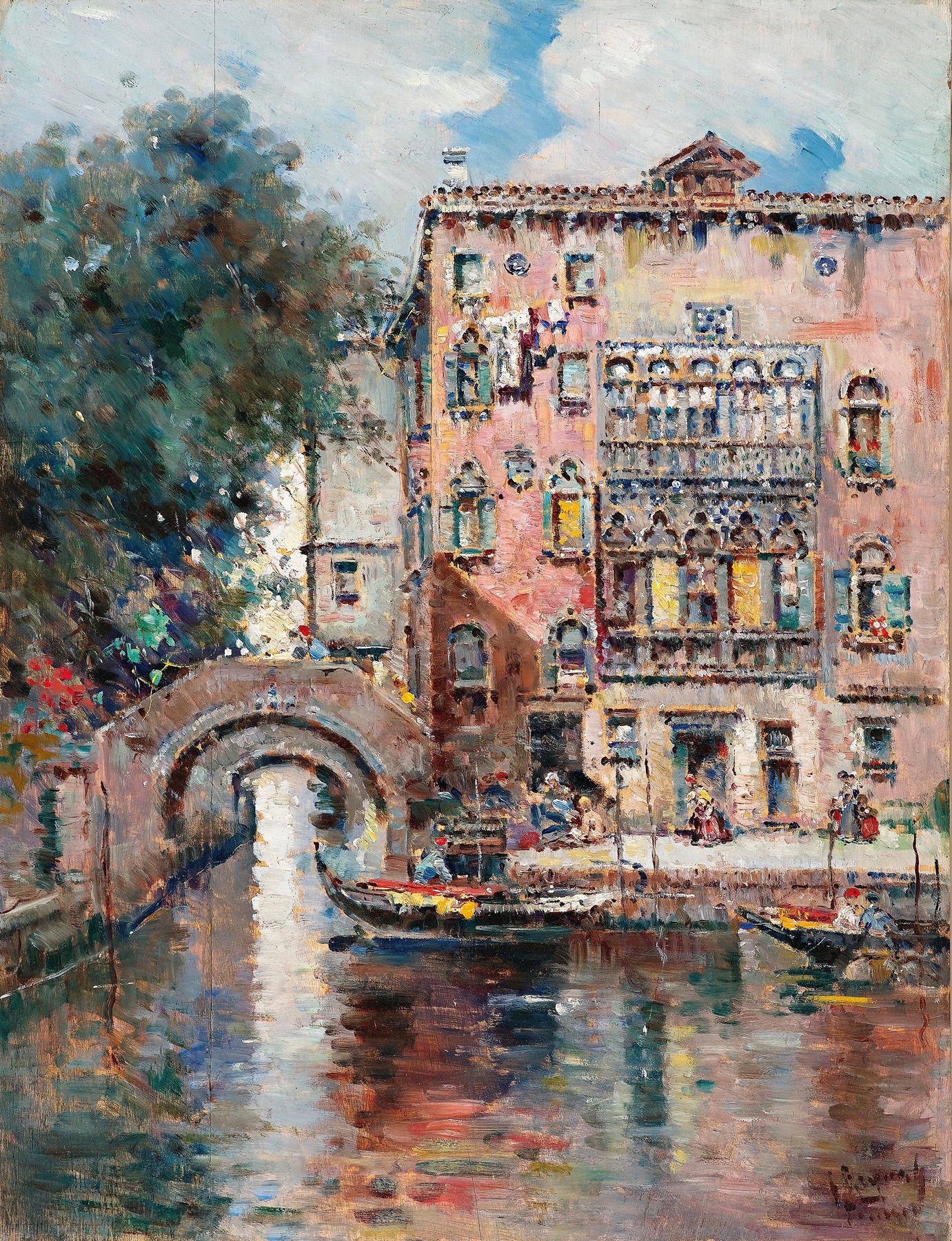
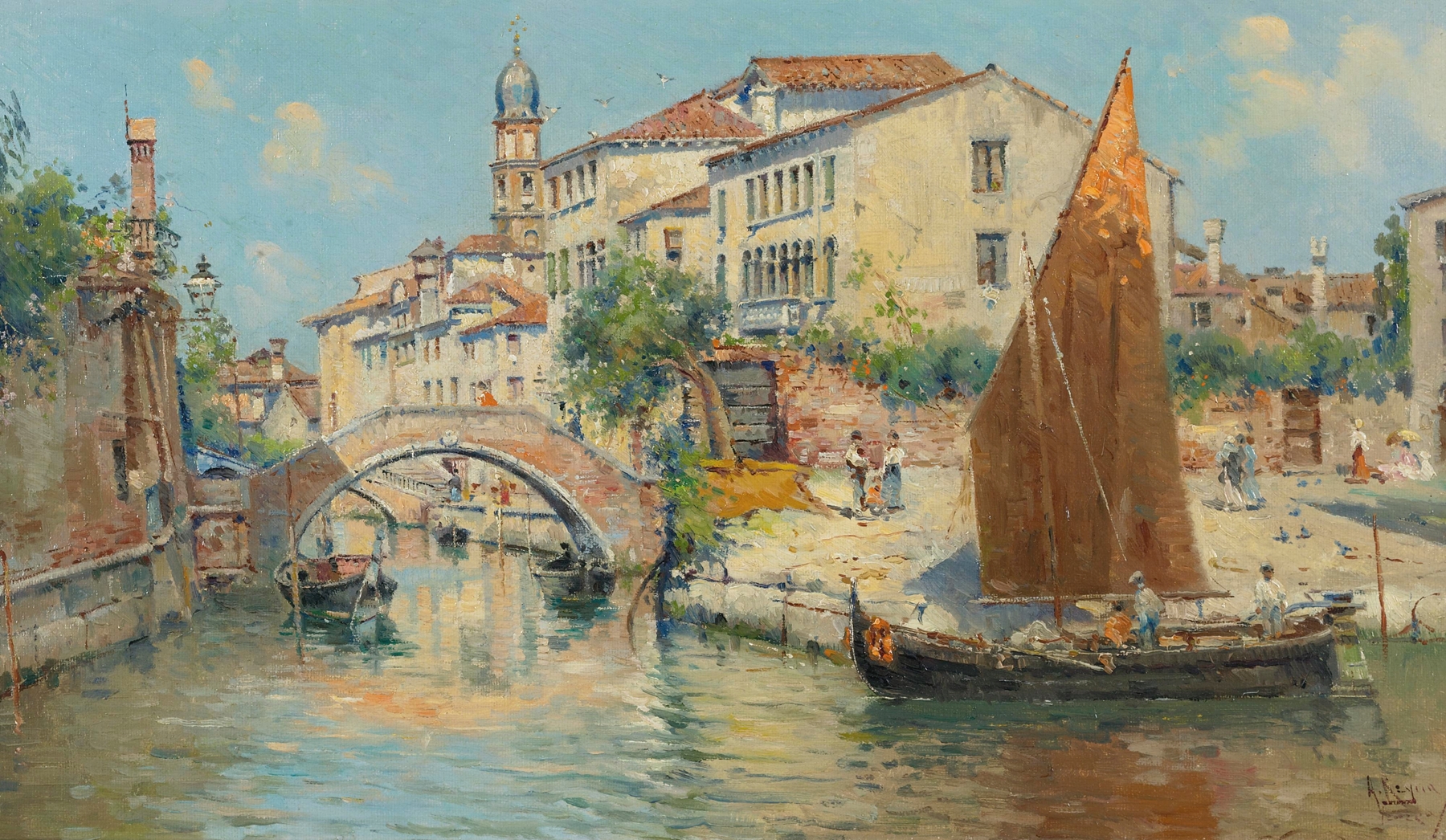
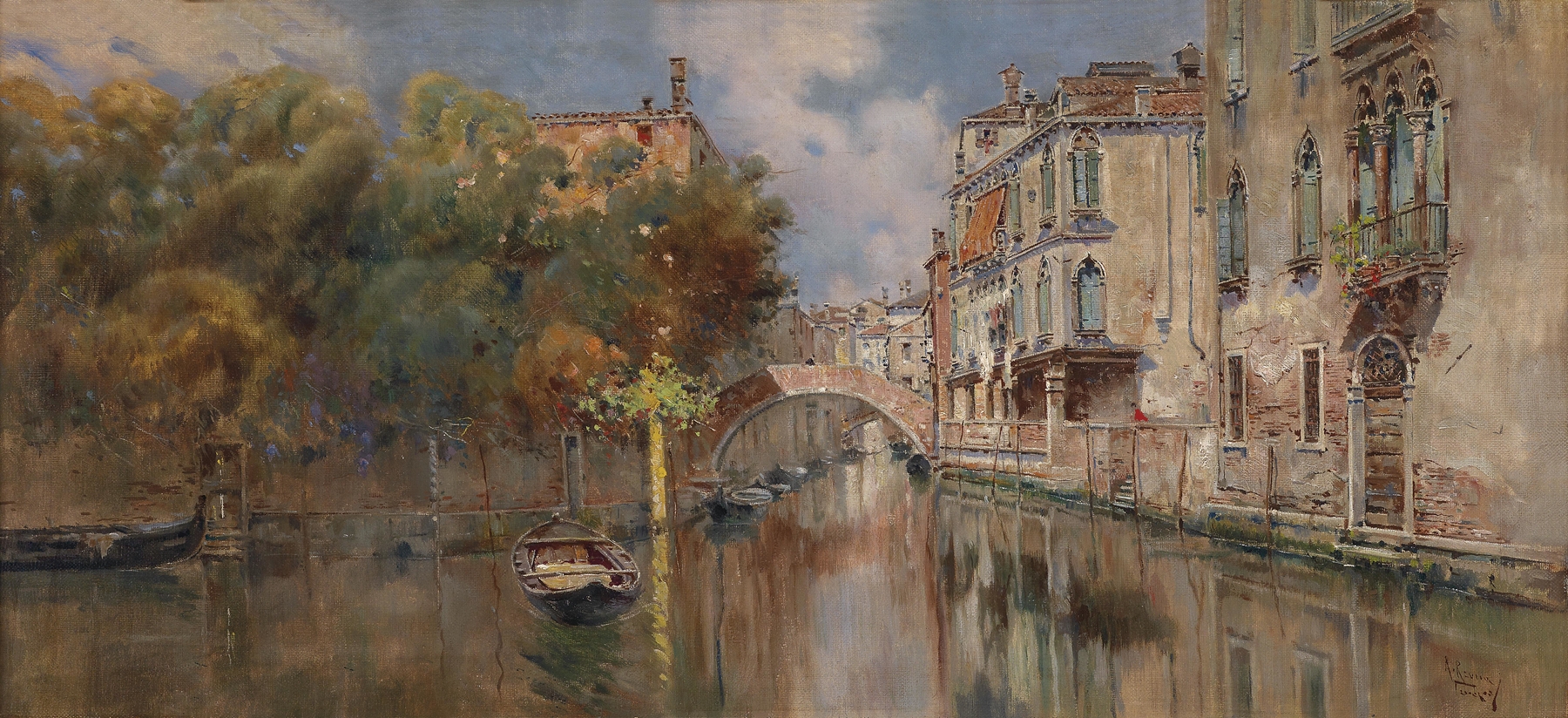
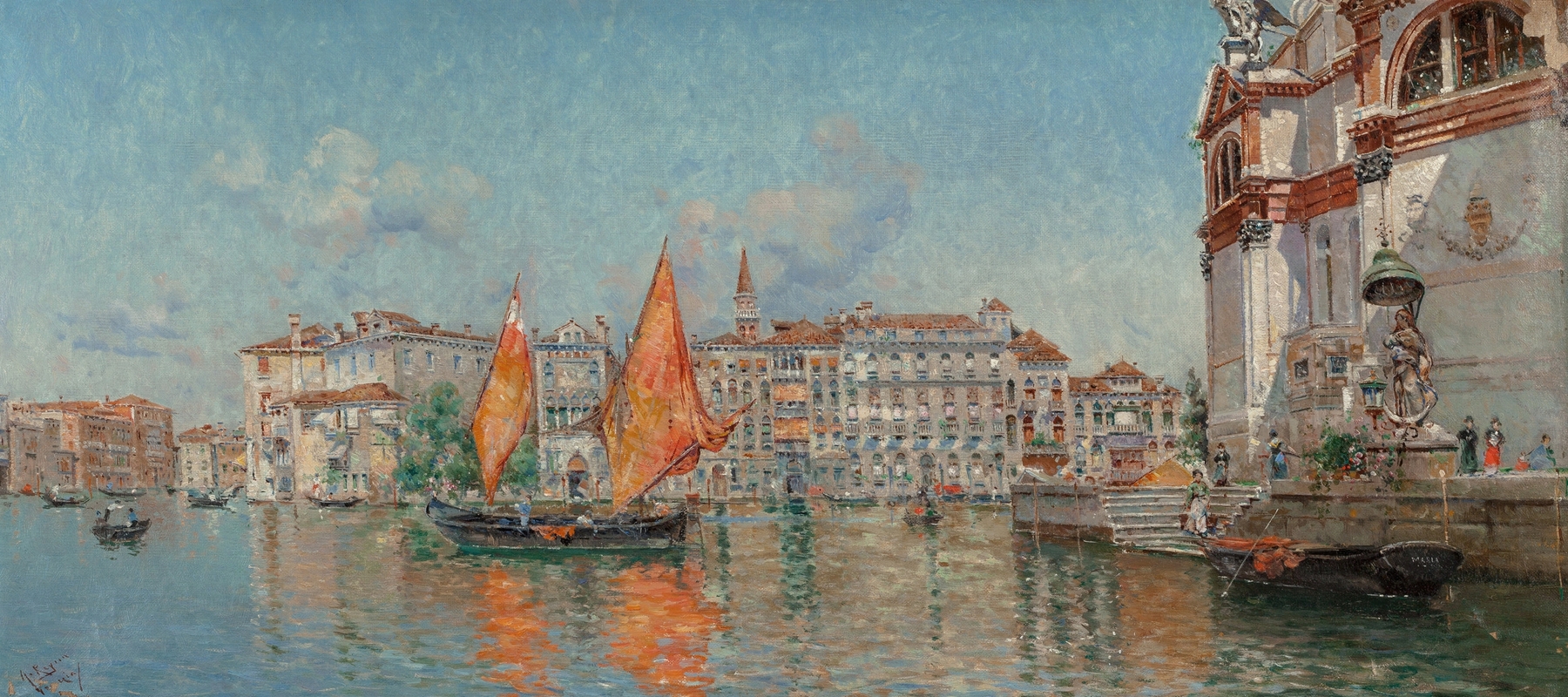
Santa Maria della Salute, Venice, seen from the side — History & Analysis
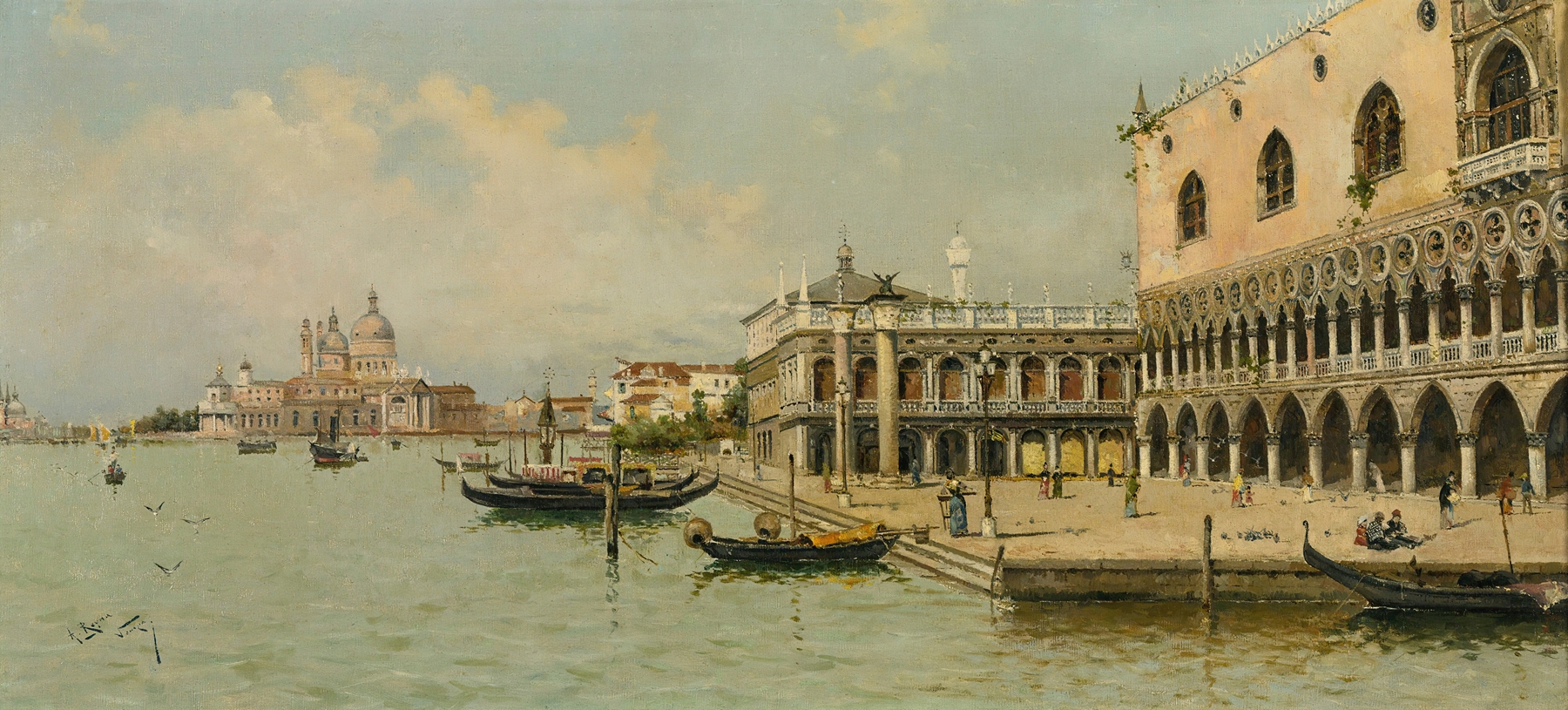
“Sometimes beauty is just pain, disguised in gold.” The shimmering façade of Venice's Santa Maria della Salute encapsulates this truth, a majestic monument born from suffering and memory. It stands as both a testament to artistry and a symbol of the resilience emerging in the face of upheaval. Look to the left at the intricate details of the church’s exterior, where the ornate decorations catch the light in a dance of shadows and brilliance. The creamy marble contrasts against the vibrant blue of the Venetian sky, while the soft curves of the dome invite the eye upward, suggesting a spiritual elevation.
Notice the play of light filtering through the arches, illuminating the textures and inviting contemplation of the structures' sacred significance amidst the busy life of the city. Beneath its surface, the painting speaks to larger themes of revolution and rebirth. The church was commissioned following the plague, a beautiful promise of healing arising from death. The juxtaposition of serene beauty against the historical context of suffering forms a poignant reminder of the cyclical nature of life, art, and human experience.
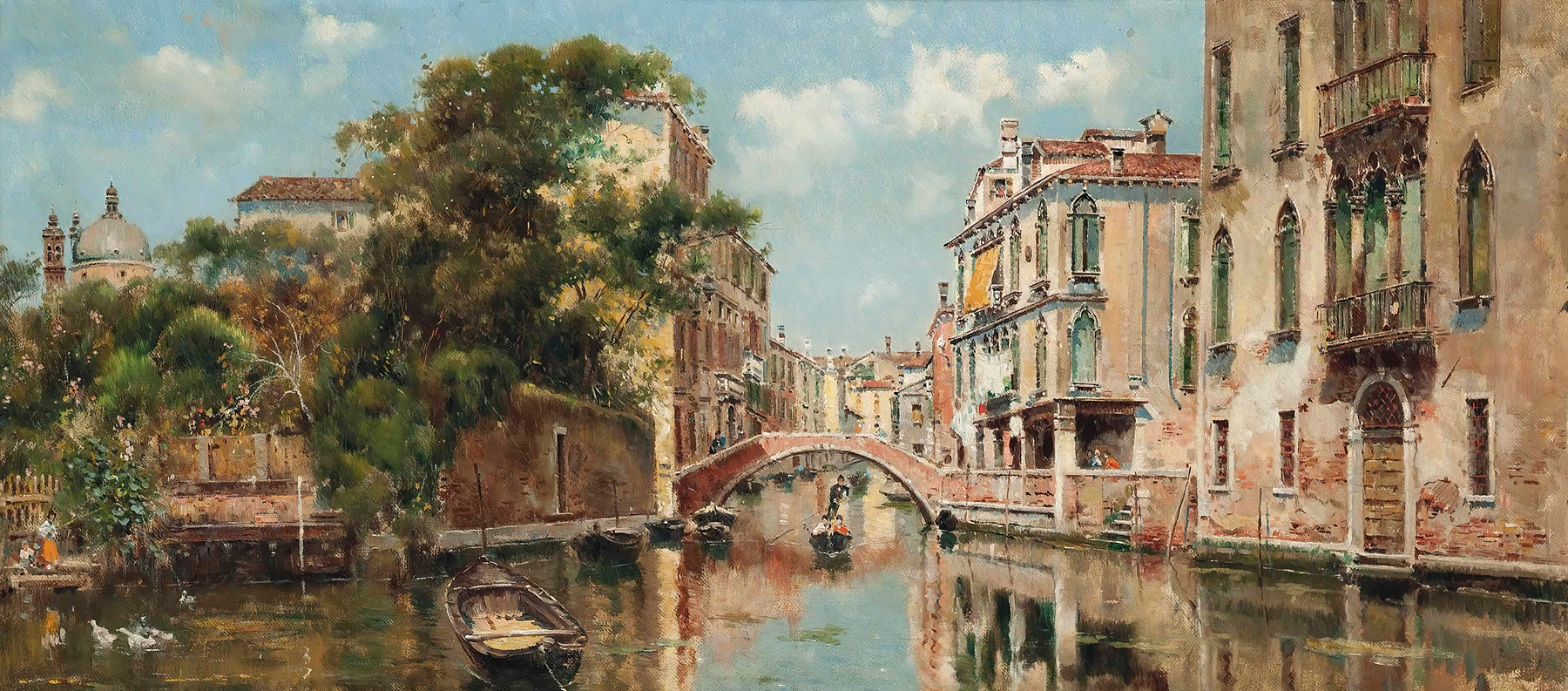
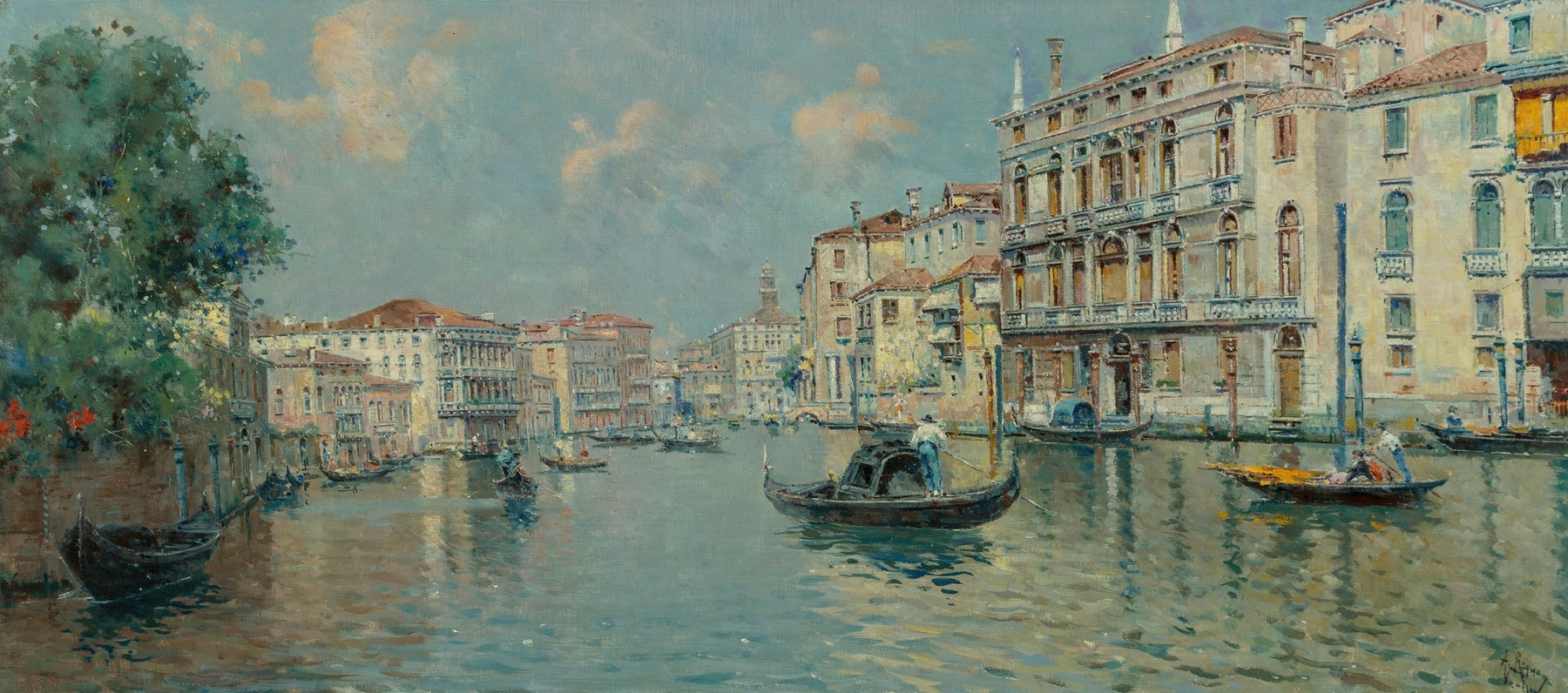
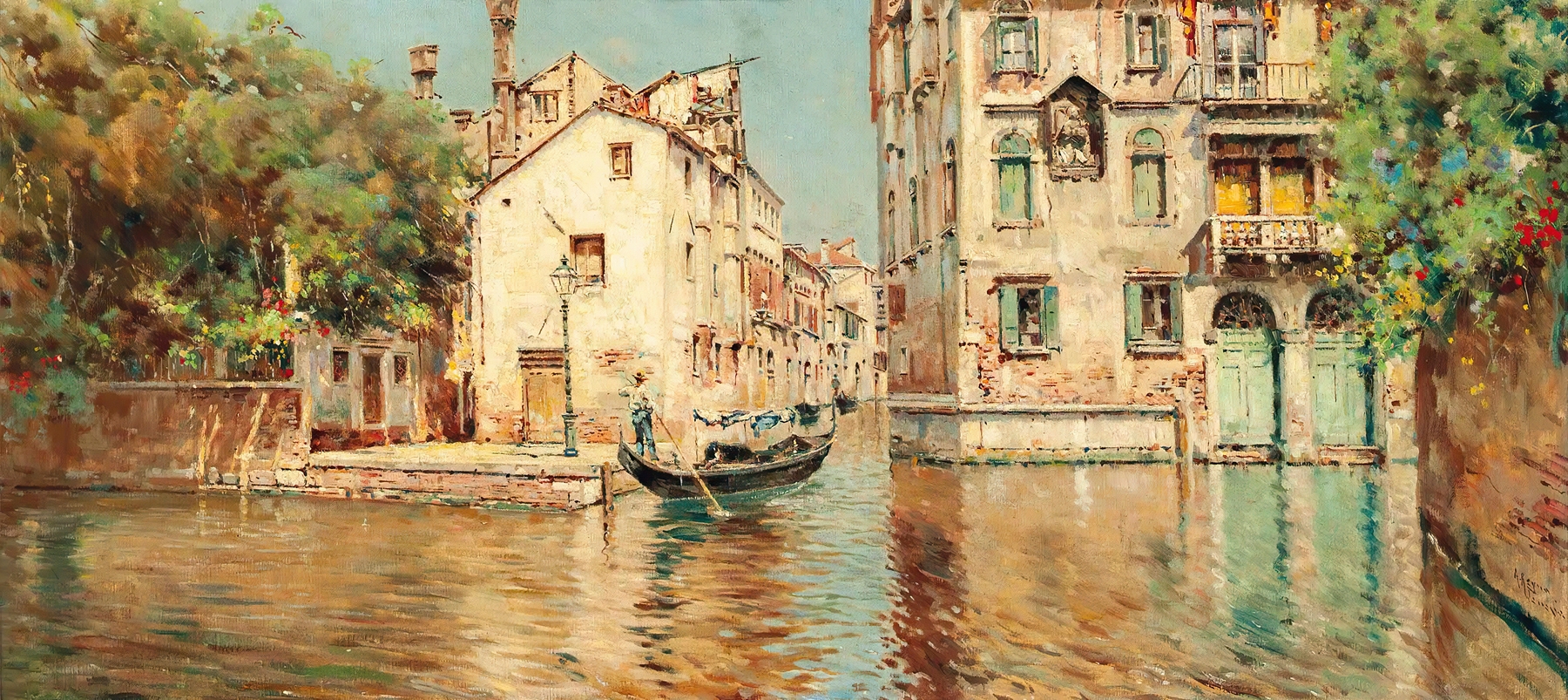
The vibrant hues and detailed craftsmanship encapsulate not just the sacred, but also the complex emotions associated with recovery from devastation. Antonio María de Reyna Manescau created this work in a period characterized by artistic exploration and emotional depth, likely amidst the vibrant cultural scene of Venice. While the exact date remains unknown, it is clear that Manescau stood at the crossroads of tradition and innovation, reflecting the spirit of a city reborn after its challenges. The painting embodies a moment in which art became a dialogue with history, as artisans sought to capture the essence of their time through stunning visual narratives.