A gondolier before a Venetian bridge — History & Analysis
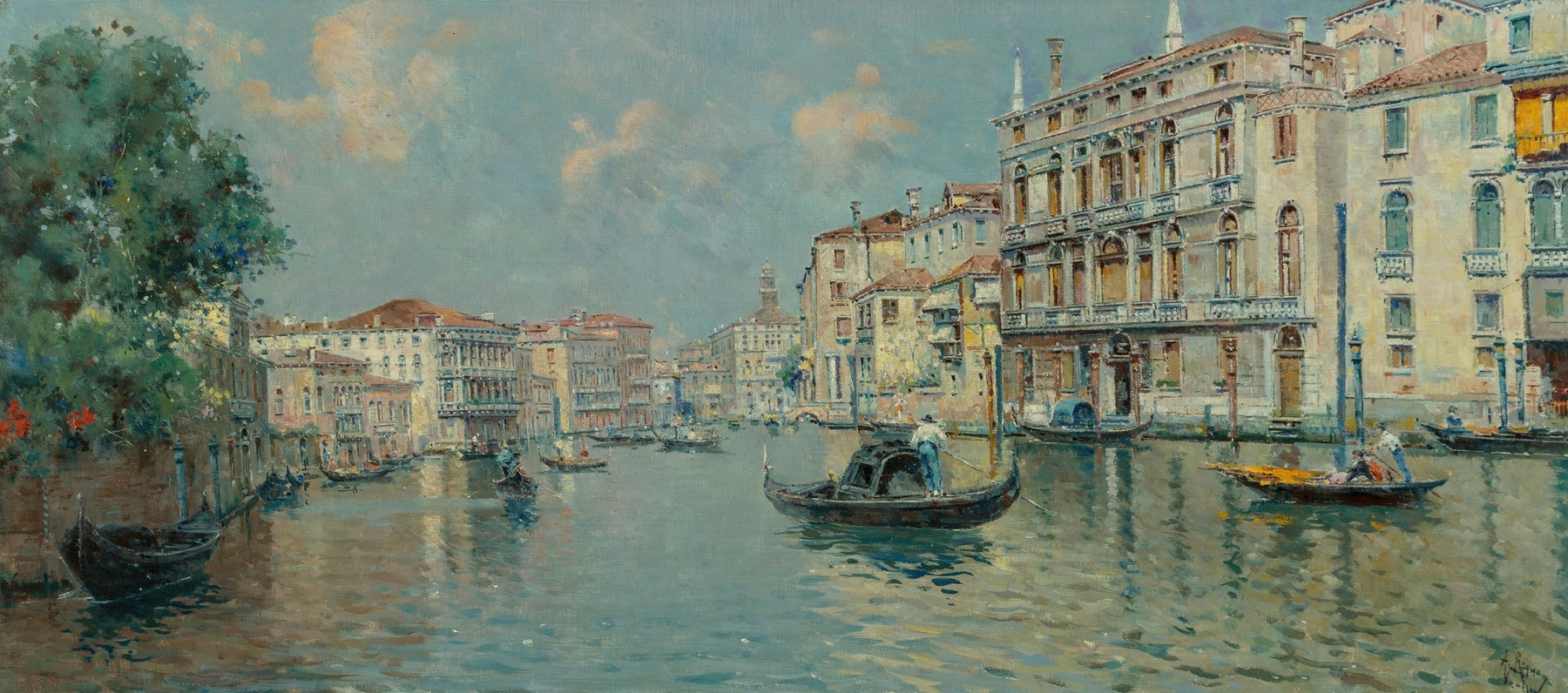
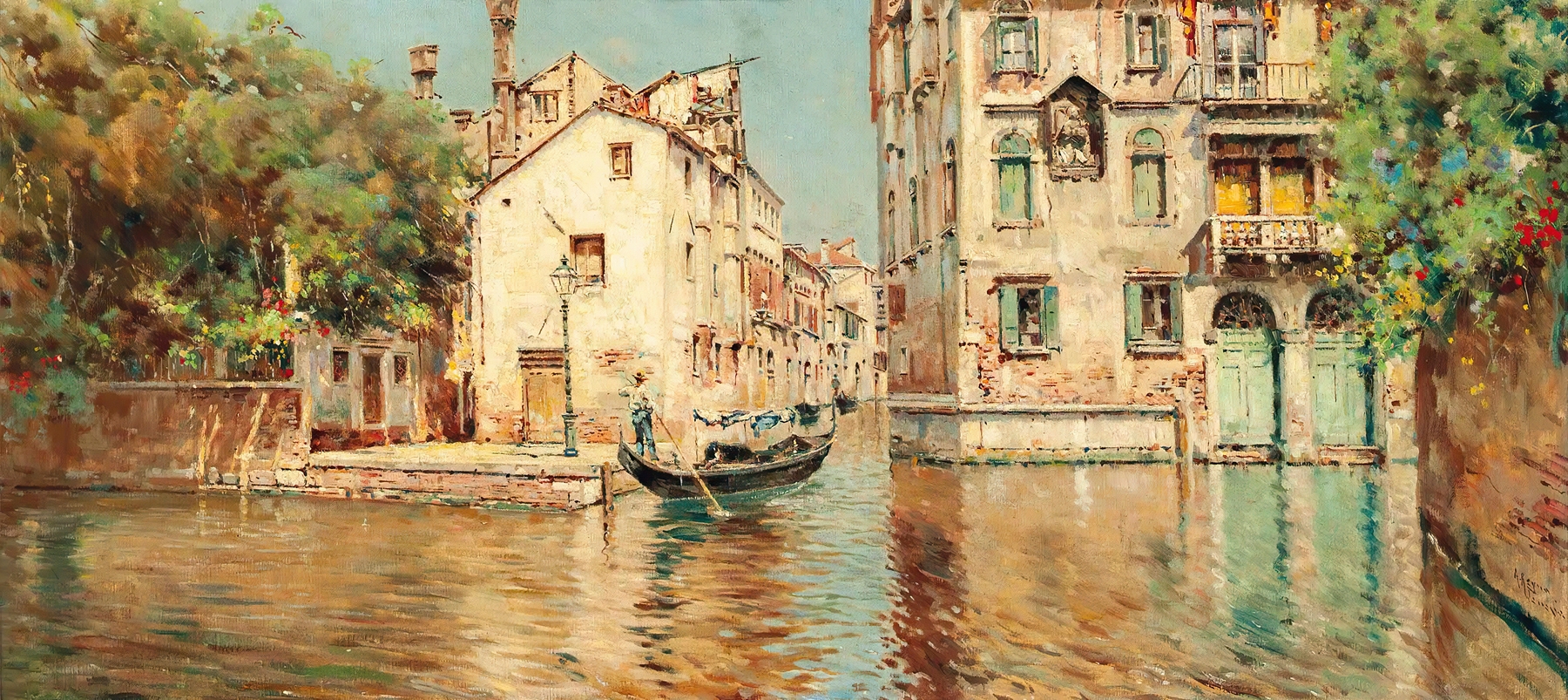
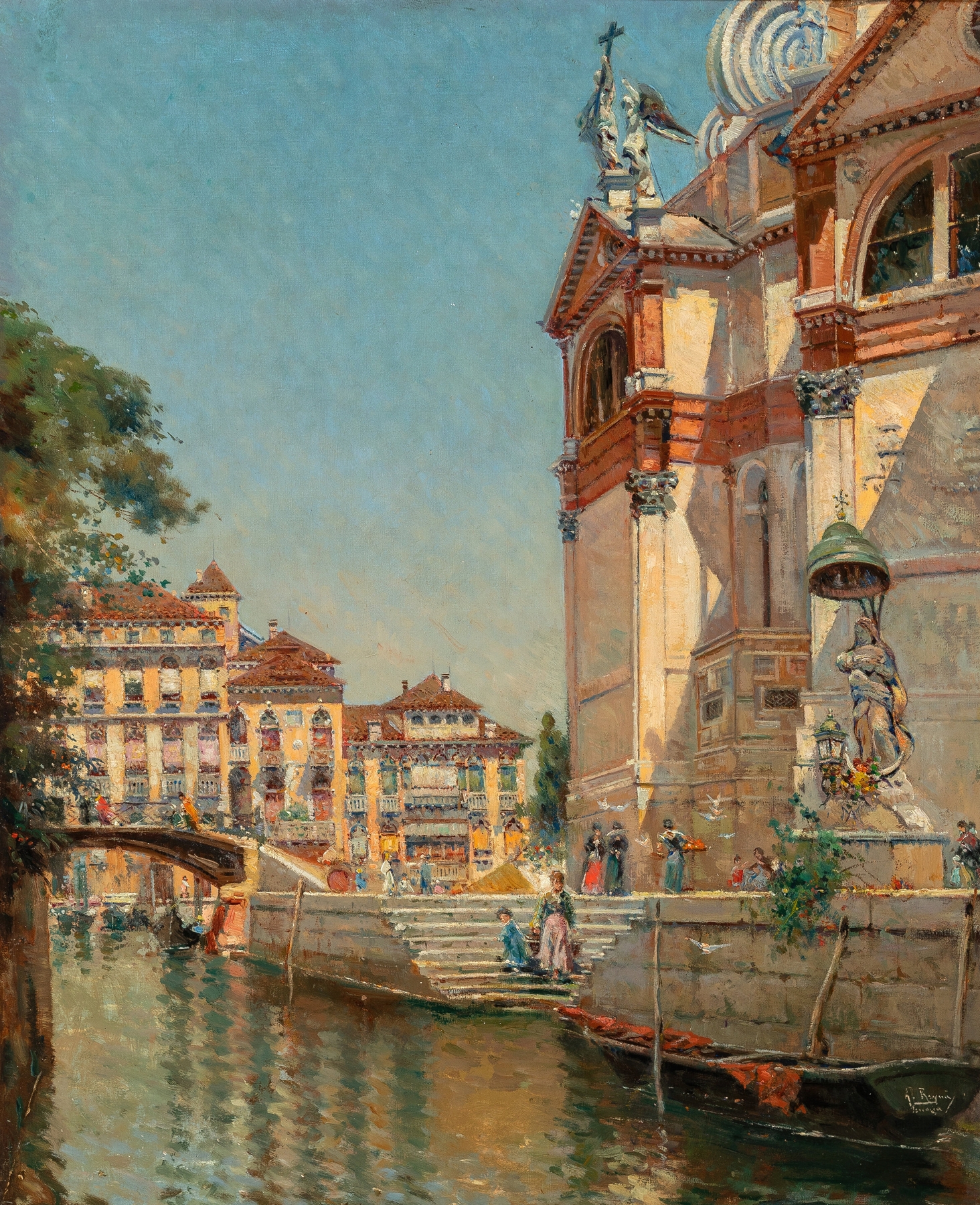
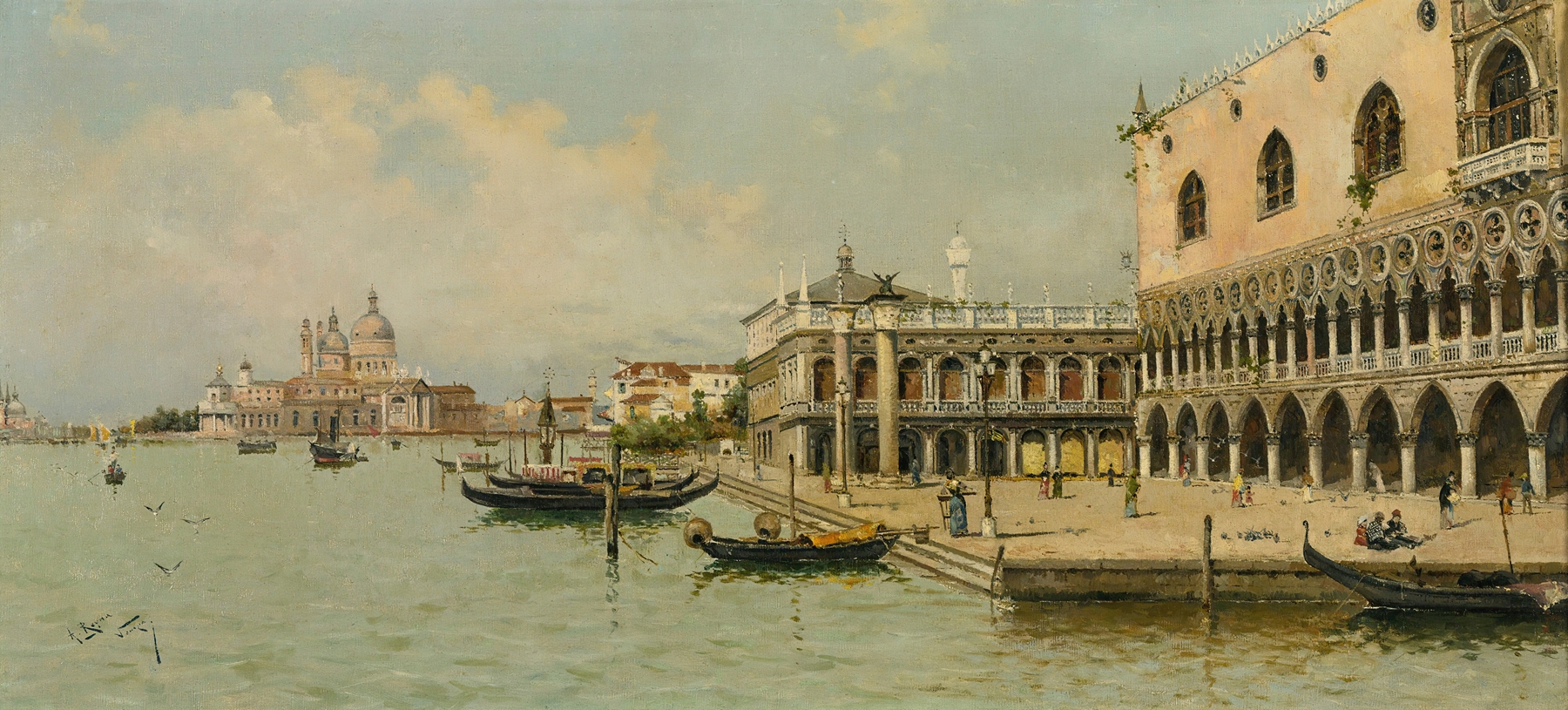
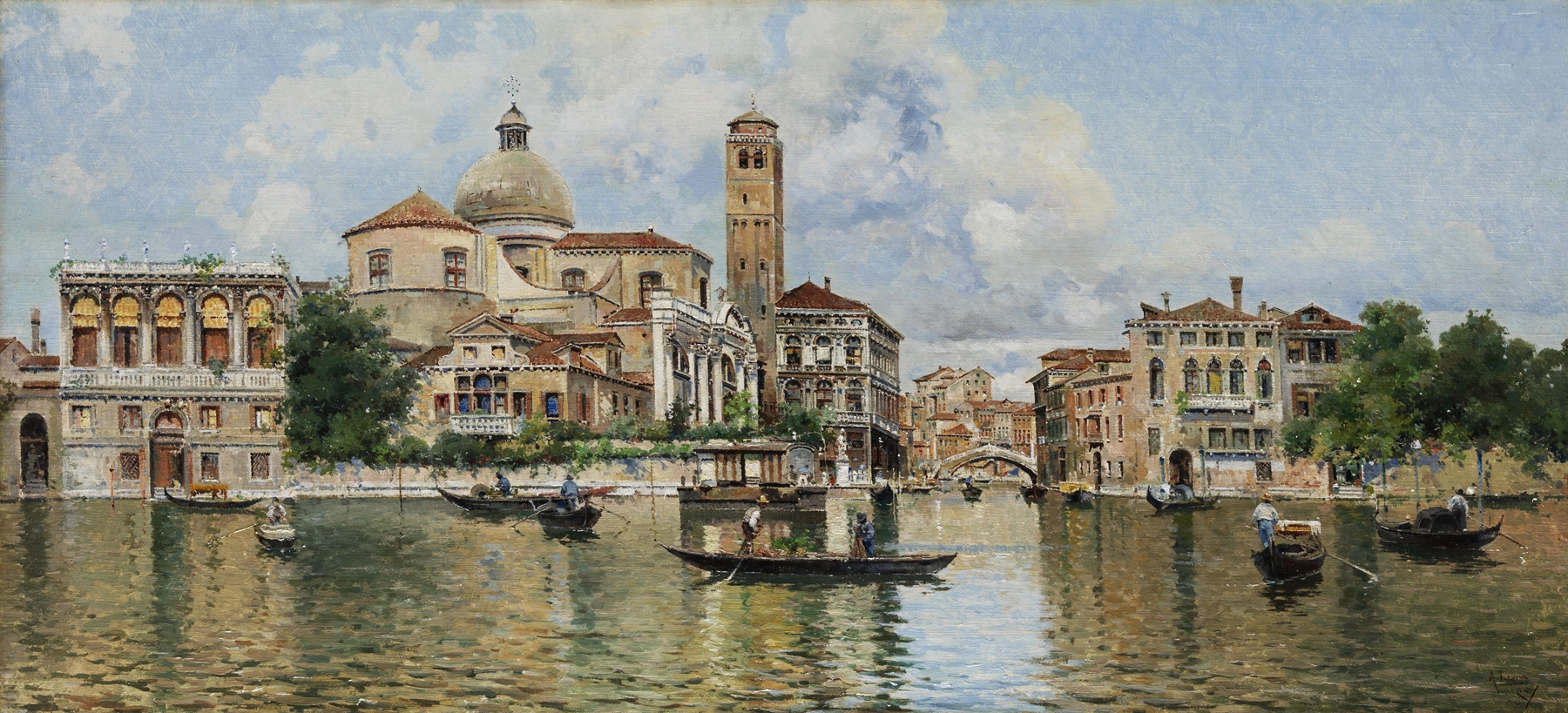
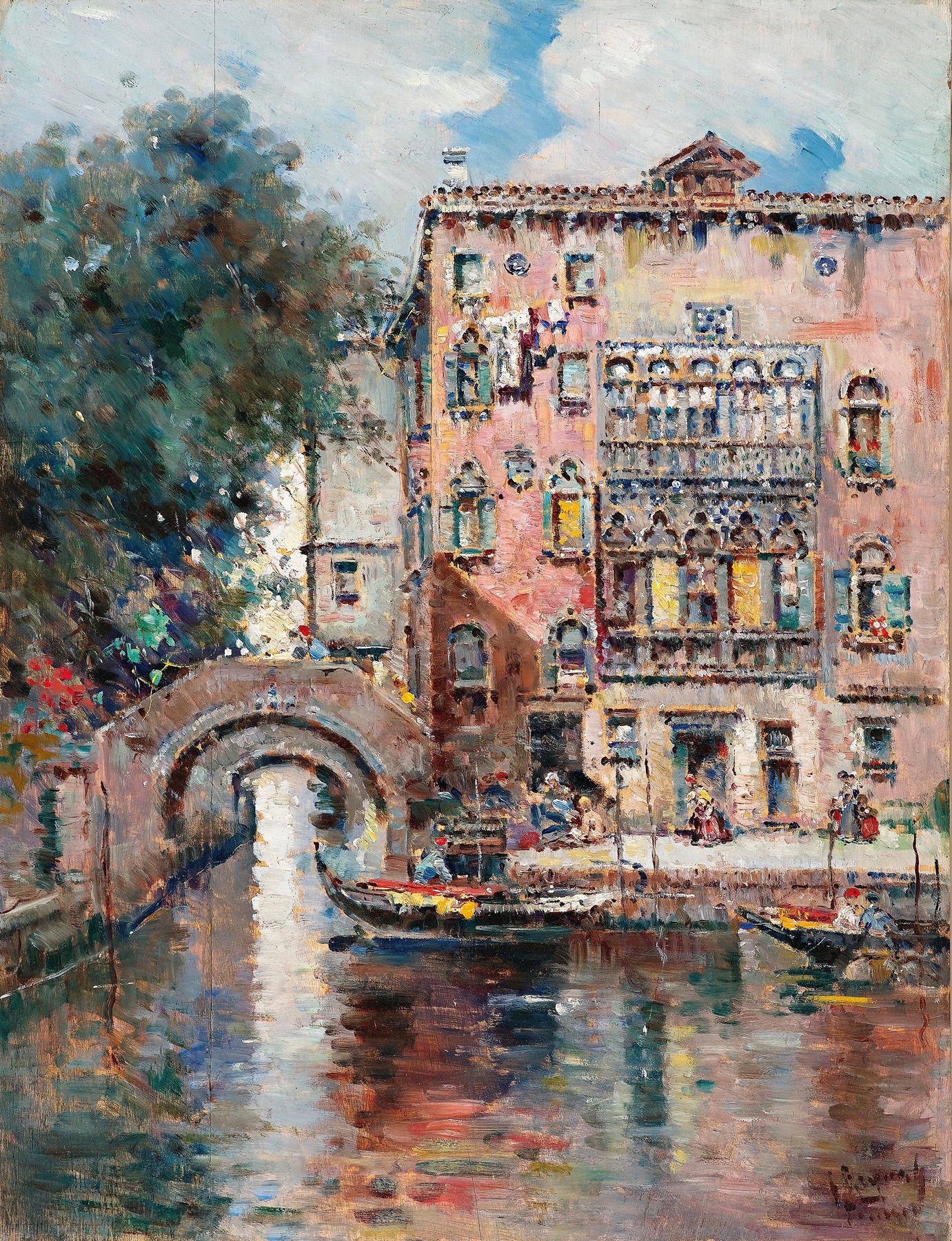
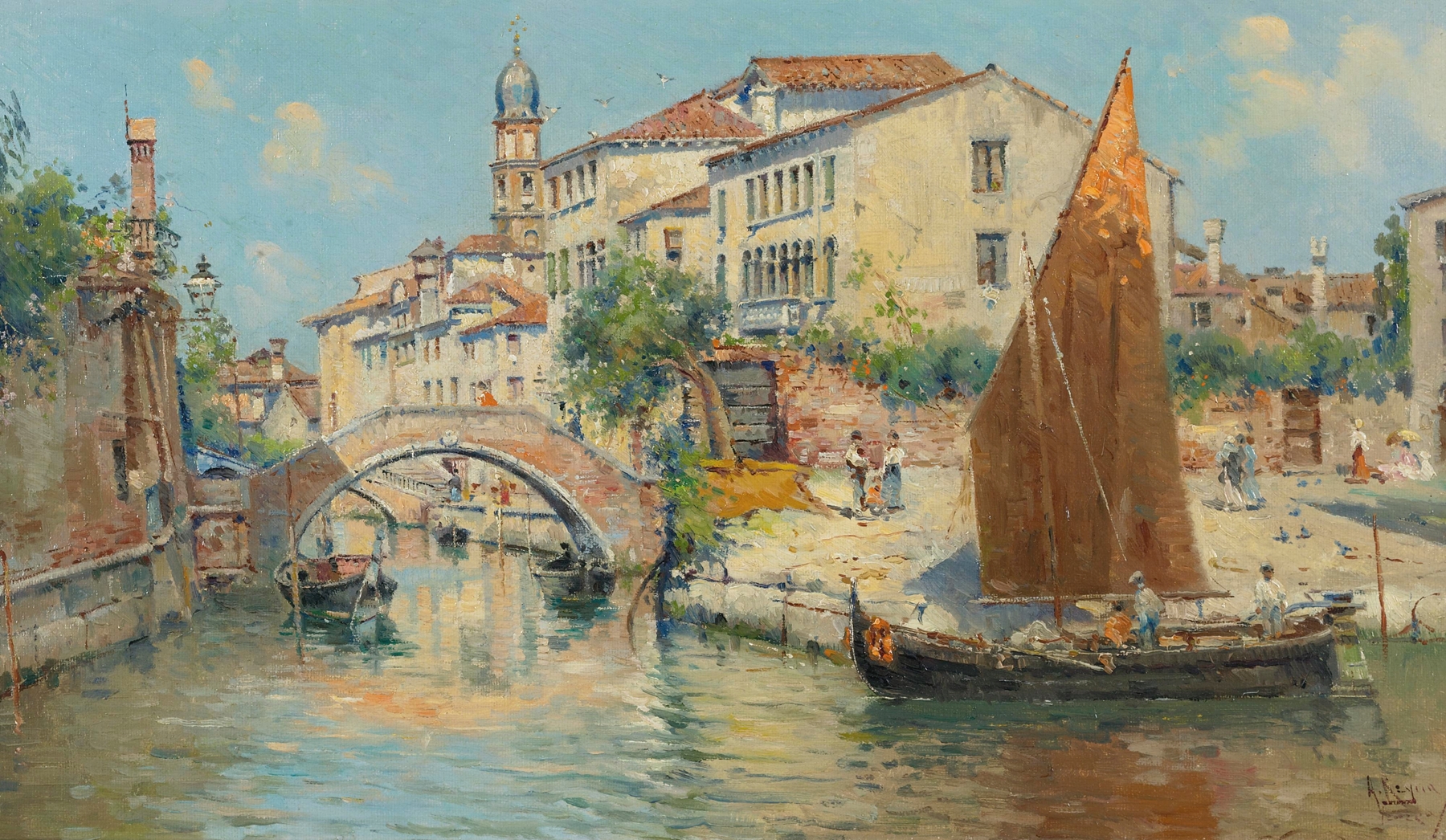
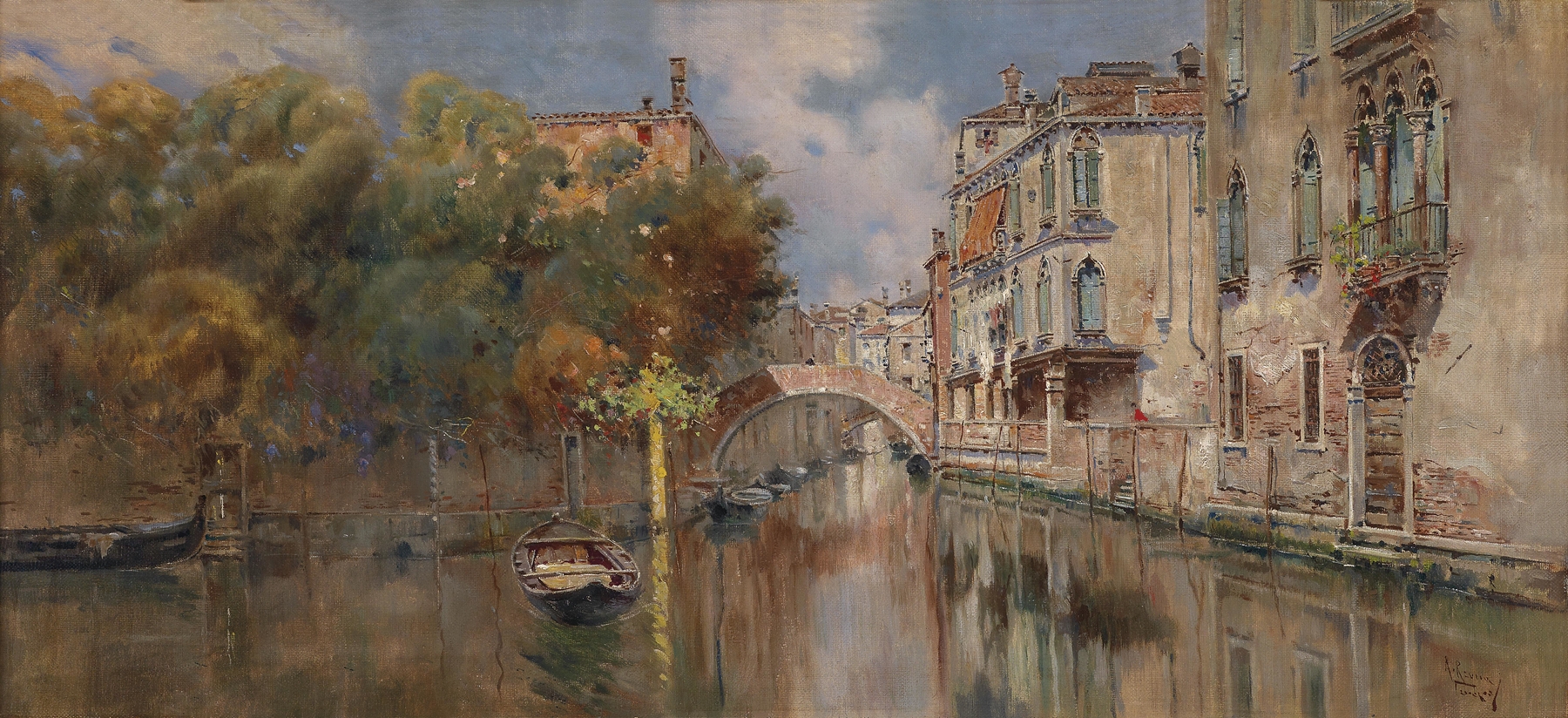
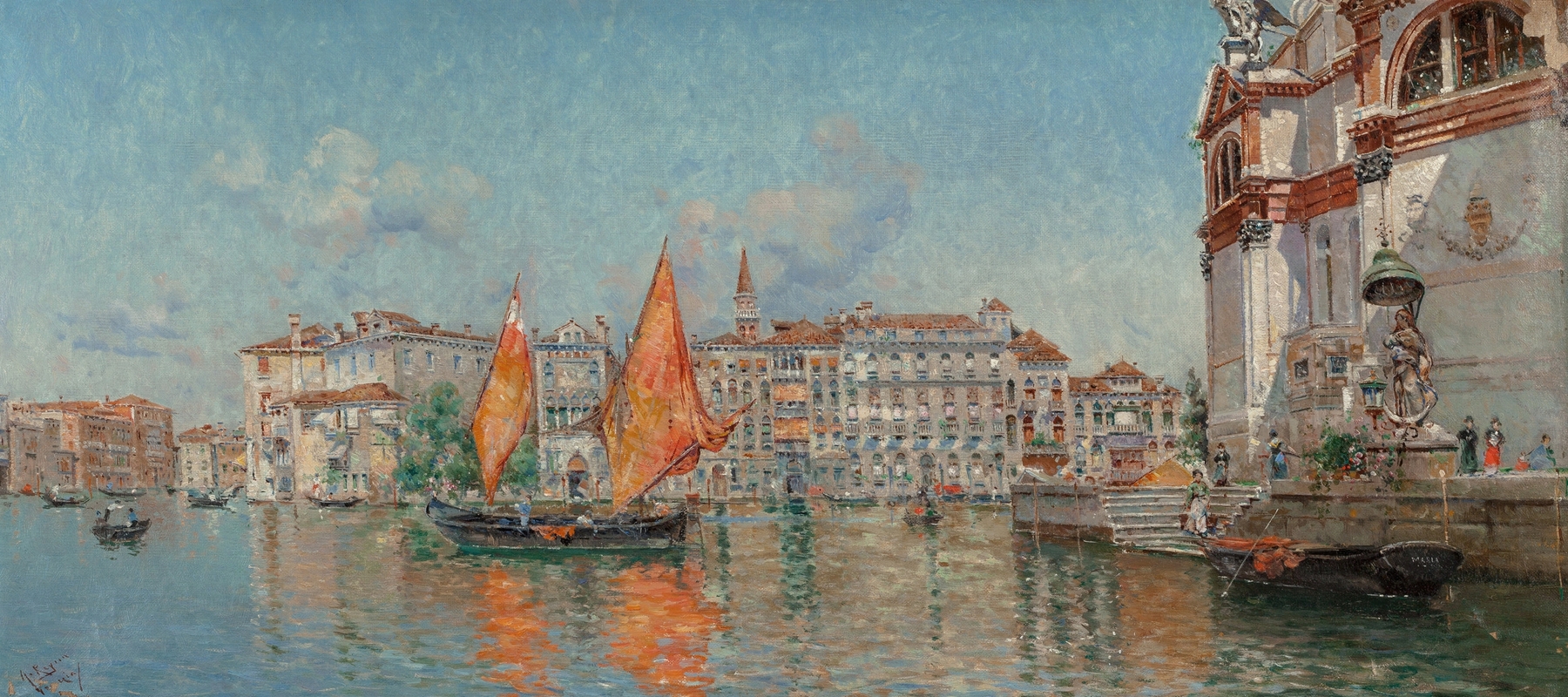
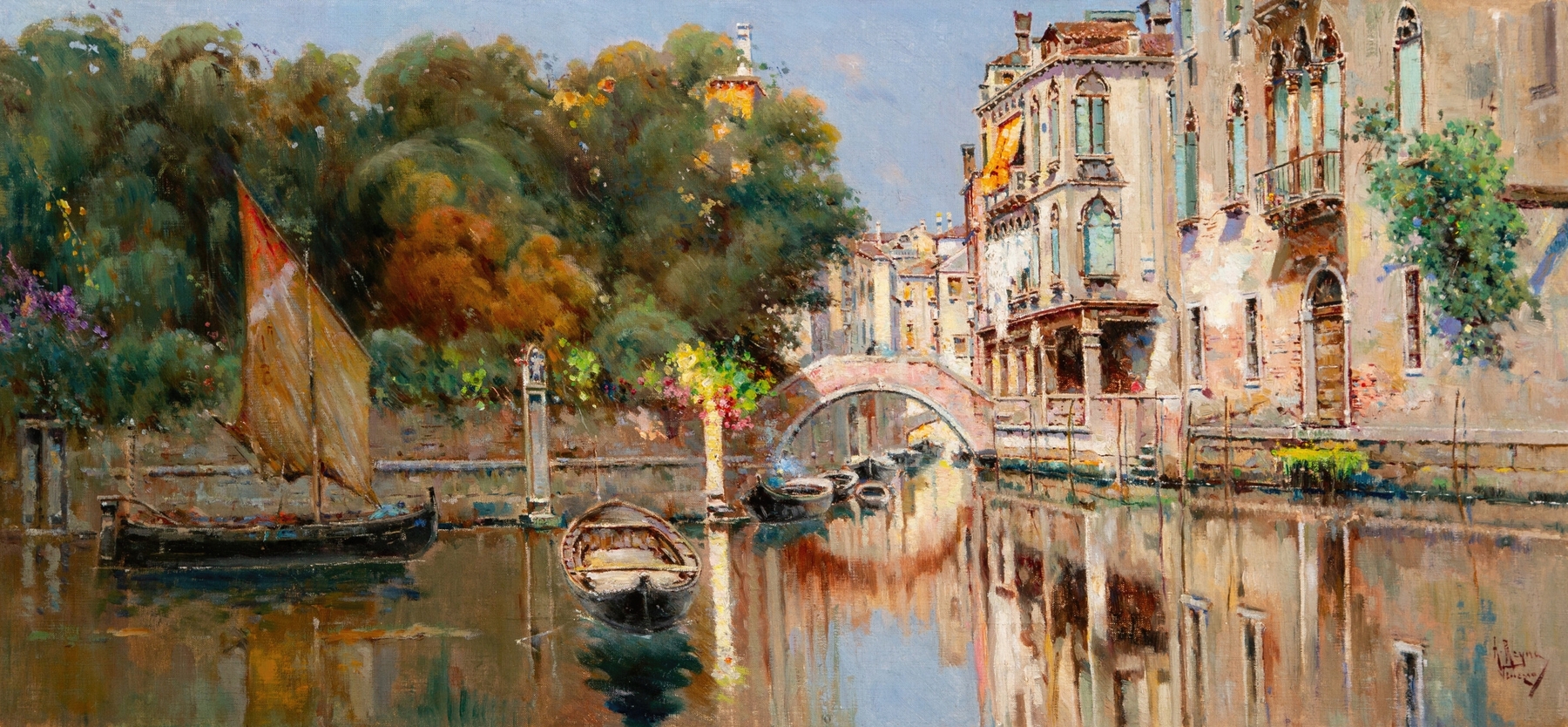
“Every silence here is a confession.” In the stillness of a Venetian afternoon, tranquility envelops the scene. A solitary gondolier, poised yet contemplative, finds himself caught between the shadows of an ancient bridge and the shimmering waters that cradle the city. This moment whispers of serenity, inviting the viewer to surrender to its gentle embrace. Look to the left where the gondolier stands, his figure elegantly framed by the arch of the bridge. Notice how the light dances on the surface of the water, casting rippled reflections that echo the gondolier’s quiet demeanor.
The soft hues of blues and golds harmonize beautifully, creating a dreamlike atmosphere that transports one into this serene moment. The composition is masterfully balanced, drawing the eye to the gondolier while leaving enough negative space for the viewer to breathe and reflect. Beyond the initial calm, the painting hints at deeper currents. The gondolier’s slight tilt of the head suggests a lingering uncertainty or nostalgia, suggesting that even in tranquility, reflections of the past linger. The bridge stands as a metaphor for the connection between the present and the memories of the city, evoking a sense of timelessness that resonates with the viewer’s own experiences.
This interplay of presence and absence invites contemplation on the nature of solitude and the secrets of the waters. Antonio María de Reyna Manescau painted this piece during a period when Venetian landscapes were gaining popularity among artists seeking to capture the charm of Italy. Little is known about the exact date of this work, but it reflects the artist's fascination with quiet, intimate scenes that encapsulate the essence of daily life. In an era rich with artistic exploration, the painting stands as a serene testament to the beauty found within stillness.