A Lacustrine Landscape With A Herder And His Animals Resting By The Water, A Town Beyond — History & Analysis
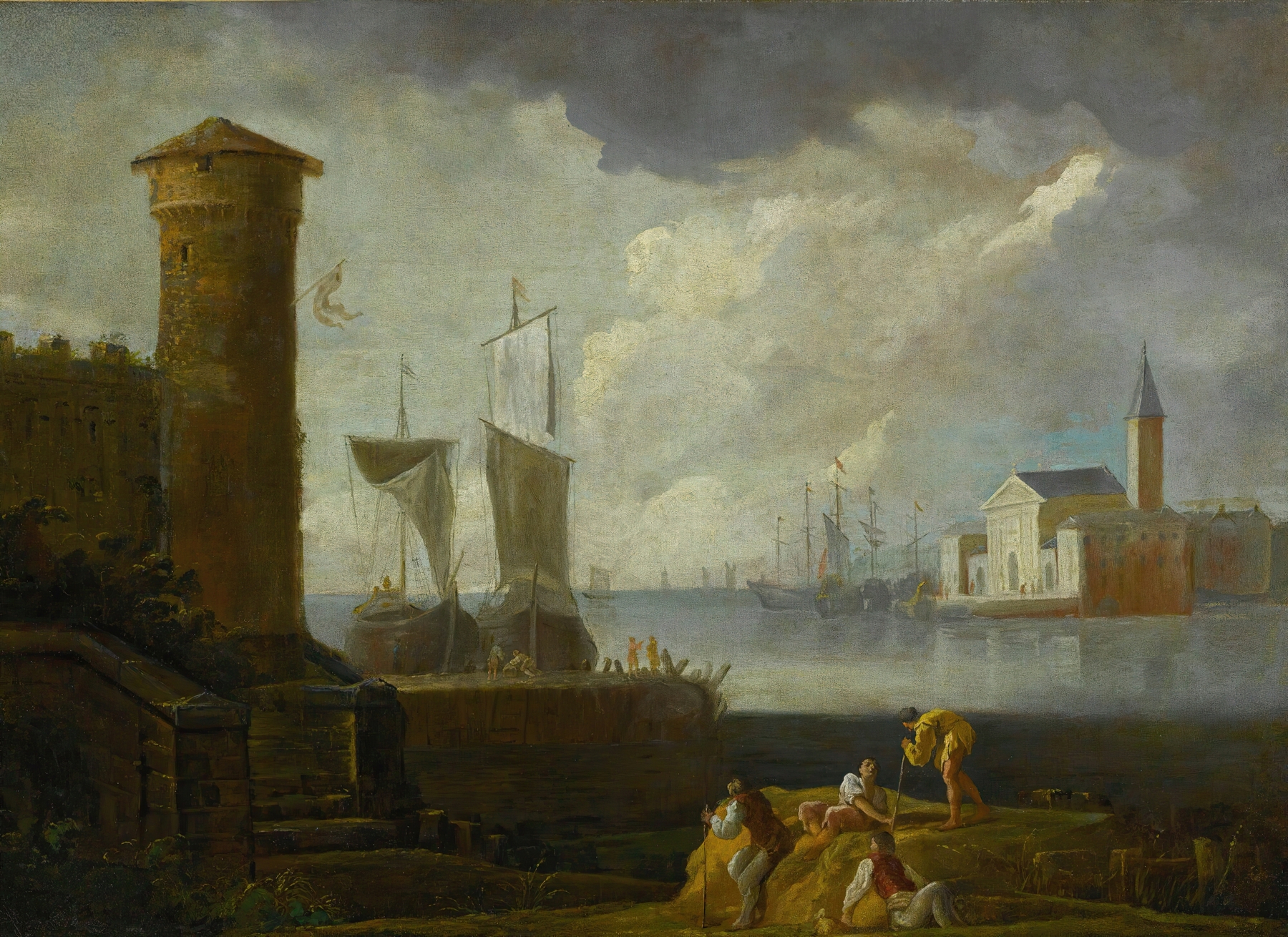
What if beauty was never meant to be finished? In the stillness of A Lacustrine Landscape With A Herder And His Animals Resting By The Water, A Town Beyond, the landscape whispers of moments fleeting, captured yet fading. Begin with the serene waters, where the herder and his animals reside. Look to the left at the tranquil repose of the cattle, their bodies softly illuminated by the golden light. The gentle ripples of the lake lead the eye towards the distant town, a hazy outline that hints at life beyond the tranquility.
Notice how the palette of earthy greens and warm browns contrasts with the cool blues of the water, creating a harmonious balance that invites contemplation. Beneath this peaceful facade lies a profound commentary on mortality. The herder’s relaxed posture, a moment of pause in his labor, speaks of transient beauty and the inevitability of change. The distant town serves as a reminder of human ambition, yet it feels almost ghostly, suggesting the fleeting nature of life and the landscapes we inhabit.
The interplay of light and shadow enhances this contrast, evoking a sense of nostalgia for what is both present and ephemeral. Created during the early 18th century, Marco Ricci painted this work amidst the burgeoning Rococo movement, which celebrated nature and pastoral beauty. At this time, he was deeply influenced by the picturesque landscapes of Italy’s Veneto region, reflecting a shift towards a more emotional and personal engagement with nature. The quiet yet profound essence of this piece exemplifies Ricci's ability to intertwine the beauty of the natural world with the poignant truth of human existence.