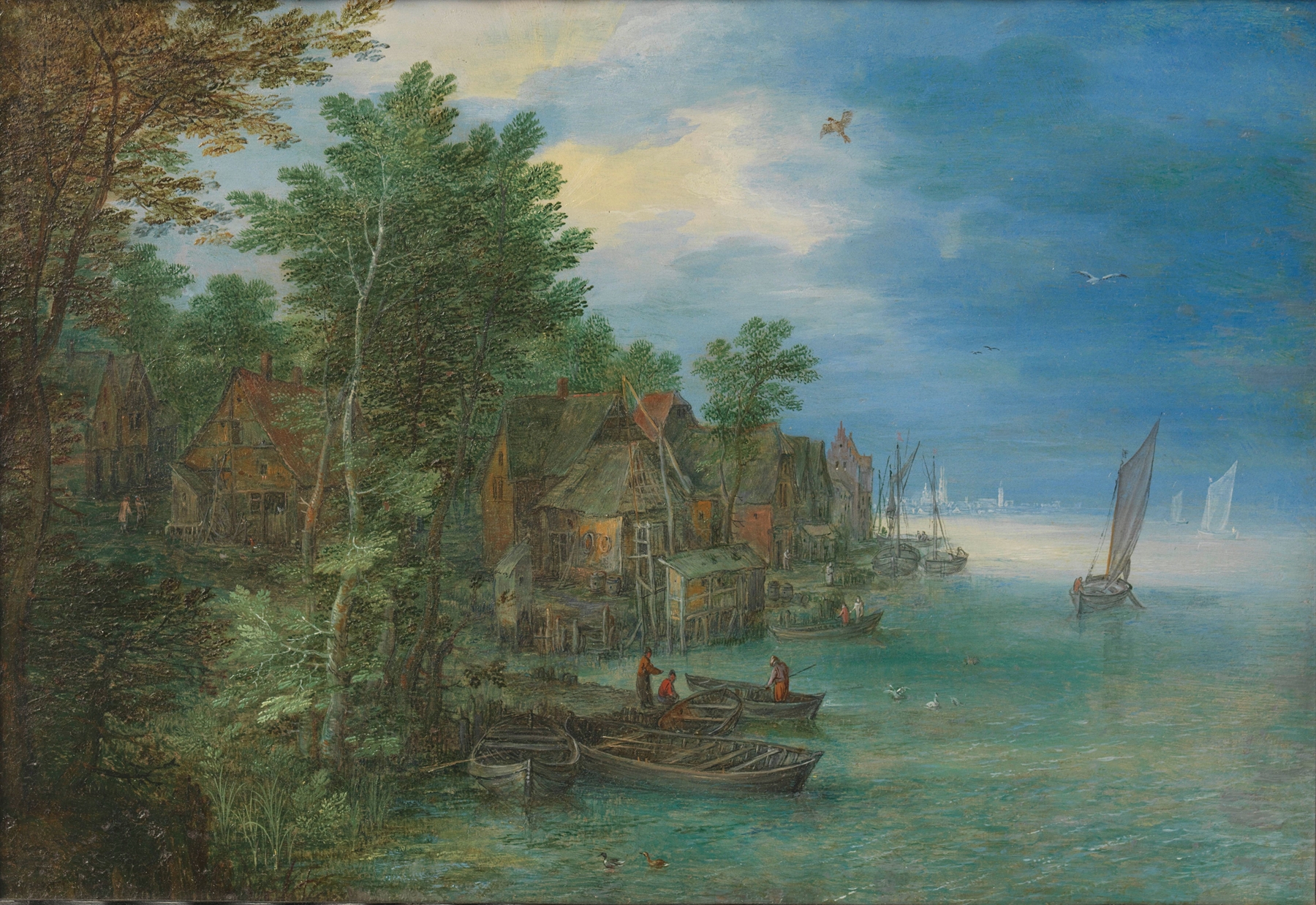
A landing stage near a village with shipping and figures — History & Analysis
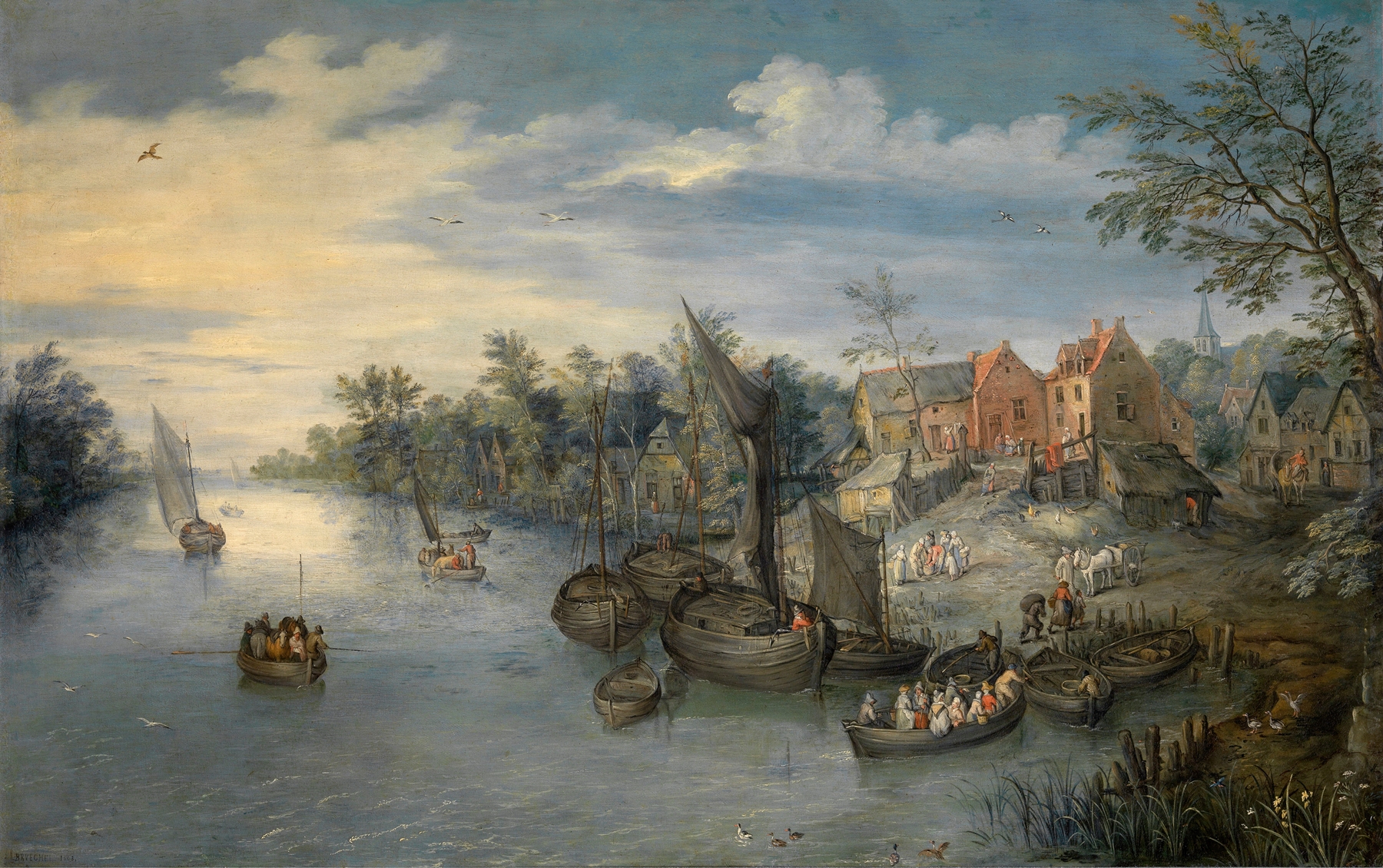
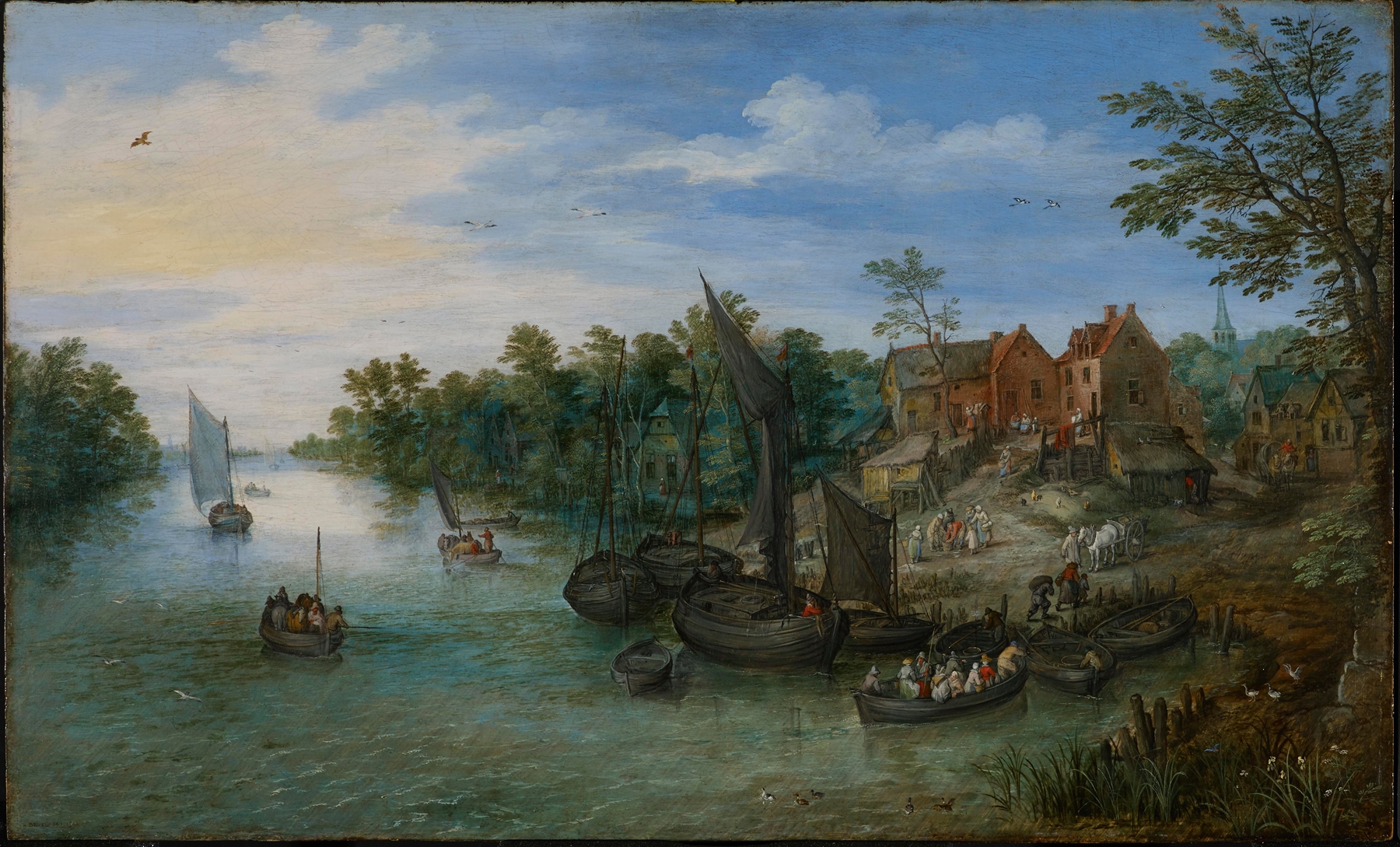
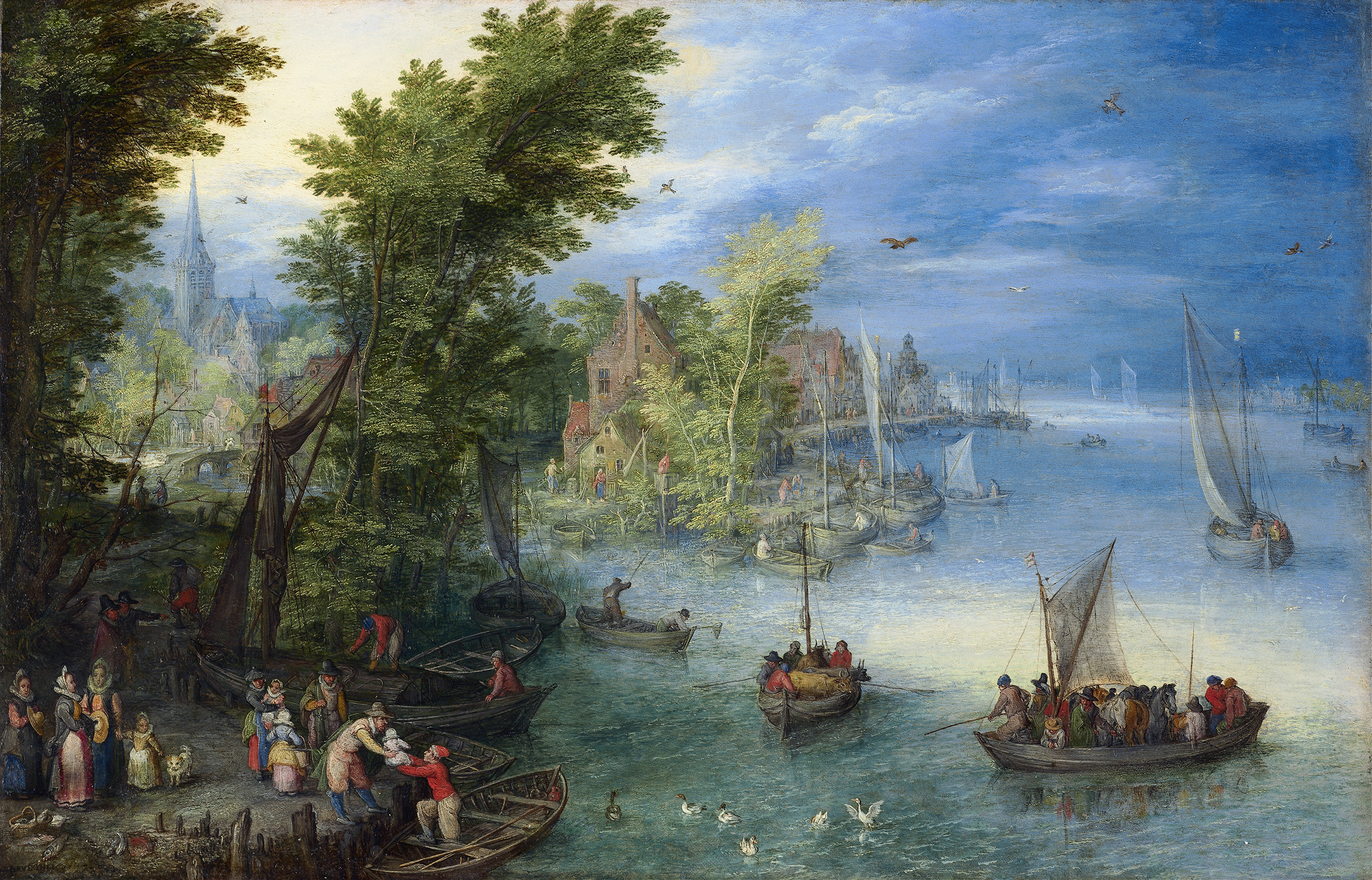
Can paint confess what words never could? In Jan Brueghel the Elder's work, the landing stage becomes a portal to an unseen madness, a quiet chaos where nature and humanity intertwine in an intricate dance of daily life. Look to the left at the vibrant figures bustling near the water's edge, their gestures animated, suggesting a narrative unfolding just beyond the canvas. Notice how the light glimmers upon the surface of the water, illuminating the subtle ripples that mirror the chaos of the scene—shimmering highlights against the muted earth tones of the village in the background.
The artist's exquisite attention to detail, from the boats bobbing gently in the harbor to the weathered textures of the wooden stage, invites the viewer to step closer and become part of this lived moment. Deeper insights emerge as the pastoral tranquility is juxtaposed with the frenetic energy of the figures, blurring the lines between serenity and madness. The careful arrangement of boats mirrors a delicate balance between nature's tranquility and the human chaos they contain, suggesting a tension where order teeters on the brink of disorder.
The soft, shadowed corners of the canvas harbor secrets, hinting at the stories of the villagers—each character a vessel for their own struggles, lost in the everyday tumult. Created in 1600, this piece reflects a time when Jan Brueghel the Elder was establishing himself within the vibrant art scene of Antwerp, a city buzzing with commerce and creativity. Amidst a backdrop of religious strife and emerging capitalism, his work captures the essence of a world caught between the idyllic and the unnerving, inviting viewers to interrogate the complex layers woven within the fabric of daily life.