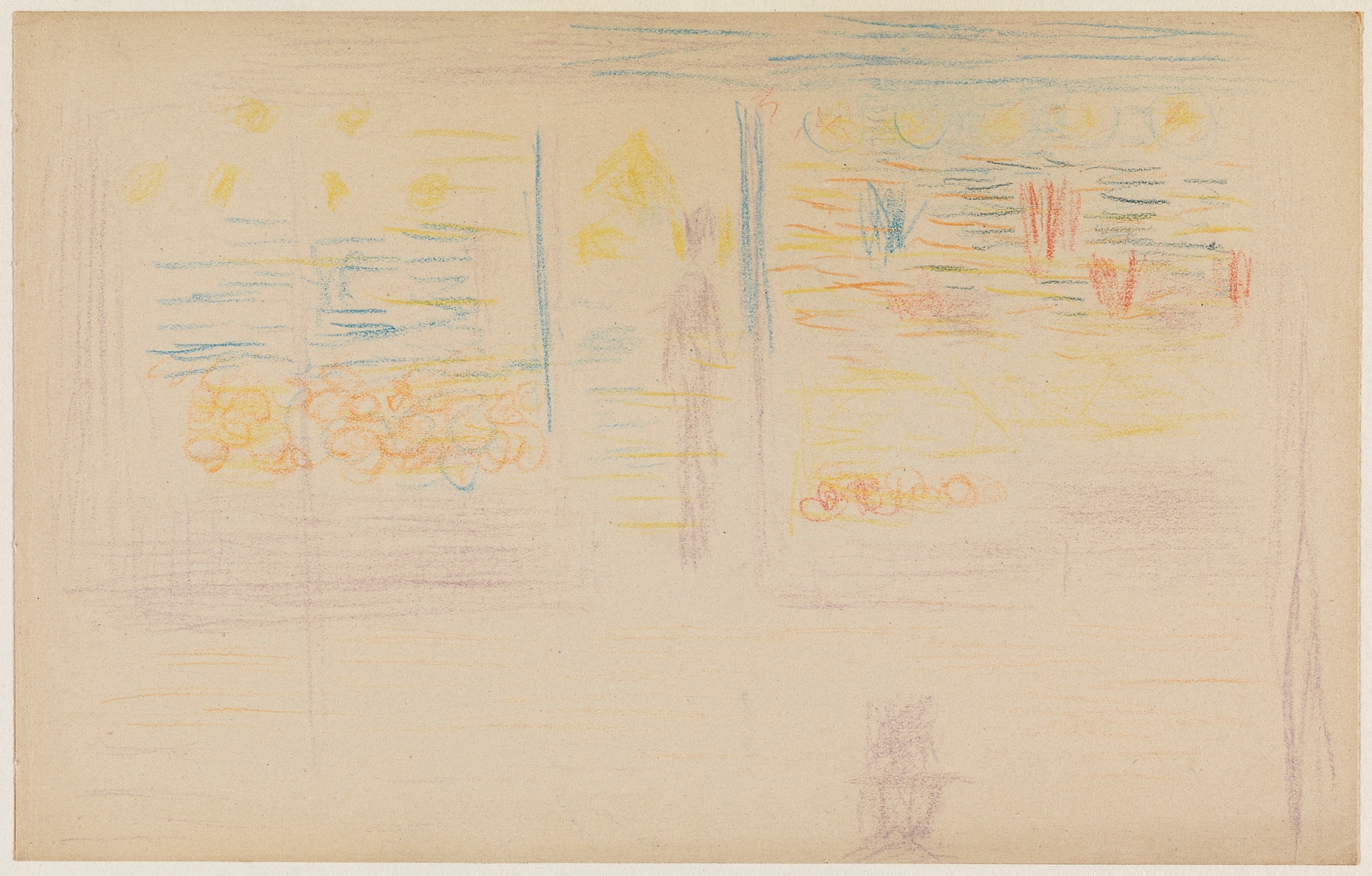
A Shop and Two Figures — History & Analysis

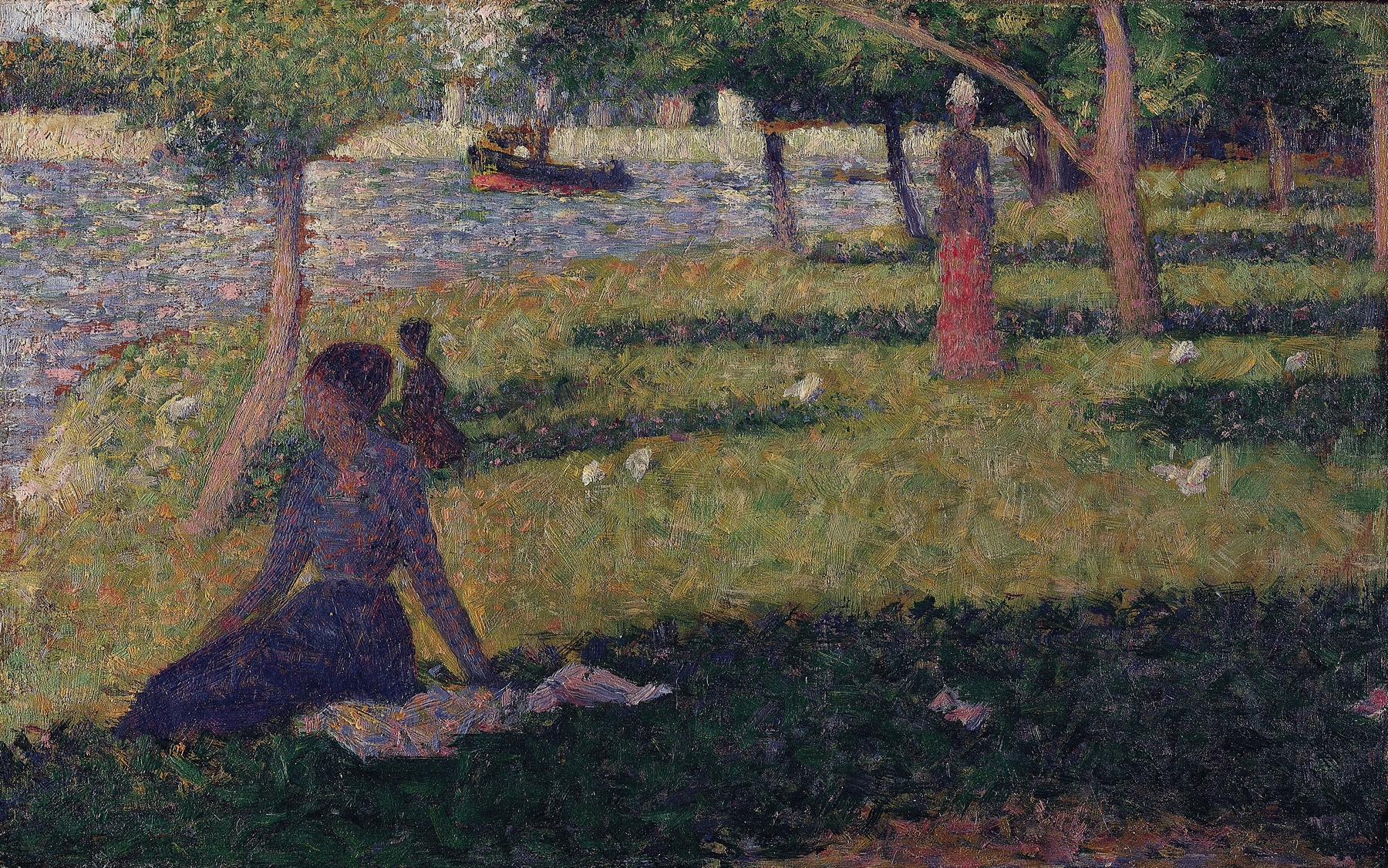
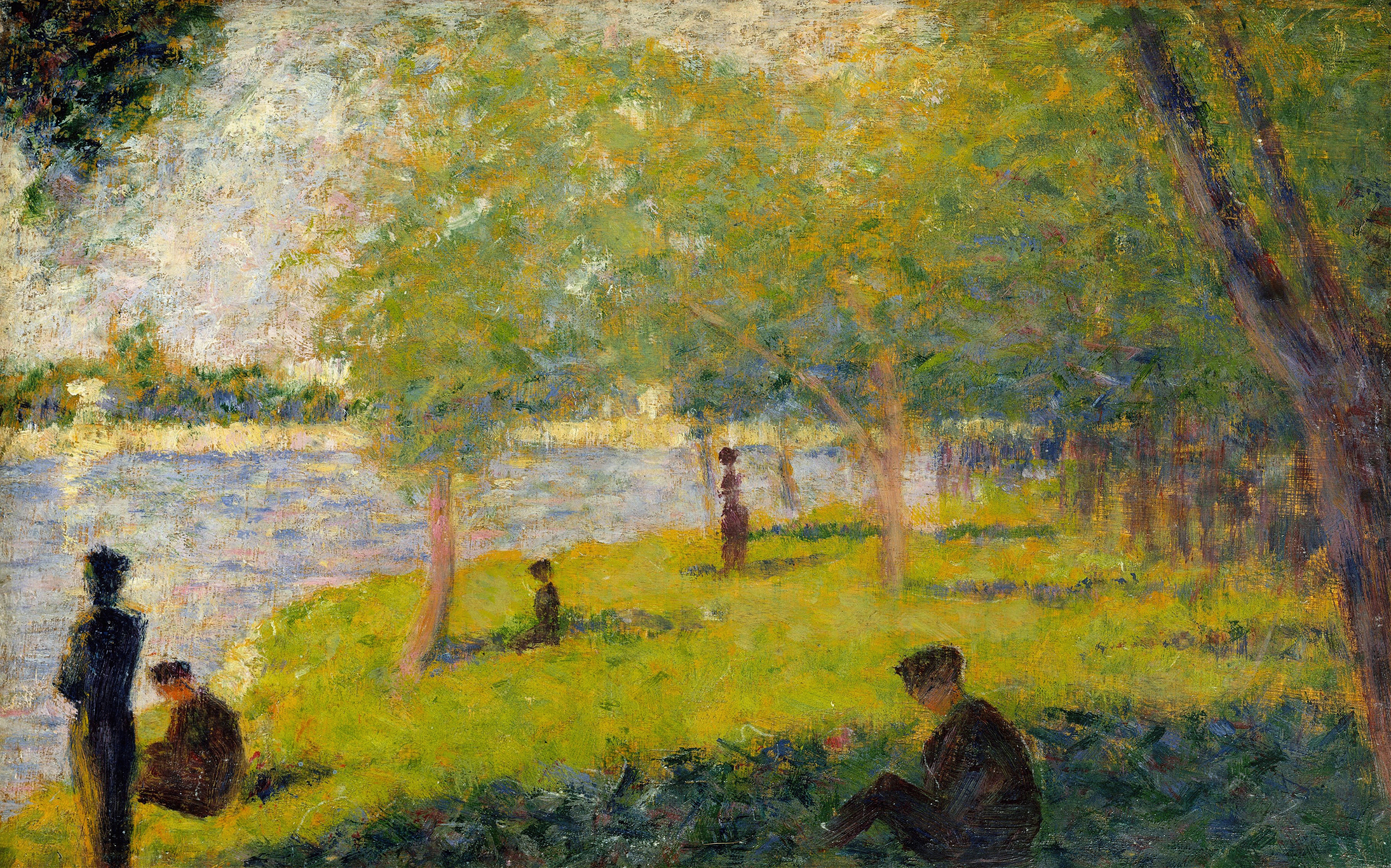
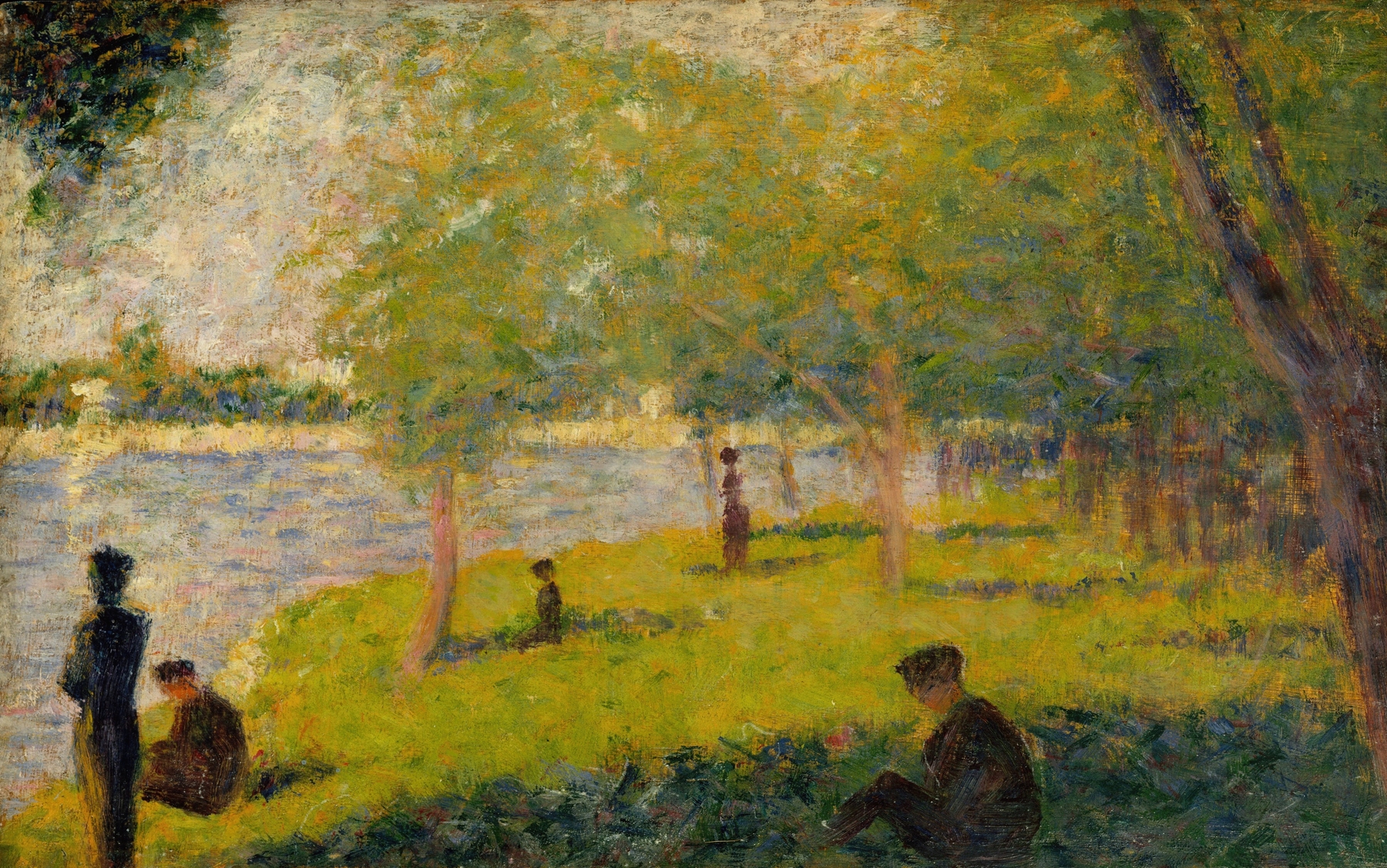
“Every silence here is a confession.” In the stillness of Seurat’s world, shadows speak louder than words, revealing deeper truths waiting to be uncovered. Look to the left at the small, inviting storefront, where the muted colors blend seamlessly into the surrounding scene. Notice how the warm ochres and deep browns create a soft contrast against the cooler tones of the figures standing nearby. The play of light and shadow gives life to the canvas, guiding the viewer's eye and adding an intriguing depth that draws you into this moment frozen in time.
The two figures are enveloped in their own intimate universe, yet they seem disconnected from the shop, hinting at a narrative that transcends their physical presence. The elongated shadows cast by the figures suggest a lingering tension—perhaps unspoken thoughts or unacknowledged feelings. The careful placement of the figures against the storefront emphasizes their solitude, inviting contemplation of their relationship and the bustling life that exists just beyond their reach.
Created in 1882, this piece emerged during a pivotal time for Seurat as he was developing his unique pointillist technique. Working in Paris, he was influenced by the Impressionist movement while also seeking to establish a new form of visual expression. The use of color and light in this work reflects the burgeoning exploration of art during this period, as artists began to delve deeper into the relationship between perception and emotional depth.