Seascape at Port-en-Bessin,Normandy — History & Analysis
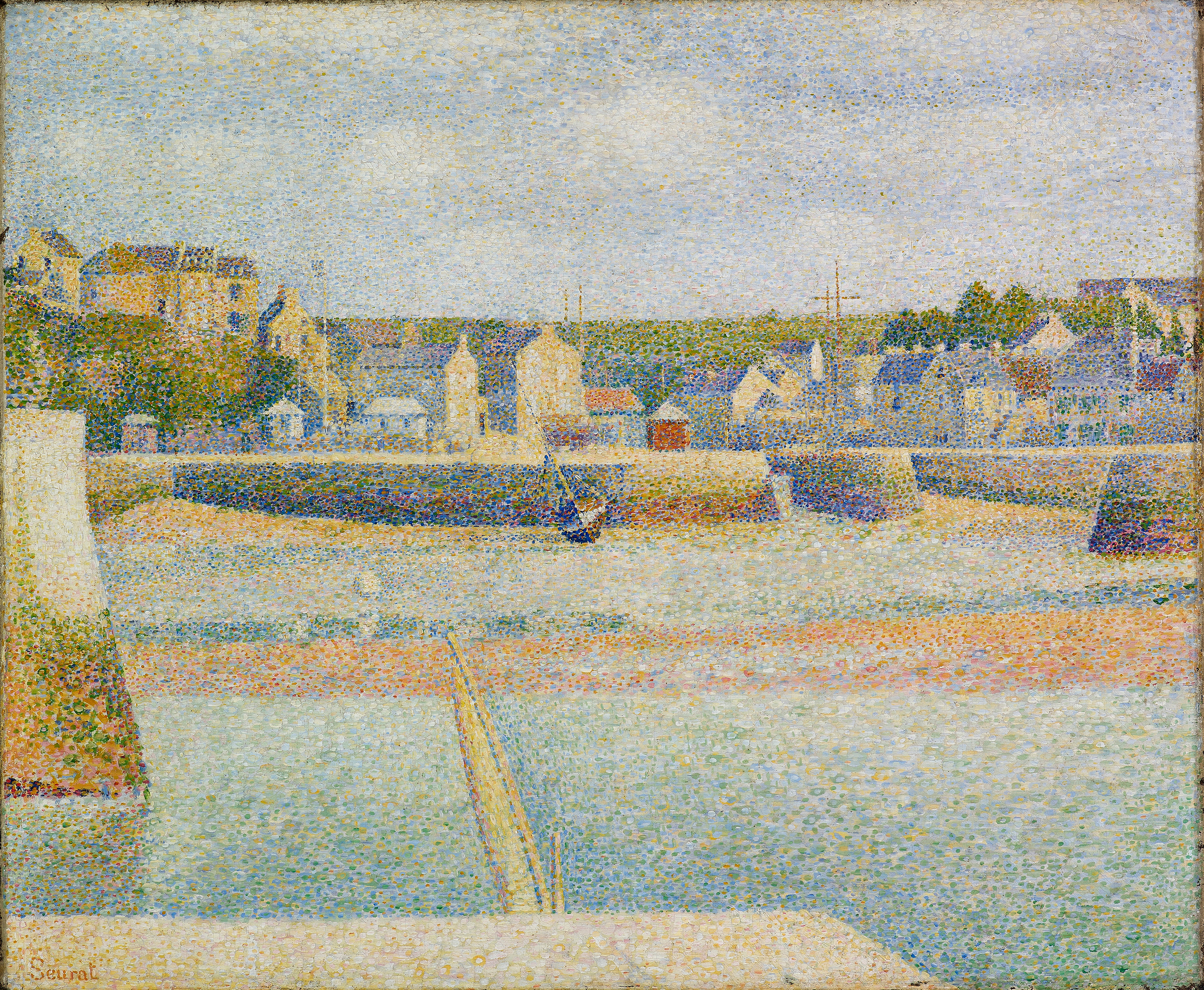
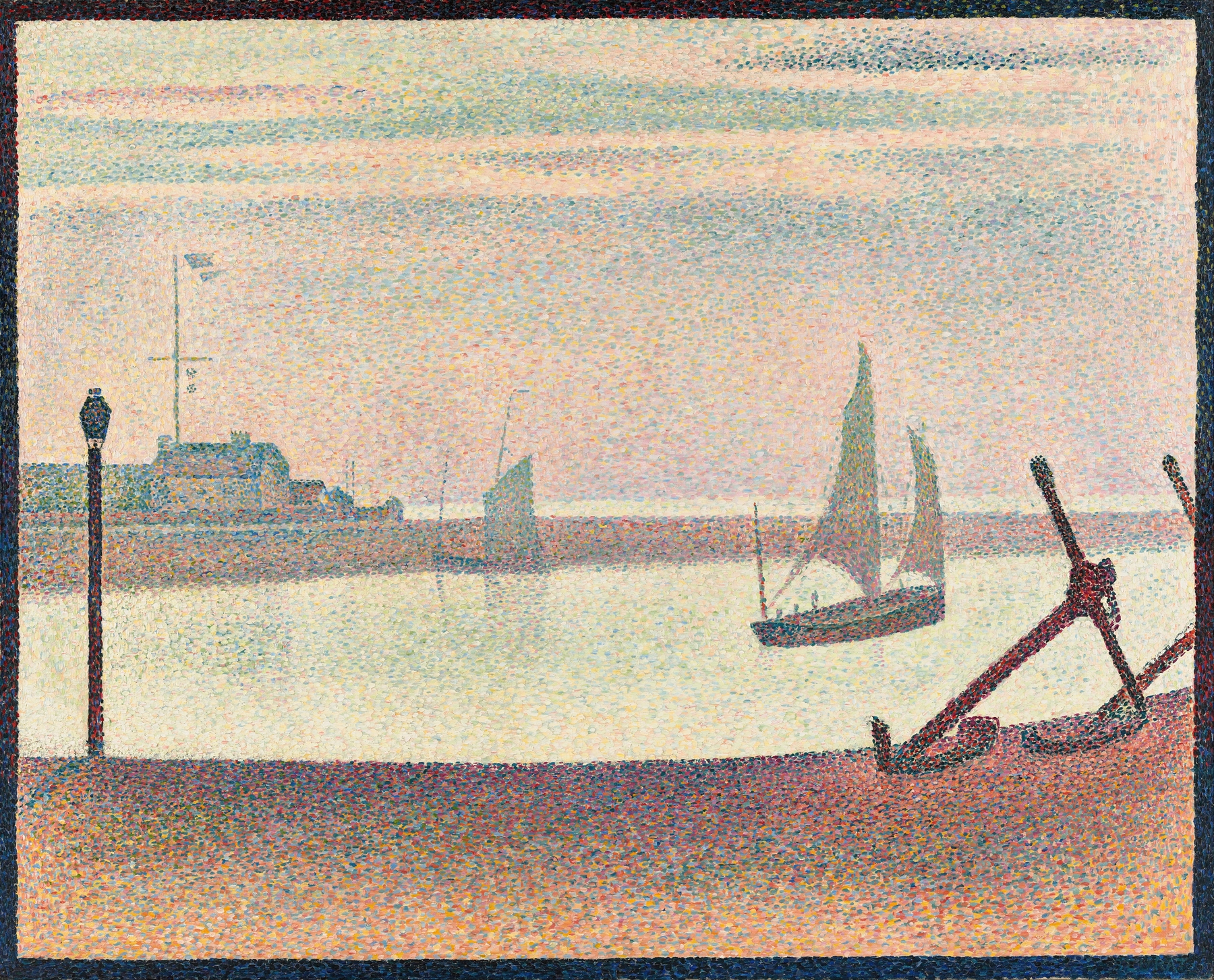
“Art reveals the soul when the world turns away.” In this intimate moment captured on canvas, the divine beauty of nature unfolds, whispering secrets of serenity and introspection. The artist, embracing this revelation, seeks to transport us beyond mere observation into a realm of emotional resonance. Look to the left at the subtle gradation of blues, where the ocean meets the sky, a seamless dance of color that beckons your eyes deeper into the scene. Notice how the delicate brushstrokes, characteristic of the pointillist technique, create a shimmering effect, as if the light itself is alive, weaving through the air.
The tranquil harbor is dotted with boats, their forms emerging with gentle clarity against the expansive backdrop, drawing the viewer's gaze outward toward life’s horizon. Here, the interplay between light and shadow vibrates with emotional tension. The vivid colors evoke a sense of calm, yet the presence of the boats hints at movement and action just beyond the frame. This duality captures a fleeting moment of stillness in the midst of potential chaos, inviting contemplation of both the divine and the human condition intertwined on the shore of existence.
Each brushstroke serves as a meditative reminder of what it means to pause and reflect amidst life’s turbulence. In 1888, while living in Paris, the artist painted Seascape at Port-en-Bessin, Normandy during a significant period of artistic evolution. Influenced by the Impressionists, he sought to explore color theory and develop his signature technique, responding to the vibrancy of post-industrial society. This work emerges not just as a depiction of nature, but as a profound exploration of light, color, and the deeper layers of human experience.