Étude pour ‘La Grande Jatte’ (Study for ‘La Grande Jatte’) — History & Analysis
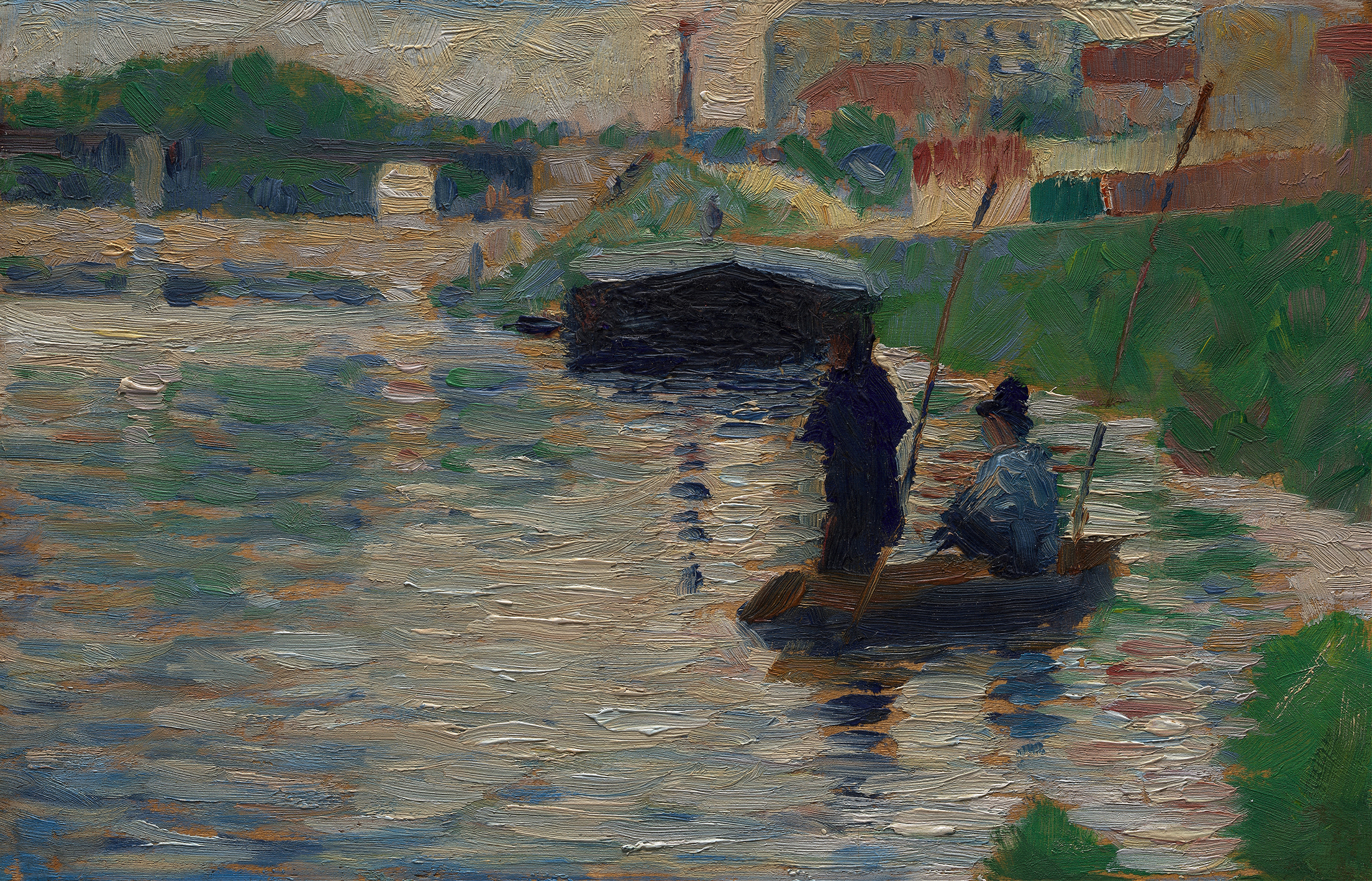
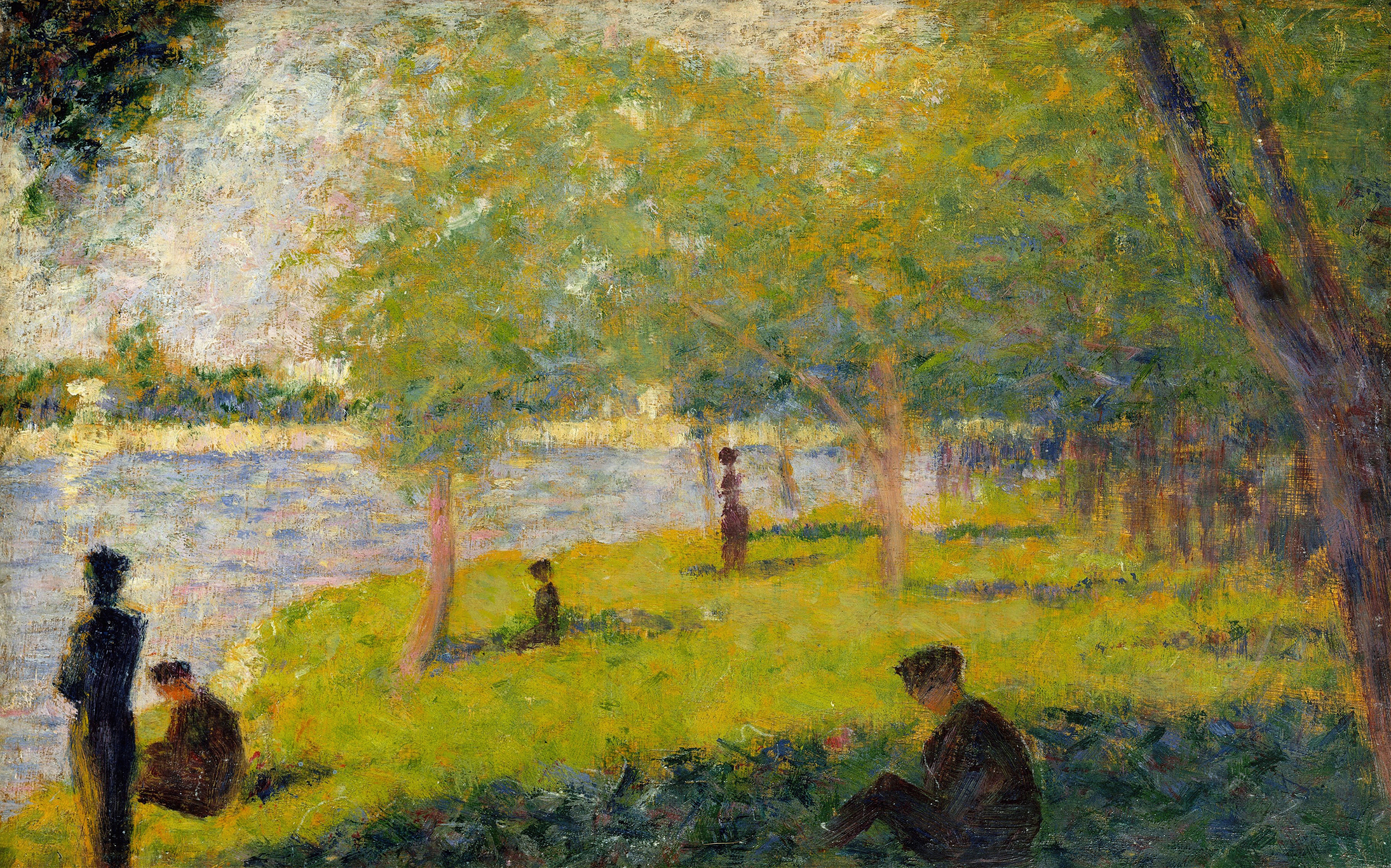
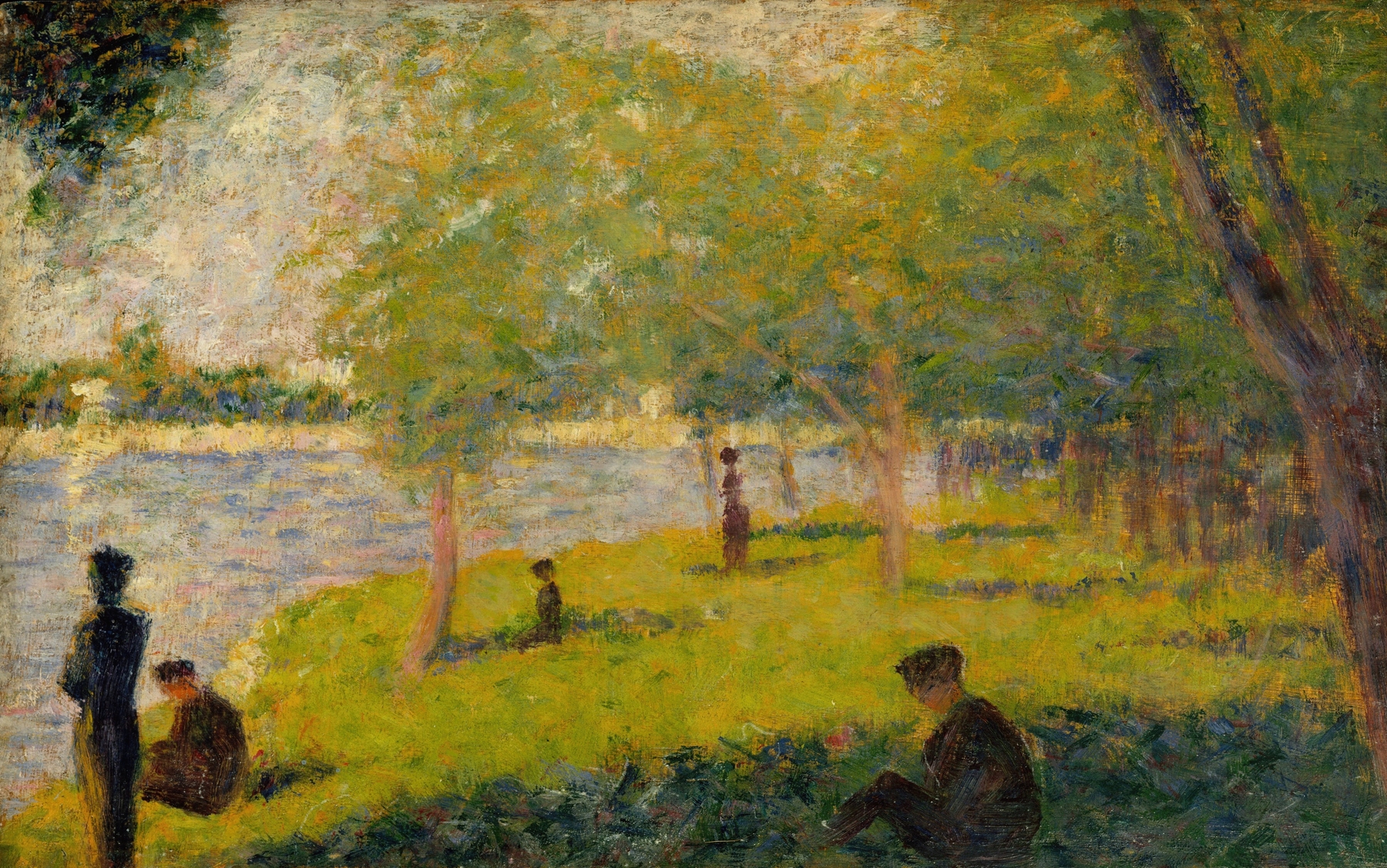
When did color learn to lie? In a world where hues dance and moods shift, the palette becomes a tapestry of untold stories and dreams. Look closely at the vibrant strokes of this study, where Seurat meticulously layers shades of green and blue. Focus on the juxtaposition of light and shadow; the sunlit figures on the banks of the Seine seem to pulse with an unspoken vitality.
Notice how the dots of paint coalesce into forms yet dissolve into abstraction, revealing a world where the observer is both participant and spectator in a fleeting moment of leisure. Beneath the surface, this study reveals an intricate dichotomy: the tranquility of a day spent by the water versus the underlying tension of a society grappling with change. Each figure, stiffly posed, hints at both relaxation and restraint, embodying the paradox of leisure amid a burgeoning modernity. The use of pointillism invites contemplation of perception itself, blurring the lines between reality and illusion, urging us to ponder the nature of our own distractions.
Created between 1884 and 1885, this work found Seurat in Paris, deeply immersed in his exploration of color theory and new artistic techniques. It was a period marked by a growing interest in the science of vision and Impressionism's evolving dialogue. As the world around him became increasingly industrialized, the artist sought to capture not merely the spectacle of life but the quiet introspection it inspired.