The Channel at Gravelines, Evening — History & Analysis
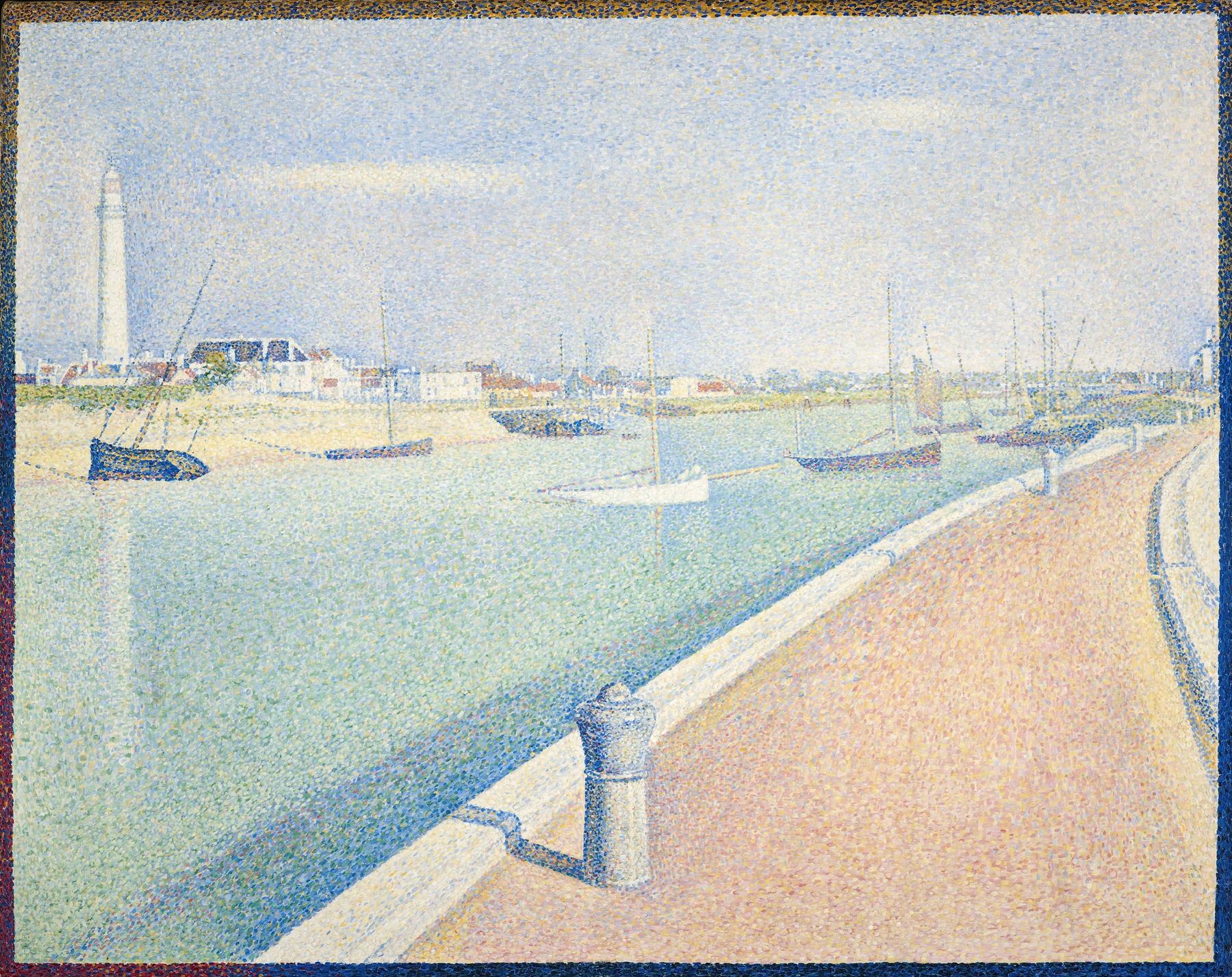
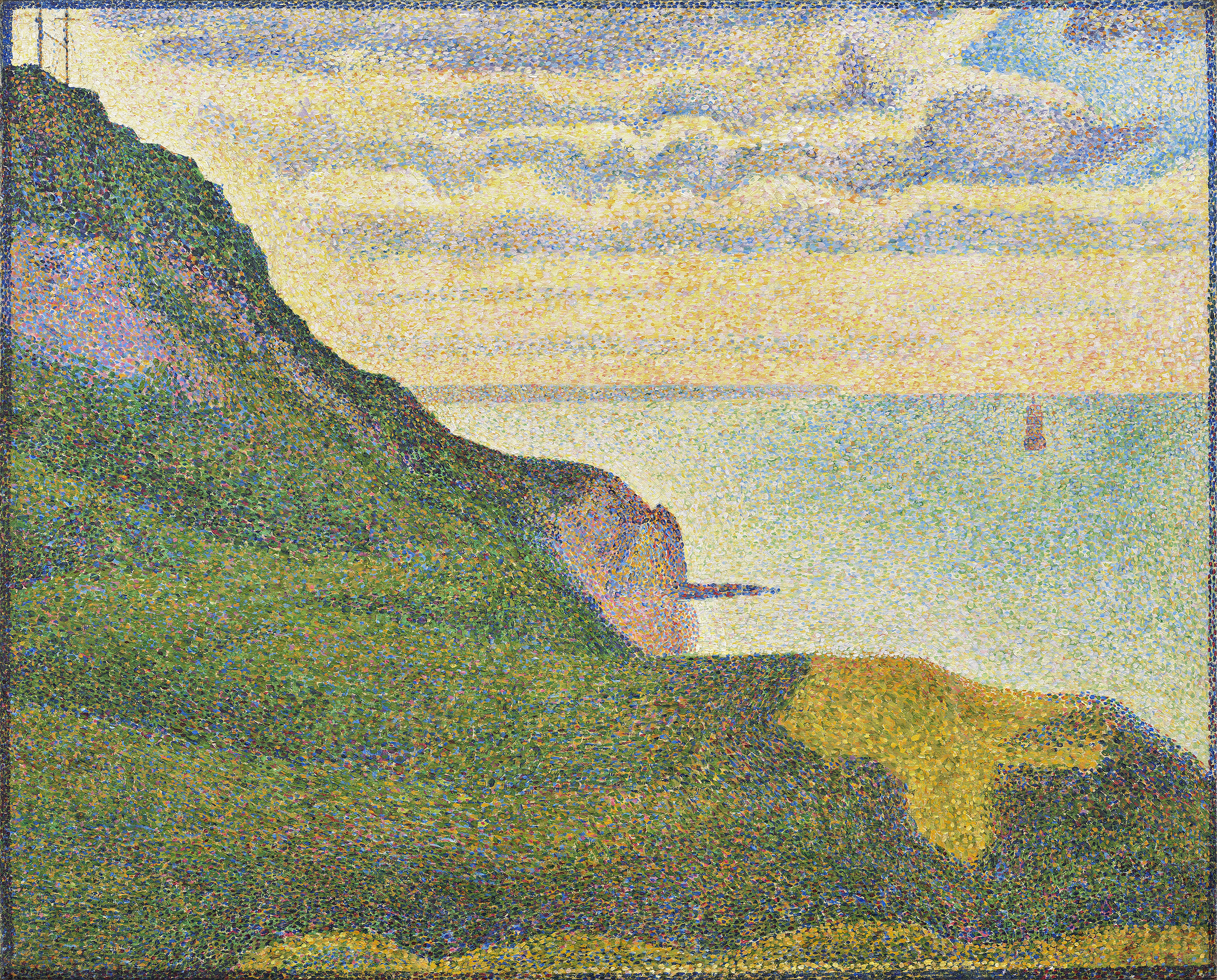
Did the painter know this moment would outlive them? In a world where fleeting time threatens permanence, The Channel at Gravelines, Evening captures a delicate balance between beauty and the inevitable fear of loss. Look to the bottom left, where soft waves ripple gently against the shore, their hues ranging from deep indigo to shimmering cerulean. The water, reflecting the warm glow of the evening sky, guides your gaze upward toward the horizon where a setting sun melts into an array of oranges and purples. Notice how Seurat's signature pointillist technique creates a textured surface, each dot pulsating with life, yet simultaneously evoking an underlying sense of transience.
The figures in the distance seem to dissolve into the landscape, embodying a haunting uncertainty. In the interplay of light and shadow, a juxtaposition unfolds—the vibrant sky pulsating with warmth contrasts sharply with the cool, darkened waters beneath. This dichotomy reflects the tension between hope and dread, capturing an ephemeral moment that will inevitably fade. The solitary sailboat, so small against the vastness of the canvas, evokes feelings of isolation, as if it too fears the encroaching night.
Each element contributes to that profound question: What remains when the light disappears? Created in 1890, the year before Seurat’s untimely death, this piece reflects both his mastery of the pointillist technique and a world on the brink of change. Living in Paris, he experienced the rise of modernity in art, yet grappled with personal struggles and societal transitions. This painting stands as a poignant testament to Seurat’s legacy, encapsulating his exploration of light, color, and the profound human experience.